

China in July and August is hot across most of its lowland cities. Beijing, Shanghai, Wuhan, and Chongqing regularly sit above 35°C with heavy humidity. The good news is that the country’s size means you are never far from a mountain, a plateau, or a forested river valley where the temperature drops by ten or fifteen degrees. This guide to the best summer destinations China offers collects the places where travelers go to escape the heat without leaving the mainland.
Why go high in summer
The basic rule of summer travel here is altitude. For every 1,000 meters of climb, the air cools by roughly 6°C. That simple fact turns the highlands of the southwest and the old summer capitals of the north into comfortable retreats while the plains bake. The trick is choosing a spot that also has things to do once you arrive, not just cool air.
The cooling effect is not just a theory. Travelers from the Yangtze Delta often drive a few hours inland to Huangshan or Jiuhua Mountain for exactly this reason, and Beijing residents head to Chengde or the Bashang grassland when the capital sits under a heat dome. A useful planning habit is to check the elevation of any candidate town before booking, because a place at 1,500 meters feels different from one at 500 even inside the same province.
Coastal cool escapes: Qingdao and Dalian
Not every summer trip needs to climb. The Yellow Sea ports of Qingdao in Shandong and Dalian in Liaoning catch steady sea breezes that hold daytime highs in the high 20s through August, and the water stays cool enough for swimming without the tropical humidity of Hainan. Qingdao pairs its shoreline with old European-style buildings, the leafy Badaguan district, and Laoshan rising straight from the sea; Dalian’s Xinghai Bay and the nearby Lushun peninsular are windier and more open. Both suit travelers who want the ocean but not the south’s heat and crowds, and each links to the national rail grid with fast trains from Beijing and Shanghai.
Chengde: the old imperial summer capital
North of Beijing, Chengde was where the Qing emperors went to avoid the court heat, and the Mountain Resort they built is still the largest classical garden in the country. Daytime highs in July usually stay in the high 20s, and evenings are brisk enough for a light jacket. The surrounding Eight Outer Temples blend Han, Tibetan, and Mongolian styles and make a full day of walking. Chengde works well as a two-night stop on a Beijing loop.
Zhangjiajie and the Hunan peaks
The sandstone pillars of Zhangjiajie in northwestern Hunan stay cooler than the cities because of constant cloud cover and altitude between 800 and 1,200 meters. The Avatar mountains are the headline, but the real summer pleasure is the glass elevator, the cliff walks, and the cable cars that lift you above the haze. Bring rain gear: summer afternoon storms are common and brief.
Huangshan for misty mornings
Anhui’s Yellow Mountain is crowded but justified. At the summit lodges above 1,800 meters, nights are cold and days are fresh, a world away from the Yangtze Delta heat. The granite peaks, the twisted pine trees, and the sea of clouds draw painters and hikers alike. Book the summit hotels early if you want to watch sunrise without climbing in the dark.
Guilin and Yangshuo’s river valleys
Guilin and Yangshuo in Guangxi stay warm rather than cool, but the karst landscape and the Li River make heat bearable, especially on a bamboo raft at dawn. The limestone hills trap breezes, and the cave systems like Reed Flute Cave stay naturally air-conditioned year round. Cycling the country roads between rice paddies is best done in the early morning before the sun climbs.
Yunnan highlands: Lijiang and Shangri-La
Yunnan is the summer escape engine of the southwest. Lijiang, at 2,400 meters, stays in the low 20s even in August, and its old town of stone lanes and canals is walkable all day. Push higher to Shangri-La near 3,200 meters for meadow flowers, Tibetan monasteries, and genuinely cold nights. The thinner air means sun protection matters more than in the lowlands. Kunming, the provincial capital, calls itself the Spring City because its temperature barely moves across the year.
Qinghai and the Tibetan plateau edge
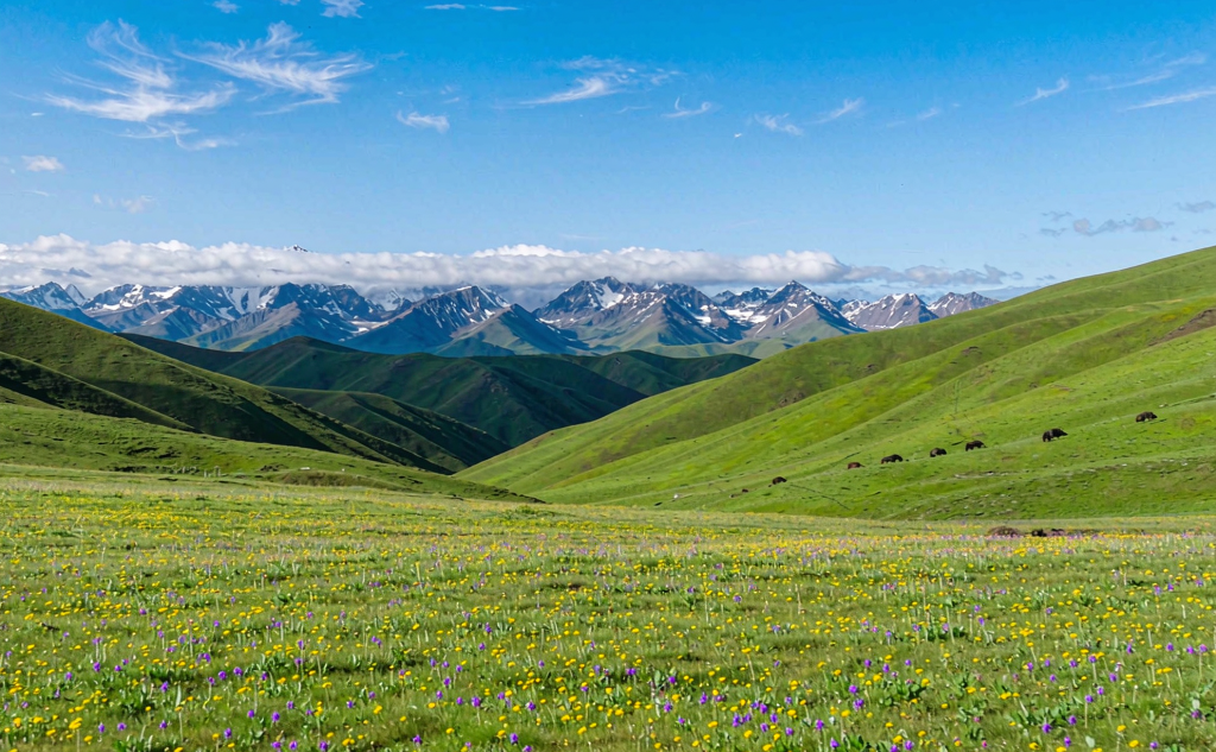
For travelers who want altitude and open space, Xining and Qinghai Lake in Qinghai province sit above 2,200 meters and offer sunny, dry summers with daytime highs around 20°C. The lake’s ring road passes yak pastures, rape-seed blossoms in July, and Buddhist monasteries. This is a highland summer trip at its purest, though the sun is intense and the nights are cold.
Moganshan: the Yangtze Delta’s bamboo retreat
For visitors based in Shanghai or Hangzhou who cannot spare a long flight, Moganshan in Zhejiang is the closest cool green escape. Its bamboo forests, old villa guesthouses, and streams sit around 700 meters and stay several degrees cooler than the cities below, with easy train-and-car access from Hangzhou. It is more a weekend reset than a wilderness trip, but the shade, quiet, and good farmhouse cooking make it a reliable summer filler between city stops, and several of the old stone houses have been turned into design-minded hotels worth the detour.
Inner Mongolia grasslands
The grasslands around Hulunbuir and Xilingol turn green and mild in July and August. Staying in a yurt, riding horses at dawn, and eating lamb roasted over open fire is a different kind of cool escape, one built on wind rather than mountains. Days are pleasant and nights are chilly, so pack layers.
Jiuzhaigou and the alpine lakes
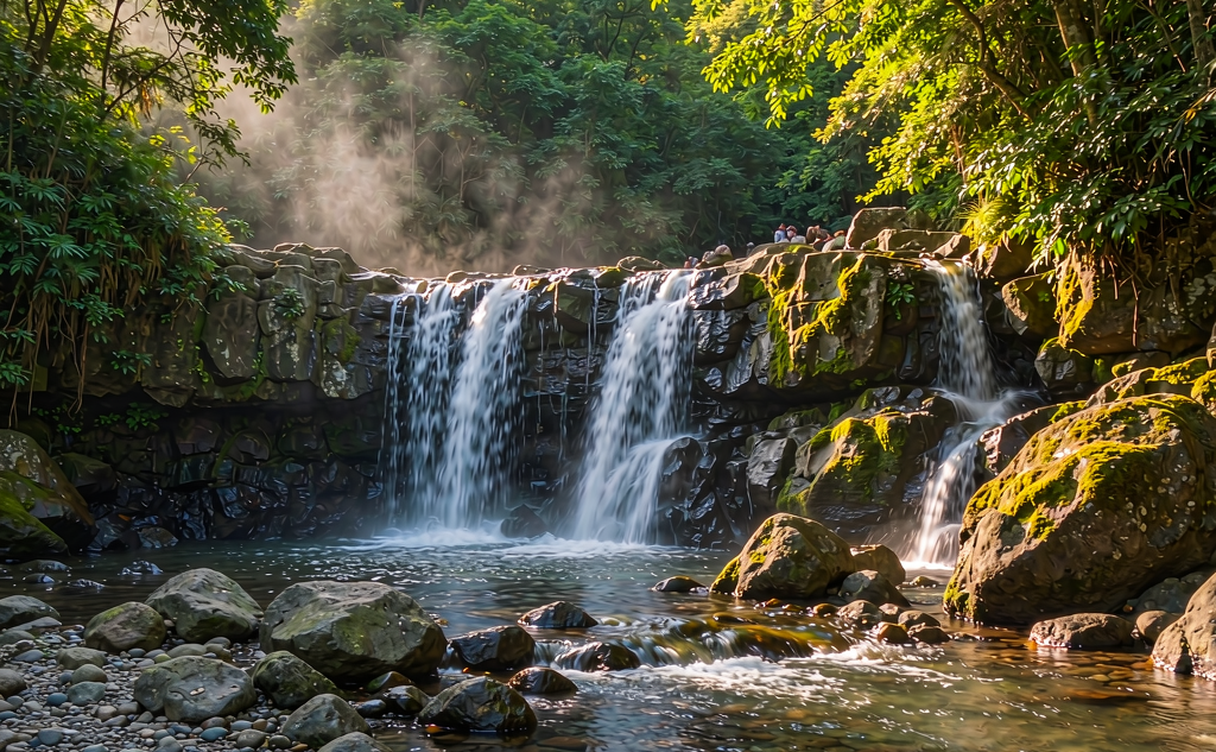
Sichuan’s Jiuzhaigou, a valley of tiered turquoise lakes and waterfalls between 2,000 and 3,000 meters, stays cool and lush through summer. The boardwalks keep you in the shade of old forest, and the morning light on the water is the main event. Summer is also the rainy season, which keeps the waterfalls full.
What to pack for a highland summer
Packing for a Chinese highland summer means planning for two climates in one day. Mornings and nights at altitude are cool enough for a fleece or light down jacket, while the noon sun on an open ridge is strong and dehydrating. A packable rain shell handles the frequent afternoon storms in places like Zhangjiajie and Jiuzhaigou, and a brimmed hat plus high-SPF sunscreen matter more than at home because ultraviolet light rises with elevation. Sturdy shoes with grip beat sandals on wet boardwalks and temple steps. If you visit anywhere above 2,500 meters, such as Shangri-La, give yourself a day or two at a lower town first so the thinner air does not spoil the first hikes.
Best time for summer travel China
The window runs from late June to late August, with the last two weeks of July being the busiest because of school holidays. If you can travel in early June or late August, you will find lower prices and fewer crowds at every highland destination listed here. Mountain weather shifts fast, so a packable rain shell and a warm layer belong in every daypack.
Practical summer travel tips
Book summit and lakefront hotels weeks ahead, since cool rooms sell out first. Trains to places like Lijiang, Xining, and Zhangjiajie run from major hubs, but the final legs are often slow buses or hired cars. Sunscreen, a refillable bottle, and altitude awareness for anywhere above 2,500 meters will keep the trip comfortable.
Regional food helps with the heat too. In Yunnan and Guangxi, cold rice noodles and sour salads replace heavy meals, while in the north a bowl of cold cucumber and noodles cools you down faster than any air conditioning. Drink plenty of water on the trails, since altitude hides how much fluid you lose, and carry some cash for the small stalls near trailheads that do not always take phone payment reliably.
For weather planning, the China Meteorological Administration publishes regional forecasts that help you time mountain visits around storms.
To build a full route, start with our China summer destinations guide, then branch into the seasonal companions: the best autumn destinations, the best winter destinations, and the best spring destinations. First-time visitors should also open our first-timers travel guide before booking trains.