

Most visitors treat the Great Wall as a half-day detour from the capital. I did the same on my first trip in 2015, arriving at Badaling with a bus tour, snapping a photo, and leaving before lunch. I regretted it for years. After a decade of sending clients to different sections, I now give everyone the same advice: if you want the wall to yourself, you have to stay the night. That is the whole premise behind the rising number of Great Wall boutique hotels, and in this guide I will walk you through the options I have personally vetted, the prices you should expect, and the mistakes I have watched travelers make.
Why a night beside the Wall beats a day trip
The sections closest to Beijing empty out by 5 p.m. Once the last tour bus leaves, the only sounds are wind and the crunch of gravel under your shoes. I have stood on the parapet at Mutianyu at 7 p.m. with not another soul in sight, watching swifts dive along the ridge. A stay near Great Wall China properties lets you catch both the late-afternoon light and the early-morning mist, which is when the photography is genuinely worth the effort. You also skip the notorious Beijing traffic: on a bad weekend the drive can take three hours each way, quietly destroying a day you could have spent walking a quiet stretch of wall. An overnight flips the math—you arrive the evening before, sleep a few minutes from the gate, and walk up at first light ahead of the crowds.
How to reach the wall and choose your section
Most of the best rooms sit along the Mutianyu and Huanghuacheng stretches, both within 70–90 km of central Beijing, with a third cluster near Gubeikou for the truly off-grid. A private car from the airport area runs ¥600–900 CNY one way; a chartered van for a small group is usually the most comfortable choice, and I book this for first-time clients who do not want to haggle with drivers at the curb. If you would rather not drive, several Great Wall hotels Beijing packages include round-trip transfers, which removes the single biggest source of stress on this trip.
For those comparing the capital with other hubs before committing, our Beijing versus Shanghai breakdown covers which city makes a better base. If heritage stays appeal to you more broadly, our China heritage hotels guide lists converted courtyards and old post houses across the country, several of which I have stayed in and would return to.
The standout options I have actually stayed in
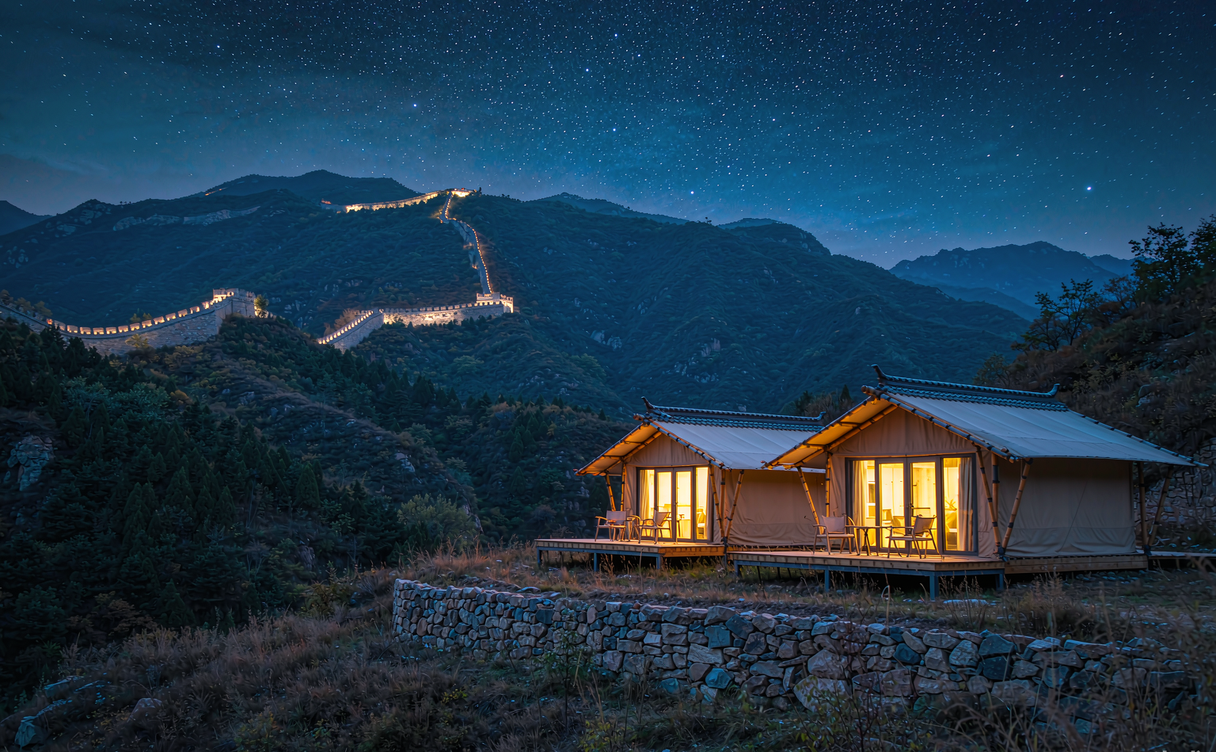
The best Great Wall stay, in my book, is a renovated watchtower suite where you can open a window and see the wall curving over the ridge. One property I send couples to has just six rooms, heated floors, and a fixed-menu dinner at ¥280–420 CNY per person; the host walks you up to a private stretch of wall at sunset. Another, nearer Huanghuacheng, pairs a lakeside setting with kayaks in summer and a fireside lounge in autumn. For travelers who want something wilder, Great Wall glamping has exploded in the last three years: think insulated canvas tents with real beds, a wood-fired breakfast, and zero light pollution. I took a family of four there last October and the kids still talk about counting satellites from their pillows.
If you want a broader shortlist beyond the wall, our best boutique hotels in China ranks properties from Yunnan to the coast. Boutique hotels near Mutianyu in particular tend to book out from April through October, so reserve at least three weeks ahead in peak season, and four if you are aiming at the National Day window in early October.
What it costs and the traps to avoid
Expect to pay ¥1,200–2,800 CNY per night for a proper boutique room, and ¥1,800–3,600 CNY for a glamping tent that sleeps two adults and two children. These numbers move with holidays—Golden Week can roughly double rates, and I always warn clients to avoid that window unless they have no choice. The most common trap is the “Great Wall view” label: some budget guesthouses are 20 km from the nearest access point, reachable only by a bumpy village road. Always confirm the driving time to the wall gate, not the straight-line distance on a map, and read the most recent reviews for the word “remote.”
Another trap is the deposit. Several boutique places ask for a 30–50% deposit by bank transfer, and a couple of my clients have been nervous about that. I now only book through properties with a verifiable booking platform or a documented WeChat business account, and I tell clients to screenshot every confirmation. It is not that the wall-side hosts are dishonest—it is that a ruined special-occasion trip is not worth the risk.
Food, seasons, and small comforts
Dining at these properties is limited—usually one restaurant serving hearty northern fare: braised pork, hand-pulled noodles, and pickled vegetables at ¥80–160 CNY a head. Vegetarian options exist but are basic, so I warn plant-based clients to pack snacks. If you want variety, the town of Huairou, 30 minutes away, has smoky barbecue joints I have grown fond of, where a table of skewers and beer runs ¥120–200 CNY for two. The best months are April–May and September–October; July–August is hot and crowded, while January brings sub-zero nights that only the glamping tents with proper heating can handle.
For a different northern China base, our Tianjin hotel picks and Qingdao seaside stays are worth a look if your trip extends to the coast. And if you are routing through central China afterward, the Wuhan hotels guide helps you plan that leg without a scramble.

A sample two-night plan
For most clients I suggest this rhythm. Day one: private transfer from Beijing in the afternoon, check in, walk a short stretch of wall near the property at golden hour, dinner on site. Day two: sunrise on the wall, late breakfast, then a second nearby section like Huanghuacheng’s lakeside path before returning to the city by early evening. This gives you two wall experiences without the exhaustion of a same-day round trip. I have run this exact plan for honeymooners and for a retired couple marking a milestone celebration, and both rated it the highlight of a two-week China trip.
My practical checklist
Book transfers in writing, pack a warm layer even in spring, and download an offline map because signal fades fast on the ridges. Bring cash for small stalls and tip jars, though most places take mobile pay. The wall itself is protected as a UNESCO World Heritage site, and you can read the official UNESCO Great Wall listing for the conservation background before you go—it also explains why some sections are restored and others left wild, which helps you pick the right stay.
Final thought
A night beside the Wall is the difference between seeing a postcard and feeling a place. I have watched jaded teenagers put down their phones up there, and that tells you everything. Plan it right, and it becomes the anchor of your whole China trip—the story you tell first when you get home.
One more note on timing
I mentioned Golden Week, but there is a subtler window worth knowing. Late March and early April bring apricot blossom along the lower slopes, and the glamping operators often run their lowest rates of the year then. If your schedule is flexible, that shoulder season is my personal favorite—cool enough to sleep well, empty enough to feel alone on the wall, and kinder on the wallet than autumn.