

Most visitors to China sleep in glass towers that could be anywhere in the world. The reward for looking a little harder is a stay that could be nowhere but China: a restored courtyard house behind a grey-brick wall, a Republican-era mansion with carved beams, or a temple lodge where the only sound at dawn is a wooden fish struck in the hall. This China heritage hotels guide is for travelers who want their room to be part of the story rather than a neutral box between sights.
China heritage accommodation spans a surprising range. At one end are the siheyuan — the walled courtyard homes of Beijing — converted into intimate hotels where you step from a hutong lane into a hidden garden. At the other are grand colonial and merchant buildings in Shanghai and the south, their parlors preserved as lounges. Between them sit monasteries that take guests, and old townhouses restored by patient owners who cared more about the timber than the profit.
Stay in a Chinese courtyard: Beijing’s hidden siheyuan
The clearest way to stay in a Chinese courtyard is in Beijing, where the old grid of hutongs still hides hundreds of siheyuan. The best have kept the original layout — a north-facing main room, side wings, and a central court with a pomegranate or a fish tank — while quietly slipping in heating, soundproofing, and rain showers. You sleep under a tiled roof and wake to the particular quiet of a walled compound, even though the city roars two meters beyond the gate.
Our Beijing courtyard hotels guide maps the lanes worth staying in and the properties that have done the restoration justice. Location matters: a courtyard near the lakes of Houhai or the alleys of Dongcheng puts you within walking distance of morning tai chi and breakfast noodle stalls, while keeping the tourist buses at a distance.
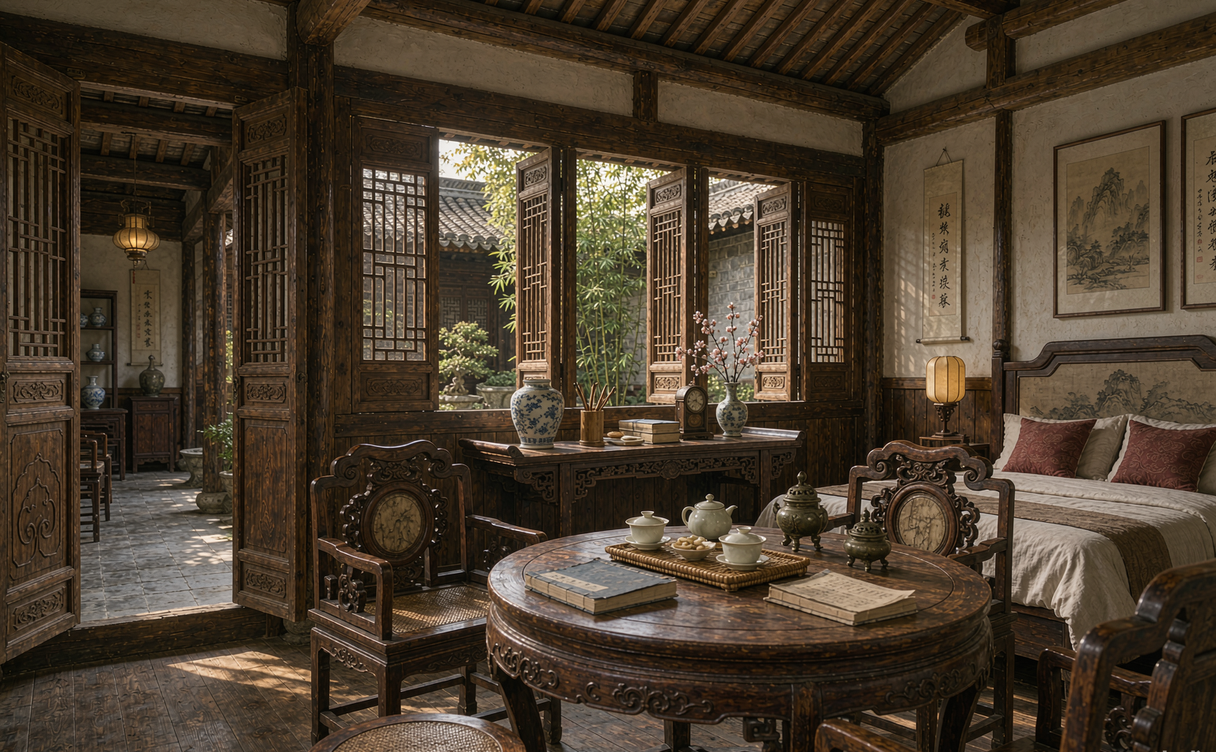
Historic hotels China: mansions and merchant houses
Move south and the heritage changes character. Historic hotels China are proud of often occupy the homes of merchants, officials, and foreign traders from the nineteenth and early twentieth centuries. Shanghai leads with its Stone Gate (shikumen) and Art Deco survivors, many reborn as boutique properties where the lobby was once a family drawing room. The Shanghai luxury hotels guide separates the genuine restored buildings from the merely themed ones, which is the distinction that makes or breaks the experience.
Chinese mansion hotels in the Yangtze and Pearl River deltas take the form of restored clan halls and scholar’s residences, with courtyards scaled for ceremony rather than intimacy. The thrill is in the detail: a moon gate framing a single rock, a lattice window filtering the light, a beam inscribed with a couplet you half understand. These are not museums you visit; they are places you are allowed to sleep.
Best heritage hotels and the boutique revival
The best heritage hotels share a refusal to fake the past. They restore rather than reproduce, and they hire staff who know the building’s history. Our best boutique hotels China rounds up the standouts across regions, from Tibetan-influenced lodges in the west to Hakka earthen-house conversions in the southeast. The common thread is character you cannot replicate with decor — the bones have to be real.
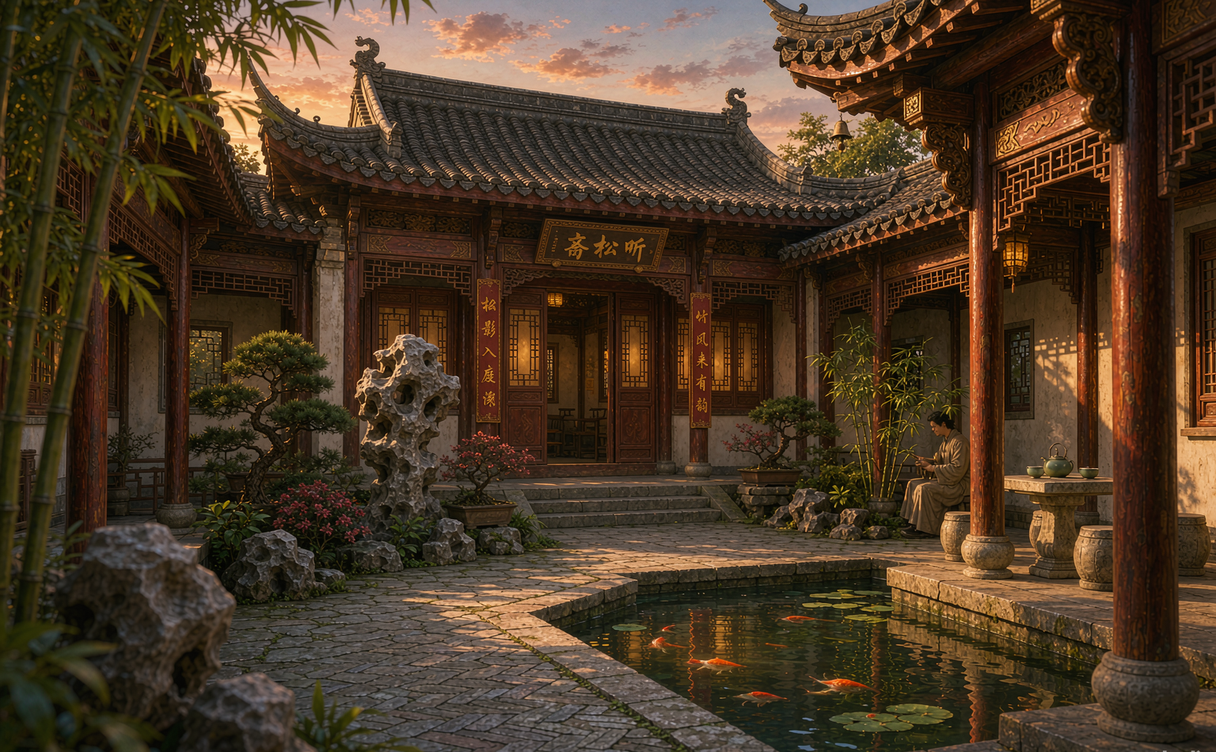
Temple stays and rural heritage
Heritage is not only urban. A China temple stay guide introduces the monasteries that welcome overnight guests, usually with simple rooms, vegetarian meals, and the chance to join morning chanting. It is the humblest end of the spectrum and, for many, the most memorable. For a softer version, the China homestay guide covers village houses where old architecture meets living family life, often in regions recognized by UNESCO for their cultural value — the World Heritage list at UNESCO is a good way to find towns worth basing yourself in.
What a heritage night actually feels like
The romance is real, but so are the small adjustments. Old walls are thinner than modern ones, courtyards collect the wind, and the charm of a timber beam comes with the occasional creak and draft. None of this is a flaw; it is the trade for sleeping somewhere with a story. The best properties soften the edges with discreet heating, good mattresses, and lighting designed to flatter the architecture rather than flood it. Guests who arrive expecting a chain-hotel sameness leave disappointed, while those who arrive curious tend to rank the stay among the highlights of their trip. The building asks for a little surrender, and it rewards it.
Matching the stay to the region
Geography decides the style. The north gives you walled courtyards and the logic of imperial planning; the Yangtze and south give you merchant opulence and garden intimacy; the west gives you earthen and timber structures shaped by climate and faith. A heritage stay in Beijing feels aristocratic and enclosed, while one in a water town feels domestic and low-slung, and a temple lodge feels ascetic by design. Thinking about the region first, then the building, prevents the common mistake of booking a courtyard in a city that has none worth saving. The right match makes the architecture feel inevitable rather than decorative.
Small properties, personal service
Because these hotels are usually small, the people who run them tend to be the people who saved them, and that shows in the welcome. Owners often greet guests personally, remember preferences, and share the building’s history over the included breakfast. This intimacy is the real luxury, finer than any thread count, and it is why heritage properties build loyal return visitors who come back to the same courtyard year after year. Booking directly, rather than through a faceless platform, often unlocks the best room and a warmer arrival, since the keeper of the keys is also the keeper of the story. Leave room in the schedule after checking in: the instinct is to rush to the next sight, but a heritage hotel rewards lingering — a pot of tea in the court, a slow walk around the beams — and those unhurried hours are where the past stops being a backdrop and starts being a presence.
Booking heritage stays as a foreign visitor
Heritage properties are smaller than chain hotels and fill faster, especially during holidays. The China hotel booking foreigners guide covers the practical side: passport registration, which platforms accept foreign cards, and how to confirm that the restored building is the one you will actually sleep in. A direct email in English often works better than a third-party listing for the smallest courtyard hotels, whose owners answer personally.
A few things to expect. Rooms in old buildings are occasionally smaller than modern ones, and sound travels through timber and tile in ways it never does through concrete. Embrace it — that creak is part of the four hundred years the roof has been standing. Ask about the building’s story at check-in; the best owners keep a photo of the original structure and a tale of its rescue. And book the courtyard room rather than a side unit if you have the choice, because the court is where the architecture actually lives.
The deeper value of a heritage stay is continuity. You are not looking at China’s past through glass; you are occupying it, heating it, and hearing it settle at night. That intimacy is hard to get from any monument, because a monument is closed at five and a hotel is not. The walls keep the same proportions they always had, and for a moment the distance between then and now gets very short.
Wherever your route runs — the hutongs of Beijing, the mansions of Shanghai, a village homestay, or a temple at first light — let at least one night be spent inside the architecture rather than beside it. The best heritage hotels do not just give you a bed; they hand you a few hours of Chinese history with the lights low and the courtyard quiet.