

Can a foreign traveller stay overnight in a Chinese temple? Sometimes — but the deciding factor is not the price, it is whether that specific guest hall can register you. Many monasteries welcome Chinese pilgrims and quietly turn away foreign visitors because they cannot complete the required residence registration. Call ahead, ask for the guest hall (客堂, kètáng), confirm registration, and carry your passport. A temple bed in a Buddhist mountain guesthouse typically costs ¥30–100 for a dorm place or ¥80–300 for a simple private room, with meals often ¥5–10.
By Karl Huang, travel content editor. Last verified November 2026. Rates below are reported typical bands checked in 2026, not fixed tariffs; temple guesthouses set their own prices and change them around pilgrimage festivals. Confirm the bed, the price and the registration question by phone before you travel.
A temple stay is not a cheap hotel with incense. You are a guest in a working monastery, sleeping in a bare room, waking to a bell before dawn and eating in silence. Done well, it is the most memorable night in a China itinerary. Done without preparation, it is a cold room, a closed gate and a long walk back to town. This guide is organised around the questions that actually decide the outcome: whether you can stay, what it costs, how to ask, and what is expected of you once the gate closes.
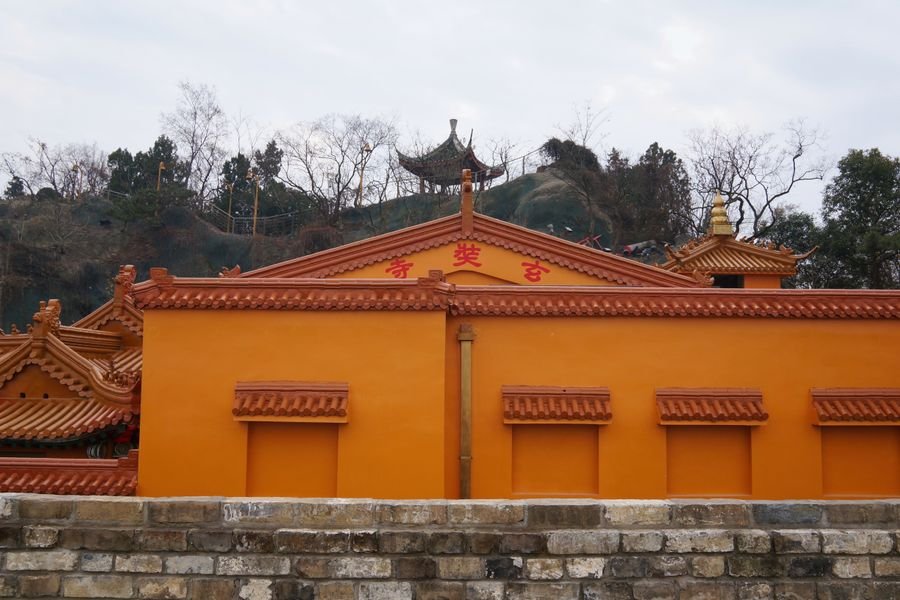
First question: can this temple register you?
Foreign nationals staying anywhere in China other than a hotel must be registered with the local police, normally within 24 hours of arrival. Hotels do this automatically. A monastery guest hall is not a hotel, and some do not have the paperwork or the training to register a foreign guest. This is the single most common reason a pre-arranged temple night falls through at the gate.
Ask the temple directly, in this order:
- Do you accept foreign guests for a night in the guest hall? (可以接待外籍香客住宿吗?)
- Can you register my passport for the police? (可以办理外国人住宿登记吗?)
- What time must I arrive, and is there a gate curfew?
- Is the bed a dorm place or a private room, and what is the contribution?
If the answer to the registration question is no, the honest alternative is a licensed guesthouse or minsu inside or just below the temple gate. It will register you, it sits in the same monastic setting, and it usually costs roughly ¥50–200 a night. You can check temple-area guesthouses with free cancellation so you are not locked into a bed the monastery cannot legally register. The China homestay guide explains how to arrange a direct booking with a local host when the international platforms have no listing.
What a temple night actually looks like
The room is deliberately plain: a clean bed, a hard mattress or a thin pad on a raised platform, a shared bathroom, and very little else. Meals are vegetarian and eaten in silence. The day follows the monks’ schedule rather than yours — morning chanting, a period of communal work, a quiet afternoon, evening sutras, and lights out early, often by 9 p.m. You are a guest of the community, not a customer, and a donation supports the upkeep of the place.
That simplicity is the point. A Buddhist retreat in China strips out screens and noise, and many travellers sleep better than they do in hotels. But the silence is structured: bells and chanting start before dawn, so a light sleeper needs earplugs and an accepting attitude.
What it costs, with real bands
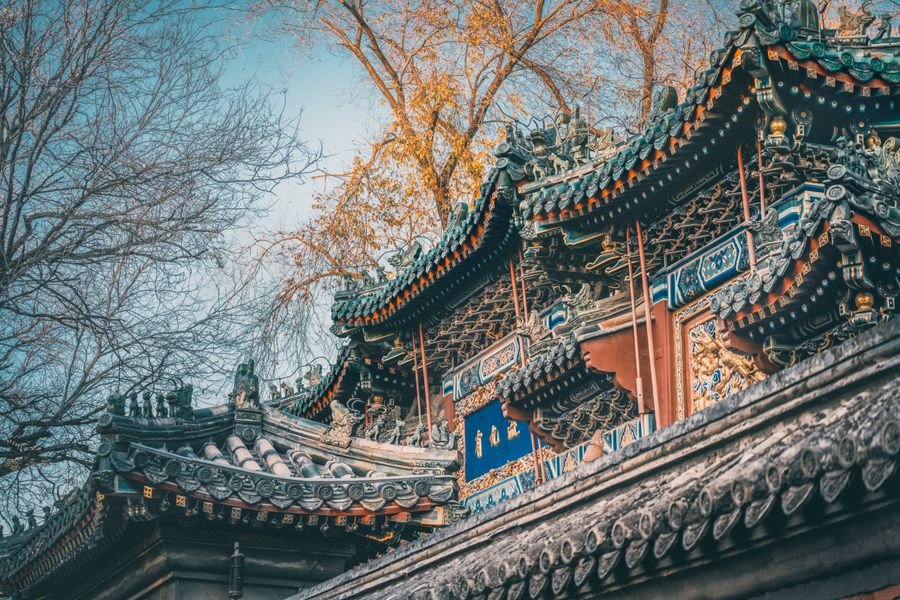
Temple accommodation is not priced like a hotel room. At some temples it is a fixed low rate; at others it is a voluntary contribution. The following bands reflect reported 2026 guest-hall prices at the four Buddhist mountains and other temples that lodge lay visitors. Treat them as planning figures and confirm on site.
| Where you sleep | Typical band per night | Privacy | Meals | Registration of foreigners |
|---|---|---|---|---|
| Buddhist mountain guest-hall dorm | ¥30–100 | Shared | Vegetarian, often ¥5–10 if sold separately | Ask first — varies by temple |
| Simple private temple room | ¥80–300 | Basic private, shared bath | Sometimes included, sometimes ¥20–40 extra | Ask first — varies by temple |
| Small local temple, spare room | Around ¥20, sometimes by donation | Very basic | Often included | Often not available |
| Guesthouse or minsu inside the gate | ¥50–200 | Room with own bath | Separate, ¥20–40 | Usually yes |
| Organised multi-day retreat | Several hundred yuan and up | Shared or simple private | Usually included | Handled by the organiser |
The wide spread is real. A season pass or a pilgrimage month can close the guest hall entirely to casual visitors, and the cheapest beds are not necessarily the ones that will register a passport. A structured retreat removes the language barrier and guarantees a bed, but you pay for the coordination rather than for a better room.
If your priority is a guaranteed, bookable bed with a clear price, compare the hostel versus hotel options in China and use a temple stay as one night inside a longer route rather than the whole foundation of the trip.
Four mountains, four different experiences
| Site | Tradition | What the overnight adds | Practical constraint |
|---|---|---|---|
| Putuoshan, Zhejiang | Buddhist, island sacred to Guanyin | Temples near the pilgrimage routes; early chanting before the ferries fill | Ferry timing governs arrival; book a bed before you cross |
| Shaolin, Henan | Chan Buddhist, near Dengfeng | Temple-affiliated guesthouses in the village, kung fu demonstrations, pagoda forest | Most lodging is in the village, not inside the monastery walls |
| Wudang Mountains, Hubei | Taoist | Pre-dawn practice, mountain guesthouses near the Golden Hall route | Private cars cannot enter the scenic area; in-mountain guests must arrive before the last shuttle |
| Buddhist mountains generally | Buddhist | The classic guest-hall dorm and silent meal experience | Peak pilgrimage months close doors to casual guests |
The Putuoshan guide covers ferry access and which temples receive visitors; the Shaolin Temple guide sets out what the temple and the surrounding village each offer; and the Wudang Mountains guide explains the temple circuit and the Golden Hall route. Wudang’s summit is around 1,612 m — altitude is rarely a problem, but the stone steps are steep and wet weather makes them slippery. The Wudang Mountains are recognised by UNESCO as a World Heritage Site, which protects both the buildings and the living practice you may witness.
How to ask for a bed
Most temples do not appear on booking platforms. The normal sequence is:
- Call the temple or message its official WeChat account and ask for the guest hall (客堂). The person responsible is the guest master or duty monk (知客, zhīkè).
- Say you want to “hang a single plank” (挂单, guàdān) — the traditional phrase for requesting a guest bed. It signals that you understand this is monastic hospitality, not a reservation.
- Have your passport ready, state your dates, and repeat the registration question. Ask what time the gate closes.
- If nobody answers, arrive in daylight, go to the guest hall and ask in person. Do not turn up after dark expecting a bed.
- For a guaranteed place with translation, use a local operator. Compare with the Taoist mountains route guide if you are linking Wudang with other sacred peaks, or book a Wudang Mountain guesthouse near the Golden Hall route if you want the pre-dawn start without the guest-hall uncertainty.
A short, polite phrase in Mandarin is worth more than a long email. “Wǒ xiǎng guàdān yī wǎn, kěyǐ ma?” (我想挂单 一晚,可以吗?) — “May I hang a plank for one night?” — plus your passport usually communicates the whole request.
The daily rhythm
A typical day begins before dawn with a bell and a wooden fish, followed by chanting that can last an hour. Guests may sit at the back of the hall; you are not expected to recite. Mid-morning often brings communal work — sweeping a courtyard, tending a garden, washing bowls — and visitors frequently find this the most grounding part of the stay. The afternoon is free for walking, reading or sitting quietly. Evening chanting closes the day and lights-out is early, commonly by 9 p.m. Exact times vary by temple and season, so ask when you arrive rather than assuming a fixed schedule.
In the dining hall, meals are taken in silence and you finish by rinsing your bowl and drinking the rinse water — a standard monastic practice. Simple hand gestures signal more, less or none. Vegetarian food is the rule, usually without the five pungent plants; eggs vary by kitchen. Temples cannot generally accommodate special diets, so bring anything you specifically need.
Etiquette that keeps you welcome
- Cover shoulders and knees. Remove hats indoors and take off shoes where a threshold indicates it.
- Keep quiet in halls and during meals; silence your phone rather than merely vibrating it.
- Do not point the soles of your feet at a statue or an altar when sitting on the floor.
- Watch chanting from the back and do not photograph mid-prayer. Ask before taking images of monastics.
- No alcohol, smoking or meat anywhere on the premises.
- Leave a donation even if the room appears free — it maintains the community.
- Arrive on time and keep the gate curfew. A late arrival may find the temple closed for the night.
What to pack, and what to expect
Bring warm layers even in spring: stone guest rooms are unheated and mountain nights are cold. Slip-on shoes make threshold removal easy. A small torch helps on pre-dawn walks to the hall, and earplugs protect against thin walls and early bells. Carry cash in small notes for donations, meals and incense — small temples do not always accept cards or phone payment. A refillable bottle is useful, and a basic pharmacy kit matters because the nearest shop may be a long walk downhill.
Comfort is basic by design. Rooms are clean and safe but thin-walled; bathrooms are often shared and hot water may be limited to certain hours. If you have knee problems, ask about the number of steps before choosing a cliff-side temple. Read the Tanzhe Temple guide for a monastery closer to Beijing if a remote mountain is too much of a commitment, or the southwest China guide to build a temple night into a longer route.
Frequently asked questions
Can foreigners stay overnight in a Chinese temple?
Some guest halls accept foreign visitors and some do not, because they must be able to register your passport with the police. Confirm by phone before you travel; if the temple cannot register you, stay at a licensed guesthouse near the gate.
How much does a temple stay cost?
Typical reported bands are ¥30–100 for a guest-hall dorm bed and ¥80–300 for a simple private room, with meals around ¥5–10 where sold separately. Organised retreats cost several hundred yuan or more. Prices vary by temple and season — confirm on site.
How do I book a monastery guesthouse?
Contact the temple’s guest hall by phone or its official WeChat account, ask to “hang a plank” (挂单) for your dates, and reconfirm the registration question. Many temples are not on international booking platforms.
Do I have to join the chanting and meals?
You are expected to keep the hours and the silence, but joining the services is optional. Nobody will pressure you. Meals are vegetarian and taken quietly.
What should I bring to a temple stay?
Warm layers, slip-on shoes, a torch, earplugs, small cash notes for donations, a water bottle and any personal medication. Mountain temples are cold at night even in warm months.
Is a temple stay suitable for children?
Only for children who can manage early nights, silence and very basic rooms. The schedule is built for monastic practice, not for families, and the nearest shops may be far away.
A temple night is less about comfort than about rhythm. Sort the registration question first, accept the plain room and the early bell, and the stillness you find there is not something a hotel can sell you.