

Off the eastern coast of Zhejiang, where the East China Sea meets a scatter of green islands, sits one of China’s most revered Buddhist pilgrimage sites. Putuoshan Island is small, only about twelve square kilometers, yet it draws millions of visitors each year. They come for the temples, the sea air, and the quiet that settles over the pine slopes after the day-trippers leave. If you are planning a trip to the region, this guide will help you make sense of the island before you set foot on the ferry.
The island is part of the Zhoushan archipelago, a cluster of more than a thousand islands that together form one of China’s most important fishing and shipping hubs. Putuoshan itself, however, has little to do with industry. It is a mountain island, sacred to Guanyin, the bodhisattva of compassion. For centuries, devotees have walked its stone paths, burned incense at its shrines, and watched the tide pull in and out below the cliffs. The blend of faith and coastline is what gives the place its strange, lingering calm.
The Island at a Glance
Putuoshan sits roughly a hundred kilometers southeast of Ningbo and is most easily reached through the city of Zhoushan on the mainland-facing side of the archipelago. The highest peak, Foding Mountain, rises just over two hundred and ninety meters. That is not a dramatic height, but the island’s compact size means the views open up fast. From the top you can see the sea folding into the horizon on every side, with smaller islands dotting the water like stray pebbles.
The atmosphere changes with the seasons. In summer the island hums with pilgrims and families escaping the inland heat. In the cooler months it grows hushed, and the temples take on a more contemplative tone. Either way, the rhythm of the place is set by the ferries that arrive from the mainland and by the bells that ring from the monastery courtyards at dawn.
How to Get to Putuoshan Island
Most travelers begin by reaching Zhoushan, then crossing by boat. Knowing how to get to Putuoshan Island in advance saves a lot of confusion, because there is no bridge and no airport on the island itself. You fly or take a train to a nearby city such as Ningbo or Shanghai, then continue overland to the Zhoushan ferry terminals. From there, a short ferry ride brings you to the island’s main pier at Puji Temple area.
The simplest route for many is to fly into Zhoushan Putuoshan Airport on nearby Zhujiajian Island, then cross a causeway and hop a connecting ferry. Others prefer the slower but scenic drive from Ningbo, followed by the boat. Whichever you choose, leave buffer time. Sea conditions occasionally delay departures, and during national holidays the queues can be long.
The Putuoshan Ferry from Zhoushan
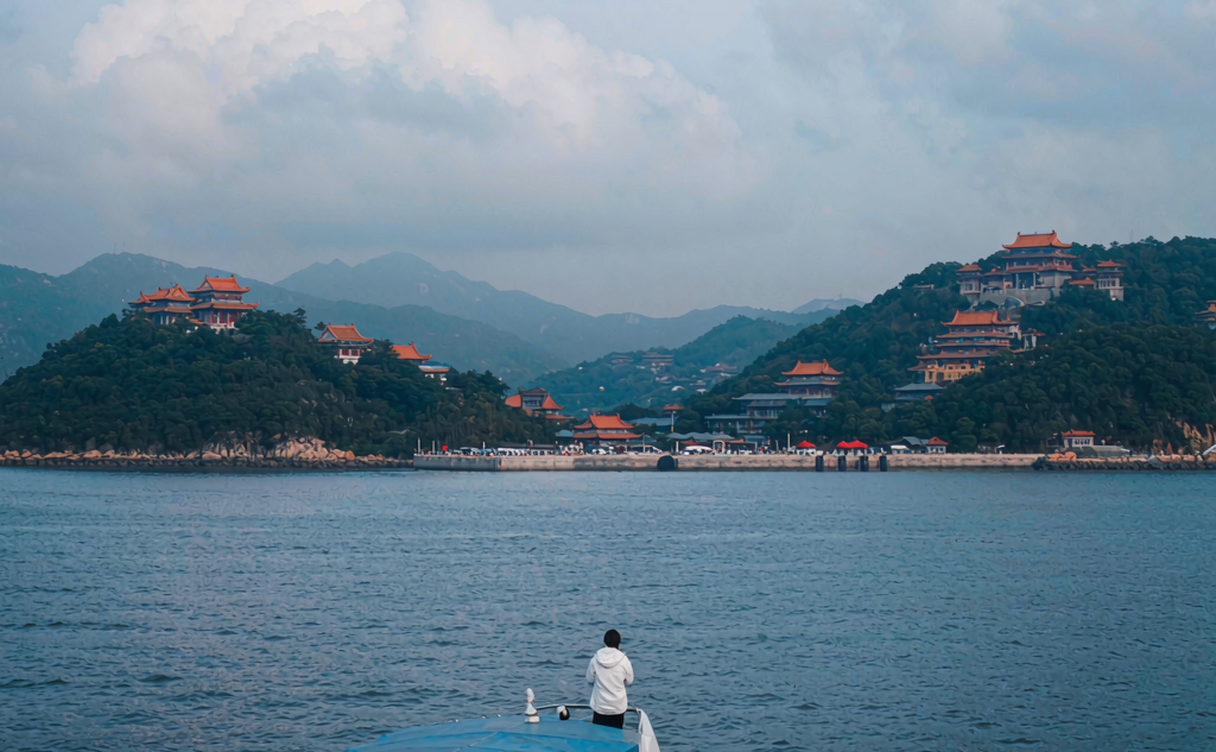
The Putuoshan ferry from Zhoushan is the backbone of the journey. Boats run frequently through the day from several terminals, including those on Zhujiajian and Shenjiamen. The crossing takes roughly fifteen to thirty minutes depending on the route, and tickets are cheap by international standards. Fast catamarans make the trip in minutes, while slower ferries let you stand on the deck and feel the salt wind.
Buy your return ticket early if you are visiting on a weekend or holiday. Same-day round trips are possible, but staying overnight is far better. The island after dark, with lanterns glowing along the temple paths and the sound of waves below, is the experience most travelers remember longest. Our Zhoushan travel guide covers the mainland terminals and where to eat while you wait for the boat.
Putuoshan Temples to Visit
The heart of any trip is the cluster of monasteries and shrines. There are more than thirty temples on the island, and listing Putuoshan temples to visit can feel overwhelming. Start with the three great temples, which between them hold the spiritual core of the site.
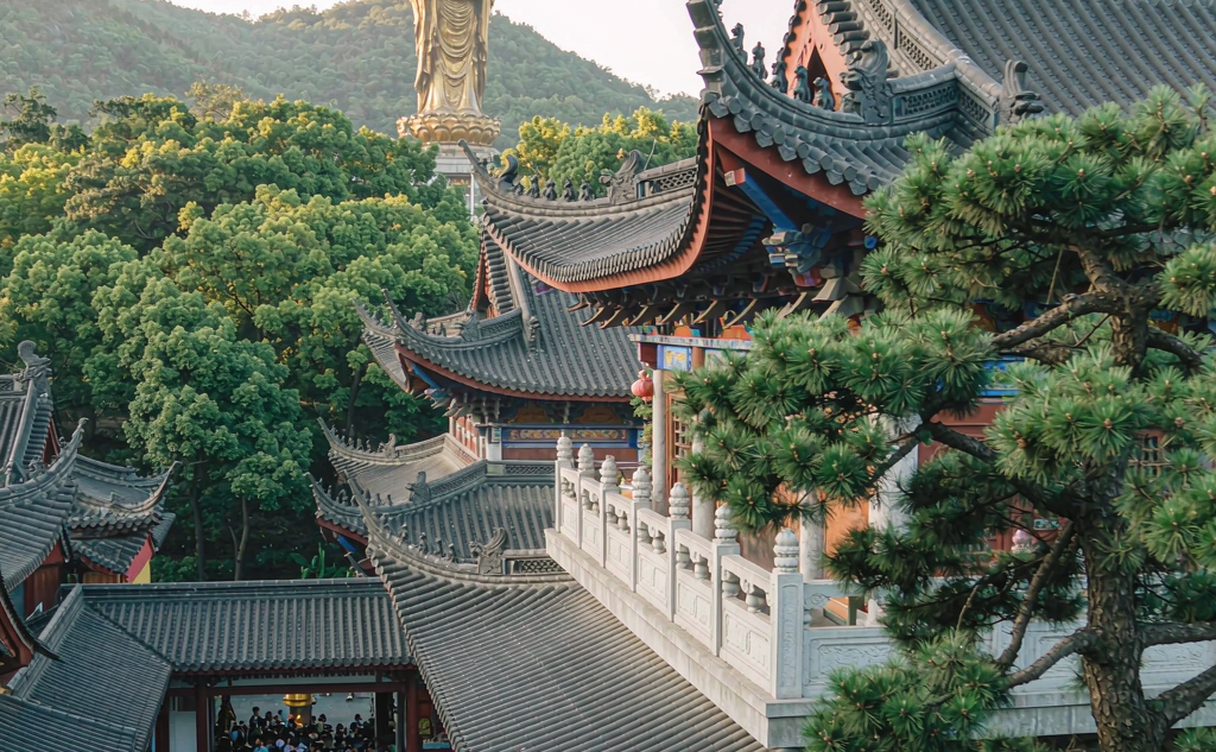
Puji Temple is the largest and most central. Its halls spread around a still lotus pond, and the morning chanting carries across the water. Fayu Temple sits higher on the hillside, reached by a long flight of stone steps, and feels more secluded. Huiji Temple crowns Foding Mountain at the summit, where a cable car or a steady climb delivers you to a quiet courtyard above the trees. Beyond these, the Nanhai Guanyin statue stands tall on the southern coast, a bronze figure overlooking the sea that has become the island’s defining image.
Smaller spots reward the curious. The Cave of the Tide Sound and the nearby rock formations draw those who like their spirituality mixed with a bit of geology. Monks still keep the daily routines at many temples, and visitors are welcome to watch the ceremonies, though photography inside the halls is discouraged out of respect.
Putuoshan Hiking Trails
You do not need to be devout to enjoy the paths. Putuoshan hiking trails wind through pine forest, along cliff edges, and between temples, and most are well maintained. A full loop of the island on foot is possible in a day if you start early, though a gentler plan is to tackle one ridge at a time.
The walk from Puji Temple up to Fayu Temple and on toward Huiji Temple is the classic route, partly paved and partly shaded by old trees. For coastal views, the southern trail past the Guanyin statue leads to quiet headlands where you can sit and watch fishing boats. Wear decent shoes; some steps are worn and can be slick after rain. Carry water in summer, when the humidity presses in.
Best Time to Visit Putuoshan
Weather shapes the trip more than most expect. The best time to visit Putuoshan is spring and autumn, when temperatures sit in the comfortable range and the skies are clearer. April through May brings mild days and blooming hillsides. September and October offer cool air and fewer crowds than the summer peak.
Summer is busy and hot, but the sea breeze keeps it bearable, and the island fills with a festival energy during major Buddhist dates. Winter is the quietest season, with bare branches and long, silver afternoons, though occasional storms can disrupt ferries. If you want solitude, aim for a weekday in the off-season and accept that some smaller temples may keep shorter hours.
Putuoshan Accommodation Tips
Staying on the island changes the experience. Putuoshan accommodation tips start with one rule: book ahead for holidays. Rooms range from simple monastery guesthouses, where you sleep close to the chanting and eat vegetarian meals, to comfortable hotels near the main pier. The monastery stays are basic but memorable, and the early bell is a fair trade for the atmosphere.
If you prefer more comfort or a lower price, you can base yourself in Zhoushan city and ferry over each morning. That works for day trips but costs you the evening calm. Wherever you stay, keep your luggage light, since you will likely walk from the pier to your room. Vegetarian food is the default near the temples, and it is surprisingly good, built around local seaweed, tofu, and the day’s vegetables.
Food, Culture, and Nearby Links
The island’s kitchens lean on the sea. Seaweed, small fried fish, and mountain vegetables appear at nearly every table. For a wider sense of the region’s flavors, our Zhejiang cuisine guide explains the sweet-and-savory style that defines the province’s cooking, much of it built on the same coastal catch you will taste here.
Putuoshan also sits within a rich corner of Zhejiang worth exploring further. If you enjoy sacred mountains, the Tiantai Mountain Zhejiang guide describes another important Buddhist site a few hours inland. Travelers with more time might pair the coast with the Wuyi Zhejiang travel guide, which covers the river scenery and hiking farther west. Each of these trips complements a few days on the island without much backtracking.
For background on the island’s religious significance, the overview at Wikipedia’s Mount Putuo page offers a useful summary of its history as a Guanyin pilgrimage center.
Practical Notes Before You Go
Bring cash for small temple donations and some ticket counters, though mobile payment works almost everywhere. Dress modestly when entering halls; shoulders and knees covered show respect. Incense is sold near the main gates, and a single stick burned with intention is the local custom, not the handfuls you sometimes see.
Plan two full days if you can. One day covers the three great temples and the southern statue; the second lets you hike, sit by the sea, and wander without a schedule. The island rewards slowness. Rushing it turns a retreat into a checklist, and you will miss the part that matters.
Planning a Zhejiang coastal trip? Download our free Zhoushan itinerary and pair Putuoshan with the best nearby islands. Start building your route today.
A Final Thought
Putuoshan is not a place that shouts. It works on you slowly, through the smell of incense, the slap of waves under a cliff, and the patience of people who have walked the same paths for generations. You may arrive for the temples and leave thinking about the silence instead. That, more than any single sight, is the island’s gift. Go with an open morning and no fixed plan, and let the ferries and the bells set your pace.
Want help booking the right ferry and temple stay? Contact our travel desk for a custom Putuoshan plan tailored to your dates and budget.
Whether you come as a pilgrim or a curious traveler, the island offers something rare on China’s busy coast: a chance to slow down without leaving the sea behind. Pack light, wear good shoes, and give yourself permission to do less. The best moments here are the unscheduled ones, found on a quiet step between two temples or on a rock at the island’s edge, watching the water go on forever.
Ready to explore more of Zhejiang? Browse our full collection of regional guides and start mapping the trip of a lifetime across the province’s mountains, cities, and shores.