

The bowl arrives deconstructed: a mound of pale noodles, one dark glossy spoonful of sauce sitting on top, and a fan of raw and blanched vegetables arranged around the rim. In a proper Beijing noodle shop nobody mixes it for you. You get chopsticks and a look that says get on with it, because the noodles have to be hot enough to loosen the sauce as you toss. Wait until the bowl stops steaming and the whole thing tightens into a claggy, salty mass — which is the first thing that separates a passable bowl of zhajiangmian from a great one.
Zhajiangmian (炸酱面) is the dish Beijingers treat as a birthright rather than a recipe. It is not banquet food and it was never meant to impress a visiting dignitary. It is what a family eats on a Tuesday, what a grandmother makes in a quantity that lasts three days, and what every household insists it does better than the house next door. Ask five Beijing cooks how to make it and you will get five firm, incompatible answers — usually about the sauce.
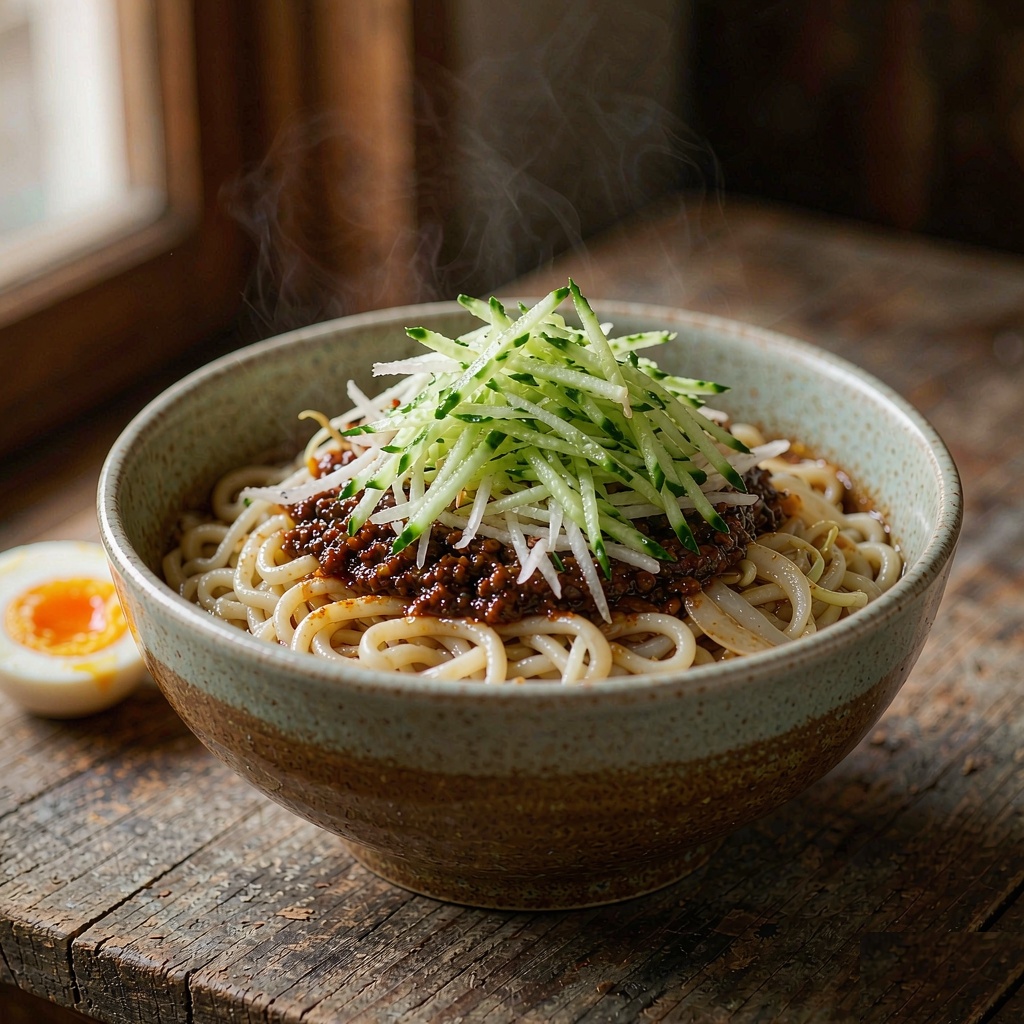
What Zhajiangmian Is — and Why “Fried Sauce” Is a Mistranslation
The English name, “fried sauce noodles,” sends people in the wrong direction. Nothing is deep-fried here, and the sauce is not a thin dressing poured over the top. Zha in this context means to stir-fry or roast in a wok, and jiang is fermented bean paste. So the dish is really “noodles with wok-cooked bean sauce,” and the sauce is the whole point.
A bowl has three parts that have to balance: the noodles, the zhajiang (the pork-and-bean-paste sauce), and the cai ma (菜码), the fresh and blanched toppings that cut through the salt and fat. Get the ratio wrong and you have either a dry pile of noodles or a salt bomb. The classic proportion in a home kitchen is roughly two heaped tablespoons of sauce per bowl of noodles, with the vegetables piled on generously — more than looks reasonable at first.
Its history is ordinary rather than imperial. Zhajiangmian grew up as northern Chinese home cooking, built around ingredients that kept through a Beijing winter: wheat flour, soybeans, salt, and a cut of pork. It spread through hutong kitchens and cheap noodle shops and remains tied to old Beijing (lao Beijing) rather than any restaurant dynasty — which is why it resists standardisation and offers no canonical version, only family ones.
What Zhajiangmian Tastes Like
The first impression is salt and deep fermented savouriness, followed quickly by a roundness that comes from the sweet bean sauce and a little sugar. Good zhajiang is not sharp. It tastes of toasted wheat and soy, with a faint sweetness at the back of the tongue and a long savoury finish. The pork should be diced small and cooked until the fat renders, so each spoonful carries tiny nuggets of meat rather than a heavy mince.
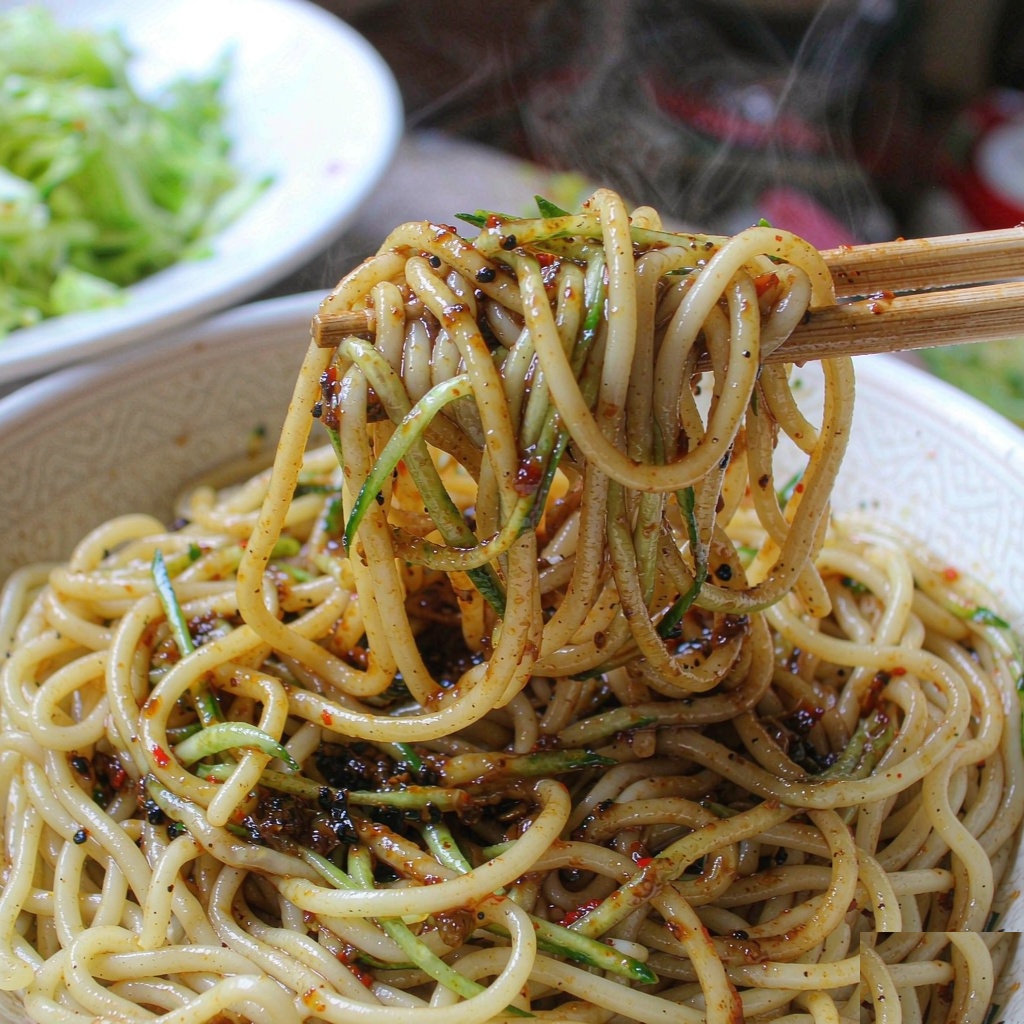
Then the toppings do their work. Cucumber and radish bring water and crunch, bean sprouts bring a green snap, and a squeeze of raw garlic or a splash of black vinegar lifts the whole bowl. The pleasure is in the contrast: dense, dark, salty sauce against cold, crisp vegetables against springy noodles. If the sauce is the melody, the cai ma is the reason it does not become monotonous by the tenth bite.
The Two-Sauce Question: Tianmianjiang vs Huangjiang
This is where Beijing families divide. Traditional zhajiang is built from two fermented pastes: tianmianjiang (甜面酱, a sweet wheat-and-soybean paste) and huangjiang (黄酱, a saltier yellow soybean paste). The ratio is the argument. A common older-Beijing proportion is equal parts of each, or two parts huangjiang to one part tianmianjiang for a saltier, more savoury result. Many younger cooks lean the other way, using mostly tianmianjiang for a sweeter, gentler sauce that suits modern palates and children.
Using only tianmianjiang gives you a glossy, almost jammy sauce that clings well but can taste one-dimensional. Using only huangjiang gives you the deep, slightly funky savouriness that older Beijingers expect, but it is easy to oversalt. If you are cooking this for the first time, start at one part huangjiang to two parts tianmianjiang and adjust after tasting. A teaspoon of sugar is not cheating — it rounds the edges — and a splash of Shaoxing wine added to the pork removes any porkiness before the paste goes in.
Zhajiangmian Ingredients: What You Need for Four Bowls
The list is short and cheap, which is part of the dish’s appeal. Amounts below are for four generous bowls.
- Noodles: 400–450 g fresh wheat noodles, or 300 g dried. Fresh, slightly thick wheat noodles give the best chew.
- Pork: 250 g pork belly, skin off, diced into small 5 mm cubes. Shoulder works if you want it leaner.
- Pastes: 3 tablespoons tianmianjiang and 2 tablespoons huangjiang, mixed with 4 tablespoons water so they loosen before they hit the wok.
- Aromatics: 3 slices ginger, 2 spring onions (white parts for the wok, green parts to finish), 1 star anise (optional but traditional).
- Seasoning: 1 tablespoon Shaoxing wine, 1 teaspoon sugar, 2 tablespoons neutral oil. No extra salt at the start — the pastes are already salty.
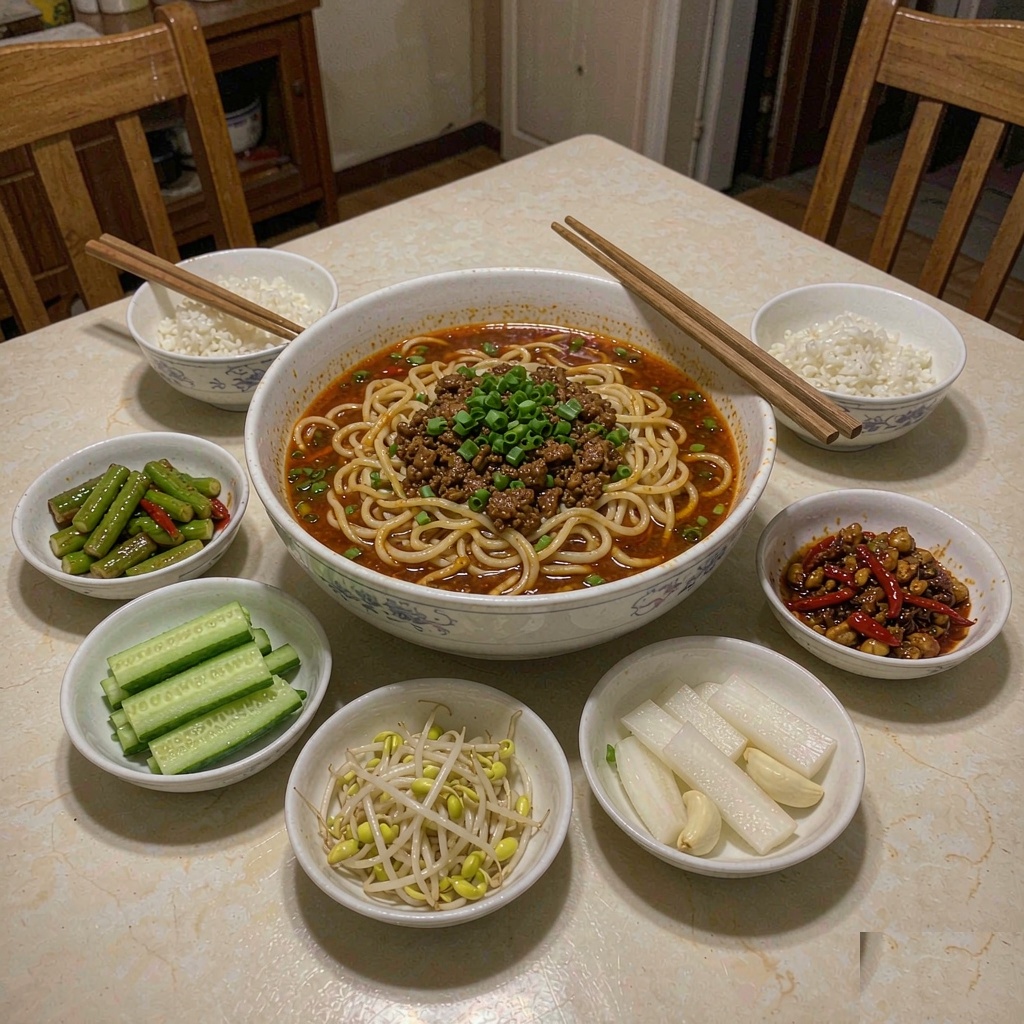
- Cai ma: 1 cucumber and a piece of white radish, both julienned; a handful of bean sprouts, blanched for 30 seconds; a small bowl of shelled edamame or soybeans; optionally shredded celery or cabbage, blanched.
Both pastes are sold in jars in Chinese groceries and keep for months in the fridge. If you can only find one, tianmianjiang is the more forgiving choice.
How to Make Zhajiangmian at Home, Step by Step
The method is not difficult, but it is patient. The sauce needs a long, low simmer and near-constant stirring, and that is the step most home cooks rush past.
- Dice the pork small. Cut the belly into 5 mm cubes. Smaller than you think — large chunks make the sauce greasy and heavy.
- Render the fat. Heat the oil in a wok over medium heat, add the pork, and cook for 6–8 minutes until the fat has run out and the cubes are lightly golden at the edges. Do not let them crisp hard.
- Add aromatics. Add ginger, the white parts of the spring onion, and the star anise. Stir for 30 seconds until fragrant, then splash in the Shaoxing wine and let it cook off.
- Pour in the loosened pastes. Add the mixed tianmianjiang and huangjiang with their water. Stir constantly. The sauce will darken and start to bubble gently.
- Simmer low and long. Turn the heat to low and cook for 25–40 minutes, stirring every few minutes so the bottom does not catch. Add a splash of hot water if it tightens too much.
- Watch for the oil separating. The sauce is ready when the oil pools at the edges and the paste looks glossy rather than grainy — Beijing cooks call this oil-and-sauce separation, and it is the signal to stop. Stir in the sugar in the last five minutes.
- Cook the noodles. Boil in well-salted water until just tender with a little bite. Drain, and either serve straight from the pot hot (guo tiao’er) or rinse briefly in cold water (guo shui) on a hot day.
- Assemble and toss immediately. Noodles in the bowl, two heaped spoons of sauce on top, cai ma around the rim. Toss hard for ten seconds before the first bite. Add vinegar or raw garlic at the table, not in the kitchen.
The most common home mistake is a sauce too thick and too salty — usually because the pastes went in dry. Loosen with water first, taste before adding salt, and remember the sauce thickens as it cools.
The Noodles Themselves
Beijing shops often use hand-pulled or hand-cut wheat noodles, and the chew matters more than the shape. What you want is a noodle sturdy enough to hold a heavy sauce without turning to paste. Fresh Chinese wheat noodles from the refrigerated section are the best supermarket option; dried noodles work if you undercook them by about thirty seconds and rinse them well. Instant ramen is the wrong texture entirely — too curly and too soft. If you want a wider tour of how Chinese noodles differ by region, our guide to Chinese regional noodle styles covers the main families.
There is also a seasonal logic: in winter the noodles are served hot and unrinsed so the sauce stays fluid, while in summer they are rinsed cold to firm them up. The same recipe eats completely differently in January and July, and both are correct.
Best Zhajiangmian in Beijing — and How to Order It
In Beijing the dish is everywhere from six-table hutong shops to chain noodle restaurants, and the best bowls tend to be the least decorated. Look for a shop where the cai ma is cut fresh to order rather than sitting pre-shredded in trays, and where the sauce is dark and glossy rather than pale. A bowl typically costs 15–30 RMB in a small shop and 25–45 RMB in a sit-down restaurant, which makes it one of the cheapest proper meals in the city.
When you order, you will often be asked whether you want the noodles rinsed cold or served hot — answer honestly, because it changes the texture. Some shops also offer extra sauce or extra cai ma for a small charge; asking for more vegetables is normal and not fussy. If you are building a day of eating around the city, our Beijing food guide puts zhajiangmian in context with the city’s other everyday dishes.
Who It Suits — and Who Should Adjust It
Zhajiangmian suits anyone who likes savoury, fermented flavours and does not mind a dish built on wheat and pork. It is filling, cheap, and easy to scale for a family, and it is a good entry point for visitors who find some regional Chinese food too spicy or sour — there is no chili heat in the base recipe, only what you add at the table.
It is less suitable for a few groups. Anyone watching sodium should use less huangjiang and more tianmianjiang, and skip the extra salt entirely. People avoiding gluten need to know that both the noodles and the pastes contain wheat, so a gluten-free version requires rice noodles and a different sauce base. Those avoiding pork can substitute mushrooms or firm tofu, though the result is a different dish rather than a like-for-like swap. And because the sauce is rich, a large bowl with fatty belly pork can run well past 650 calories, so portion size matters more than any single ingredient.
Family and Regional Variations
Within Beijing, the variations are mostly about the sauce ratio, the cut of pork, and which vegetables are in season. Spring brings shredded toon shoots (xiangchun), a strong, aromatic leaf that Beijingers treat as a delicacy; winter leans on cabbage and radish. Some families add diced dried shrimp or a little fermented bean curd for extra depth, and versions outside the city run sweeter and thicker.
The most famous cousin is Korean jajangmyeon, which descended from the same idea but diverged sharply: it uses chunjang (a dark, slightly caramelised black bean paste), stir-fries it with onion and often pork or seafood, and serves it without the raw vegetable toppings. The result is sweeter, saucier, and milder than Beijing zhajiangmian. They are related, but ordering one expecting the other leads to disappointment in both directions.
One more piece of context for travellers: zhajiangmian is a lunch or dinner dish, not a breakfast. Beijing mornings run on a completely different set of foods — soy milk, fried dough sticks, and fermented mung-bean drinks — which our Beijing breakfast notes explain if you want to eat the city the way locals actually do.
Frequently Asked Questions About Zhajiangmian
Is zhajiangmian healthy, and how many calories are in a bowl?
It is a balanced everyday dish rather than a health food. A standard bowl with pork belly and a normal amount of sauce comes to roughly 500–650 calories, depending on how much oil the sauce carries and how many noodles you serve. Using leaner pork, less oil, and a higher proportion of vegetables brings that down; doubling the sauce pushes it up quickly.
Can I make zhajiangmian vegetarian or vegan?
Yes, and it is a common home variation. Replace the pork with finely diced shiitake and king oyster mushrooms, or with firm tofu pressed and crumbled, and add an extra teaspoon of sugar to compensate for the missing pork richness. Check the paste labels — most tianmianjiang and huangjiang are plant-based, but a few include fish or meat derivatives. Use wheat noodles and the dish is vegan.
What is the difference between zhajiangmian and Korean jajangmyeon?
They share a name root and a concept but not a flavour. Zhajiangmian uses tianmianjiang and huangjiang with diced pork and a spread of raw and blanched vegetables; jajangmyeon uses chunjang stir-fried with onion, is sweeter and saucier, and usually has no vegetable toppings. The Korean noodles are thicker and chewier, so do not expect the two to taste alike.
Do I have to use pork belly?
No. Pork shoulder gives a leaner sauce with less rendered fat, and many home cooks use it. The trade-off is a slightly drier, less silky result. If you use lean pork, add an extra tablespoon of oil and cook it a little more gently so it does not toughen.
How do you eat zhajiangmian properly?
Toss it immediately, while the noodles are hot, so the sauce loosens and coats every strand. Do not stir in all the cai ma at once if you want to keep some crunch — many Beijingers mix half in and leave the rest on the rim to add as they eat. Finish the bowl while it is warm.
What noodles should I buy outside China?
Look for fresh Chinese wheat noodles in the refrigerated section, or a good dried wheat noodle with a firm bite. Avoid instant ramen and very thin vermicelli, which cannot carry the sauce. If you only have dried noodles, cook them a fraction under the packet time and rinse them briefly so they stay springy; our notes on Chinese noodle varieties help match the right shape to the dish.
Zhajiangmian is one of those dishes that rewards doing less, not more. A short list of cheap ingredients, one long slow simmer, and a bowl tossed the moment it reaches the table will beat any restaurant version built on shortcuts. The arguments about the sauce ratio will continue in Beijing households indefinitely, and that is fine — the disagreement is part of the recipe.