

The first Peking duck I ate in Beijing, China was at a centuries-old roast house near Qianmen, and the waiter carved the skin tableside into exactly 108 slices. That ritual — crisp amber skin, a swipe of sweet bean sauce, a scallion baton, all folded into a warm pancake — is why any Beijing food guide has to open with duck, even though the city gives you far more than one bird.
Peking duck pricing confused me on my first visit. Tourist palaces like Quanjude charge RMB 298–398 for a whole duck (half portions RMB 168–218), while the more beloved Bianyifang and neighborhood kaoyaya shops serve a comparable bird for RMB 168–238. My advice: book a duck house that carves in front of you and order the rong (a soup made from the carcass) as a follow-up course for RMB 20–30. The best Peking duck where to eat question has one honest answer — go where locals queue, not where the bus tours stop. I once followed a grandfather into a Hongqiao-side shop and paid RMB 178 for a duck that beat a RMB 360 one I ate the next night near Wangfujing.
Beijing noodles deserve equal space. Zhajiangmian, fermented soybean paste over wheat noodles with raw cucumber and bean sprouts, costs RMB 18–28 at a hutong spot and is the city’s everyday comfort. I ate a memorable bowl for RMB 22 at a retired cook’s shop in the Dongsi lanes, where the paste was dark, funky, and unmistakably homemade. Then there is jianbing, the breakfast crepe of egg, crispy cracker, and savory sauce folded around a griddle, sold from carts for RMB 7–12 — the cheapest great bite in the capital, and the one I still crave most. A third staple, douzhi, a fermented mung-bean drink with pickled vegetables, is an acquired taste I never quite acquired, but try it once for RMB 6 to say you did.
The hutongs are where Beijing hutong food comes alive. Behind the Forbidden City’s northern wall, the alleys hide menzi (mung-bean jelly), candied hawthorn skewers (bingtang hulu, RMB 5–10), and lamb skewers (yangrou chuan, RMB 3–6 each) grilled over charcoal until midnight. On my second trip I joined a hutong food walk where the guide, a Beijinger, explained that the city’s cuisine is Mandarin court food layered over northern nomad grilling — which is why you taste both delicate and smoky in a single evening. For a wider lens on the country’s highlights, our best things to do in China guide pairs Beijing’s kitchens with the rest of the map.
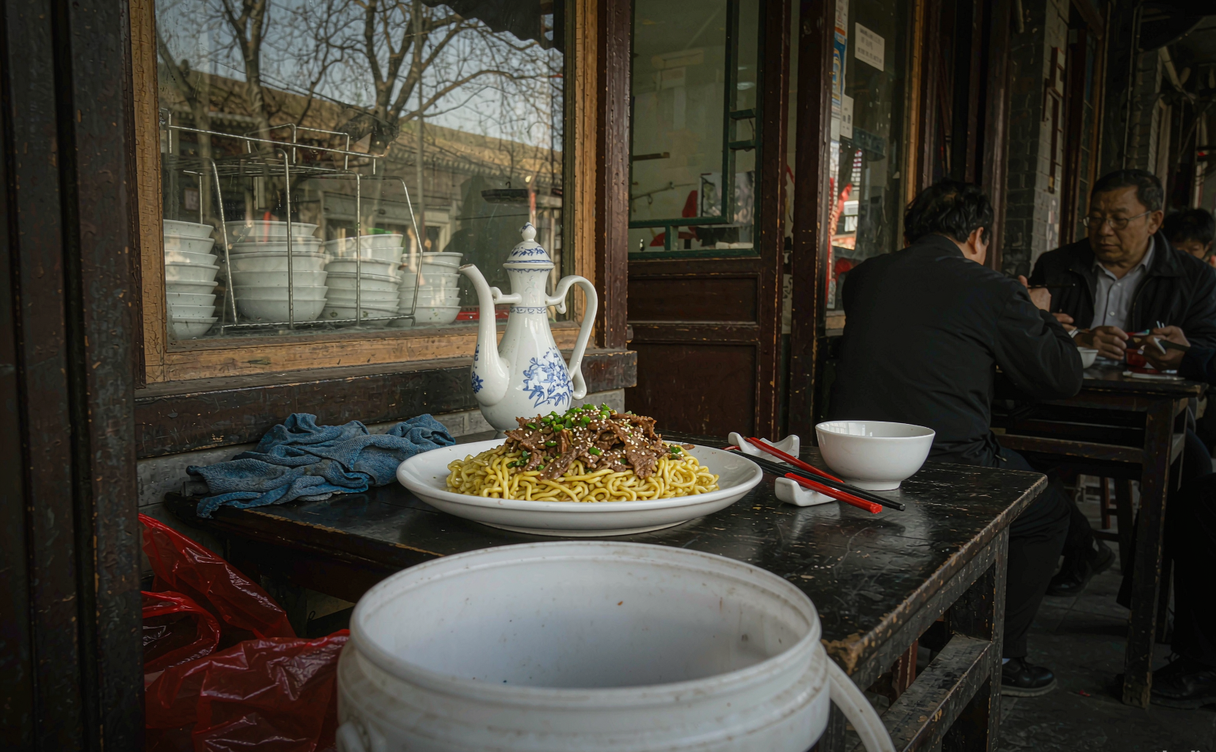
Regional logic helps you order. The court tradition gives you duck, manhan quancheng (the Manchu-Han banquet, now mostly a museum piece), and refined dim sum at old tea houses. The northern nomad layer gives you lamb, cumin, and the grill. And the migrant wave of the last thirty years added Sichuan, northeastern, and Hui Muslim cooking, so a single hutong can serve hand-pulled noodles, hotpot, and halal barbecue within a hundred meters. I plan my Beijing eating by mood: duck for ceremony, noodles for speed, skewers for a night out.
Getting around to eat is simple. The Beijing subway (RMB 3–9 per ride) drops you steps from most food streets, and DiDi rides across town run RMB 25–45. A multi-city food trip is easy by rail; our foreigner high-speed train guide explains ticket pickup with a passport and which apps actually work for a visitor. The best seasons for Beijing food are spring (April–May) and autumn (September–October), when hutong strolls are comfortable; summer is sweltering and winter duck tastes best but the alleys get icy underfoot. I avoid August, when the grill smoke just adds to the humidity.
Vegetarians eat well if they plan ahead. Temple-of-Heaven-area Buddhist restaurants serve mock-meat banquets (RMB 60–120 per person), and di san xian appears citywide. Payment is mobile-first: Alipay and WeChat Pay dominate, so set up a tourist wallet before you arrive or carry cash for the smallest stalls. First-timers should read our China first-timer travel guide for ordering tips that saved me from a peanut-butter “duck” mistake on trip one — I pointed at the wrong character and got a condiment plate instead of a main.
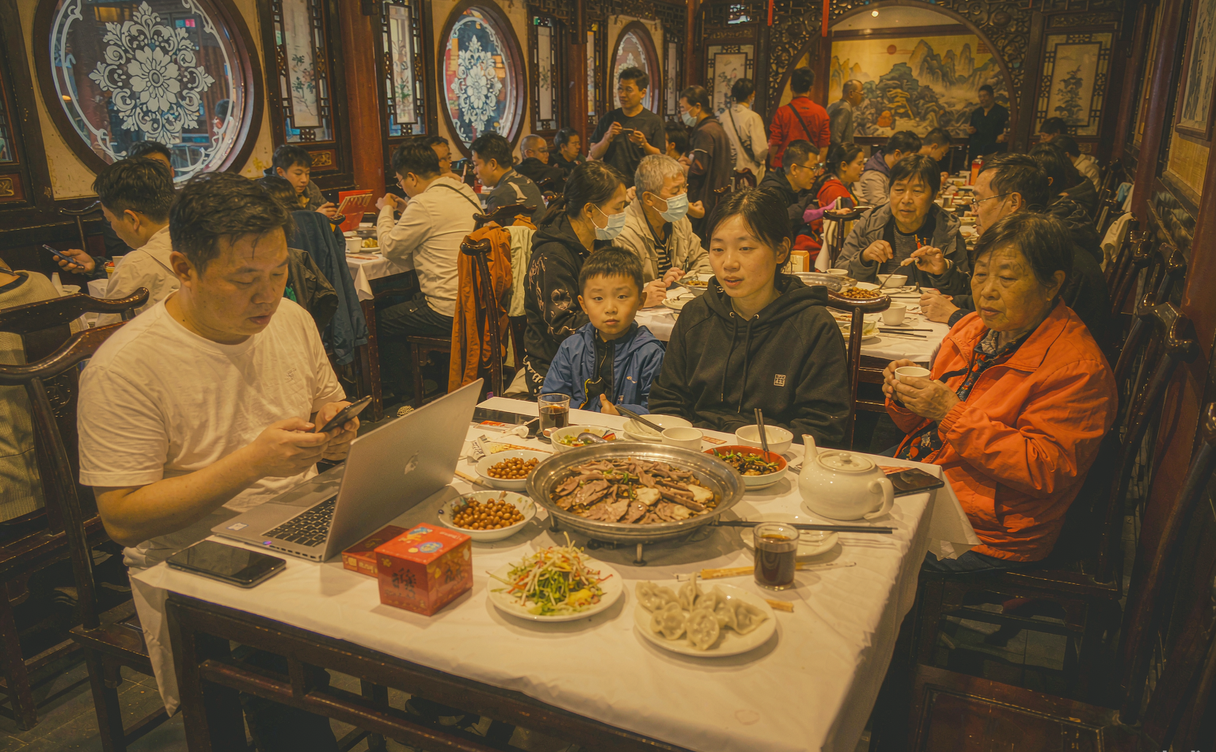
Beyond the hutongs, I grew fond of the city’s working edges where office crowds queue for braised pork rice sets (RMB 25–35) and where northeastern and Korean influences show up as cold noodles and pickled cabbage. For a calmer duck experience, the southern Qianmen restoration zone hides smaller roast houses that book out weeks ahead in autumn, and the wait is shorter than at the famous names.
My worst Beijing meal was also my funniest. I followed a friendly “local” into a tea house off Wangfujing and three hours later owed RMB 880 for leaves I could not name. I paid, laughed, and learned to never let a stranger choose the venue. The rule since: if you did not pick the door, you do not sit at the table.
Budgets spread wide here. A duck-house dinner runs RMB 200–400 per person with wine; a noodle-and-jianbing day costs RMB 40–60; a hutong skewer crawl with beer lands around RMB 80–120. My favorite cheap splurge is a hotpot in a变了 neighborhood like Fangzhuang, where RMB 120 feeds two with more lamb than you can finish. Watch the “tea ceremony” scam near Qianmen, where a friendly local invites you to a private tasting that ends in a RMB 800 bill — politely decline and pick your own crowded, priced menu instead.
The best Beijing dishes — duck, zhajiangmian, jianbing, lamb skewers — share a northern directness: hearty, wheat-led, and built for cold air and long conversations. I have come to think of Beijing, China as a city you eat with your hands and your scarf on, duck fat warming you against the wind off the plateau. The courtly refinement is real, but the street is where the city actually feeds its people.
Save room for the sweet endings. A bowl of shuangpi nai (double-skin milk custard, RMB 12–18) from a Nanluoguxiang shop is the city’s gentlest dessert, and lvdagun (glutinous rolls in soybean flour) costs RMB 8 at the old snack counters. I finished most Beijing nights with a warm soy milk (RMB 5) from a corner cart rather than a bar — the city winds down early outside the nightlife districts, and the quiet walk back through a lit hutong is its own kind of treat. Tea, not coffee, is the local default; a pot of jasmine in a tea house runs RMB 30–60 and comes with free refills and a front-row seat to the life of the lane.
One caution worth repeating: avoid the first week of October, China’s National Day holiday, when Beijing swells with domestic travelers and duck houses quote two-hour waits. Late September or early November gives you the same crisp weather with a tenth of the crowd — the single scheduling tip I wish someone had handed me before trip one, and the reason I now book my duck a day ahead even in the quiet months.
For the deeper history of the capital’s cooking, the encyclopedia entry on Beijing cuisine at Wikipedia traces the imperial and northern influences behind every dish above. My own rule after four visits: skip the airport-adjacent duck chains, wander a hutong after dark, and let the charcoal lead. Beijing, China rewards the hungry wanderer far more than the seated tourist.