

Most foreign visitors to Zhejiang head straight for the West Lake in Hangzhou and never learn that the province holds one of the most important Buddhist sites in East Asia. Tiantai Mountain (天台山), in the eastern part of the province, is the birthplace of Tiantai Buddhism — the school of thought that spread from here to Japan and Korea more than a thousand years ago. It is also a genuine mountain landscape, with cloud-wrapped ridges, cold streams, and quiet temples that still function as working monasteries rather than museums. This Tiantai Mountain guide covers how to get there, what to see, and how to make the most of a one- or two-day visit.
The mountain sits in Tiantai County, administered by the city of Taizhou. Despite the name, “Tiantai” refers to a range rather than a single peak, and the sights are scattered along a valley road that climbs from the county town into the hills. The main draw is Guoqing Temple, founded in 598 AD and considered the ancestral temple of the Tiantai school. But the area rewards slower travel: waterfalls, a famous cliffside path, and smaller temples where you can sit and listen to the wind in the bamboo.
Getting to Tiantai Mountain
The practical starting point for almost every visitor is Taizhou, the nearest city with an airport and a high-speed rail station. From Taizhou, a bus or taxi takes you to Tiantai County (about 1.5 to 2 hours by road). If you are already in Hangzhou, you have two reasonable options. The slower but simpler one is the direct long-distance bus from Hangzhou; the faster one is the high-speed train to Tiantai Mountain Station, which opened as part of the rail expansion and put the mountain within easy reach of both Hangzhou and Shanghai. Trains from Hangzhou take roughly an hour, and from Shanghai around two and a half to three hours with a transfer.
Once in Tiantai County, local buses run up the mountain valley, but they are infrequent and the stops are not always obvious to first-time visitors. Most foreigners find it easier to use a rideshare app like DiDi or to hire a driver for the day, since the temples and trailheads are spread out and walking between them is not realistic. If you plan to arrive by train, note that “Tiantai Mountain Station” and the mountain scenic area are not the same place — budget another 30 to 45 minutes of road transfer.
This is the kind of trip where knowing the rail system helps. Our China high-speed train guide for foreigners walks through booking tickets, reading station names, and avoiding the common mix-ups that waste a day.
Guoqing Temple: the heart of the mountain
A Guoqing Temple guide has to start with the building itself, but the real story is the institution. The temple was founded by Master Zhiyi, the monk who systematized Tiantai Buddhism, and it has been continuously active for over fourteen centuries. The Sui dynasty pagoda in front of the gate is one of the oldest brick pagodas in China and is worth the walk down the lane to see it properly. Inside the complex, the halls follow the standard layout, but the atmosphere is different from the heavily restored temples in bigger cities. Monks still chant here, and the surrounding rice fields and stream give it a grounded, rural calm.
Allow at least two hours. The entry lane alone, lined with old trees and small stupas, sets the tone before you reach the main gate. Photography is allowed in the open courtyards but be respectful in the halls. If you arrive early in the morning, you may catch the monks at morning practice — a rare thing to witness in China’s more commercialized religious sites.
Hiking and the Shiliang (Stone Beam) waterfall
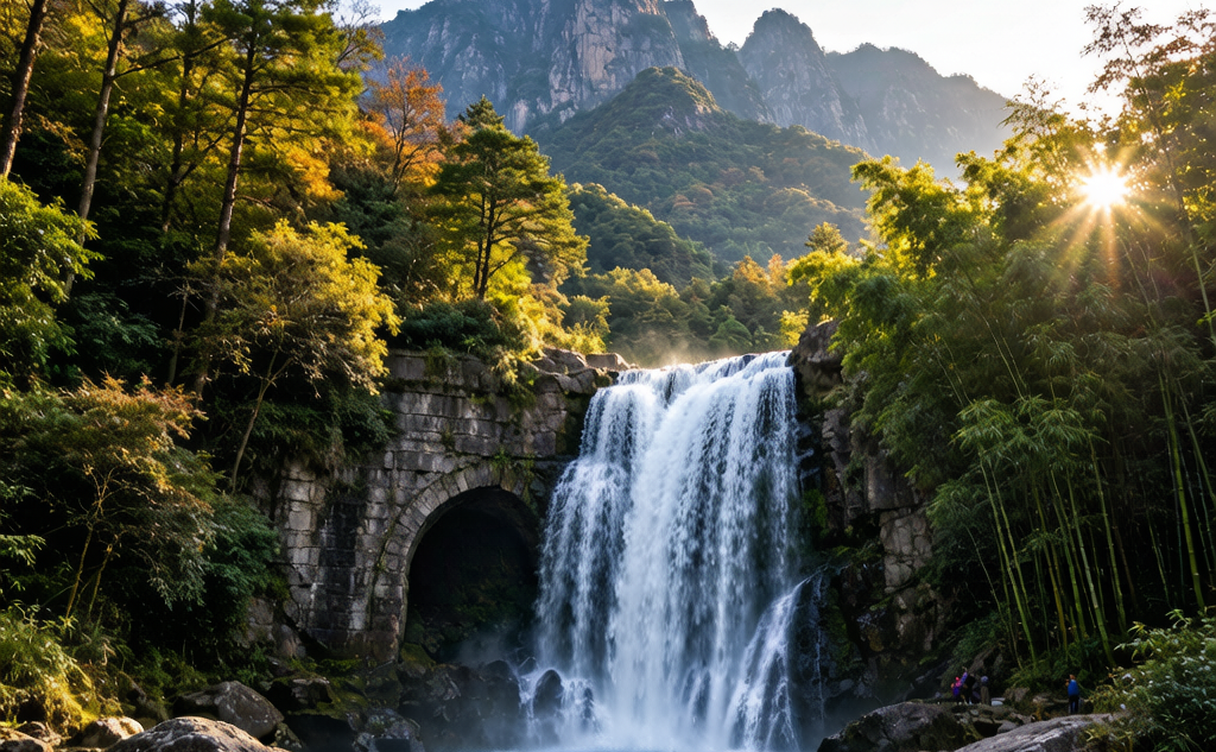
Tiantai Mountain hiking is not about bagging a summit. The trails are modest by Sichuan or Yunnan standards, and that is part of the appeal. The best-known walk leads to Shiliang Waterfall, where a stream pours through a natural stone arch — the “stone beam” that gives the spot its name. The path is well maintained, with stone steps and railings, and takes around an hour each way from the nearest drop-off point. It is shaded and cool even in summer, which makes it a good choice on a hot August afternoon.
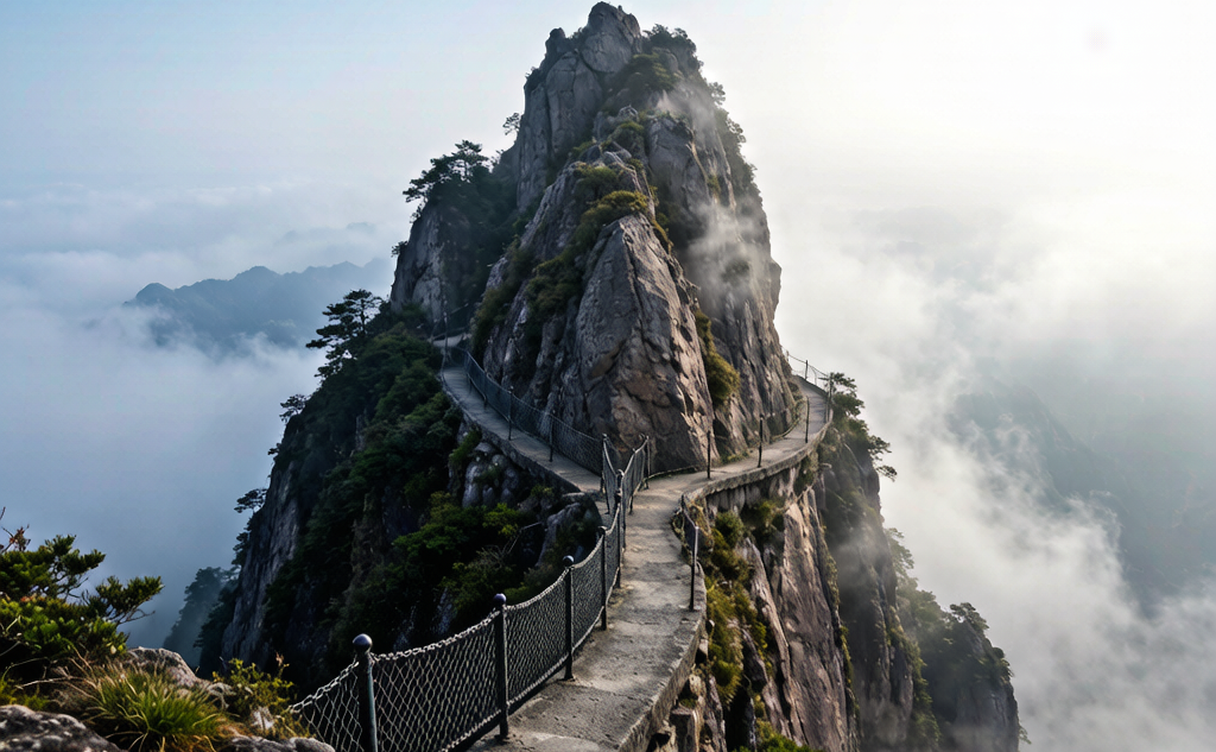
A second, quieter trail climbs toward Huading (the flower-top) peak, highest in the range, known for azalea blooms in late spring and for the Huading Temple nestled in the clouds. On clear days the views stretch across the surrounding hills; on misty days the temples emerge from the fog in a way that explains why monks chose this place to meditate.
Best time to visit and what to expect
The best time to visit Tiantai Mountain is spring (April to May) and autumn (October to November). Spring brings fresh green and the Huading azaleas; autumn gives clear air and comfortable hiking temperatures. Summer is hot and humid at lower elevations but pleasant in the shaded valleys, and it is also the busiest season for domestic tourists. Winter is cold and quiet, with occasional snow on the higher ridges — beautiful if you have the place to yourself, but check that temples and roads remain open.
Crowds are manageable compared with Hangzhou or Suzhou. Weekdays are noticeably calmer than weekends, and an early start (before 9 am) lets you see Guoqing Temple in peace. Bring cash for small temple donations and snacks, though most ticket offices now accept mobile payment.
Where to stay and eat
Tiantai County town has a range of hotels from basic to comfortable, and it makes a sensible base if you want an early start at the mountain. A handful of guesthouses near Guoqing Temple offer a quieter, more atmospheric stay, though facilities are simple. Vegetarian temple food is a highlight — many visitors eat at the small restaurants around Guoqing, where the “Tiantai vegetarian feast” uses local mountain vegetables and tofu in surprisingly creative ways.
If your wider trip includes the provincial capital, our Hangzhou travel guide covers where to stay and how to fit day trips like this one into a longer itinerary. And for a broader frame, the Taizhou Zhejiang travel guide explains what else the city and its coast offer beyond the mountain.
A note on the temple stay
Tiantai is a good place to experience monastic rhythm without the language barrier being a big problem, because the setting speaks for itself. While full ordination-style retreats are not generally open to casual visitors, some nearby temples offer simple overnight stays or morning chanting that foreigners can join respectfully. Our China temple stay guide goes into the etiquette and booking realities in more detail.
Practical tips before you go
- Buy tickets online in advance where possible; the official scenic area uses Chinese platforms, but your hotel can often help.
- Wear proper shoes — the Stone Beam path is wet and slippery in places.
- Download an offline map; mobile signal weakens in the valleys.
- Combine Tiantai with nearby Taizhou or a Hangzhou stop rather than treating it as a standalone trip, since the transfer times add up.
For travelers pulling together a first China itinerary, our best things to do in China list places Tiantai among the quieter, more rewarding cultural stops away from the headline cities.
The Tiantai school’s influence is documented well beyond the mountain. For historical context on its founder and spread across Asia, the Encyclopaedia Britannica entry on Tiantai is a solid, neutral reference.
Final thought
Tiantai Mountain will not wow you with scale. What it offers is continuity — a living tradition, a working monastery, and a landscape that has drawn seekers for fifteen hundred years. If you are the kind of traveler who would rather stand in an old courtyard listening to chanting than queue for a cable car, this is one of Zhejiang’s best-kept secrets. Give it a full day, arrive early, and let the mountain set the pace.