

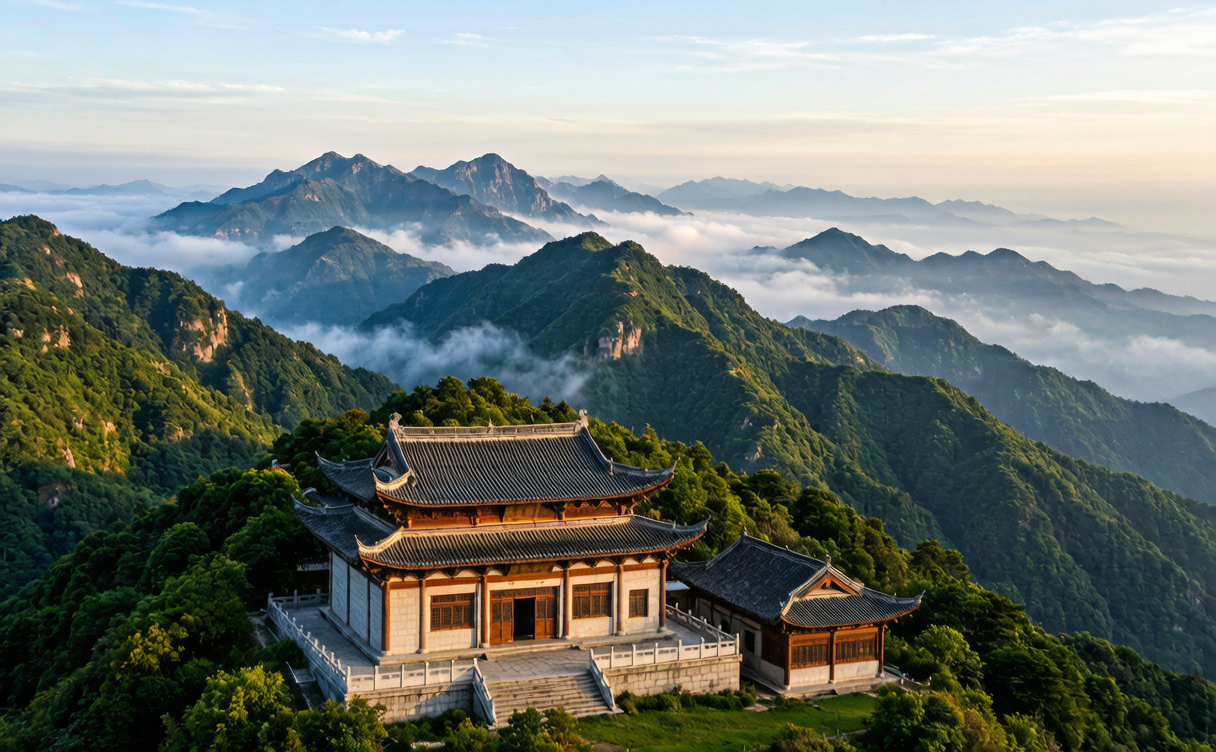
On a wet April morning at Guoqing Temple the only sounds are water running off camphor leaves and an elderly monk sweeping the same three metres of flagstone he has swept for years. There are maybe eleven other people here. This monastery was founded in 598 AD, it is the mother house of a school of Buddhism that later spread to Japan and Korea, and it costs five yuan to enter. Ninety minutes down the expressway, cliffs three hundred metres high drop into a valley crossed by glass walkways. This Taizhou travel guide is about a prefecture with all of Zhejiang’s scenery and almost none of its crowds.
First, the Name Problem
There are two Taizhous. Taizhou in Zhejiang (台州, Tāizhōu, first tone) is the coastal prefecture in this guide. Taizhou in Jiangsu (泰州, Tàizhōu, fourth tone) is a different city 500 km north, near Yangzhou. In English they are spelled identically, so book the wrong ticket and you will discover this at 300 km/h. Always add “Zhejiang” when searching.
What Taizhou Actually Is
Taizhou is less a city than a scattered prefecture of nine districts and counties across 9,400 square kilometres, from 1,100-metre peaks in the west to a chewed-up coastline of islands and fishing harbours in the east. The urban core — Jiaojiang, Huangyan and Luqiao — is a prosperous manufacturing centre with very little to see. Everything worth travelling for is 40 to 120 minutes out of it, so pick two bases rather than trying to do it all from one hotel.
Best Time to Visit
Late March to May — the best season. 15–25°C, tea terraces greening, and the azaleas on Huading Peak peaking from late April to mid-May. Book around the 1–5 May holiday.
Mid-June to early July — the plum rains (梅雨, méiyǔ). Three to four weeks of grey drizzle and 90% humidity. Trails turn slick and sea views vanish. Do not plan a Taizhou trip in this window.
July to September — hot and risky. Coastal highs of 30–36°C with heavy humidity, and this is the most typhoon-exposed stretch of the Chinese mainland. Storms make landfall most summers, closing ferries, scenic areas and occasionally the rail line. Keep the schedule loose. The compensation is that Tiantai and Xianju run 5–8°C cooler than the coast.
October and November — my quiet favourite. Clear, dry, 15–25°C, and the Huangyan tangerine harvest fills every roadside stall. Our China seasons guide has the national picture.
December to February. 4–12°C, damp, no heating south of the Yangtze. Bearable but bleak.
How to Get There
Taizhou sits on the Hangzhou–Shenzhen high-speed corridor and is far easier to reach than its low profile suggests.
| From | Mode | Duration | Cost |
|—|—|—|—|
| Hangzhou East → Taizhou | High-speed rail | 1 hr 20 min | ¥103 (US$15) |
| Shanghai Hongqiao → Taizhou | High-speed rail | 2 hr 30 min | ¥199 (US$28) |
| Ningbo → Taizhou | High-speed rail | 50 min | ¥65 (US$9) |
| Wenzhou South → Taizhou | High-speed rail | 45 min | ¥55 (US$8) |
| Beijing South → Taizhou | High-speed rail | 6 hr 30 min | ¥660 (US$93) |
| Taizhou Station → Luqiao and the airport | Metro Line S1 | 35 min | ¥6 (US$0.85) |
| Taizhou Station → Linhai old town | Bus 901 | 40 min | ¥5 (US$0.70) |
| Taizhou Station → Tiantai | Coach | 1 hr 15 min | ¥30 (US$4.20) |
Tiantai and Linhai have their own stations on the same line, so check which is nearest your target before booking — “Taizhou Station” is in Huangyan, not the old city. Taizhou Luqiao Airport (HYN) is domestic only; international arrivals come via Hangzhou or Shanghai.
Taizhou Travel Guide to the Five Places Worth Your Time
Tiantai Mountain and Guoqing Temple
The single most significant thing in the prefecture. Guoqing Temple (国清寺) was completed in 598 and became the seat of the Tiantai school of Buddhism founded by the monk Zhiyi; Japanese Tendai and Korean Cheontae both trace their lineage to this valley, and pilgrim groups still arrive by the coachload. Entry ¥5 (US$0.70), open 07:00–17:00. It is a working monastery, not a museum — go early and keep your voice down.
Elsewhere on the mountain: Shiliang Waterfall (石梁飞瀑), where a natural stone beam spans the gorge above the drop, ¥60 (US$8.50); Qiongtai Fairy Valley, a two-hour ravine walk, ¥65 (US$9); and Huading Peak at 1,098 metres, ¥50 (US$7), with the azalea forest that draws the May crowds.
Shenxianju in Xianju County
If you only do one outdoor day, do this one. Shenxianju (神仙居) is a bowl of vertical rhyolite columns strung with clifftop boardwalks, suspension bridges and a glass-floored walkway pinned to a sheer face. Entry ¥110 (US$15); ropeway ¥60 up, ¥50 down. Allow five to six hours and take the cable car — the 1,200-step climb is pointless.
Linhai Ancient City
Linhai (临海) was the prefectural capital for 1,300 years and still has the walls to prove it. The Taizhou Prefecture City Wall, six kilometres of Ming rampart running along a ridge above the river, is locally called the Jiangnan Great Wall — the general Qi Jiguang drilled troops here in the 1550s while fighting coastal raiders. Tickets ¥65 (US$9), 08:00–17:00; the main restored section takes about 90 minutes to walk.
Below it, Ziyang Old Street (紫阳古街) runs 1,080 metres through grey-brick shophouses and is free. Unlike the sanitised old towns of the Yangtze delta, this one still sells hardware, funeral supplies and cheap noodles to residents.
Shitang and the Wenling Coast
Shitang (石塘) is a fishing village built entirely of stone blocks stacked up a headland, and where mainland China’s first sunrise of the year 2000 was recorded. Free, no gate, best at dawn. Nearby Changyu Dongtian (长屿硐天), ¥85 (US$12), is a complex of cathedral-sized caverns left by 1,500 years of slate quarrying; concerts are staged inside and the acoustics are extraordinary.
Dachen Island
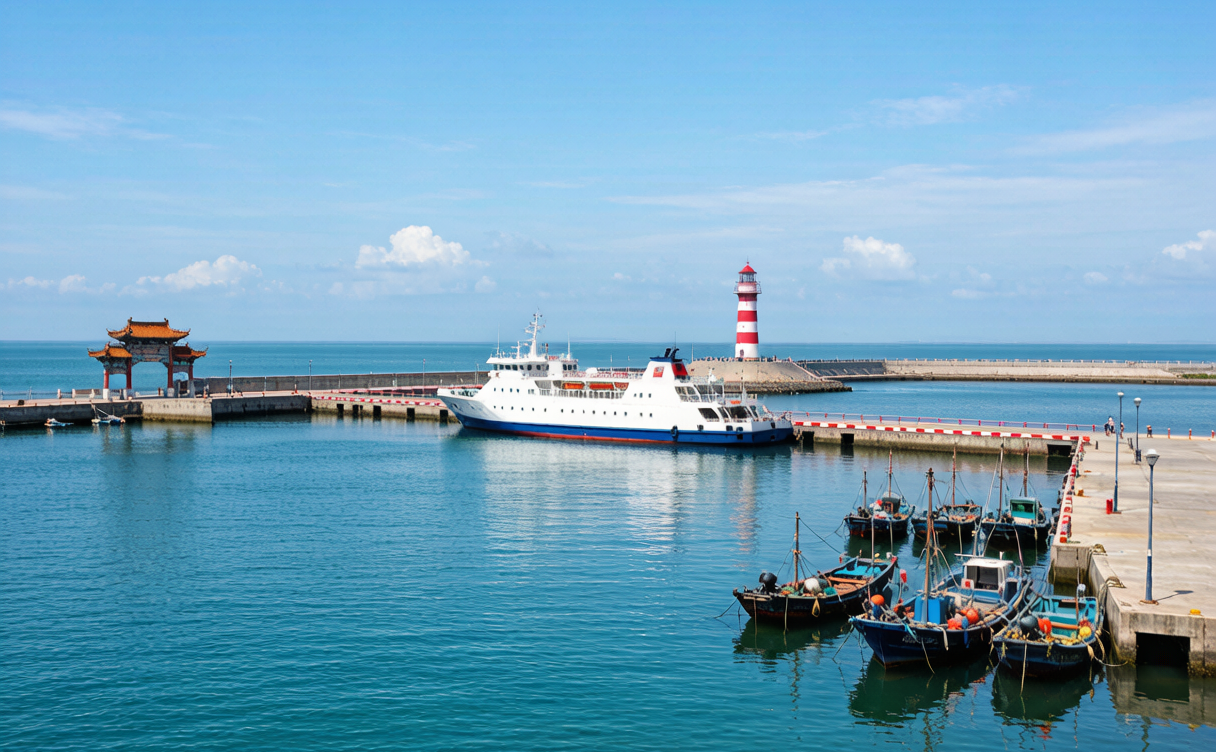
A fast ferry from Jiaojiang, 80 minutes and ¥130 (US$18), reaches Dachen Island: clear water, hillside fortifications and seafood straight off the boat. Ferries cancel in rough weather, so never plan it for your last day.
Where to Stay
Budget — ¥150–320 (US$21–45). Guesthouses around Ziyang Old Street in Linhai. This is where I stay: walk to the wall, eat well for ¥30, and the old town is pleasant at night. Chain hotels near Taizhou Station run ¥160–250 if you need an early train.
Mid-range — ¥300–600 (US$42–85). Business hotels in Jiaojiang, near the ferry terminal and the best seafood, or newer places in Tiantai town, fifteen minutes from Guoqing Temple’s morning service.
Splurge — ¥800–1,800 (US$113–254). Mountain resorts at Shenxianju and on the Tiantai slopes, with valley-facing rooms and hot spring pools. Rates double in the May azalea window and the October holiday.
What to Eat
Taizhou food is coastal Zhejiang at its least famous and, I would argue, its most interesting. Nothing here is sweet in the Hangzhou manner.
- Shibingtong (食饼筒) — the local obsession. A thin wheat pancake rolled around a dozen fillings: shredded pork, egg ribbons, bean sprouts, glass noodles, tofu skin. ¥10–15 from a street window.
- Ginger soup noodles (姜汤面, jiāngtāng miàn) — a Sanmen speciality, fiercely gingery broth with rice wine, eaten for breakfast. ¥12.
- Mai xia (麦虾) — “wheat shrimp”, though there are no shrimp: batter scraped in strips into a boiling seafood broth. ¥18–25.
- Qiangao (嵌糕) — Wenling’s answer to a burrito, a pounded rice cake stuffed with braised meat and doused in gravy. ¥12.
- Wangchao (望潮) — thumb-sized octopus steamed with ginger. Order with swimming crab (梭子蟹, suōzixiè) at any Jiaojiang seafood place; ¥180–300 for two.
Sample Itinerary: Three Days
Day 1 — Linhai
- 09:00 arrive from Hangzhou; drop bags near Ziyang Old Street
- 10:30 walk the city wall from Wugu Gate along the ridge, about 90 minutes
- 13:00 lunch of mai xia in the old town
- 15:00 Donghu Park and the lanes behind it; evening street food
Day 2 — Tiantai
- 07:00 coach to Tiantai; 08:30 Guoqing Temple before the tour groups
- 11:00 Shiliang Waterfall; 14:30 Qiongtai Fairy Valley
- 18:00 back to town for ginger soup noodles
Day 3 — Xianju or the coast
- Option A: a full day at Shenxianju, cable car up, boardwalks and glass walkway
- Option B: Shitang for sunrise, Changyu Dongtian caverns at 11:00, seafood in Jiaojiang
Two days covers Linhai plus one mountain; three lets you add the coast. For wider context, Britannica’s overview of Zhejiang province is a useful read before you go.
FAQ
Is Taizhou worth visiting for a foreign traveller?
Yes, if you have already seen Hangzhou and Suzhou and want the same landscape without the queues. No, if this is your first trip to China and you have ten days — the headline sights elsewhere are more spectacular. Taizhou is a second- or third-visit destination.
How many days do I need?
Two minimum, three ideal, five if you want the islands as well. Anything under two days and the internal travel eats the trip.
Is there much English spoken?
Very little outside hotel front desks. Signage at the major scenic areas is bilingual; restaurants, buses and guesthouses are not. Bring an offline translation app and save destinations in Chinese characters.
How do I get around within the prefecture?
Intercity coaches connect the county towns cheaply and frequently, and Didi works everywhere. For the mountains, a chartered car and driver at ¥500–700 (US$70–99) per day saves hours.
What about typhoons?
Between July and September, check the forecast three days ahead. Ferries stop first, then cable cars and clifftop walkways, then in severe cases the trains. Storms usually pass within 24–36 hours, so build a buffer day into a summer itinerary.
Can I visit Taizhou as a day trip from Hangzhou?
You could reach Linhai and walk the wall in a long day, but you would spend three hours on trains for it. Stay the night — hotels are cheap and the old town after dark is the best part.