

Rising in mist and legend above the northwestern corner of Hubei Province, the Wudang Mountains are one of the most sacred landscapes in all of China. For more than a thousand years, these green peaks have drawn Taoist monks, martial artists, and emperors who came to study, worship, and build. Today the range is best known around the world as the birthplace of Tai Chi, the slow, flowing movement practice that millions of people now perform in parks from Beijing to Boston. This Wudang Mountains guide will help you understand why the mountains matter, what you can see there, and how to plan a trip that fits your interests.
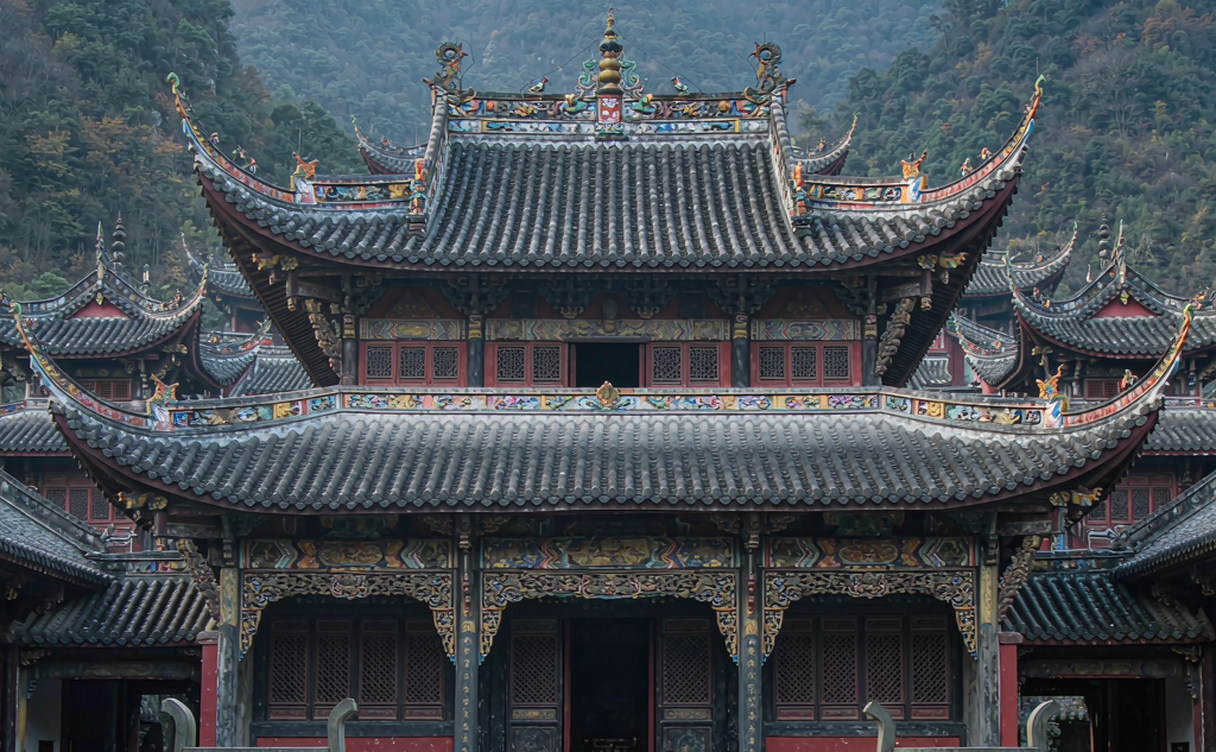
The Wudang Mountains are not a single summit but a cluster of seventy-two peaks centered on Tianzhu Peak, the “Heavenly Pillar,” which rises to about 1,612 meters. The whole sacred area spreads across roughly 312 square kilometers, and within it sit dozens of temples, monasteries, bridges, and cultivation huts. What makes Wudang unusual is the way nature and architecture merge. Paths climb through pine forest and past waterfalls to cliff-hanging halls that seem to grow out of the rock itself. Because the site is so intact, it was inscribed on the UNESCO World Heritage List in 1994 for both its cultural and natural value, a recognition you can read about at UNESCO.
A Short History of the Wudang Sacred Range
Taoist hermits practiced on these slopes as early as the Tang dynasty, but the mountains became a true power center during the Ming dynasty. In the early 1400s, the Yongle Emperor ordered the construction of a vast network of temples here to honor his patron deity, the deity Zhenwu, and to legitimize his rule. Tens of thousands of artisans and soldiers labored for more than a decade, and the result was a “temple for every peak, a shrine for every cave.” At its height, Wudang supported hundreds of buildings and thousands of monks. Many of those structures still stand, repaired and maintained, and they form the core of what visitors explore today.
Wudang Tai Chi Origins
No part of Wudang’s story is more famous than its martial arts. According to legend, a Taoist monk named Zhang Sanfeng watched a snake and a crane fight, then blended that observation into a circular, soft-style combat system. Over centuries this teaching evolved into what we now call Wudang Tai Chi, a discipline that pairs deep breathing with slow, continuous motion. The guiding idea is that softness overcomes hardness, and that health, meditation, and self-defense are one practice rather than three.
The Wudang Tai Chi origins matter because they connect a living global habit to a specific place. When you stand on the mountain where the art was born, the movements you may have learned in a city class take on new meaning. Several schools on the mountain still teach short forms to visitors, and a morning lesson on a stone terrace, with clouds drifting below, is one of the most memorable experiences Wudang offers. Even if you never study a posture, you will see groups of practitioners moving together at dawn near the main temples.
How to Get to Wudang Mountain
The practical question for most travelers is how to get to Wudang Mountain from a major city. The nearest transport hub is Shiyan, a city in northwestern Hubei, about an hour away by road. High-speed trains run from Wuhan to Shiyan East Station in roughly two to three hours, and from there you can take a bus or taxi to the Wudangshan scenic area entrance. If you are flying, the closest airport is in Shiyan, with connections to major Chinese cities; many visitors also fly into Wuhan and continue by train. Inside the mountain zone, a shuttle bus system connects the ticket gate to the lower temples and the cable car, while the final climb to Tianzhu Peak is on foot along stone steps or by cable car for those who prefer it.
For travelers building a longer Hubei itinerary, the provincial capital is a useful base, and our Best hotels in Wuhan guide can help you choose where to stay before or after the mountains.
Wudang Mountain Temples You Should Not Miss
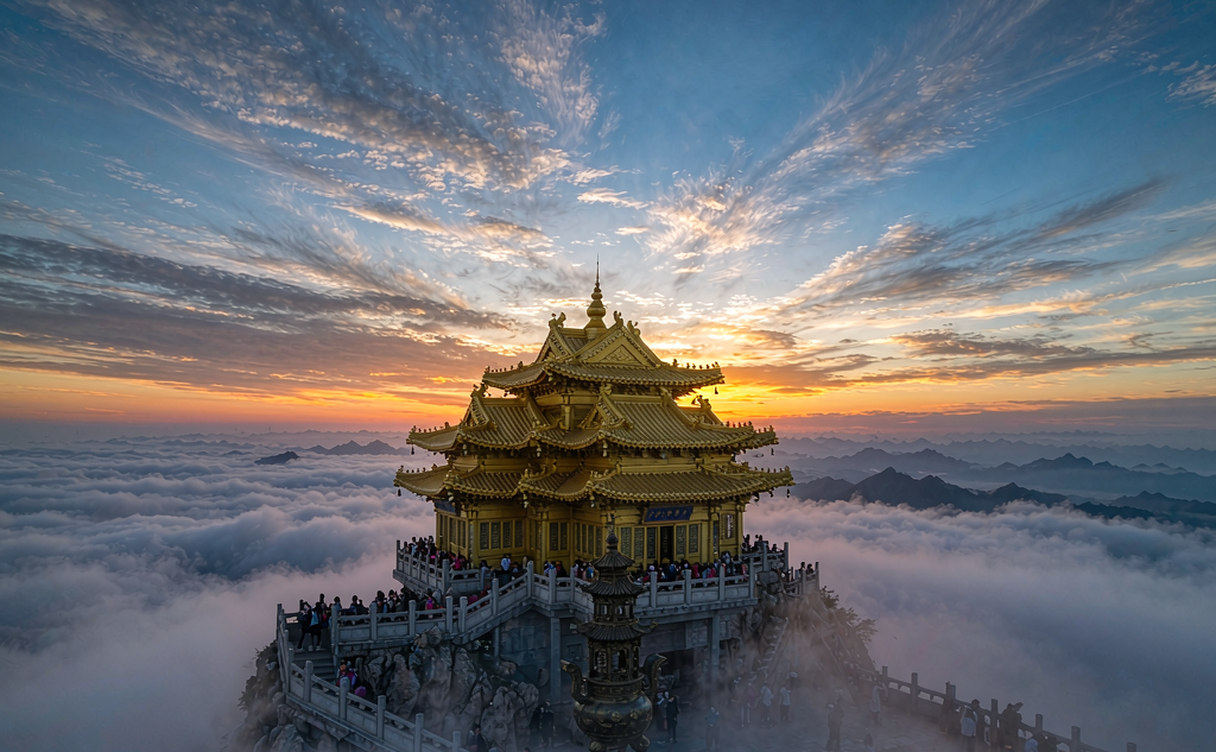
The heart of any visit is the temple architecture, and there are several Wudang Mountain temples that deserve real time. The Golden Hall, or Jindian, sits at the very top of Tianzhu Peak and is made of gilded bronze, cast in the Ming era and still gleaming. Below it, the Purple Cloud Temple, or Zixiao Gong, is the largest and best-preserved complex on the mountain, with layered courtyards, painted beams, and a steady stream of incense smoke. The Nanyan Temple clings to a cliff face, famous for a stone dragon head that juts out over the void where devotional lamps were once lit. The Yuxu Palace at the foot of the mountain once held the largest number of buildings and remains an atmospheric ruin worth a quiet walk.
Because Wudang is large, most visitors choose a route rather than trying to see everything. A common one-day plan rides the shuttle to Nanyan, walks or buses to Purple Cloud Temple, then takes the cable car up to the Golden Hall. Two days lets you add the southern foothill temples and a sunrise from a mid-mountain viewpoint.
Best Time to Visit Wudang
The best time to visit Wudang is spring and autumn, roughly April through May and September through early November. In these months the temperatures are mild, the forest is green or turning gold, and the famous sea of clouds is most likely after rain. Summer is the busy domestic travel season; it is also the most humid and crowded, though the mountain stays cooler than the lowlands. Winter brings occasional snow that turns the temples into a quiet, photogenic wonderland, but some paths and the cable car can close in poor weather. If your goal is photography or Tai Chi practice, aim for a weekday in the shoulder season when the stone paths are nearly empty.
Hiking, Cable Cars, and Staying Overnight
You do not need to be an athlete to enjoy Wudang, but the mountain rewards walkers. The stairways between temples are well built and shaded, and the climb to the Golden Hall is a steady but manageable effort. For those who want the views without the sweat, the cable car covers most of the vertical gain. A few small guesthouses and a monastery-run lodging option sit inside the scenic area, allowing you to hear the temple bells at night, though most travelers stay in the town at the base where food and hotels are cheaper and more varied.
Wudang vs Mount Song
A question travelers often ask is Wudang vs Mount Song, since both are sacred mountains tied to Chinese martial arts. Mount Song, in Henan Province, is home to the Shaolin Temple and the hard, striking style of kung fu, while Wudang is the soft, internal home of Tai Chi and Taoist practice. The contrast is real: Shaolin feels theatrical and firm, while Wudang feels meditative and circular. If you prefer philosophy, breath, and landscape, Wudang is the stronger choice; if you want to see precise, powerful forms and a famous temple complex, Mount Song delivers. Many serious martial arts travelers do both, since they sit only a few hours apart by train.
If you enjoy comparing China’s sacred peaks, you might also like our Cangshan Mountain guide, the Baiyun Mountain Guangzhou guide, and the Baiyun Mountain Luoyang guide for more mountain trips across the country.
Food, Culture, and Local Tips
The towns around Wudang serve hearty Hubei cooking: hot dry noodles for breakfast, smoked pork, river fish, and plenty of chili. Vegetarian temple meals are available near the monasteries and are worth trying for their simplicity. Bring comfortable shoes with good grip, a light rain jacket for sudden mountain showers, and a respect for the active religious life of the site, where photography inside halls is often restricted. English signage is limited, so downloading an offline map and learning a few key phrases ahead of time will smooth your day considerably.
For travelers who like off-the-beaten-path peaks, the Ailao Mountain Yunnan guide and the Baishishan Mountain Hebei guide offer very different but equally striking mountain experiences.
Planning Your Wudang Trip
A well-planned visit to the Wudang Mountains usually spans one to two full days, plus travel time to Shiyan or Wuhan. Buy your entrance ticket in advance during holidays, arrive early to beat the crowds, and leave buffer time for weather delays on the cable car. Whether your interest is history, faith, fitness, or scenery, Wudang rewards the curious traveler with a rare combination of all four. Few places let you walk through a living World Heritage landscape in the morning and learn the slow art of Tai Chi in the same afternoon.
Planning a Hubei trip? Book your stay with our Best hotels in Wuhan guide and use Wuhan as your gateway to Wudang. **[CTA]** Want more mountain adventures across China? Explore our Cangshan Mountain guide and the Baiyun Mountain Guangzhou guide to build your route. **[CTA]** Ready to study Tai Chi at its source? Contact a local Wudang school ahead of your visit to reserve a dawn lesson on the mountain.