

We started pointing travelers to Baiyun Mountain (白云山) as the cool, green counterweight to a Luoyang trip built around temples and pagodas. Baiyun Mountain sits deep in Song County, southwest of Luoyang, in the Funiu range (伏牛山), and at 2,215 meters its Jade Emperor Peak is the high point of the whole range. The scenic area is a national forest park and part of a UNESCO Global Geopark, a place of old-growth fir, tiered waterfalls, alpine lakes, and a high-altitude peony garden that blooms weeks after the city’s famous flowers have dropped. This Baiyun Mountain Luoyang guide comes from a May 2025 visit, with the buses, shuttles, and trails we used, written for travelers who want a real forest and a sunrise above the clouds without leaving Henan.
How to get to Baiyun Mountain
There is no train to the mountain, so the rail gateway is Luoyang Longmen Station (洛阳龙门站), the high-speed stop for the city. From there you have two choices: a direct tourist coach to the scenic area (about 3 hours, RMB 60 to 80) or a public bus to Song County (嵩县) and a second local bus up to the gate. We took the direct coach from Luoyang’s transport hub and it was the simpler of the two. If you fly into the provincial capital, the Zhengzhou travel guide is the entry point, and from Zhengzhou it is a high-speed train to Luoyang (about 1 hour 10 minutes, second class RMB 75 to 95) then the mountain coach. Our Luoyang travel guide lays out the city sights, and Baiyun Mountain is the natural day-two or day-three escape when the plain gets hot.
For the train booking, our China high-speed train guide for foreigners covers the app and ID steps, and I used it to grab the Luoyang seat. Inside the area you must use the scenic shuttle — the park is huge, with sights spread over 30-plus kilometers of mountain road — so budget the shuttle fare (about RMB 70 in 2025) on top of the gate. In our experience, arriving in Luoyang the afternoon before and taking the morning coach beats a same-day dash, because the mountain road is slow and you want the afternoon light on the lake, not a night drive.
Best time to visit Baiyun Mountain
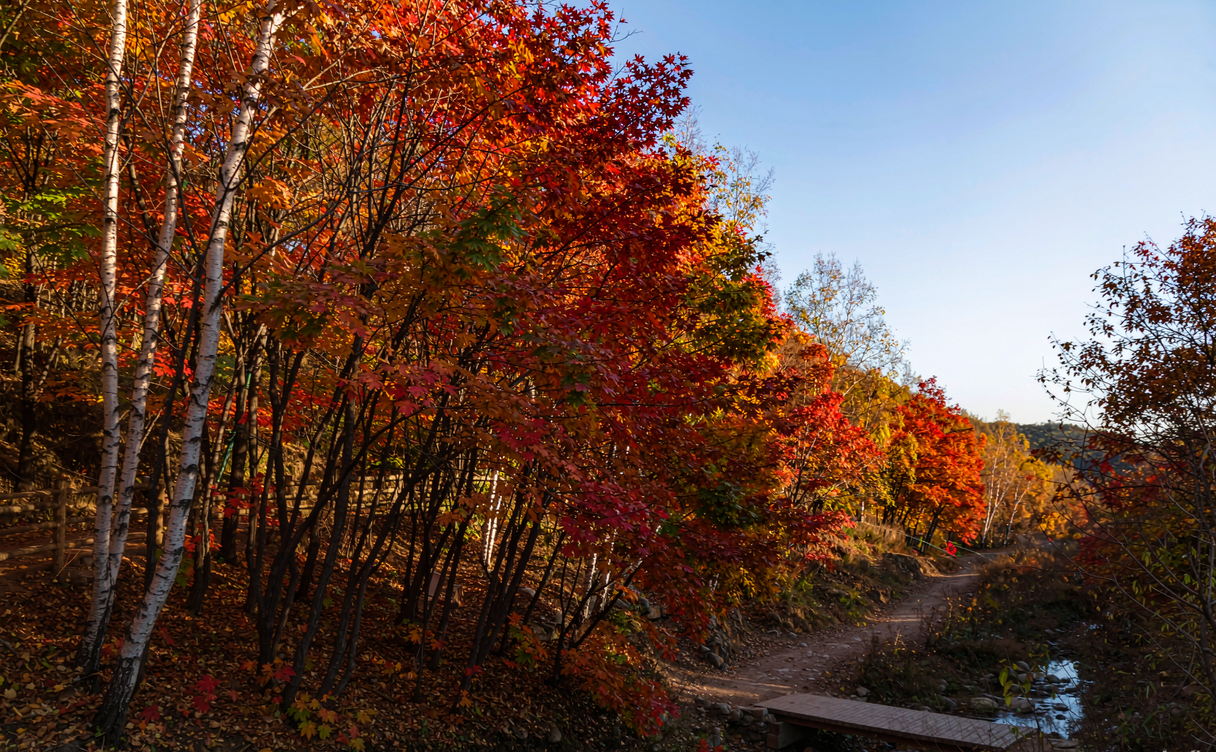
The best time to visit Baiyun Mountain is summer if you want to escape the heat, or May and October for the flowers and the leaves. Summer daytime highs at the base sit around 20 to 23°C while Luoyang bakes above 35°C, which is why Henan families treat it as a natural air conditioner; the Jade Emperor Peak is another 8 to 10 degrees cooler. May is our favorite: the high-altitude peony garden (高山牡丹园) blooms in late April to May, weeks after the Luoyang city peonies, and the rhododendrons light the upper slopes. October brings red leaves and clear summit mornings. Winter is cold and quiet, with ice on the falls, and some upper roads close after snow.
Our best time to visit China guide sets the national windows if you are stacking Henan with Shaanxi or Sichuan, and it put us in May for the peonies. For more trip ideas, best things to do in China is a useful scan before you lock dates.
The waterfalls, lakes, and the alpine forest
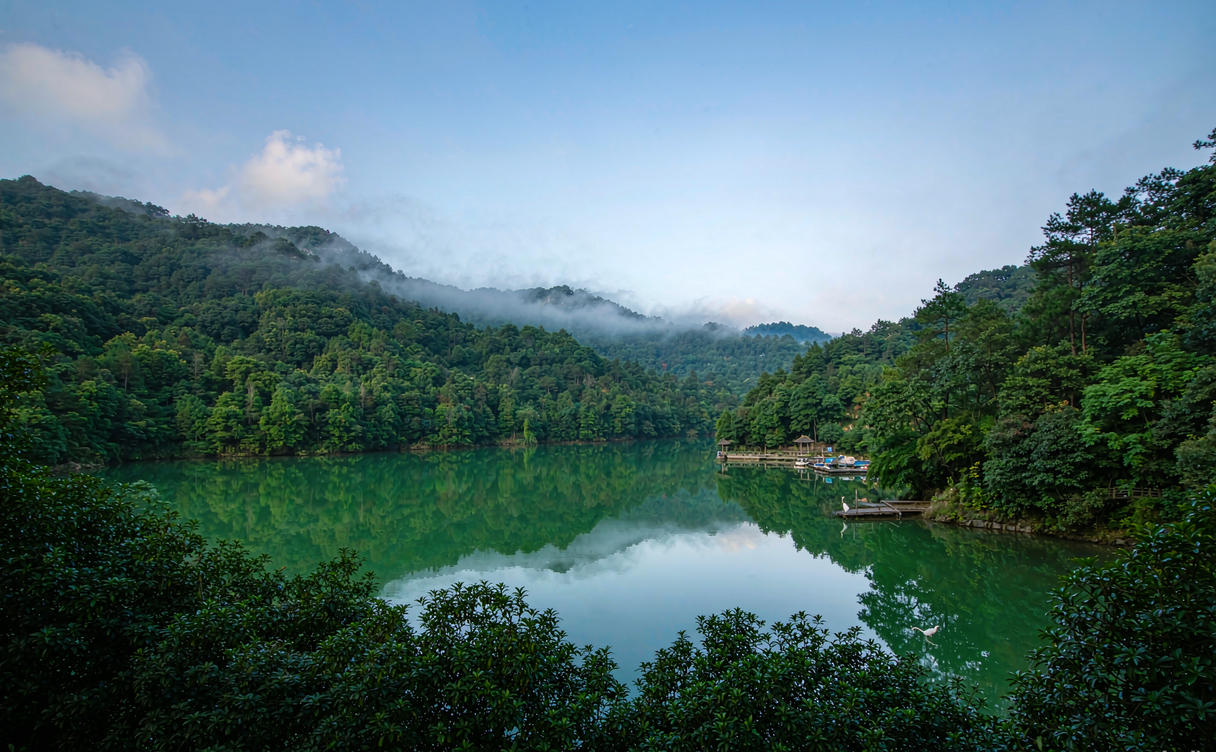
Things to do at Baiyun Mountain start with the water. The Jiulong Waterfall cluster (九龙瀑布群) is a staircase of falls on the north side, the tallest dropping around 100 meters, reached by a boardwalk through damp, mossy forest. I walked the falls loop in about two hours and it was the greenest, wettest walk of the trip — constant spray and old fir everywhere. The Luohua Valley (芦花谷) is a gentler stream walk good for a hot afternoon, and Baiyun Lake (白云湖) near the central hotel zone is the spot for a flat evening stroll and a reflection photo of the peaks.
The Luoyang alpine forest is the quiet star: above 1,800 meters the road passes into a belt of pristine conifer with a “forest oxygen bar” boardwalk where the air smells like resin and there is no traffic sound. We have sent travelers here to recover from city noise, and every one came back saying the stillness was the point. The Jade Emperor Peak (玉皇顶) is the climax — a sunrise viewpoint at 2,215 meters with a cable car (about RMB 60 to 80 one way in 2025) or a stiff walk up. I took the car up for first light and watched the sea of clouds roll off the Funiu ridge, which is the single best hour on the mountain. The Baiyun Mountain Henan experience lives in that dawn: cold, clear, and a long way from the Luoyang temples.
More to do and where to eat
Beyond the falls and the peak, the high-altitude peony garden is worth the trip in May — a terraced planting of late peonies and tree peonies at 1,500 meters that blooms when the city’s famous flowers are long gone, and it is included in the scenic ticket. There is also a small “Little Huangshan” (小黄山) ridge with exposed rock and a cable-assisted walk for people who want a taste of a summit without the full climb. For a slow afternoon, the central hotel zone has tea houses and a short forest loop that is stroller-friendly, which is rare in a mountain park this size.
Food at Baiyun Mountain is honest Henan hill cooking. The mountain produces good mushrooms and wild greens, and a plate of stir-fried 香菇 with bamboo was RMB 38 to 48 at the central restaurants; the local 栾川-style tofu and a simple noodle bowl ran RMB 15 to 25. A full dinner for two with a few mountain dishes was RMB 120 to 200 in 2025. The market near the base sells dried fungus and the local honey, which make cheap take-homes. We booked the shuttle and paid the restaurants with Alipay; the smallest stalls take WeChat, so keep both apps live. Our China travel guide for first-timers has the payment and SIM notes that make a mountain evening smooth, because you will be scanning codes more than handling cash.
Where to stay
Stay splits into three tiers. The central hotel zone by Baiyun Lake (inside the gate, RMB 300 to 600 a night in 2025) is the convenient choice — you step out to the lake and catch the first shuttle without a long drive. The base town outside the gate is cheaper (RMB 150 to 280) but adds 40 minutes each way up the mountain road. The summit lodges near the Jade Emperor Peak are basic and booked out for sunrise, so reserve ahead if that is your plan. We stayed at the lake and it was worth the premium: after the day-trippers leave, the forest goes quiet and the stars are startling.
A practical Baiyun Mountain itinerary
Here is the two-day plan we used. Day one: coach from Luoyang to the gate, shuttle to the lake, afternoon walk of the falls and Luohua Valley, lake at dusk. Day two: pre-dawn shuttle to the Jade Emperor Peak for sunrise, peony garden if in season, forest boardwalk, coach back to Luoyang. One long day covers the falls plus peak if you start at gate-open and skip the garden; two days lets you add the garden and a relaxed morning. Spend was about RMB 700 to 1,000 a person excluding the Luoyang train, which is fair for an alpine stop.
The scenic area posts current tickets, shuttle times, and the peony bloom window at the official Baiyun Mountain tourism site (Chinese only) — check it before you go, because the shuttle only runs while the gate is open and the bloom date moves with the weather.
Riding the train in? Sleep in Luoyang the night before and take the morning coach up, so you reach the lake with daylight to spare instead of a dark mountain drive.
Getting around and final tips
Inside the park the shuttle is mandatory and the roads are slow, so ride it and save your legs for the trails. Carry cash for the smallest stalls, download offline maps because signal drops above the tree line, and pack a warm layer even in July — the Jade Emperor Peak was 11 degrees colder than the lake when we were there. Baiyun Mountain rewards an early start: the clouds, the peonies, and the quiet all come to the people who are up before the coaches.
Want the sunrise without the climb? Take the cable car to the Jade Emperor Peak and book a summit-side room, so first light is a short walk, not a pre-dawn hike.
If you are building a Henan route, Baiyun Mountain pairs with the city’s ruins and the plains, and our China travel guide for first-timers ties the train hops together so the whole loop reads as one trip.
Planning a longer China nature trip? Explore our other China guides to link Baiyun Mountain with the cities and rivers into one smooth route before you book.