

What Do Potstickers Taste Like, and Why the Crispy Bottom Matters
The first time I watched a cook in a Tianjin alley lift a heavy iron lid, the sound was less a sizzle than a satisfied crackle — and what sat underneath was a tight row of dumplings fused to the pan by a single, paper-thin sheet of caramelized starch. That web is the signature of guotie, the northern Chinese pan-fried dumpling English speakers usually call a potsticker. Get the technique right and you get three textures in one bite: a pleated, steamed-soft top; a juicy pork-and-cabbage middle; and a lacquered, almost glassy bottom that shatters when you bite.
So what do potstickers taste like? Think of a regular boiled dumpling, then add the toasty, nutty depth that only contact with a hot, oiled surface can give. The filling stays moist and savory — pork seasoned with ginger, scallion, soy and a whisper of sesame — while the underside carries a gentle bitterness from the Maillard browning that balances the richness. When a cook adds a splash of starch water near the end, the dumplings knit together into the lacy “skirt” that food photographers love but home cooks secretly fear. It is optional, and I will show you both ways.
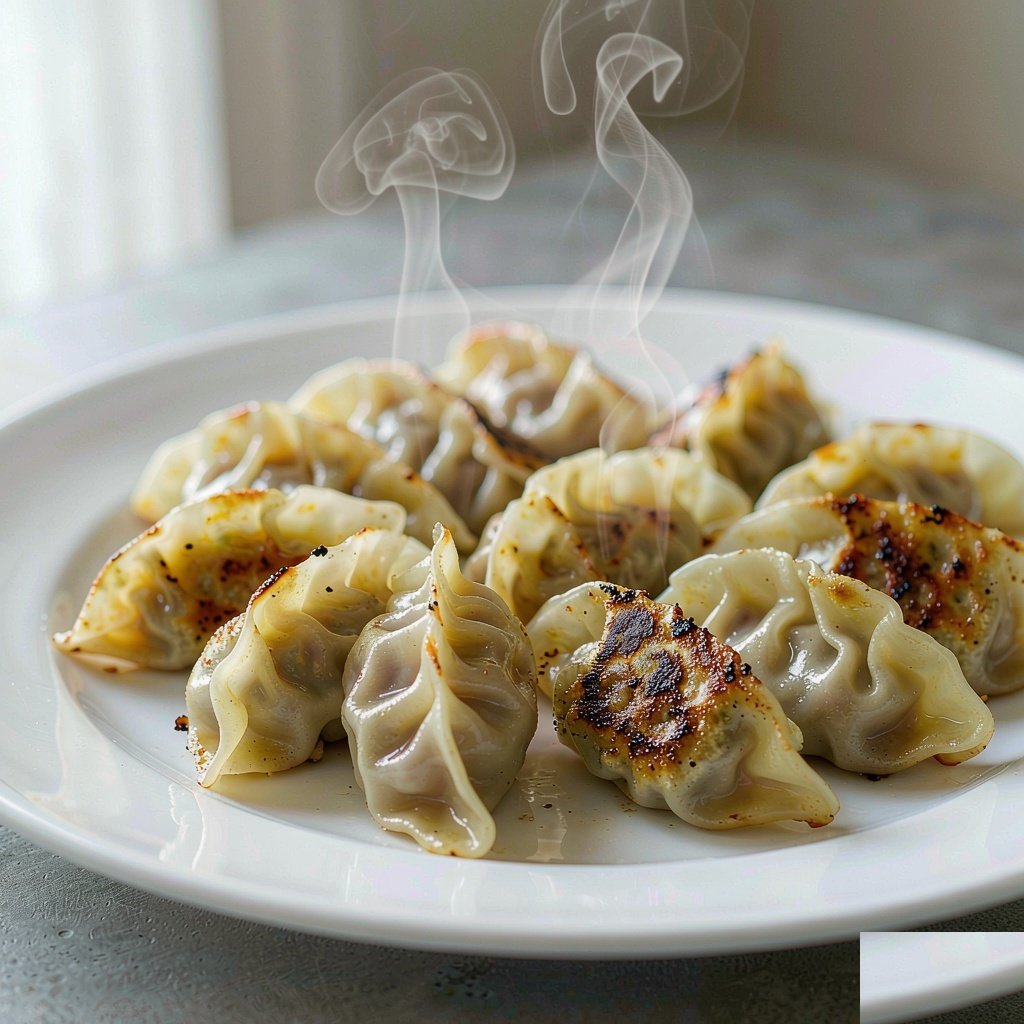
Potstickers vs Dumplings vs Gyoza: The Real Differences
The word “dumpling” in English lumps together a hundred different things, so it helps to be precise. In Chinese, the broad category is jiaozi (饺子) — a filling wrapped in wheat dough. Potstickers are a cooking method of jiaozi, not a different species. You make the same parcel, then pan-fry it instead of boiling it.
The potstickers vs dumplings question usually comes down to the cooking liquid. Boiled jiaozi sit in water; guotie start in a hot pan with oil, get a small amount of water added, the lid goes on so the tops steam, then the lid comes off so the bottoms dry out and crisp. The result is a dumpling that is simultaneously steamed and fried.
The potstickers vs gyoza distinction is thinner but real. Japanese gyoza descended from northern Chinese jiaozi brought over in the 20th century, but they tend to be smaller, thinner-skinned, more heavily garlic-forward, and almost always served with a sharp vinegar-rayu (chili oil) dip. Northern guotie are bigger, the filling leans more pork-and-cabbage than garlic, and the crispy skirt is a point of pride rather than an afterthought. And the guotie vs jiaozi shorthand you will hear in China simply means “fried” versus “boiled” — same ancestor, different pan.
The Core Potsticker Filling Recipe (Pork and Cabbage, With Amounts)
A potsticker filling recipe lives or dies on fat and water. Too lean and you get a rubbery pellet; the cabbage and a little added liquid are what keep it juicy. This is the baseline guotie chinese pan fried dumplings mix I use for a batch of about 40:
- 500 g ground pork, preferably 20% fat — shoulder or belly, not lean loin.
- 300 g napa cabbage, very finely chopped, then salted and squeezed dry.
- 1 tablespoon fresh ginger, minced to a paste.
- 2 scallions, minced, green and white parts both.
- 2 tablespoons light soy sauce for salt and umami.
- 1 tablespoon Shaoxing wine to round off the pork smell.
- 1 tablespoon toasted sesame oil for aroma.
- 1 teaspoon white pepper and 1 teaspoon salt, adjusted after a taste-fry.
- 3–4 tablespoons ice water, beaten in one spoon at a time so the pork turns sticky and bouncy.
- 40 round dumpling wrappers, store-bought if you are honest about your time, or a simple potsticker wrapper recipe of 300 g flour to 150 g water if you are not.
- For the crispy skirt: 1 tablespoon cornstarch whisked into 150 ml water.
Mix the pork with the seasonings and water first until it looks like a glossy paste, then fold in the squeezed cabbage and aromatics. A filling that holds together when you pinch it is ready; one that weeps liquid will burst in the pan.
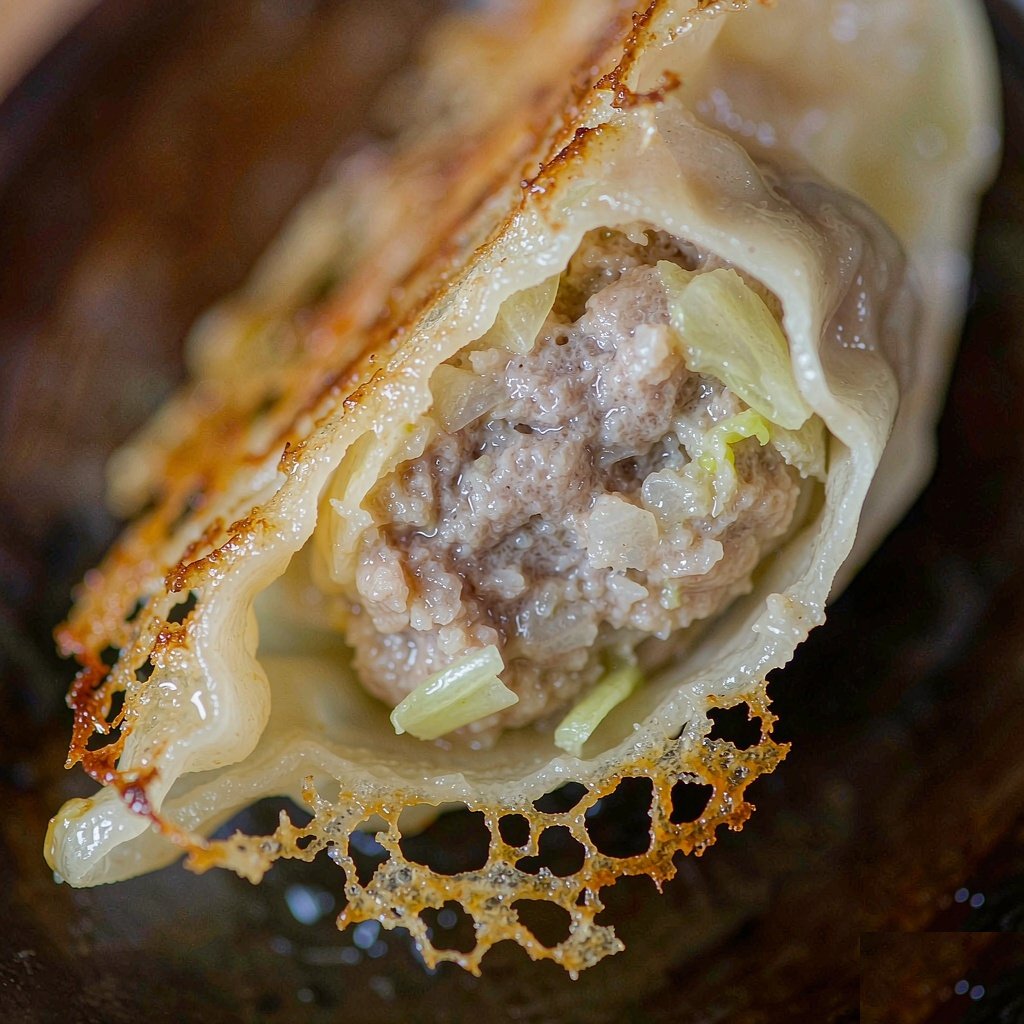
How to Fold Potstickers Without Tearing the Skin
The shape sends a signal. Restaurants in the north pleat guotie into a flat-bottomed crescent so they stand in the pan and brown evenly; home cooks often just pinch a half-moon. Either way, the how to fold potstickers skill is mostly about not overfilling.
- Place a heaped teaspoon of filling just below center of the wrapper. Too much and the seams split.
- Wet the top half-edge with a finger dipped in water — the “glue” that matters more than the filling.
- Fold the bottom up to meet the top and press out the air in one firm motion.
- For a pleated look, make 3–4 small pinches along the sealed edge. For a flat potsticker, just press the seam and stand it on its heel.
Work on a lightly floured tray and keep finished dumplings covered with a damp towel so the skins do not dry and crack before they hit the pan.
How to Make Potstickers at Home, Step by Step
This is the part people overthink. A potsticker recipe easy enough for a weeknight is just three phases: sear, steam, crisp. Here is the guotie step by step method I trust:
- Step 1 — Heat the pan. Use a non-stick or well-seasoned cast-iron skillet with a lid. A medium flame and 2 tablespoons of neutral oil.
- Step 2 — Stand them up. Arrange the dumplings in a tight spiral or rows, heel-down, so the bottoms touch the oil. Do not crowd; one layer only.
- Step 3 — Sear undisturbed for 2 minutes. You are building the golden base. Resist the urge to poke.
- Step 4 — Add water and steam. Pour in roughly 100 ml of hot water (or the starch water if you want the skirt), cover immediately, and lower to a simmer for 6–8 minutes until the tops are cooked through.
- Step 5 — Uncover and dry out. Lift the lid, turn the heat back up, and let the remaining water boil off — this is where the bottom re-crisps.
- Step 6 — The flip. When the bottoms are deep amber and the skirt (if any) has set, slide a thin spatula all the way under and invert onto a plate in one confident motion. If it sticks, it needed another 30 seconds.
That is the whole how to make potstickers at home routine. The only variable worth obsessing over is the water-to-heat ratio; too much water and you boil them, too little and the tops stay raw.
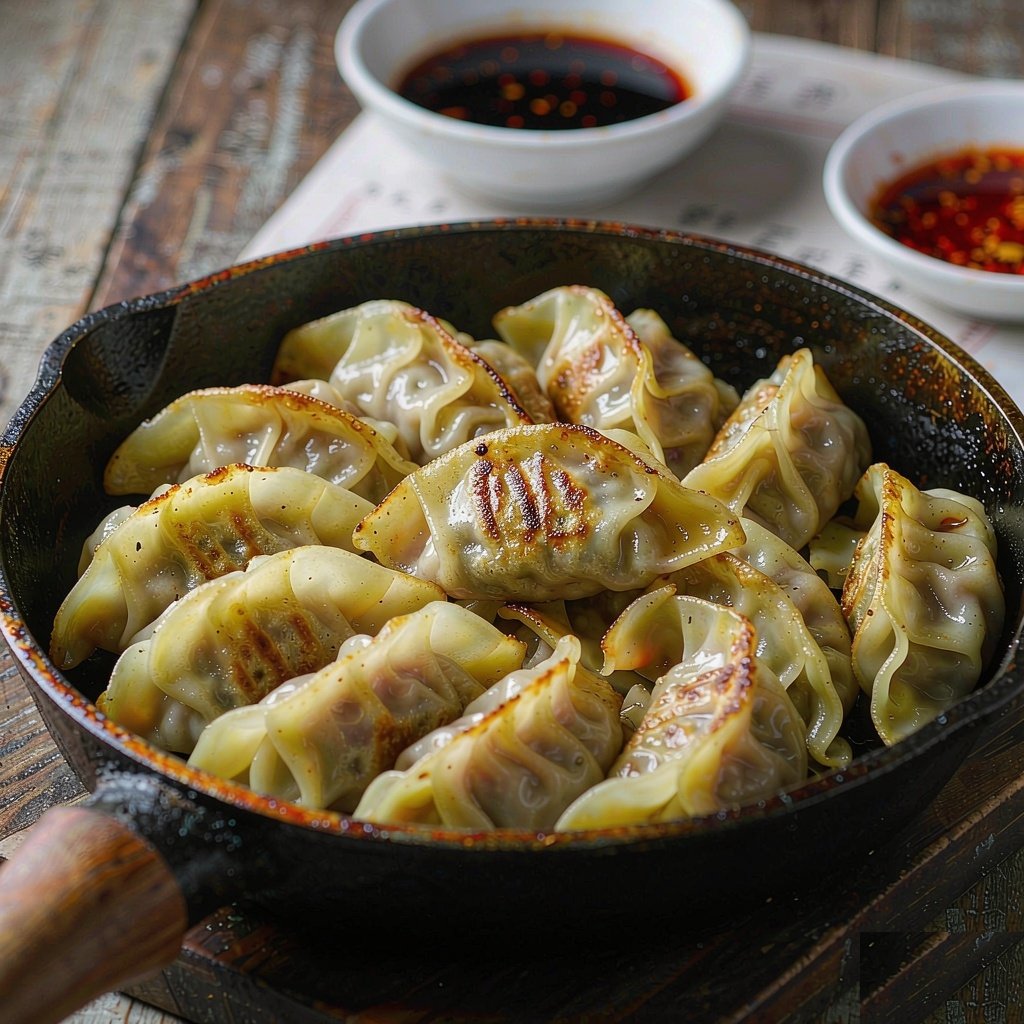
Authentic Northern Chinese Potstickers and the Black Vinegar Dipping Sauce
A dumpling without its dip is only half a dish. The classic potstickers dipping sauce black vinegar is nothing more than Chinese black vinegar (Zhenjiang or Shanxi style), a few drops of soy, and slivered ginger — sometimes a teaspoon of chili oil if you want heat. The vinegar cuts the pork fat and makes a third helping seem reasonable.
When people talk about authentic northern Chinese potstickers, they usually mean the versions of Beijing, Tianjin and Liaoning: bigger parcels, pork-heavy fillings, and that standing-crescent shape. Southern China has its own fried dumplings, but the north owns the potsticker canon, and it shows up constantly at Chinese dumpling tables from street stalls to banquet halls.
Best Potstickers in Beijing (and Where Travelers Actually Eat Them)
If you want the best potstickers in Beijing, skip the tourist complexes near the Forbidden City and look for the older hutong neighborhoods and train-station districts where commuters grab a plate on the way to work. The tell is a short queue at 7 a.m. and a single giant griddle out front. Order a portion of guotie with a bowl of millet congee and you have a northern Chinese breakfast that beats any hotel buffet.
For travelers, potstickers are also one of the safest first steps into northern morning markets: they are fully cooked, easy to eat with chopsticks, and almost never spiced beyond your control. Point at a neighbor’s plate and say “yi fen” — one portion — and you will rarely go wrong.
Regional Twists and a Few Practical Tips
Once you have the base, the variations are endless. Northern homes swap cabbage for chives (xiānròu jiǔcài), add crushed shrimp, or use a chicken-and-mushroom mix for a lighter bite. The how to make crispy bottom dumplings trick that separates amateurs from regulars is resting the cooked potstickers seam-up for a minute off heat — the steam redistributes so the bottom stays crunchy instead of going soggy under its own condensation.
Two more tips worth keeping: freeze uncooked potstickers on a tray before bagging them, and you can fry them straight from frozen (just add two minutes of water and a lower flame); and never flip them with a fork — a broad spatula under the whole row is the only way to preserve the skirt.
Who Should Eat Potstickers — and Who Might Skip Them
Potstickers suit almost everyone: they are a complete hand-held meal of protein, vegetable and starch, and they freeze beautifully for busy weeks. Children and nervous eaters tend to love them because the filling is mild and the crust is fun. Vegetarians can swap the pork for smashed tofu, glass noodles and mushroom, and the method is identical.
That said, a few people should pause. Anyone watching sodium will find the soy-heavy filling and dip add up fast. People with pork allergies or certain religious diets need to ask what is inside, because street-stall fillings are not always labeled. And because the wrapper is wheat, this is not a gluten-free dish — for that, look at rice-flour wraps instead. On the question of potsticker calories, a typical pork-cabbage guotie runs about 50–70 calories each, so a restaurant portion of ten lands near 600, before the oil the pan absorbed; homemade, drained well, you can shave a good third off that.
Potsticker History: From Northern Street Stalls to Every Kitchen
The potsticker history story most Chinese cooks will tell you is folk rather than documented: a chef in the imperial era left boiled dumplings in a pan too long, they stuck, he scraped them up, and the accidentally fried version caught on. Whether or not that happened, the dish is genuinely old, and it spread with northern wheat-eating culture along the railways and into every Chinese diaspora community. Today guotie sit comfortably between a hurried breakfast and a late-night snack, proof that a dumpling does not need a holiday to be loved.
Frequently Asked Questions
Are potstickers and guotie the same as jiaozi?
Yes and no. Guotie and jiaozi share the same wrapped-dough ancestry; “guotie” specifically means the pan-fried version, while “jiaozi” is the general word. So every potsticker is a jiaozi, but not every jiaozi is a potsticker — boiled and steamed ones are not.
How many calories are in potstickers?
A standard pork-and-cabbage potsticker is roughly 50–70 calories. A ten-piece restaurant plate is about 550–700 calories once you count the cooking oil, while a careful homemade batch can come in closer to 400–500 for the same count.
Can I make potstickers ahead and freeze them?
Absolutely. Freeze them raw on a floured tray until solid, then bag them. You can fry frozen potstickers directly from the freezer — just extend the steaming step by a couple of minutes and keep the flame moderate so the centers cook before the bottoms burn.
What is the best pan for potstickers?
A heavy non-stick skillet for beginners, or a seasoned cast-iron pan if you want the deepest crust. Avoid thin stainless steel; the dumplings will cement themselves to it and you will lose the skirt.
How do you eat potstickers properly?
Lift one with chopsticks, dip the crispy bottom lightly into the vinegar-ginger sauce rather than drowning it, and eat it in two or three bites so you get the soft-top-crisp-bottom contrast in each mouthful. Eating the whole thing in one go wastes the texture.
Pan-fried vs boiled dumplings — which is better?
Neither is “better”; they are different experiences. Boiled jiaozi are cleaner and lighter, better in broth or in summer. Pan-fried potstickers win on texture and aroma, especially in cold weather, which is why they dominate northern winters and dumpling menus alike.