

Tucked into the southern corner of Guizhou province, the Libo Seven Small Arches (Qixiao Kong) scenic area is one of China’s most underrated natural wonders. Part of the larger Libo Zhangjiang National Park and a UNESCO World Heritage Site, this 7-kilometer corridor of emerald rivers, layered waterfalls, and ancient stone bridges offers a gentler, greener counterpoint to the famous peaks of central China. If you are planning a southwest China itinerary and want a destination that combines easy walking trails with jaw-dropping karst scenery, this Libo Seven Small Arches guide will help you make the most of your visit.
Why Visit Libo Seven Small Arches
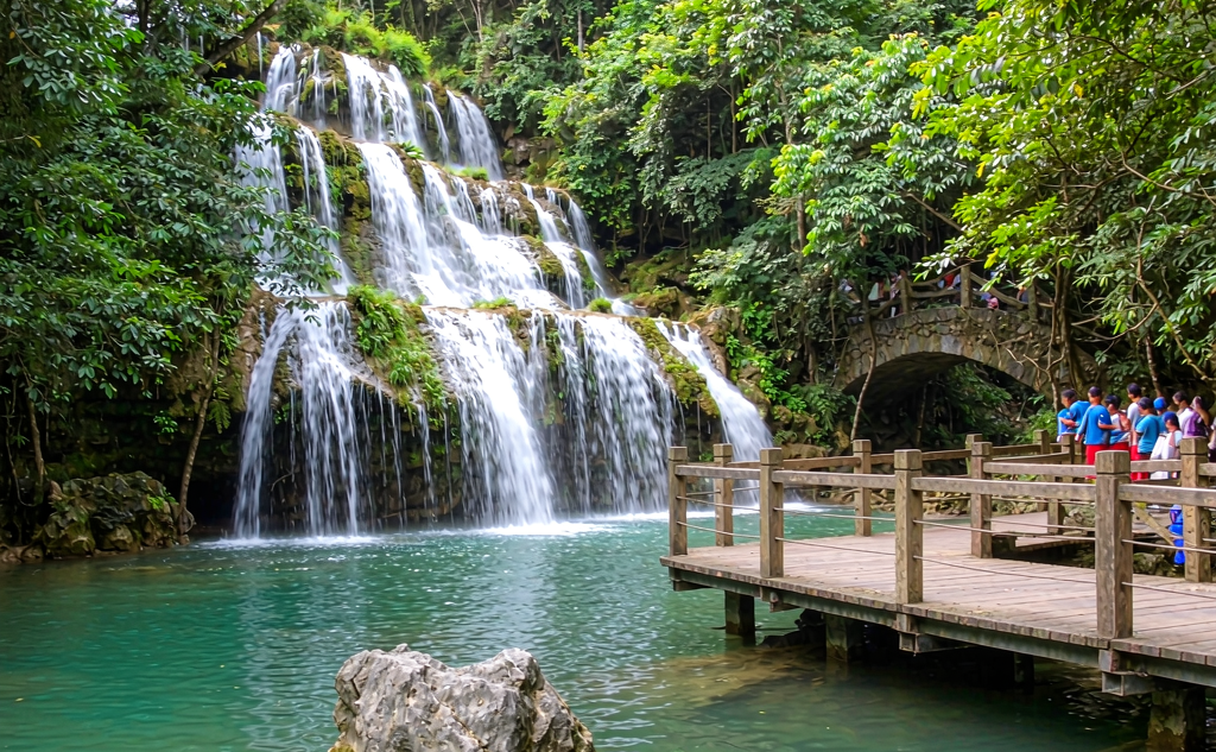
The name comes from a humbling seven-arch stone bridge built during the Qing dynasty, which still spans a quiet stretch of the Yuanyang Lake today. But the bridge is only the beginning. The park strings together a series of connected sights — the Wolong Pond, the 68-level waterfall, the Shishang Forest (forest growing on stone), the Water Forest, and the Laya Waterfall — all connected by boardwalks and shuttle buses that make the area surprisingly accessible.
Unlike some of China’s more crowded national parks, Libo rewards slow travel. You can spend a full day wandering from one turquoise pool to the next, listening to cascading water, and photographing mist drifting between limestone peaks. It is also noticeably cooler and more humid than the surrounding plateau, which makes summer visits especially pleasant.
For travelers comparing landscapes, the Libo vs Zhangjiajie debate comes up often. Zhangjiajie is famous for its towering sandstone pillars and dramatic verticality, while Libo offers low, rounded karst hills wrapped in dense subtropical forest and threaded with clear water. If you love mountains that pierce the sky, choose Zhangjiajie. If you prefer rivers, waterfalls, and intimate forest paths, Libo is the better fit — and it is far less crowded.
How to Get to Libo from Guiyang
Most international and domestic travelers enter Guizhou through its capital, Guiyang. Knowing how to get to Libo from Guiyang is the first step to a smooth trip, because Libo sits roughly 260 kilometers to the south.
The most relaxed option is the high-speed train. Trains from Guiyang North or Guiyang East run to Libo Station in about 1.5 to 2 hours, and from there a short taxi or local bus brings you to the scenic area’s east gate. This is the recommended route for first-time visitors who want to avoid long, winding mountain roads.
If you prefer driving, the journey takes around 3.5 hours via the expressway. A private car or guided tour gives you flexibility to stop at roadside villages and viewpoints along the way. Some travelers also combine Libo with a loop through Guilin and Yangshuo, since the region shares a similar karst geography — though that adds significant travel time and is best done with an overnight or two in between.
When you arrive, buy your ticket at the east gate and take the park shuttle to the top of the route, then walk downhill through the sights. Walking the full circuit one way is far easier than backtracking uphill.
Best Time to Visit Libo
The best time to visit Libo is from April to October, when rainfall keeps the rivers full and the waterfalls at their most powerful. Late spring brings lush green foliage and comfortable temperatures, while summer turns the parks into a cool, misty refuge from the heat of the cities.
Autumn (September to early November) is another excellent window. The crowds thin out after the summer holidays, the water stays clear, and the surrounding forests take on warmer tones. Winter is the quietest season and tickets are cheaper, but some smaller falls slow to a trickle and mornings can be chilly.
A practical note: because Libo is in a humid subtropical zone, afternoon showers are common in summer. Pack a light rain jacket and waterproof shoes, and try to start early so you can enjoy the calmest light and the fewest tour groups.
Highlights You Should Not Miss
The 68-level waterfall is the park’s signature spectacle — a staircase of small drops that tumbles down a broad limestone slope, creating a constant, soothing roar. Just upstream, the Water Forest lets you walk along a boardwalk where tree roots grip the riverbed and water flows around your feet. It is one of the few places where you can stroll directly through a living karst stream.
The Shishang Forest shows how resilient nature can be: trees grow straight out of solid rock, their roots creeping into every crack. The Wolong Pond, meanwhile, glows an almost unnatural blue-green under the right light, making it a favorite for photographers. And of course, the original Seven Small Arches bridge itself remains the spiritual heart of the area, especially at sunrise when mist sits low on the water.
These landscapes are a textbook example of Guizhou karst scenery, which is why the region earned its UNESCO listing. The interplay of water, forest, and limestone here is subtle but deeply rewarding, particularly for travelers who enjoy nature photography and slow exploration over thrill-ride attractions.

Libo Travel Tips
A few Libo travel tips will save you time and money. First, wear sturdy, quick-drying shoes — you will cross wet boardwalks and shallow streams. Second, bring cash as well as mobile payment, since signal can be weak deep inside the valleys. Third, budget a full day; half-day visits miss most of the best sections.
Food inside the park is limited and priced for tourists, so eat a proper breakfast or bring snacks. The town outside the east gate has simple noodle shops and barbecue stalls at local prices. If you want a more comfortable base, consider staying in Libo County or making Guiyang your hub and doing Libo as a day trip.
For accommodation planning, you can browse the best hotels in Guiyang to find a convenient city base, or look at the best hotels in Guilin if you are building a wider Guangxi-and-Guizhou karst route. Travelers extending toward the Li River region may also like the best hotels in Yangshuo, which pairs well with a Guilin stopover.
Ready to build your Guizhou itinerary? Start by booking a Guiyang hotel as your hub, then take the high-speed train south to Libo for a relaxed day among the waterfalls. Check our Guiyang hotel guide for convenient, well-rated options near the train station.
Combining Libo with Nearby Karst Destinations
Libo is not an isolated gem. The same limestone geology that shapes Guizhou continues into Guangxi, which is why many travelers link Libo with Guilin and Yangshuo. If you enjoy the forest-and-water style of Libo, you will likely love the river-and-peak drama of Guilin. Our Guilin food guide is a handy companion for that leg of the trip, and Guilin Elephant Trunk Hill makes an easy, iconic half-day stop on the way.
The advantage of this combined route is variety: Libo gives you intimate forest streams and hidden ponds, while Guilin delivers sweeping river views and the famous karst skyline. Together they show two faces of the same geological story.
For background on the region, the Libo County entry on Wikipedia provides useful context on the area’s history and its World Heritage status.
A Sample One-Day Route
If you have a single day, follow this order: arrive at the east gate, shuttle to the top, then walk downhill through the Water Forest, the 68-level waterfall, the Shishang Forest, and finish at the Seven Small Arches bridge and Yuanyang Lake. This keeps you moving with gravity and avoids the worst of the midday crowds.
Give yourself at least five to six hours inside the park. Add another hour if you want serious photography time at the Wolong Pond and the bridge.
Short on time? A guided day tour from Guiyang handles the train tickets, park shuttle, and lunch so you can simply enjoy the scenery. It is the easiest way to see Libo without worrying about transport connections on your own.
FAQ: Libo Seven Small Arches
How long should I spend at Libo Seven Small Arches?
Plan for a full day, roughly six to eight hours including travel from Guiyang. The park is large, and rushing means missing the quiet corners that make it special.
Is Libo Seven Small Arches suitable for children and older travelers?
Yes. The main route is downhill with boardwalks and shuttle buses, so it is manageable for most fitness levels. Bring a carrier for toddlers and take the shuttle between major sections if needed.
Do I need a guide?
Not necessarily. Signage is improving and the path is linear, so independent travel is easy. A guide helps if you want deeper context on the karst ecology and local minority cultures.
Libo vs Zhangjiajie — which should I choose?
Choose Libo for water, forests, and gentle karst hills with few crowds. Choose Zhangjiajie for dramatic vertical peaks and cable-car viewpoints. If your schedule allows, both are worth it.
What should I pack?
Quick-dry shoes, a rain jacket, sunscreen, water, and a power bank. Signal is weak in places, so download maps and tickets before you enter.
Still deciding between Libo and other southwest China highlights? Our attraction guides and hotel lists are built to help you stitch together a route that matches your pace. Save this Libo Seven Small Arches guide and start mapping your Guizhou adventure today.