

Two and a half hours southwest of Beijing, Baishi Mountain (白石山) rises out of the plains of Laiyuan County as a wall of pale granite. We’ve taken travelers there who came for the famous glass walkway and stayed for the sea of clouds that pours over the ridgeline at dawn. This is one of the most dramatic peak forests in northern China, and the Baishi Mountain Laiyuan Hebei guide below covers exactly how to do it without wasting a yuan or a minute.
The mountain’s name means “White Stone,” and from a distance the bare granite summits do look bleached. The highest point, Buddha Light Peak (佛光顶), reaches 2,096 meters, which makes Baishi the roof of central Hebei. What sets it apart is the shape of the peaks: tall, narrow blades of rock separated by deep clefts, with boardwalks and suspended bridges strung between them. On a clear morning the whole ridge floats above a rolling carpet of cloud, and that is the image most visitors remember.
The glass walkway
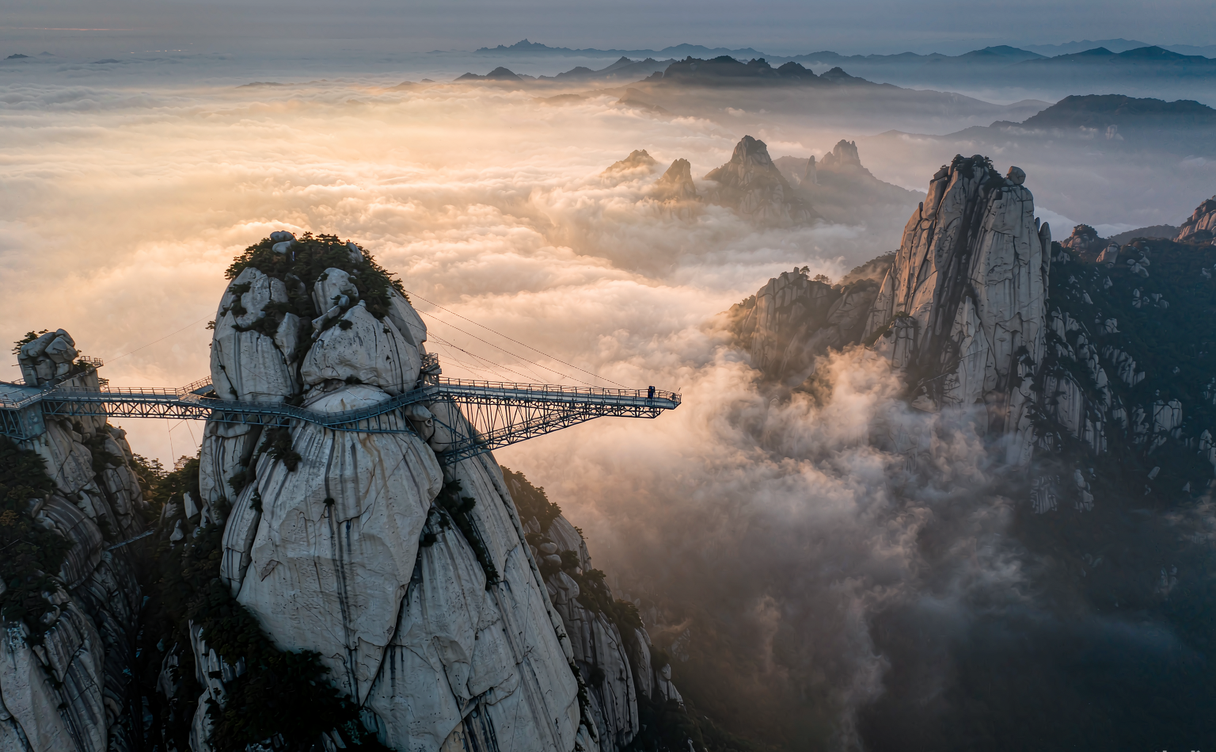
The headline attraction is the Baishi Mountain glass walkway, a transparent path bolted to the side of a cliff at roughly 1,900 meters above sea level. The main section runs about 95 meters and is built from layered tempered glass rated well beyond the weight of a crowd. You are issued fabric shoe covers at the entrance (¥10) so the glass stays scratch-free and your footing stays sure. There is a second, shorter cliff-hugging walkway on the west side as well. We tell nervous travelers the same thing every time: keep your eyes on the far wall, not your feet, and the vertigo passes in thirty seconds. The walkways are included with your mountain ticket, so there is no separate charge beyond the shoe covers.
How to get there
A Baishi Mountain to Beijing trip is straightforward by road. Most people drive, taking the Jinggang’ao Expressway south and then the Zhangshi Expressway west toward Laiyuan; the trip is about 200 kilometers and three and a half hours without traffic. If you would rather not drive, long-distance buses leave Beijing’s Liuliqiao Bus Station for Laiyuan several times a day (around ¥60–70, three hours), and from Laiyuan town a taxi to the east gate costs roughly ¥50. By rail, the practical high-speed hub is Baoding East, reached from Beijing in about an hour (second class around ¥52), with a connecting bus to Laiyuan of another ninety minutes. We usually build Baishi into a wider Hebei loop rather than a same-day dash, because the mountain deserves a full day and an early start. The Baoding travel guide explains the regional road network, and the Beijing first-time travel guide has the capital departure details.
Things to do at Baishi Mountain
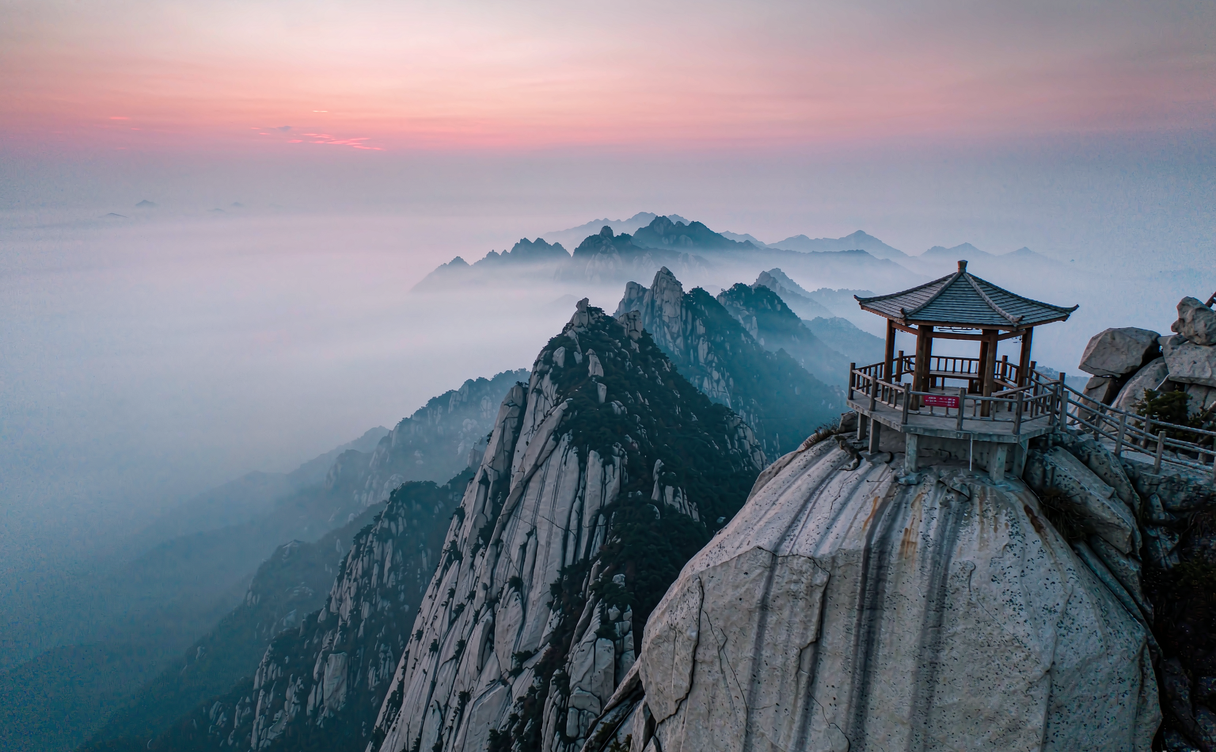
Beyond the walkways, things to do at Baishi Mountain center on the ridge loop. From the east gate you take the Xiangyunmen cable car up to the high trail, then follow a one-way circuit that passes the Double Heroes Peak, the Flying Stone (a boulder wedged improbably on a cliff edge), and the Peak Forest viewing decks. The walk is all boardwalk and stair, well maintained, with railings throughout. Allow four to five hours for the full loop if you stop for photos, which you will. At the top end there is a small temple and a cafe where you can buy instant noodles and hot corn (¥10–15) — not gourmet, but warming on a cold ridge.
Baishi Mountain hiking
For walkers who want more than the boardwalk, Baishi Mountain hiking extends down the back of the ridge on unpaved stone steps toward the valley. This is steeper and quieter, and it is where we send travelers who want to feel the granite up close rather than through glass. The descent to the valley car park takes about ninety minutes and saves the lower cable car fare, but only attempt it in dry weather — the steps get slick after rain. Whatever route you choose, the loop is one-directional by design, so once you start you commit to finishing the circuit before the cable cars stop around 5 p.m.
Best time to visit
The best time to visit Baishi Mountain is September and October, when the summer haze clears, the temperatures sit in a comfortable 12–20°C range, and the autumn light turns the granite a warm gold. June through August is green and lush but busier and more prone to afternoon thunderstorms that wipe out the cloud views. Winter brings spectacular rime ice (雾凇) on the peaks, but some walkways close in heavy snow and it is brutally cold up top. We strongly advise avoiding the National Day week of October 1–7, when the glass walkway can back up for an hour at a time. A regular weekend in late September is close to perfect.
Tickets and budget
Peak-season entry (April to November) is ¥150; the off-season rate drops to ¥90. The east-gate cable car one way is about ¥65 and a round trip about ¥130, while shoe covers for the glass walkway are ¥10. Budget ¥250–350 per person for the day including transport from Beijing if you carpool, or less if you bus it. For an overnight, the best hotels in Beijing make a comfortable base for a dawn departure, and a Laiyuan town guesthouse runs ¥120–200 a night if you prefer to sleep nearer the gate. Travelers continuing north can fold Baishi into a Chengde travel guide route, or head west toward Zhangjiakou for more mountain scenery.
Insider tips we give our own groups
Arrive at the east gate when it opens at 7 a.m. The first cable car beats both the tour buses and the cloud burn-off, so you get the ridge to yourself for an hour. Dress in layers even in summer: the summit can be ten degrees colder than Laiyuan town, and weather on the ridge shifts fast. After rain, wait for the sun — the sea of clouds is thickest in the hour after a clearing storm, which is also when the glass walkway photographs best. Finally, carry cash as well as a payment app; the upper cafes and the shoe-cover booth do not always take cards.
The scenic area publishes trail and weather notices through its official site, which is worth a glance the night before, because the mountain occasionally closes the high walkways during high wind. If you are also planning a city stop, the Shijiazhuang travel guide pairs well as a southern extension of the same trip.
The ridge, the bridge, and the clouds
Beyond the two walkways, the mountain hides a long suspension bridge swinging between two granite pinnacles, and a west-ridge path that most day-trippers never reach. We route photographers across it in the calm hour after the morning trains, when the light rakes sideways across the stone and the crowd has not yet filled the deck. The famous sea of clouds is not a daily guarantee — it forms when humid air meets the cold summit after rain — but on the right morning it pours into the valleys below the boardwalk and turns the peaks into floating islands. Locally the best odds run from late September through early November, right after a passing cold front. Laiyuan County itself is worth a meal: it is known for cured mountain bacon (腊肉) and a sour-cabbage hotpot (酸菜锅) that warms you fast after a windy descent. Guesthouses near the east gate rent rooms from ¥120, and a few even open a breakfast window before the 7 a.m. gate so you can eat and walk in together.
A note on weather and crowds
Baishi sits high enough that conditions change in minutes: a clear morning can build afternoon cloud that swallows the ridge, so we plan the glass walkway for first light. Weekday visits in September are the sweet spot — blue sky, thin crowds, and the chestnut forests on the lower slopes turning yellow. Avoid arriving after noon; the last cable car down leaves around 5 p.m., and the upper walkways close earlier when the wind picks up.
Arrive at the east gate by 7 a.m. to walk the ridge before the tour buses arrive.
Pack a windbreaker even in summer; the summit runs ten degrees colder than town.
Check the official site the night before, since high walkways close in strong wind.