

Choosing Beijing courtyard hotels lets you trade a glass tower for a walled siheyuan where generations of locals once lived. A siheyuan is the traditional courtyard residence of northern China: four buildings arranged around a central yard, closed to the street and open to the sky. Staying in one puts you inside the hutongs — the narrow alley neighborhoods that are the living texture of old Beijing — rather than above them in a high-rise lobby. This guide covers where these courtyard guesthouses sit, what they cost, how to book, and what to expect once the lane gate closes behind you.
What Exactly Is a Siheyuan?
The word siheyuan means “a courtyard enclosed on four sides.” The layout follows a strict north–south axis: the main north-facing hall was reserved for elders, while the side wings held younger family members and guests. A solid grey-brick wall hides the whole compound from the alley, and a moon-gate or carved screen often blocks the straight line of sight from the entrance — a nod to feng shui and privacy.
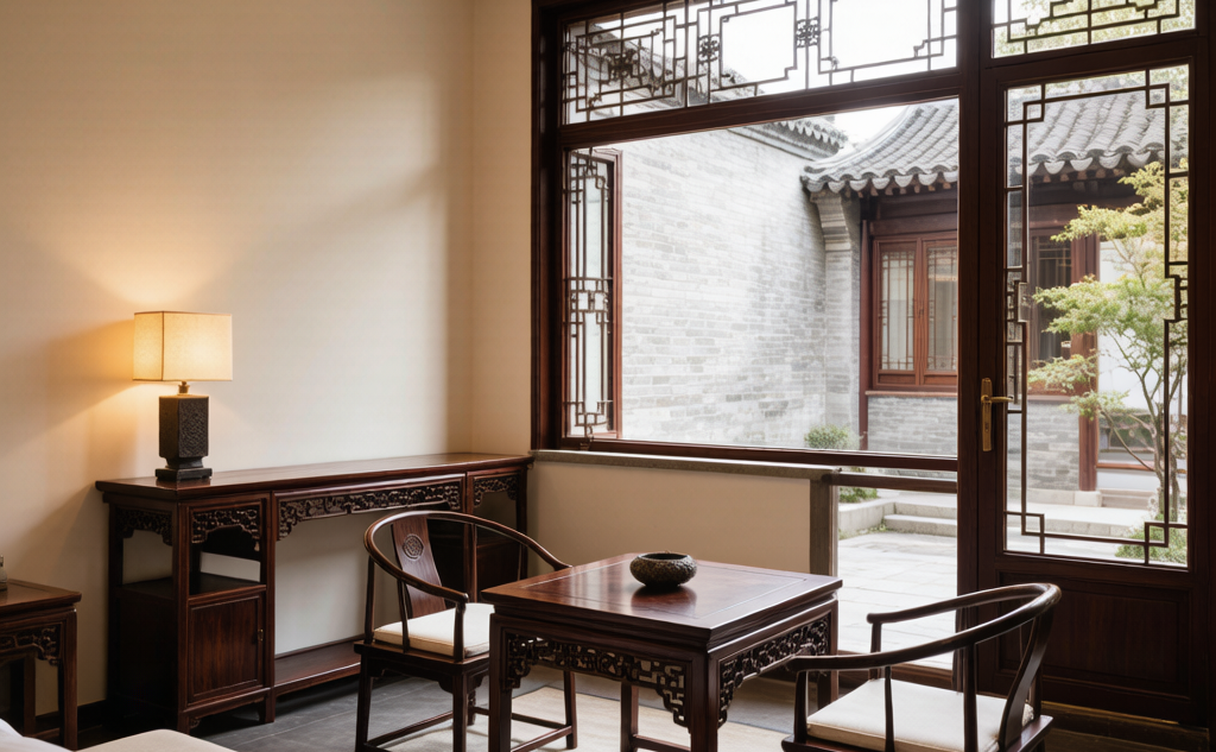
Many of today’s boutique courtyard hotels are restored siheyuan, some dating back a century or more. Restoration ranges from careful heritage conservation — exposed timber beams, lattice windows, grey-tile roofs — to light-touch makeovers that keep the footprint but modernize plumbing and heating. A true siheyuan boutique hotel preserves the courtyard feel: you step from a quiet hutong lane into a green-tiled sanctuary where the only traffic is the rustle of a pomegranate tree.
Why Sleep in a Hutong Instead of a Skyscraper
A hutong hotel Beijing experience is about proximity. Within a five-minute walk you may find a breakfast stall selling jianbing, a bicycle repair man, a calligraphy supply shop, and a centuries-old temple tucked behind a wall. You hear the city at human scale — footsteps, bicycle bells, the clack of mahjong — not the hum of an expressway.
Courtyards also run cooler in summer and quieter year-round than roadside hotels, because the thick walls and internal garden buffer street noise. For first-time visitors, the trade-off is charm versus convenience: hutong lanes can confuse ride-hail apps, and rooms are often smaller than a chain hotel’s. Our Beijing first-time travel guide explains how to navigate the lanes with offline maps and translation apps.
Best Neighborhoods for a Courtyard Stay
Picking the right lane matters as much as picking the right hotel. Here are the most traveler-friendly hutong districts for visitors deciding where to stay in Beijing hutongs:
- Nanluoguxiang and the surrounding “gorgeous alleys” (Jiaodaokou): The most famous hutong strip, lively by day and walkable to the Drum and Bell Towers. See our Beijing Nanluoguxiang guide for cafe and bar picks.
- Shichahai / Houhai: Lakeside hutongs with bars and rickshaw tours; atmospheric but noisier at night.
- Dongcheng around the Lama Temple: Quieter residential lanes, easy metro access, and good mid-range courtyard guesthouses.
- Qianmen / Dashilan: Recently restored commercial hutongs south of Tiananmen, polished but convenient.
For a deeper walk through these lanes, pair your stay with our Beijing hutongs walking guide. If you want the broad overview first, our main where to stay in Beijing article ranks districts by budget and travel style.
Courtyard Guesthouse vs Boutique Hotel
Not every “courtyard” is the same. Understanding the categories helps you book the right room and sets expectations for your Beijing boutique accommodation:
| Type | Typical price/night | Best for | Watch-outs |
|——|——————–|———-|————|
| Heritage boutique siheyuan | ¥900–¥2,500 | Design lovers, couples | Small rooms, few elevators |
| Independent courtyard guesthouse | ¥400–¥900 | Budget charm, longer stays | Inconsistent service |
| Chained “hutong-style” hotel | ¥700–¥1,500 | Reliable standards | Less authentic layout |
| Homestay courtyard | ¥250–¥500 | Immersion, language practice | Shared bath, basic comfort |
A courtyard guesthouse Beijing stay at the budget end can be wonderfully local, but confirm heating for winter and whether the “private courtyard” is truly private or shared with other guests. Our hostel vs hotel in China comparison helps if you are weighing social budget stays against private comfort.
Booking Tips and What to Expect
- Book direct when possible. Many small courtyards list on major platforms but give a cheaper rate or free upgrade via their own WeChat mini-site.
- Confirm the bathroom. Older siheyuan were not built with en-suites; some rooms still use a shared facility down the lane.
- Ask about heating and AC. Thick walls help, but Beijing winters are brutal and summers humid — climate control is essential.
- Check lane access. If you have heavy luggage or mobility needs, ask how far the car can drop you from the door.
- Expect thin windows. Traditional glazing means early risers and late drinkers are audible; pack earplugs.
For a curated shortlist of design-led properties across the country, browse our best boutique hotels in China.
Etiquette and the Daily Rhythm
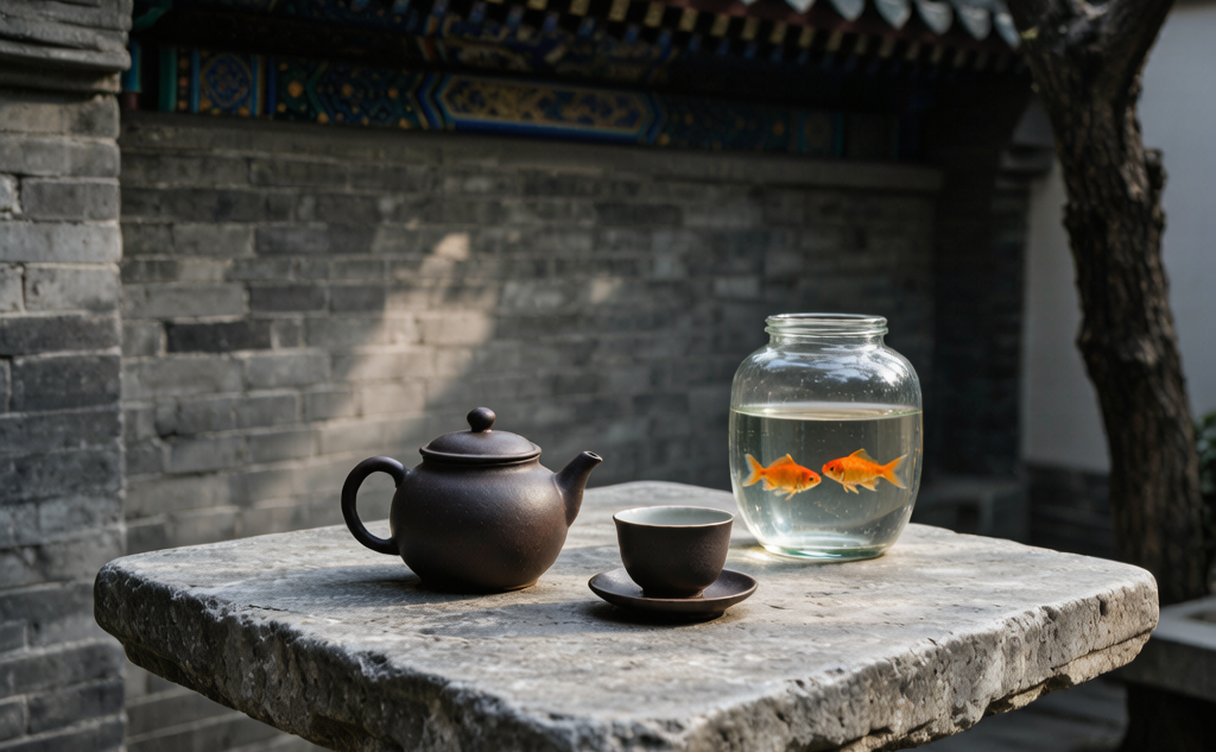
A courtyard is someone’s restored home, not a resort. Keep voices low after 10 pm, remove shoes where indicated, and treat the shared yard gently. Many courtyards serve a simple homemade breakfast — soybean milk, fried dough sticks, congee — and the host may help you summon a taxi or order dumplings. Tipping is not expected in China.
If you want the official cultural background on these historic residences, the Beijing Municipal Culture and Tourism Bureau publishes maps and heritage notes on protected hutong zones, including which lanes are officially preserved.
A Three-Night Hutong Plan
- Day 1: Settle in, walk to the Drum and Bell Towers, dinner at a nearby noodle shop.
- Day 2: Morning hutong walk, afternoon Lama Temple, evening lakeside stroll around Houhai.
- Day 3: Day trip to the Great Wall (your host can arrange a driver), back for a quiet courtyard night and a pot of jasmine tea.
Getting to Your Courtyard and Getting Around
Most Beijing hotel neighborhoods in the hutongs sit within a 15-minute taxi ride of a subway line, but ride-hail apps sometimes struggle to pinpoint a specific lane entrance. Before you arrive, save your host’s phone number and a pinned map location, and don’t be surprised if the driver calls to confirm the nearest gate. Once settled, the best way to explore is on foot or by rented shared bicycle — the lanes are too narrow for cars and far more charming at walking pace. A courtyard in Dongcheng or Nanluoguxiang puts you within easy reach of multiple metro stops, while Qianmen offers the bonus of a dedicated tourist subway line to the old city center.
Seasonal Notes for Courtyard Stays
Timing shapes the experience as much as the location. Spring (April–May) brings mild weather and blooming courtyard trees, making it the most comfortable season for sitting outside with tea. Summer is lush and green but humid, so confirm that your room has working air conditioning and a dehumidifier if you are sensitive to moisture. Autumn (September–October) is widely considered the best window: cool, clear, and golden, with the city’s famous blue skies returning. Winter turns a siheyuan magical under snow, with heated rooms and possibly a traditional kang bed, but always verify insulation and heating before booking, because older compounds can feel draughty despite the thick walls.
Who Should (and Shouldn’t) Book a Courtyard
A historic hotels Beijing stay suits travelers who value character over square footage, and who enjoy the spontaneity of lane-life. It is less ideal for those who need an on-site gym, 24-hour room service, or step-free elevator access — many courtyards are two stories with steep wooden stairs. Light sleepers should request a room away from the street-facing gate. If you love the idea but want a safety net of hotel standards, choose a restored boutique property rather than a bare-bones guesthouse for your first night.
Pros and Cons at a Glance
- Pros: Authentic setting, walkable old-town life, quieter than main roads, characterful design, friendly hosts.
- Cons: Smaller rooms, uneven service at budget tier, lane navigation can confuse apps, limited elevators, winter cold if heating is weak.