

This Suzhou food guide invites you to the kitchen of Jiangnan, the watery south where China’s scholar-gardens were built and the food is as refined and gentle as the scenery. The Suzhou food guide below explains what to eat in Suzhou, from the famous Suzhou noodles aozao eaten at dawn to the theatrical squirrel mandarin fish served at banquets. Suzhou sits among canals and classical gardens just west of Shanghai, and its cooking — part of the broader Jiangnan cuisine — leans sweet, delicate, and seasonal, a world away from the wheat-and-lamb north. Stroll Pingjiang Road food stalls, sit in a Suzhou tea house, and you will taste why this city has fed poets for a thousand years.
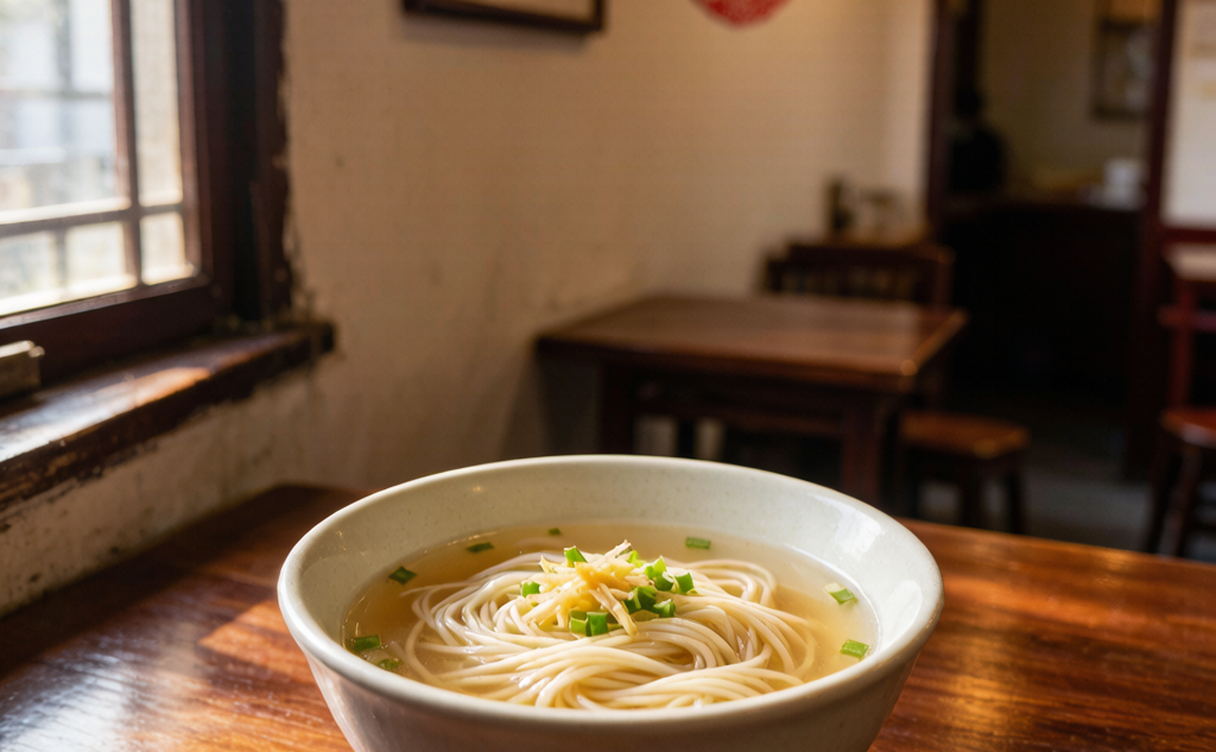
The Flavor of Jiangnan
Suzhou cooking is the gentle pole of Chinese food: light broths, river fish, young bamboo, and a measured sweetness that comes from rock sugar and the local palate. The city’s chefs prize “xian” (umami) drawn from stock and fermentation rather than chili or heavy spice. Jiangnan cuisine, which Suzhou shares with nearby Hangzhou and Shanghai, values appearance and balance, so dishes are pretty and restrained. For the regional map, our Chinese food guide to the 8 great cuisines places Jiangsu (of which Suzhou is a pillar) among the eight, and explains how its sweetness differs from the south’s other styles. The city itself is introduced on Wikipedia’s Suzhou page, which notes its canals, gardens, and long reputation as a culinary and cultural capital of the Yangtze Delta.
Must-Eat Dishes
Suzhou Noodles Aozao
The Suzhou noodles aozao are a morning ritual: thin wheat noodles in a clear, sweet-savory broth made from a long-simmered stock, topped with braised pork, shrimp, or a seasoned egg. “Aozao” refers to the rich base, and locals queue at famous shops before work, eating standing or at tiny tables in minutes. Order a “jiaozao” (with toppings) and watch the counterman whip it up in under a minute. The broth is the point — sip it to the last drop. A bowl runs 15 to 30 yuan and is the most authentic Suzhou breakfast you can have.
Squirrel Mandarin Fish
The squirrel mandarin fish (songshu guiyu) is Suzhou’s signature banquet dish: a whole mandarin fish scored, fried until the flesh blossoms like a squirrel’s tail, then doused tableside with a hot sweet-and-sour sauce. It is as much theater as food, crisp outside and tender within, with a glossy red-brown glaze. Found at proper restaurants rather than street stalls, it is the dish to order when you sit down for a real Jiangnan meal, ideally with a garden view.
Pingjiang Road Food
The Pingjiang Road food scene is the grazer’s joy: a canal-side lane of small shops selling sticky rice rolls, sweet Osmanthus cakes, lotus-root starch, and fried glutinous treats. It is the easiest place to snack your way through Suzhou’s dessert side while watching the boats. Go in the late afternoon when the light hits the water and the stalls are all open. Our Suzhou travel guide maps Pingjiang Road and the gardens around it so you can eat between sights.
Suzhou Mooncakes
Unlike the dense Cantonese mooncakes, Suzhou mooncakes (Su shi) have a flaky, layered pastry with savory or sweet fillings — pork, red bean, or rose. They are eaten year-round, not only at the Mid-Autumn Festival, and the savory pork version is a local pride. Buy a box from a old bakery near Guanqian Street and eat them warm; the flakiness shatters on the first bite.
Suzhou Tea Houses
The Suzhou tea houses are where the city slows down: quiet rooms off the gardens serving green tea from nearby Dongting, often with a sweet snack and sometimes a pingtan (story-singing) performance. A pot and an hour cost little and reset your pace after a morning of garden-walking. The best sit beside water, so you hear the canal while you sip.
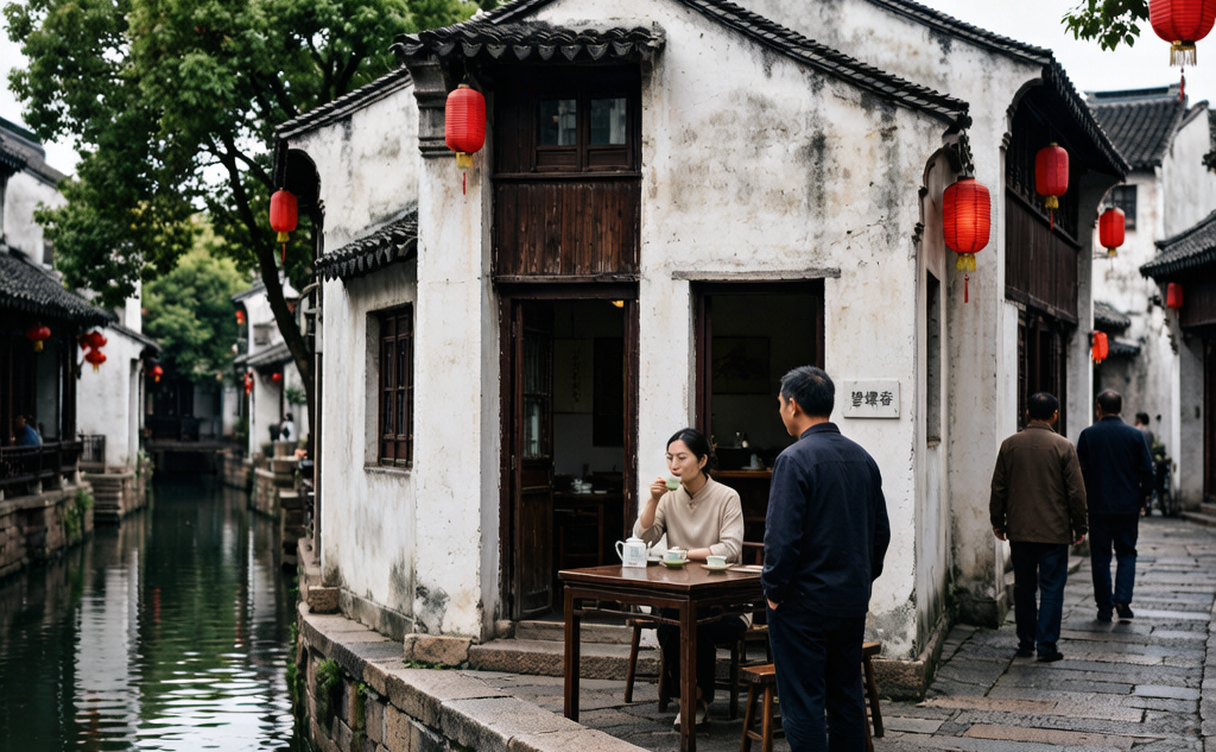
A Day of Eating in Suzhou
- Dawn: Suzhou noodles aozao at a famous corner shop, eaten quickly like a local.
- Mid-morning: Osmanthus cake and a walk along Pingjiang Road food stalls.
- Lunch: Squirrel mandarin fish and a river-green vegetable at a garden restaurant.
- Afternoon: A Suzhou tea house session with pingtan and a sweet.
- Evening: Savory Suzhou mooncakes and a canal-side stroll.
Beyond the City: Tongli and Hangzhou
Suzhou’s food travels well into the water towns. The Tongli water town guide covers the canal village where the same noodles and cakes come with slower, quieter views and family-run kitchens. For a bigger Jiangnan comparison, the Hangzhou travel guide shows the West Lake style — slightly less sweet, more broth-driven — so you can taste how the region’s cities differ. Together with Suzhou, they form the classic Yangtze Delta food loop, and our China food tour guide can chain them into one journey with Shanghai in between.
Where to Eat
- Guanqian Street: The old commercial core, dense with bakeries, noodle shops, and banquet restaurants; touristy but central.
- Pingjiang Road: Scenic snacking and a few sit-down spots with canal views.
- Shiquan Jie: A dining street with stronger restaurants for the squirrel fish and multi-course meals.
- Garden-area teahouses: For the slow tea experience rather than a full meal.
For sightseeing between meals, the Suzhou Humble Administrator’s Garden is the city’s masterpiece and an easy pairing with a nearby tea house.
Sweet Tooth: Suzhou’s Desserts
Suzhou’s desserts are a category of their own. Beyond mooncakes and Osmanthus cake, try:
- Tian jiu niang: Fermented rice in sweet wine broth, gently alcoholic and warming.
- Lu sha yuanzi: Glutinous balls in red-bean paste, similar in spirit to Ningbo’s but sweeter.
- Osmanthus lotus-root starch: A silky, fragrant pudding sold along the canals.
- Fried glutinous rolls: Coated in sugar and sesame, a walk-and-eat favorite on Pingjiang Road.
Practical Tips for Eating in Suzhou
- Eat noodles early: The best broth sells out by mid-morning; aim before 9:00 for the classics.
- Expect sweetness: Jiangnan cuisine is noticeably sweet; if you prefer savory, ask for less sugar (shao tang).
- Book banquet dishes: Squirrel mandarin fish needs a whole fish, so order ahead at restaurants.
- Cash and apps: Small stalls like cash or mobile pay; a translation app handles menus.
- Pace with tea: A Suzhou tea house break keeps the rich meals from weighing you down.
FAQ
Is Suzhou food very sweet?
Yes, relative to most of China; the sweetness is gentle and from sugar, not fruit, and you can request less.
What is the cheapest authentic meal?
A bowl of Suzhou noodles aozao, 15 to 30 yuan, eaten standing at a local shop.
Are there vegetarian options?
Yes — river vegetables, tofu, and many desserts are meat-free, though broths may contain stock.
How is Suzhou food different from Hangzhou?
Suzhou is a touch sweeter and more snack-focused; Hangzhou is broth-lighter and lake-fish driven.
Final Thoughts
This Suzhou food guide traces a city that eats as gracefully as it gardens. From the Suzhou noodles aozao at dawn to the squirrel mandarin fish at dinner, from Pingjiang Road food to a quiet Suzhou tea house, what to eat in Suzhou is a lesson in Jiangnan cuisine’s restraint and sweetness. Add the flaky Suzhou mooncakes and a day trip to Tongli, and you have a meal plan as pretty as the canals. Bring a sweet tooth, a slow afternoon, and an appetite for the subtle.