

I’ll be honest: the first time I walked into Nanluoguxiang, I thought I’d made a mistake. It was a Saturday afternoon, the main alley was packed shoulder-to-shoulder with tour groups and bubble-tea umbrellas, and a shop was blaring pop music at a volume that should be illegal. I nearly turned around and walked straight back to the metro. Then a friend grabbed my sleeve, pulled me into a side branch alley, and everything changed. The crowd thinned to a murmur, a courtyard gate stood open with the smell of roasting coffee beans drifting out, and an old man was trimming a potted pomegranate tree like the chaos next door didn’t exist. That is the secret of Nanluoguxiang, and it’s the one most day-trippers never learn: the famous alley is just the front door. The real Beijing is in the lanes running off it.
What Nanluoguxiang Actually Is
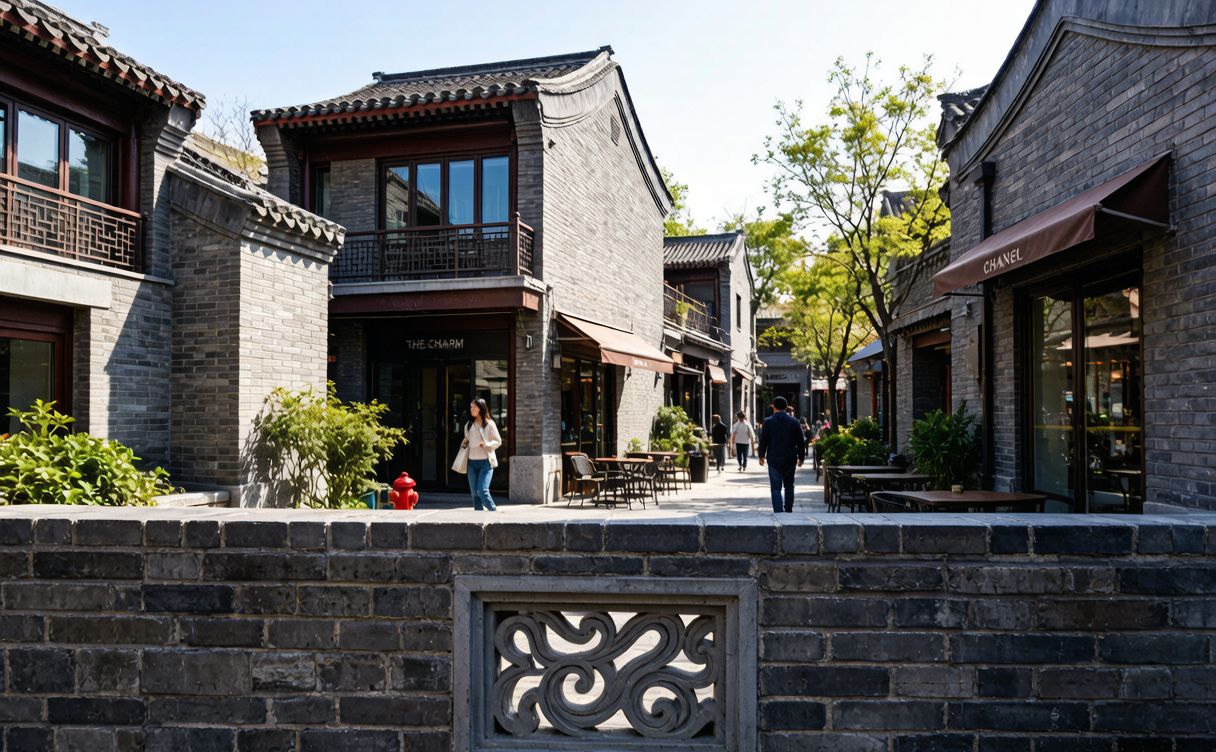
Nanluoguxiang (南锣鼓巷, literally “South Gong and Drum Lane”) is an 800-meter-long hutong — one of the best-preserved areas of traditional courtyard housing in the old city — running north to south between Gulou (the Drum Tower) and Bingmasi Hutong. What makes it unusual is its shape. Eight narrower hutongs branch off to the east and eight to the west, like the ribs of a fish, laid out during the Yuan dynasty some 700 years ago. Stand at the north end and look down the main lane and you can still read that grid in the rooftops.
The neighborhood was never famous until the mid-2000s, when artists and cafe owners started renting the old courtyards. Within a few years it went from quiet residential block to one of Beijing’s most photographed streets. The city has since capped the number of commercial shops to keep it livable, but the east-west branch alleys are where you’ll find the courtyard cafes, independent bookstores, and quiet grey-brick lanes that make the place worth your time.
Getting There and When to Go
Take Beijing Metro Line 6 or Line 8 to Nanluoguxiang Station (Exit E is the convenient one). You’ll surface about 200 meters from the south entrance. It’s also an easy 15-minute walk northeast from the Drum and Bell Towers, and a straight shot from the northern end of the Forbidden City area if you’re combining sights.
Timing matters more than people expect. The main alley is genuinely unpleasant on weekend afternoons — I’m talking elbow-to-elbow, can’t-walk-in-a-straight-line crowded. The sweet spots are weekday mornings (before 11 a.m.) and weekday evenings after 7 p.m., when the side cafes are lit warm and the tour groups have gone home. If you only have a weekend, go early. For the bigger picture on climate and crowd patterns across the year, our guide to the best time to visit Beijing breaks it down by season.
The Main Alley — Skim It, Don’t Live In It
Let me save you some disappointment. The central lane is fun for about twenty minutes and then it’s repetitive: the same three flavors of milkshake, the same “I heart Beijing” fridge magnets, the same fried-cheese stalls. It’s not fake, exactly, but it’s the theme-park version of a hutong. Walk it once, buy a snack if something smells good, take your photos of the grey-tile roofs, and then make a deliberate turn into one of the side alleys. That turn is the whole point of this guide.
A few things on the main strip are worth a stop, though. The tiny shops selling hand-pressed chrysanthemum tea and the older gentlemen carving seals (印章) by hand are genuinely local crafts. And if you’ve never tried bingtanghulu — hawthorn berries dipped in hardened sugar on a stick — this is a fine place to grab one for a few yuan.
Where to Wander: The Branch Alleys
This is the part I wish every visitor knew about. The east and west alleys are where Nanluoguxiang earns its reputation.
Mao’er Hutong (帽儿胡同) — my favorite detour
Head into Mao’er Hutong, the third alley on the west side, and you step into a different century. This is one of the most intact courtyards in the city, including the former residence of a Qing-dynasty prince and the stunning Ke Garden (可园), a private garden tucked behind high walls. You can’t always go inside the private residences, but the lane itself — with its worn stone pavers, grapevine trellises, and the occasional open courtyard gate — is the wander itself. I once spent a whole unhurried hour here just watching light move across the grey brick.
Dongmianhua Hutong and the quiet east side
On the eastern side, Dongmianhua Hutong (东棉花胡同) has some of the prettiest restored courtyard doors in the neighborhood, with carved stone drum piers flanking the entrances. It’s also where several of the indie cafes and a well-loved record shop hide. Go slow. The joy here is not a destination; it’s the act of turning a corner and finding a wooden gate painted shutters-blue, with a cat asleep on the step.
Ju’er Hutong — where old meets new
South of the main drag, Ju’er Hutong (菊儿胡同) is famous among architecture people for a 1990s experiment that slotted modern courtyard apartments into the old fabric without bulldozing it. It’s a thoughtful, low-rise maze and a good reminder that hutongs aren’t museums — they’re still housing, still evolving.
Hutong Cafes and Where to Actually Sit Down
The cafe scene is the reason Nanluoguxiang shows up on so many “cool Beijing” lists, and most of the good ones are off the main lane. A few patterns I’ve noticed:
- Courtyard cafes are the prize. Look for a wooden sign and an open gate; inside you’ll often find a renovated siheyuan (四合院) with a fig tree in the middle and coffee roasted that week. They charge more than a chain, but you’re paying for the courtyard, not just the cup.
- Rooftop spots near the Drum Tower end give you a view over the grey-tile sea. Go for a late-afternoon flat white and watch the towers turn gold.
- Independent roasters have multiplied in the branch alleys. Don’t be shy about ducking into one with three tables — some of my best conversations in Beijing started with a barista asking where I was from.
One practical note: many of these cafes have limited seats and no English menus, but staff are used to foreigners pointing at the espresso machine. A translation app covers the rest. If you want more on daily-life apps and paying by phone while you’re out and about, our Beijing first-time travel guide covers the essentials.
Food Beyond the Bubble Tea
Nanluoguxiang is not a dining destination in the serious sense — for that you’d head elsewhere — but you can eat well if you know the move. The branch alleys hold a handful of noodle counters, a couple of excellentjianbing (savory crepe) stalls at the north entrance, and small restaurants doing homestyle northern Chinese food. For a proper Peking duck dinner after a day of wandering, our write-up on where to eat Beijing duck points you to the right neighborhoods and what a fair price looks like.
My own routine: grab a jianbing from the north-end cart, wander the east alleys with it, then settle in a courtyard cafe for an hour before the light goes. Cheap, slow, and exactly the kind of afternoon that makes Beijing stick in your memory.
A Walking Route I Actually Recommend
If you want a half-day plan rather than random wandering, here’s the loop I give friends:
- Start at the Drum Tower and climb it if you like (short, cheap, good rooftop view).
- Walk south into Nanluoguxiang from the north entrance — skim the main alley, don’t dawdle.
- Turn west into Mao’er Hutong, wander to the Ke Garden wall, then loop back.
- Cross to the east side via Dongmianhua Hutong, poking into a cafe or the record shop.
- Drop south to Ju’er Hutong, then exit toward Gulou Dajie for dinner or a metro ride.
That’s roughly 2 to 3 hours with a coffee stop, and it captures both the postcard version and the real one. If you’re building a longer stay around this, our Beijing 3-day itinerary slots Nanluoguxiang neatly into a hutong-and-temples day.
Pairing It With Nearby Sights
Nanluoguxiang sits in the dense, walkable heart of old Beijing, so it pairs naturally with other classics. The Forbidden City is about a 20-minute walk south; our Forbidden City tickets guide explains how to book ahead, because you must. The Temple of Heaven and the Summer Palace are farther out but easy metro rides if you want a full imperial circuit. And if you’re deciding which district to base yourself in, our where to stay in Beijing guide rates the hutong-adjacent areas — staying within walking distance of Nanluoguxiang is, in my opinion, the most pleasant base in the city.
A Note on Respect and Reality
These are people’s homes. Most of the courtyards behind those gates are not attractions — families live there, hang laundry, and ride electric bikes through the lanes. Don’t push into open courtyards that are clearly private, keep your voice down in the residential alleys, and ask before photographing people. The neighborhood works because residents and visitors share the space; a little courtesy keeps it that way. For a fuller rundown of local etiquette and what not to do, our Beijing overview threads hutong manners into the wider list of things worth doing.
The history of the area is documented and protected as part of Beijing’s old city planning, and you can read the official conservation framing on the Beijing Municipal Culture and Tourism Bureau site, which covers the hutong preservation zones in detail.
My Honest Take
Nanluoguxiang is easy to dismiss as touristy, and the main alley deserves some of that reputation. But give it twenty minutes past the bubble tea and into the side lanes, and it becomes one of the most human, layered places in Beijing — part living neighborhood, part open-air museum, part coffee-crawl. Go on a weekday, turn off the central strip early, and let the alleys decide your route. That’s the version of Nanluoguxiang worth writing home about.