

People land in Chengdu expecting one thing — fire — and leave confused because the food is also sour, sweet, nutty, and weirdly fragrant. After eating my way across the province for a decade, I wrote this Sichuan cuisine guide to explain what the cuisine actually is, which dishes to chase, and how to order without setting your mouth on permanent alert. The short version of what is Sichuan food: a toolbox of twenty-odd flavor profiles built on chili and Sichuan pepper, not just heat.
The Core Idea: Mala and Beyond
The signature is mala (麻辣), the tandem of ma (numbing) from Sichuan pepper (花椒) and la (heat) from chili. But reducing Sichuan to mala misses the point. The province’s real genius is compound flavors (复合味), where a single dish balances several notes. The ones worth knowing:
- Yuxiang (鱼香, “fish-fragrant”): No fish involved. It is a sweet-sour-savory glaze of pickled chili, garlic, ginger, and scallion. Try it on pork shreds.
- Guaiwei (怪味, “strange flavor”): A cold-dish profile mixing sesame, soy, vinegar, chili, and a hint of sweetness. Found on chicken or peanuts.
- Huli (糊辣, “toasted chili”): Dried chilies and Sichuan pepper quick-fried until smoky, used in bang bang chicken.
- Suanla (酸辣, “hot and sour”): Soup-based, lighter, common in noodle broths.
Understanding these lets you read a menu instead of guessing. The Sichuan snacks guide covers the street-side versions of many of these flavors. For a scholarly overview of the tradition, the Sichuan cuisine page on Wikipedia traces its history back to the Qing-era court.
Dishes to Try First
If you only eat five things, make them these Sichuan dishes to try:
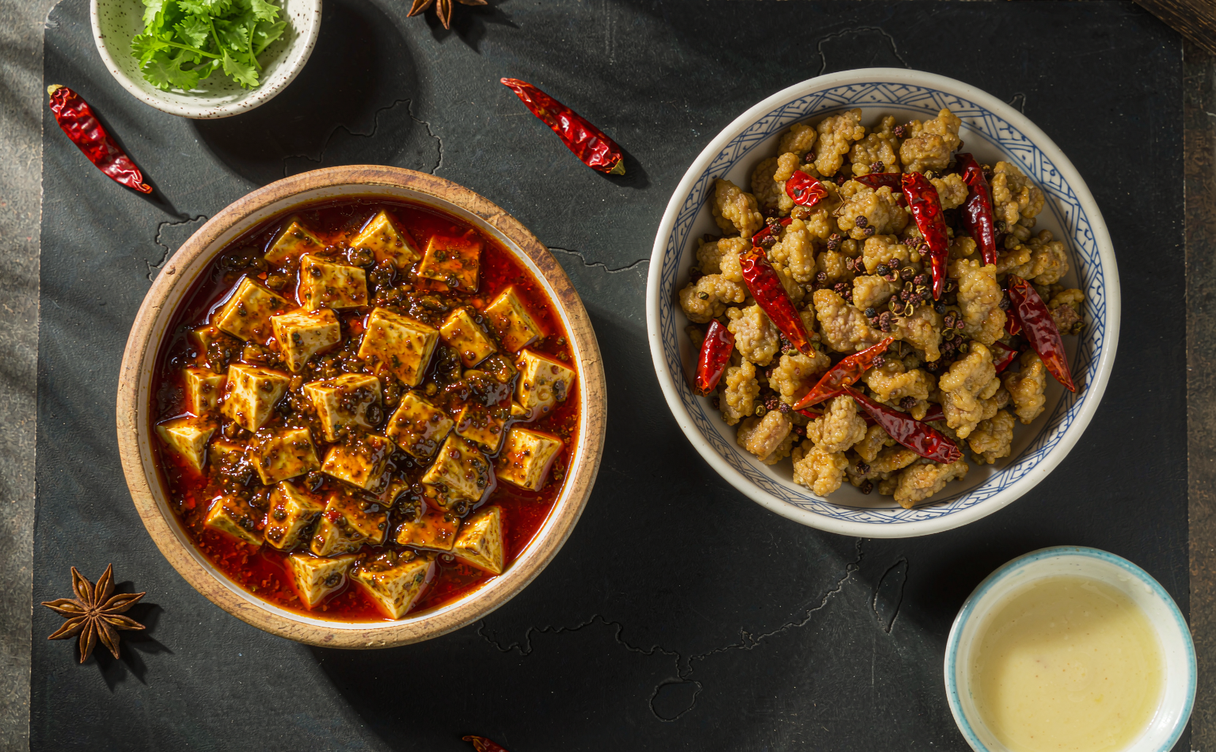
1. Mapo tofu (麻婆豆腐): Silken tofu in a chili-bean and beef gravy, finished with numbing pepper. Order it “shao ma” (less numbing) if you are new.
2. Hui guo rou (回锅肉, “twice-cooked pork”): Belly pork refried with leeks, fermented bean, and chili. The everyday classic.
3. Gong bao ji ding (宫保鸡丁, “kung pao chicken”): Diced chicken, peanuts, and dried chili in a gentle sweet-sour sauce — the gentlest entry point.
4. Shui zhu yu (水煮鱼, “boiled fish”): Poached fish in a deep-red chili oil bath. Looks lethal, eats aromatic.
5. Fu qi fei pian (夫妻肺片, “husband-and-wife lung slices”): A cold offal salad in chili oil; despite the name it is beef tripe and tendon, no lungs.
6. Zhong shui jiao (钟水饺): Chengdu dumplings in a sweet-spiced soy-chili sauce, a breakfast favorite.
These six span the flavor range and show why the Sichuan mala flavor is only one chapter.
How the Province Differs by City
Sichuan is not one taste. The regional split matters when you travel:
- Chengdu: The capital plate is rounded, a touch sweet, snack-heavy. Great for first timers and timid palates.
- Leshan: A snack paradise an hour south — tofu puddings, crispy pork, and the best street grazing in the province.
- Zigong (Yanbang cai, “salt-bank cuisine”): The spice capital. Fierce, salty, fresh-water fish driven by the old salt-trade kitchens. Eat here only if you truly love heat.
- Yibin: Home of ran mian (燃面, “burning noodles”), a dry chili-oil noodle that is all texture and fragrance.
- Nanchong: Known for Zhangfei beef (张飞牛肉), a dark cured beef, and a milder countryside style.
When you plan the route, the Chengdu travel guide pairs naturally with a Leshan day trip for snacks. For a different regional contrast, the Lijiang food guide and the Hangzhou food guide show how other Chinese regions handle spice and sweetness.
About Hotpot (Briefly)
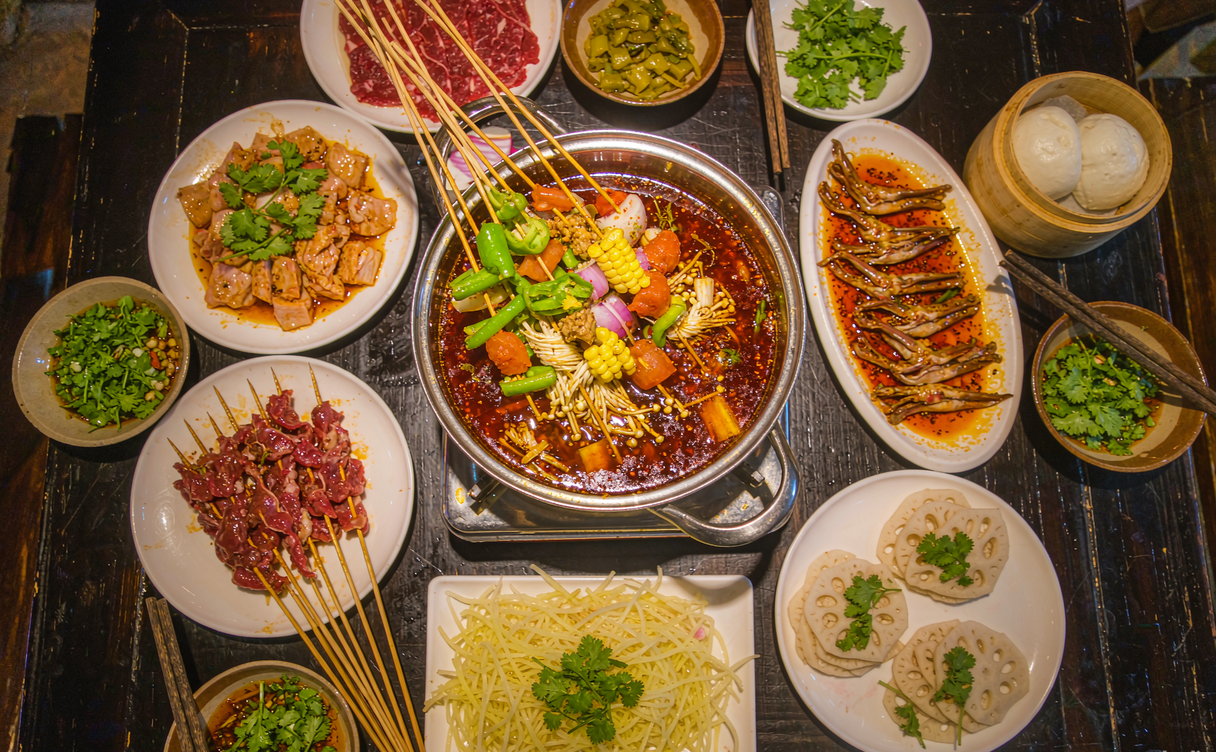
Sichuan hotpot deserves its own study, so I will keep this short: it is a simmering cauldron of mala broth where you cook meats and vegetables at the table. The definitive version lives in our Chengdu hotpot guide, which covers broth types, dipping sauces, and etiquette. On a province level, just know that Chongqing style is fiercer and oilier than Chengdu style, and that you can always ask for a yuanyang (鸳鸯) pot split between spicy and clear broth.
Ordering and Spice Communication
The single most useful skill is telling the kitchen your limit. Use these phrases, or show them on your phone:
- “Bu yao la” (不要辣): no chili at all.
- “Wei la” (微辣): mild.
- “Zhong la” (中辣): medium.
- “Te la” (特辣): extra hot — only if you mean it.
- “Qing shao huajiao” (请少花椒): please use less Sichuan pepper, the numbing part.
Restaurants respect these; I have never been ignored when I asked for wei la. If you are traveling by rail between cities, the China train dining food guide explains what to eat on board so you arrive hungry but not starved.
Tea, Beer and Cooling the Burn
Sichuan tables always have a drink to reset your palate. The classic local soda is 冰粉 (bing fen), a trembling bowl of brown-sugar jelly with peanuts and raisins that cools the mouth better than water. A cold 雪花 (Snow) beer or a sweet 王老吉 (Wong Lo Kat) herbal drink does the same. Avoid washing heat away with more chili oil; that just spreads it. If a dish lands too hot, eat a spoon of plain rice or a bite of the restaurant’s pickled vegetable, which locals use as the true fire extinguisher. Ordering a mild side dish alongside your spicy ones is not weakness — it is how Sichuan families actually eat, balancing the table so no single flavor dominates. I learned this from a Chengdu grandmother who scolded me for ordering three mala plates and nothing else, then made me try her cold sweet-sour lotus root.
What It Costs
Per-person spending in Sichuan is friendly:
- Street snack crawl: ¥20–40 (CNY) for a full belly of dumplings, noodles, and skewers.
- Casual restaurant: ¥50–90 per person for three shared dishes and rice.
- Mid-range famous-brand spot: ¥100–180 per person, especially in Chengdu’s tourist quarters.
- Fine dining (e.g., a celebrated mapo tofu house): ¥200–350 per person.
Portions are built for sharing, so order one dish per person plus a vegetable and you will not overpay.
Sichuan vs Hunan
A note on the Sichuan vs Hunan cuisine question I get constantly: Hunan (Xiang) food is straight dry heat — fresh chilies, no numbing, no heavy sweet balance. Sichuan is rounder, perfume-driven, and built on the numbing pepper. If you can handle Hunan, you can handle medium Sichuan; if Sichuan pepper makes your lips buzz unpleasantly, lean toward Hunan or ask for less huajiao.
Quick Tips Before You Go
A few habits that made my Sichuan eating smoother: look for restaurants where the locals queue, not the ones with the biggest photo menus aimed at tour groups. Ask to see the dishes at the counter if there is no English menu; pointing works and the staff usually enjoy explaining. When a dish arrives far hotter than promised, do not suffer in silence — most kitchens will remake a milder version if you show the phrase. Keep small bills; some hole-in-the-wall spots on the Chengdu circuit are cash-only. And pace yourself across the day: five shared plates beats five mala plates, which is how you keep tasting instead of just sweating.
Practical FAQ
Is Sichuan food always spicy? No. Yuxiang, guaiwei, and sweet-sour dishes prove the range; ask for wei la and you will be fine.
What if I hate the numbing feeling? Say “qing shao huajiao.” Many dishes work without Sichuan pepper.
Is it safe to eat street food? Generally yes at busy stalls with high turnover. I have eaten hundreds of street servings without trouble.
Can vegetarians eat well? Yes — mapo tofu (ask for no meat), dry-fried green beans, and tofu puddings are common meat-free picks.
Where is the best Sichuan restaurant in China? Chengdu and Zigong are the two poles; for depth go Zigong, for comfort go Chengdu.