

Zhangjiajie Travel Guide 2026: Avatar Mountains, Tianmen Mountain & What Foreign Visitors Need to Know
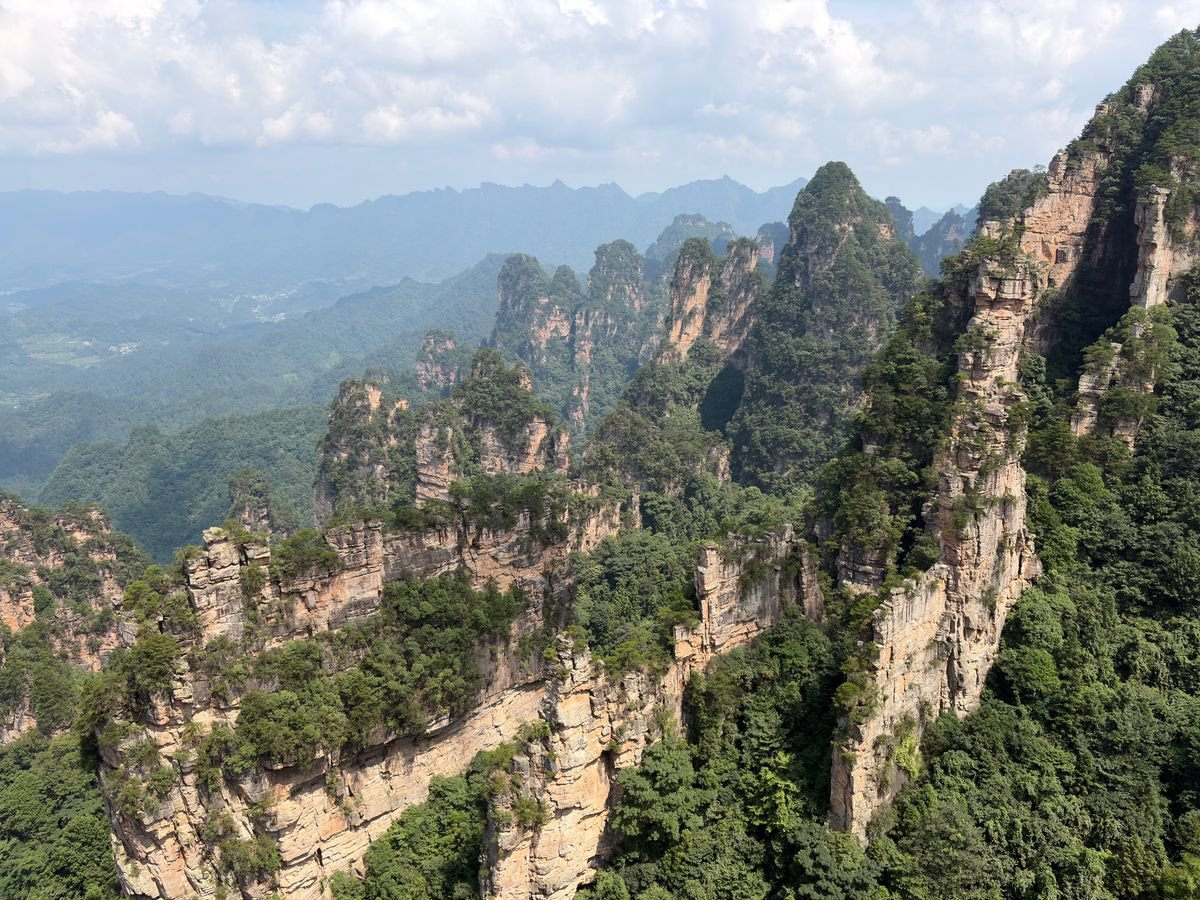
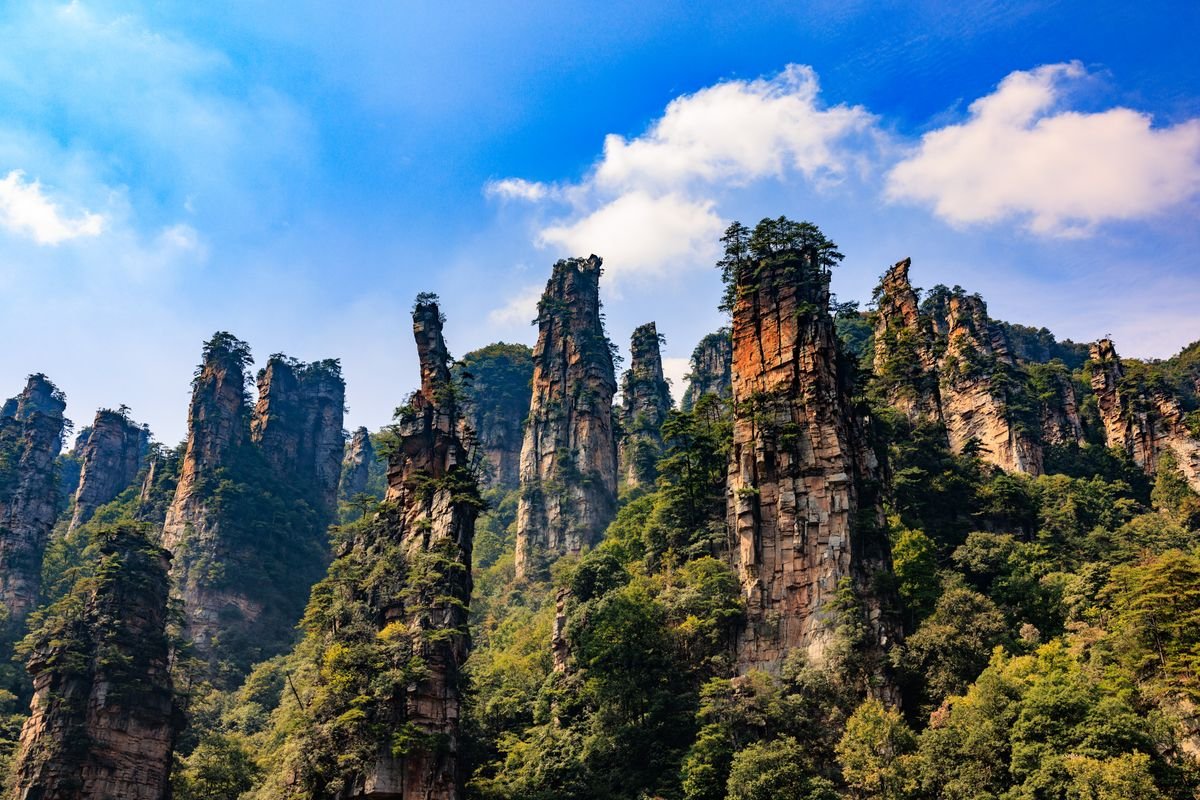
Zhangjiajie is a national park in northwestern Hunan Province, China, famous for more than 3,000 quartz-sandstone pillars that inspired the floating “Hallelujah Mountains” in the movie Avatar. Most first-time foreign visitors need three to four full days to see it properly. The best months are April–May and September–November; the months to avoid are July–August and the first week of October (National Day Golden Week). It is not especially expensive compared with other world-class natural wonders, and it is reasonably easy to reach by flight to Zhangjiajie Hehua Airport (DYG) or by high-speed train to Zhangjiajie West Station. The headline attraction many travelers ask about — Tianmen Mountain’s “Stairway to Heaven” — is a real 999-step staircase climbing to a giant natural rock arch. This guide answers the practical questions foreign travelers actually type into Google before booking.
Where Is Zhangjiajie? (Where in China Is Zhangjiajie?)
Zhangjiajie sits in the northwest of Hunan Province, in central-south China, about 320 km (200 miles) northwest of Changsha, the provincial capital. The scenic core is the Wulingyuan Scenic Area, a UNESCO World Heritage Site inscribed in 1992 for its 3,000-plus sandstone pillars, deep ravines, and subtropical forest. The nearest major transportation hub is Changsha, which has an international airport and is the usual gateway if you are coming from another Chinese city. If you are planning a broader trip, our China travel for first-timers guide covers the pre-flight booking steps in detail.
How Many Days Do You Need in Zhangjiajie?
The short answer: three days is the minimum, four is comfortable. Two full days go to Zhangjiajie National Forest Park (the pillar landscape, including Yuanjiajie, Tianzi Mountain, and the Bailong Elevator), and one day goes to Tianmen Mountain near the city center. Add a fourth day if you also want the Grand Canyon Glass Bridge.
| Day | Area | Highlights |
|---|---|---|
| Day 1 | Wulingyuan / Yuanjiajie | Avatar Hallelujah Mountain, First Bridge Under Heaven, Bailong Elevator |
| Day 2 | Tianzi Mountain & Yangjiajie | Sea of clouds, needle-like spires, Ten-Mile Gallery mini-train |
| Day 3 | Tianmen Mountain | 7.5 km cable car, 999-step Stairway to Heaven, glass skywalk, 99-Bend Road |
| Day 4 (optional) | Grand Canyon Glass Bridge | Glass-bottom bridge, canyon walk, boat ride |
Trying to compress everything into two days means rushing what should be a slow, contemplative experience — and you will walk 15,000–25,000 steps a day on uneven stone paths.
Best Time to Visit — and the Months to Avoid
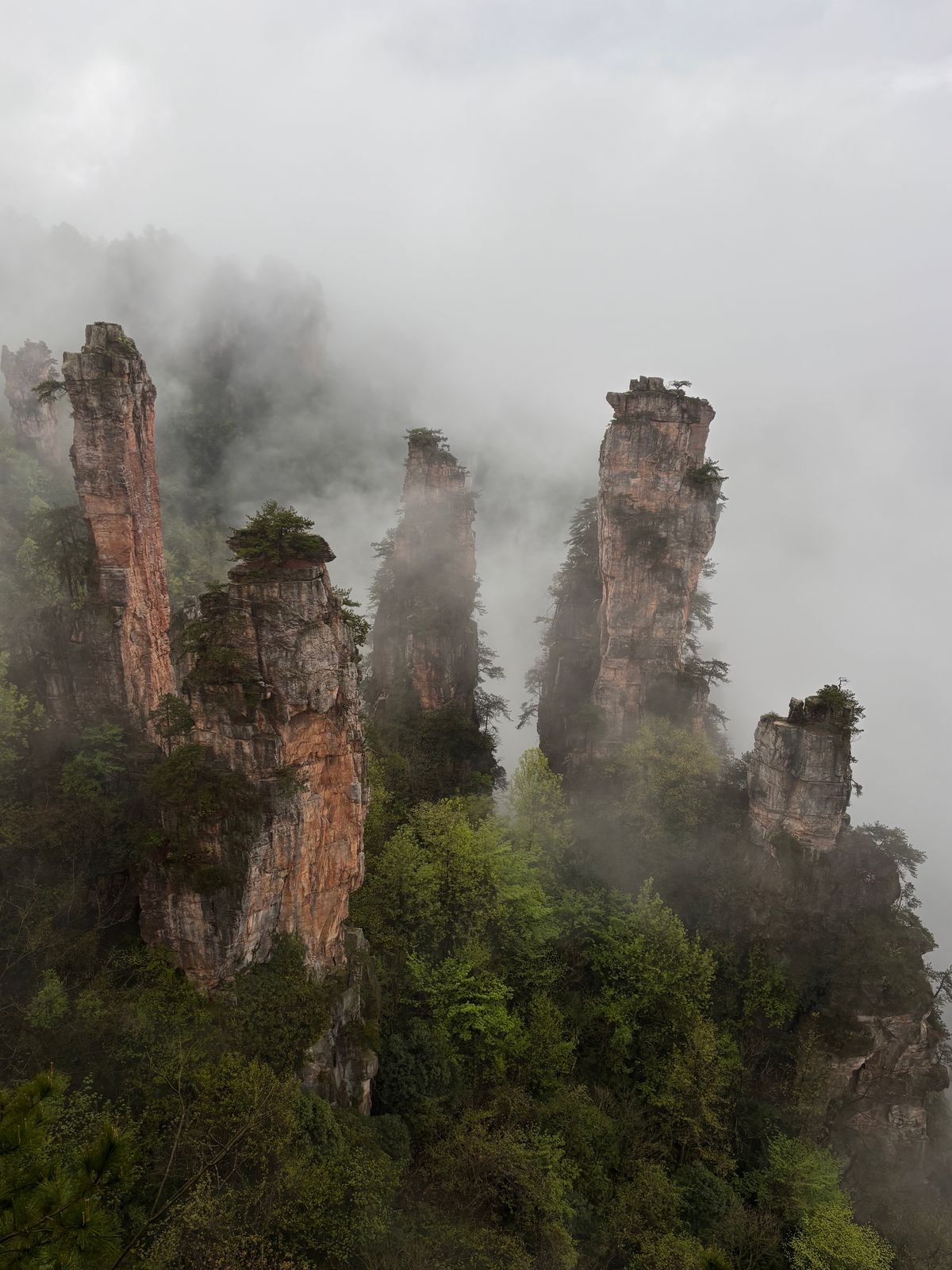
Zhangjiajie has a humid subtropical climate. The two clearly best windows are spring (April–May) and autumn (September–November). Spring brings fresh green foliage and frequent mist that makes the pillars look otherworldly; autumn gives the clearest skies, comfortable hiking temperatures (12–22°C), and golden high-elevation color.
| Season | Weather | Crowds | Verdict |
|---|---|---|---|
| Apr–May | 15–25°C, misty, occasional rain | Moderate | Best (most atmospheric) |
| Jun–Aug | 25–35°C, humid, afternoon storms | Very high | Avoid (heat + summer-holiday crowds) |
| Sep–Nov | 12–22°C, clear, colorful | Moderate–low | Best (most reliable views) |
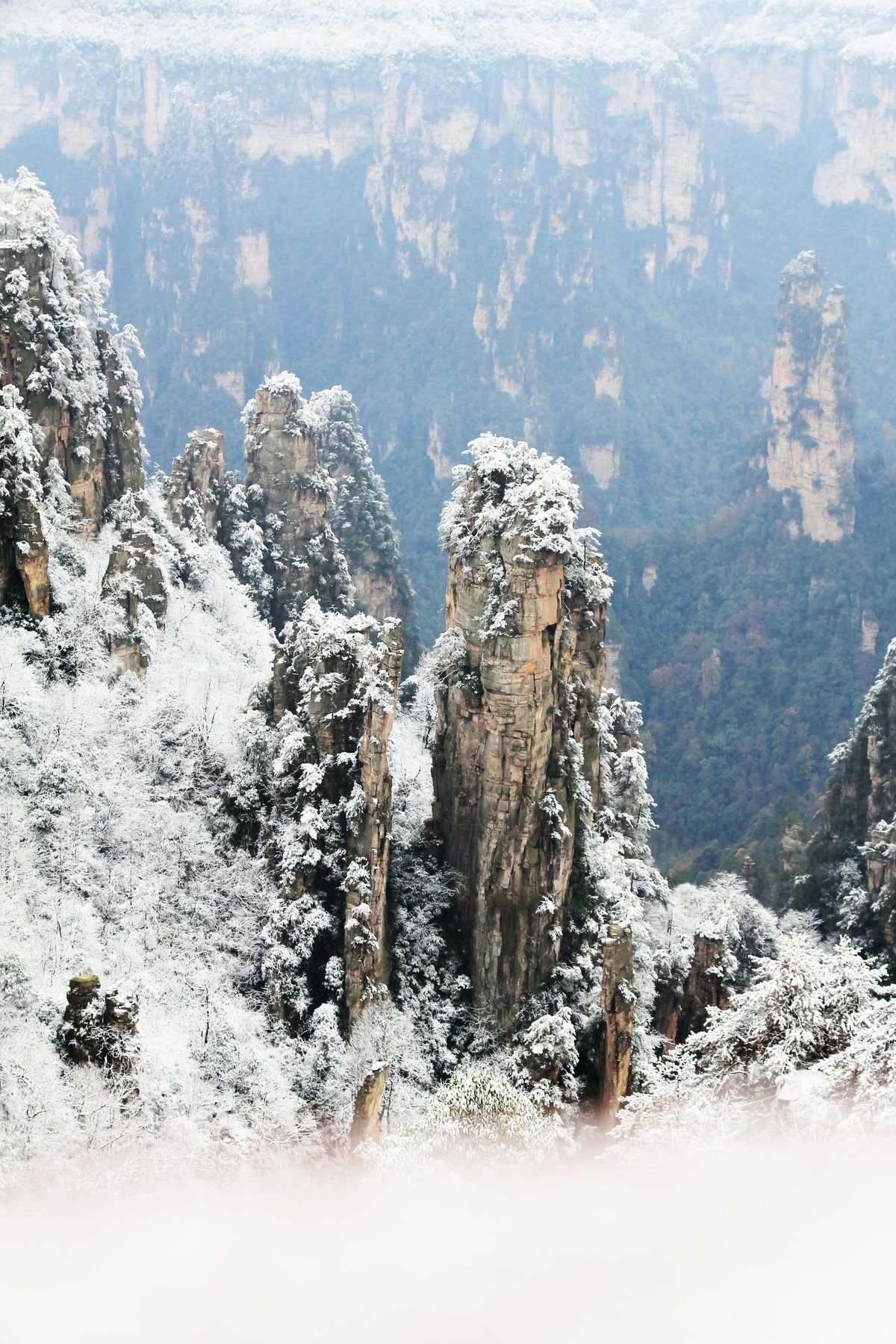
| Dec–Feb | 0–8°C, occasional snow, icy paths | Low | Good if you accept cold/ice closures |
Which month should you avoid? Two clear ones: July and August (hot, humid, and packed with domestic summer vacationers), and early October during National Day Golden Week (Oct 1–7), when the entire country travels and tickets sell out days in advance. The Spring Festival period is also best avoided. For a wider seasonal picture across the country, see our best time to visit China breakdown.
Weather in October & What to Wear
October is genuinely one of the better months — daytime highs around 21–25°C (70–77°F) and nights cooling to 13–15°C (55–59°F), with generally comfortable, crisp air. The catch is the National Day Golden Week at the very start of the month. If you come in mid-to-late October you get good weather and thinner crowds.
What to wear: layers. A moisture-wicking base, a fleece or light sweater, and a packable rain jacket (not an umbrella — you need both hands on steep trails). Mountain tops are noticeably cooler than the valley, and wet stone paths are slippery, so bring shoes with real grip. In November, as the current local forecast shows (highs around 13–19°C with frequent light rain), you will want a warmer layer and waterproofs.
Is Zhangjiajie Expensive?
For a UNESCO-listed natural wonder, Zhangjiajie is moderate — far cheaper than a comparable trip in Western Europe or Japan, though a step above Southeast Asia. Below are typical 2026 price points; treat them as approximate and confirm before you travel.
| Item | Typical cost (per person) | Notes |
|---|---|---|
| National Forest Park entry + shuttle | ≈ ¥225 (US$30) | Multi-day pass, includes park buses |
| Tianmen Mountain | ≈ ¥258 (US$35) | Includes the long cable car + shuttle |
| Grand Canyon Glass Bridge | ≈ ¥138 (US$19) | Bridge only; canyon extra |
| High-speed train, Changsha → Zhangjiajie West | ¥150–200 (US$20–28) | 2nd class, ~2–3 hours |
| Hotel (mid-range, Wulingyuan) | ¥400–800 (US$55–110)/night | Budget options from ¥150 |
| Meals | ¥25–60 (US$3.5–8) each | Local noodle shops to restaurants |
A comfortable independent trip runs roughly ¥600–900 (US$85–125) per person per day including mid-range lodging, meals, tickets, and local transport. If you want to keep costs down, our budget China trip guide walks through the cheapest booking tactics, and our group tour vs self-booking comparison helps you decide whether a package saves money.
How to Get to Zhangjiajie
By air: Zhangjiajie Hehua International Airport (IATA: DYG) has domestic flights from Beijing, Shanghai, Guangzhou, Chengdu, Xi’an, and Chongqing, plus some regional international flights (e.g., Seoul, Bangkok). The airport is about 40 minutes from the Wulingyuan scenic area.
By high-speed train: This is the easiest option if you are already in China. Zhangjiajie West Railway Station sits on the Changsha–Zhangjiajie line — about 2–3 hours from Changsha and under 6 hours from Guangzhou. From the station, shuttle buses and taxis run to Wulingyuan, the main park gateway. For navigating the system, read our high-speed rail guide for foreigners and our overview of getting around China.
Visa note: Citizens of 61 countries — including the United States, United Kingdom, Canada, Australia, New Zealand, and most of the EU — are eligible for China’s 240-hour (10-day) visa-free transit, provided they hold a confirmed onward ticket to a third country or region (source: China National Immigration Administration). Travelers who simply want a dedicated China holiday rather than a transit stop usually need a standard tourist (L) visa in advance. Our China layover tours guide explains how the transit rule works in practice.
Tianmen Mountain & the 999-Step “Stairway to Heaven”
This is the question that surprises most people. Yes — Tianmen Mountain really does have 999 steps. They form the staircase up to Tianmen Cave (Heaven’s Gate), a 131-meter-tall natural arch punched through the cliff face — one of the most photographed sights in China. The climb is steep and takes most people 20–40 minutes, depending on fitness and how often you stop for photos. It is moderately strenuous; there is an escalator inside the cave that covers part of the ascent if you want to spare your knees.
Once at the top, the mountain is known for its glass skywalks and the cliff-edge walkways, plus the 99-Bend Road (a switchback bus descent that is an attraction in itself). If you want the dedicated write-up, our Tianmen Mountain guide covers tickets, the cable car, and route order. Note: the “Stairway to Heaven” here is a real stone staircase in Zhangjiajie — not the Led Zeppelin song, which often crowds the search results.
Is Zhangjiajie English-Friendly?
Partially. At the major ticket offices and the big attractions you will find some English signage, but day-to-day staff English is limited, especially outside the city center. Successful independent travelers do three things: install a translation app before arrival (Google Translate with offline Chinese packs, or Pleco for characters), rely on DiDi (China’s ride-hailing app) in town, and book tickets through an app that shows English. Our best China travel apps for 2026 lists exactly which ones to download and how to pay without a Chinese bank card. Booking tickets in advance is not optional in peak season — our how to book attraction tickets in China guide explains the official channels.
What to Eat and Buy in Zhangjiajie
Zhangjiajie sits in Tujia and Miao minority territory, and the food reflects that heritage. Local specialties worth trying include Zhangjiajie “three pots” (三下锅), a rustic stir-fry of meat and vegetables; smoked pork (腊肉); wild mountain mushrooms; sour fish; and rice wine (米酒). For context on everyday Chinese staples you will see everywhere, our guides to steamed buns (baozi) and potstickers (guotie) explain what you are ordering.
For souvenirs, the standouts are Tujia brocade (西兰卡普), handmade silver jewelry, wood carvings, local green tea, and Du Zhong (eucommia bark) products. Buy from the official shops near the park gates rather than aggressive street vendors, and remember that anything described as “ancient” is almost certainly not.
Frequently Asked Questions
How many days are needed to visit Zhangjiajie?
Three days minimum, four if you add the Grand Canyon Glass Bridge. Two days for the National Forest Park, one for Tianmen Mountain.
What is the best month to visit Zhangjiajie?
April–May (lush, misty, atmospheric) and September–November (clear, comfortable, colorful). Both avoid the worst crowds and heat.
Which month should I avoid in Zhangjiajie?
Avoid July and August (hot, humid, peak domestic crowds) and early October during National Day Golden Week (Oct 1–7), when tickets sell out and prices spike.
What is the weather like in Zhangjiajie in October?
Generally mild: highs around 21–25°C, lows 13–15°C, with comfortable, sometimes rainy days. The only rough patch is the Golden Week crowds at the start of the month.
What should I wear in Zhangjiajie in October?
Layers plus a packable rain jacket and grippy walking shoes. Mountain tops are cooler than the valleys, and stone paths get slippery when wet.
Is Zhangjiajie expensive to visit?
Moderate. Plan roughly ¥600–900 (US$85–125) per person per day for a comfortable independent trip, including mid-range lodging, meals, tickets, and local transport.
Is Tianmen Mountain really 999 steps?
Yes. The staircase to Tianmen Cave (Heaven’s Gate) has 999 steps and takes about 20–40 minutes to climb; an escalator covers part of it.
How difficult is the Stairway to Heaven hike?
Moderately strenuous because it is steep and continuous, but there is an escalator option and plenty of places to rest. Reasonable fitness is enough.
Where is the real stairway to heaven?
It is the 999-step climb to Tianmen Cave on Tianmen Mountain in Zhangjiajie, China — a natural rock arch, not the Led Zeppelin song.
Is Zhangjiajie English friendly?
Partly. Major attractions have some English signage, but you should bring a translation app, use DiDi in town, and book tickets through an English-friendly app.
What is the best food to eat in Zhangjiajie?
Local Tujia and Miao dishes: Zhangjiajie three pots (三下锅), smoked pork (腊肉), wild mushrooms, sour fish, and rice wine (米酒).
What should I buy from Zhangjiajie?
Tujia brocade (西兰卡普), silver jewelry, wood carvings, local green tea, and Du Zhong products — bought from official shops near the park gates.
Plan Your Trip
Zhangjiajie rewards travelers who give it enough time and book tickets early. Build it as a stop on a longer China itinerary via Changsha, or pair it with nearby Fenghuang Ancient Town for a classic Hunan route. Check the weather a week out, pack layers and good shoes, and let the mist do half the work — the pillars are genuinely as surreal as the photos promise.
About the author: Karl Huang is a China-based travel writer who has covered Hunan’s national parks and practical China travel logistics for foreign visitors since 2019. This guide reflects on-the-ground experience and is updated for the 2026 travel season; ticket prices and visa rules change, so confirm with official sources before you book.