

The Lid Comes Off and the Cold Disappears
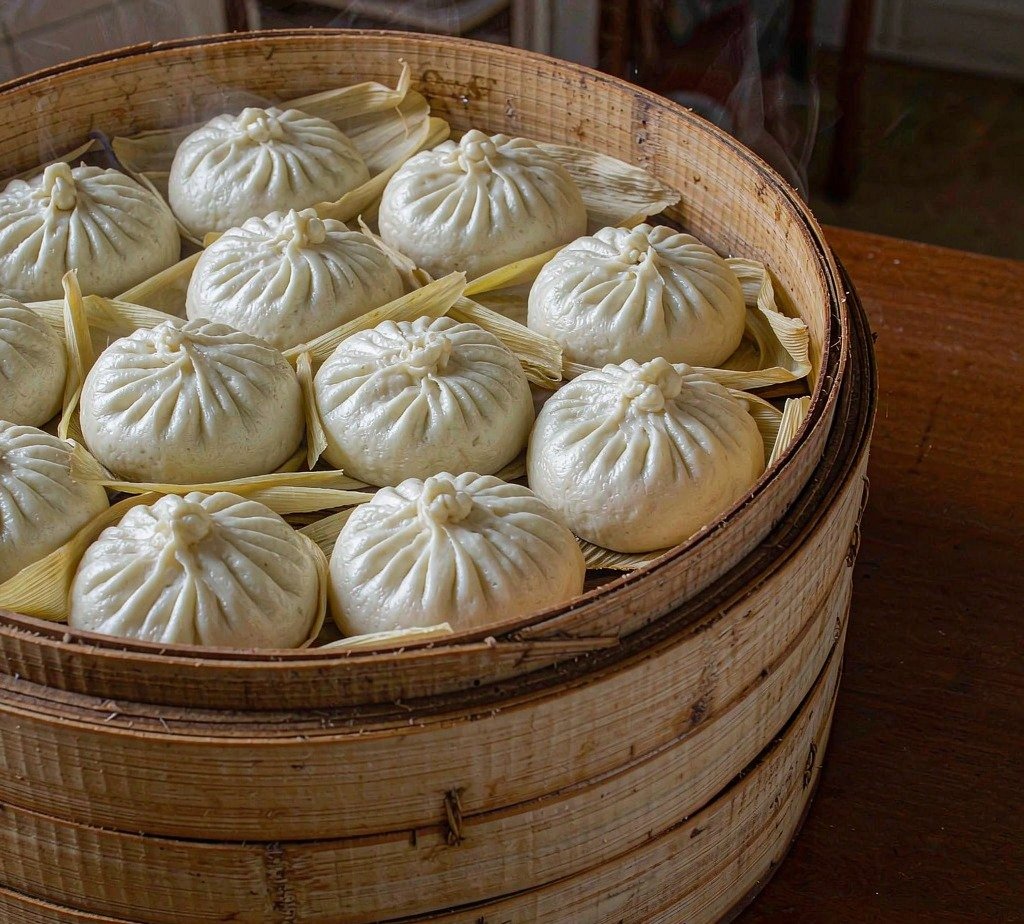
The lid comes off with a sharp clack and a wall of steam rolls straight into the January cold. Inside the stacked bamboo tower at a Beijing breakfast stall, a dozen round white buns sit shoulder to shoulder, each one pinched shut at the top into a tight little spiral. You point, the vendor lifts two onto a sheet of paper, and you are holding breakfast that is still too hot to hold. That first bite — tearing the pale, faintly sweet skin to let out a puff of pork-scented steam — is the real introduction to baozi, the steamed bun that feeds northern China before the workday begins.
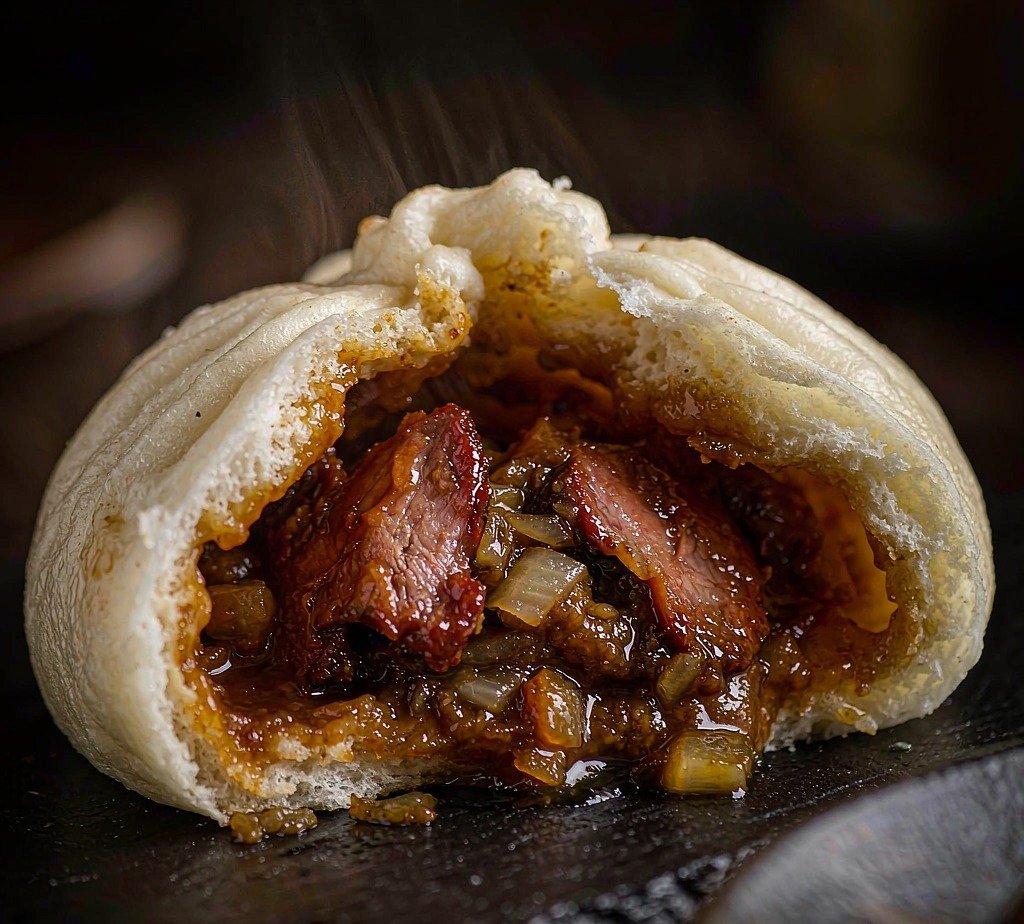
If you only ever meet baozi as a faceless lump on a hotel buffet, you have missed the point. A proper bao is a small piece of engineering: a soft, slightly chewy shell that stays tender instead of bready, wrapped around a filling that can be as humble as cabbage and pork or as indulgent as glossy barbecue pork. Learning how to make baozi at home turns that daily street food into something you actually understand, and it is far less intimidating than the pleated top knot suggests.
What Baozi Actually Is — and What It Is Not
Baozi (most often translated as “steamed buns” or “Chinese steamed buns” in English) are leavened wheat dough wrapped around a filling and cooked by steam, never by baking or frying. The dough is a risen one — yeast makes it puff — which is the single detail that separates it from almost every other Chinese handheld food. The character of a good bao is subtle: the skin should taste gently sweet and wheaty, with a springy bite that gives way without turning to paste, and the filling should be seasoned enough to stand on its own.
The two confusions travelers hit first are worth clearing up. The first is baozi vs mantou: mantou is exactly the same steamed leavened dough with nothing hidden inside, the plain white roll of the north. Baozi is simply mantou with a secret. The second is baozi vs dumplings. Dumplings (jiaozi) use a thin, unleavened wrapper and are boiled, pan-fried, or steamed, with a denser bite and a visible crimped edge. Baozi are always built from a soft risen dough and almost always steamed in a basket. If you want the dumpling side of the family, our Chinese breakfast guide maps the whole morning spread, baozi included.
So what does baozi taste like to someone trying it cold? Disappointing — and that is the honest answer. Baozi is a hot-food format. Eaten within minutes of the steamer, the skin is pillowy and the filling aromatic; an hour later it tightens and goes bland. Treat it like fresh bread, not like a packaged snack.
Where the Bun Came From
The baozi history most Chinese schoolchildren learn traces the filled bun to Zhuge Liang, the strategist of the Three Kingdoms period, who supposedly wrapped meat in dough to appease river spirits. The story is probably folklore, but it points at something real: filled steamed bread is old, probably over a thousand years old, and it spread because it is portable, cheap, and endlessly adaptable. In the north it became a wheat-belt staple; in Guangdong it was refined into the dainty dim-sum basket; in every region the filling followed whatever was local and affordable.
Core Ingredients, With Real Amounts
This is a baozi dough recipe scaled for about sixteen medium buns. Weighing in grams is worth it — steamed dough is sensitive to hydration.
- All-purpose flour: 500 g
- Lukewarm water: 260 g
- Instant yeast: 5 g
- Sugar: 15 g (feeds the yeast and rounds the flavor)
- Neutral oil: 10 g
- Baking powder: 3 g (optional, gives a whiter, softer crumb)
For a classic northern pork and cabbage filling:
- Ground pork, 20–30% fat: 300 g
- Napa cabbage: 250 g, finely chopped, salted 10 minutes and squeezed bone-dry
- Ginger: 15 g, grated
- Scallions: 2 stalks, minced
- Light soy sauce: 2 tbsp
- Shaoxing wine: 1 tbsp
- Sesame oil: 1 tbsp
- White pepper and salt to taste, plus 3–4 tbsp cooled gelatinous pork stock for juiciness
And for the Cantonese favorite, the char siu bao filling:
- Char siu (barbecue pork), diced small: 250 g
- Oyster sauce: 1 tbsp
- Hoisin sauce: 1 tbsp
- Soy sauce: 1 tsp
- A cornstarch slurry to thicken the sauce into a glossy coating
Who Baozi Is For — and Who Should Skip It
Baozi is a near-perfect breakfast in Beijing and across the north: cheap, filling, and eaten on the move. It suits commuters, families feeding kids (the mild pork-cabbage version is child-friendly), and anyone who wants to meal-prep — buns freeze beautifully and reheat from frozen. Vegetarians are not left out; mushroom, tofu, or sweet red-bean fillings are common, and a baozi filling ideas list is basically limited only by your fridge.
On the other hand, baozi is a poor fit for a strict gluten-free diet (the shell is pure wheat), for anyone avoiding yeast, and for low-carb eaters — a single bun is mostly refined starch. Filled versions can also run high in sodium, and some street char siu bao carry added sugar and red coloring. None of that makes them “unhealthy” as an occasional breakfast, but if you are counting, a plain mantou or a vegetable bun is the lighter call. Roughly speaking, one pork bun lands around 180–230 calories depending on size and filling.
How to Make Baozi: A Step-by-Step Method
This is the steamed buns step by step path that reliably works in a home kitchen. The folding looks hard; it isn’t, as long as you keep the dough from drying out.
Step 1 — Activate the yeast. Stir yeast and sugar into the lukewarm water and wait five minutes until it goes foamy. If nothing happens, the water was too hot or the yeast is dead — start over.
Step 2 — Build the dough. Mix the flour, oil, and baking powder in a bowl, pour in the yeast water, and knead until smooth and elastic, about eight minutes by hand. The dough should feel soft but not sticky.
Step 3 — First rise. Cover and leave in a warm spot until doubled, roughly one hour. A properly risen dough springs back slowly when poked.
Step 4 — Finish the filling. Combine your chosen filling, then chill it for twenty minutes so it firms up and is easier to enclose. Cold filling also helps the bun hold shape.
Step 5 — Portion and roll. Divide the dough into sixteen pieces, roll each into a ball, then flatten and roll into a disc thicker in the center and thinner at the edge — a rounded “U” shape, not a flat circle.
Step 6 — Fill and pleat. This is how to fold baozi: spoon filling into the center, then pinch small pleats around the edge while rotating the bun, finally twisting the top shut. Aim for eighteen to twenty-two pleats if you are feeling neat; a simple “turtle” close — gather the edges and twist — is completely acceptable and tastes identical.
Step 7 — Second proof. Arrange the buns on parchment in the steamer, leaving space to expand, and rest them uncovered for fifteen to twenty minutes. Skipping this step is the most common reason home buns come out dense.
Step 8 — Steam and rest. Bring the water to a boil, lower the baskets, and steam over medium-high heat for twelve to fifteen minutes. Crucially, turn off the heat and wait three minutes before lifting the lid — a sudden cold draft collapses the tops into sad craters.
Practical Tips and Regional Twists
A few habits separate decent buns from great ones. Keep the dough covered with a damp towel while you work so the skins don’t form a dry skin. Don’t overfill — a third of the disc is enough. And if you lack a bamboo steamer, a metal insert or even a colander over a pot works; just line it so the buns don’t stick.
Regionally, the bun mutates constantly. The north leans pork-and-cabbage and beef-and-onion; Guangdong turns out the sweet char siu bao and pillowy custard buns; Shanghai’s famous soup dumplings (xiaolongbao) are a close cousin — a thin-skinned steamed bun holding hot broth, covered in our Shanghai soup dumpling guide. Pan-fried shengjian is the same dough with a crispy bottom. For the street-stall context, our morning markets field guide walks through ordering baozi the way locals do at a 6 a.m. stall.
Frequently Asked Questions
What does baozi taste like?
A good bao tastes of soft, mildly sweet wheat wrapped around a savory filling — pork and cabbage is meaty and aromatic, char siu is sweet-savory and sticky. The joy is textural: tender skin, a burst of warm filling, and the comfort of something freshly steamed.
How to make baozi at home without a bamboo steamer?
Use any pot with a lid and a rack or inverted bowl inside to keep buns above the water. Line with parchment or cabbage leaves so they don’t stick, and follow the same steam-and-rest method. The bamboo basket mostly adds fragrance and looks; it isn’t required.
Are baozi healthy, and what are baozi calories?
As an occasional breakfast they are fine — protein from the filling, energy from the wheat. One pork bun is roughly 180–230 calories. Watch sodium in filled versions and skip them if you need gluten-free or very low-carb eating. Vegetable and red-bean buns are the lighter choices.
Baozi vs dumplings: which should I order?
Order baozi when you want something soft, bready, and portable, steamed and gently filling. Order dumplings when you want a chewier, more delicate wrapper with a wider range of cooking styles. Both show up at breakfast; baozi wins for eating while walking.
How to eat baozi without burning yourself or spilling?
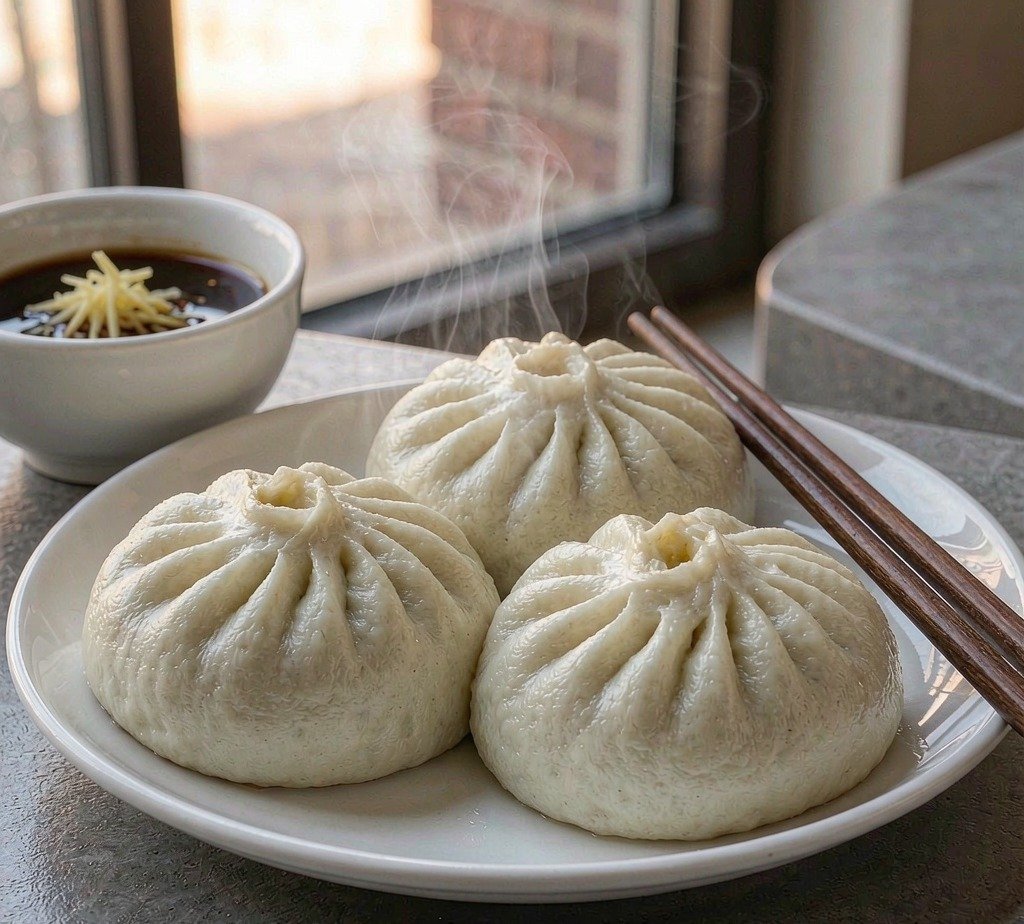
Lift it with the paper or chopsticks, wait a moment, then bite a small opening at the side to let steam escape and sip any broth before taking a full bite. Dip the pork versions in black vinegar with grated ginger — that is the northern move and it cuts the richness perfectly.
What exactly is char siu bao?
Char siu bao is the Cantonese steamed bun filled with diced barbecue pork in a sweet, glossy sauce. It is a dim-sum staple, softer and sweeter than northern savory buns, and the version most Western readers recognize from restaurants. The filling can be made from shop-bought char siu to keep things simple.
The Quiet Pleasure of a Hot Bun
There is a reason baozi has outlasted a thousand years of trends: it meets you where you are, at a freezing stall or a quiet kitchen, and asks only that you eat it while it is hot. Master the dough once and the fillings become a weekly improvisation — leftover greens, a spoon of hoisin pork, even sweet bean paste for dessert. The bun is a format, not a recipe, and that is exactly what makes learning it worthwhile.