

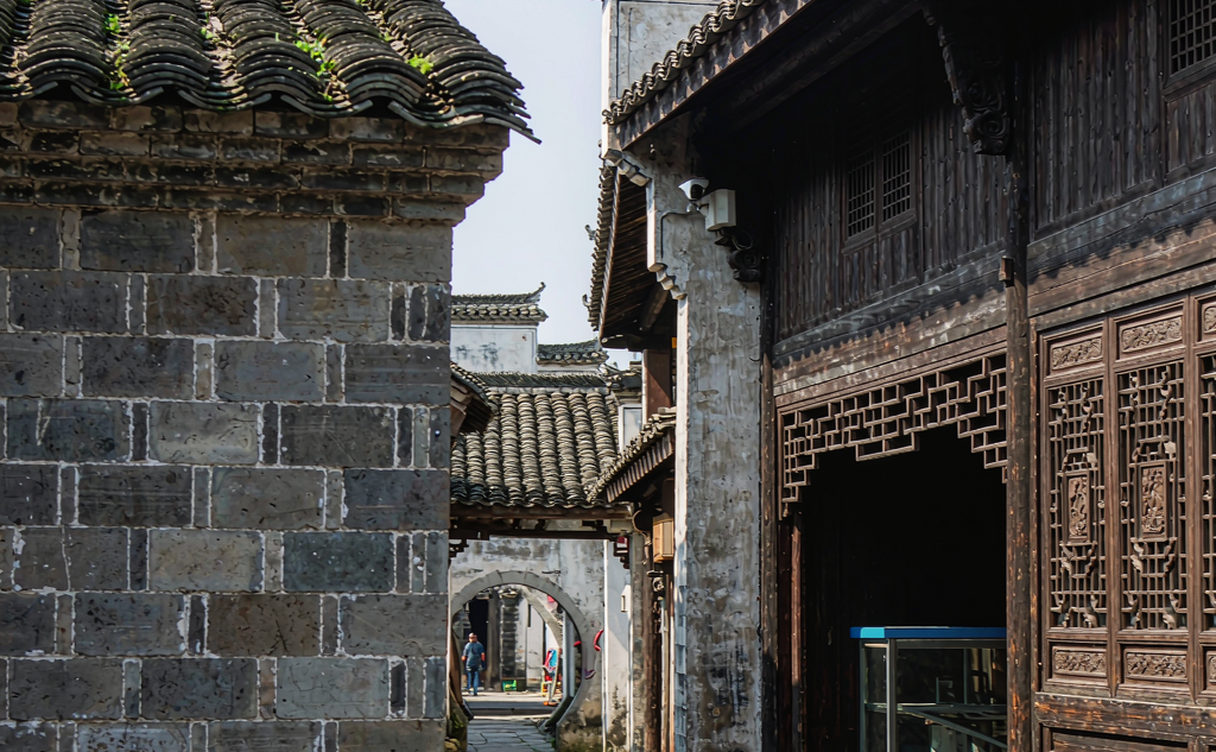
In the hills of southern Anhui, a few hours from Shanghai by bullet train, lies Xidi — a village that looks almost exactly as it did four centuries ago. Unlike the polished tourist towns that dot China’s waterways, Xidi is a living community of around 1,000 people, most of them descended from the same merchant clan that built the place. Its lanes are quiet, its stone archways weathered, and its wood-and-brick houses carry the restrained elegance of the old Huizhou style.
Xidi, together with the nearby village of Hongcun, is recognized as a UNESCO World Heritage site for its exceptional preservation of Ming and Qing dynasty rural architecture. For visitors interested in Chinese history, photography, or simply a slow afternoon away from city noise, it is one of the most rewarding stops in the region.
A Short History of Xidi
Xidi was founded during the Northern Song dynasty and grew wealthy under the Hu family, who made their fortune in commerce and officialdom during the Ming and Qing periods. The wealth showed itself not in flamboyance but in craftsmanship: carved lintels, inscribed couplets, and ancestral halls built to last. The village plan follows feng shui principles, with a stream flowing southwest to northeast and the surrounding hills forming a protective armchair.
What survived is remarkable. More than 120 well-preserved Ming and Qing residences remain, along with three ancestral halls and a famous memorial archway dedicated to a virtuous widow of the Hu clan. Because the village was relatively isolated in the mountains, it escaped much of the destruction that reshaped other parts of China in the 20th century.
Things to Do in Xidi
You do not “do” Xidi so much as wander it. Still, a few sights anchor the visit:
- The Hu Wenguang Memorial Archway: The village’s postcard image, a four-column stone gate carved in the late 16th century. Stand beneath it early in the morning when the light is soft and the tour groups haven’t arrived.
- Jingai Hall (Ancestral Hall): The largest of the clan halls, used for ceremonies and now a window into lineage architecture.
- The resident houses: Many families open their courtyards. Look up at the horse-head walls — the stepped white gables that are the signature of Xidi Huizhou architecture — and down at the bluestone lanes worn smooth by generations.
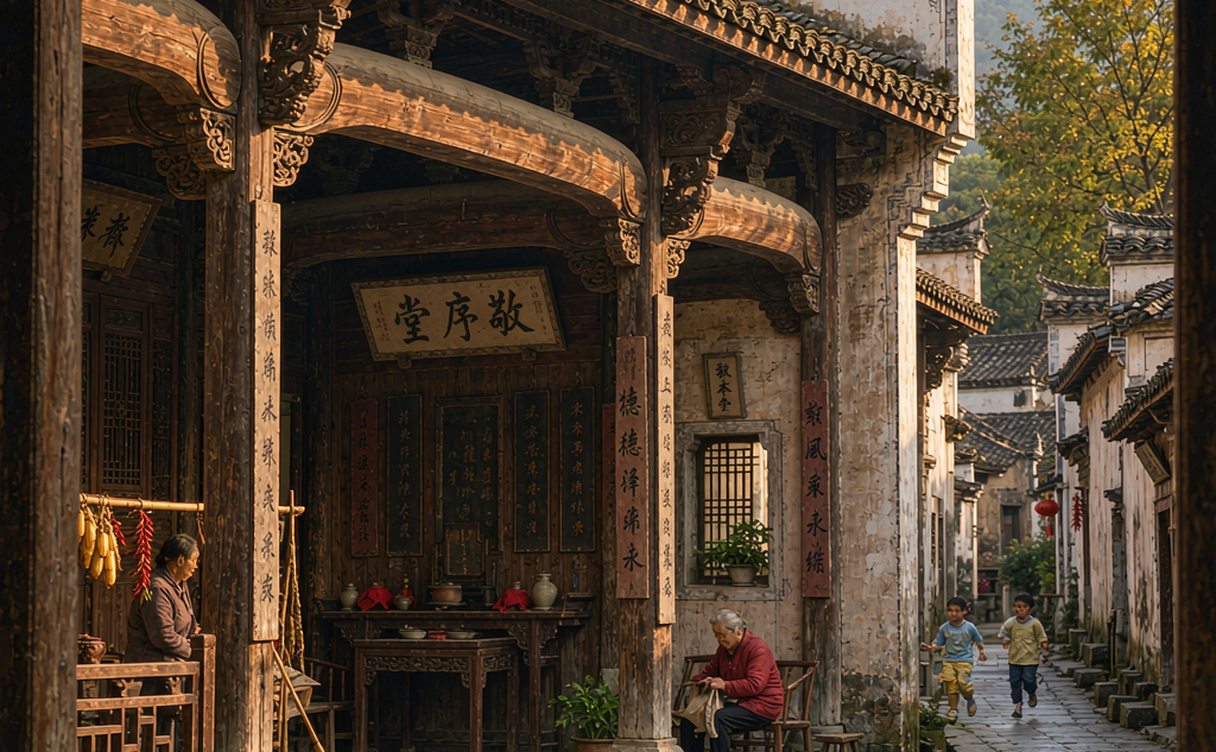
- Carving details: Door frames, window screens, and beam brackets carry wood and stone carvings of scenes from opera and folklore. A guided walk helps you spot what you’d otherwise walk past.
- The surrounding countryside: Rice paddies and tea terraces ring the village; a short walk out the back gate gives you the classic framed view of roofs against green hills.
If you are choosing between the two heritage villages, our Hongcun ancient village guide explains the differences and how to pair them in one trip.
Best Time to Visit Xidi
Anhui’s climate gives Xidi four distinct moods:
- Spring (March–May): Green terraces and blossom, comfortable temperatures, and the clearest light for photography.
- Autumn (September–November): The most popular season, with golden rice and cool, dry days. This is when the village looks its most postcard-perfect.
- Summer: Hot and humid, with afternoon thunderstorms; still pleasant in the shaded lanes but busy with domestic tourists.
- Winter: Cold and sleepy, sometimes with a dusting of snow that turns the white walls blue-grey. Fewest visitors, and a calm, almost melancholic beauty.
For the best balance of weather and crowd levels, aim for a weekday in April or late October. The best ancient towns in China guide lists Xidi alongside others worth combining.
How to Get to Xidi
Xidi sits in Yi County, about 50 km from Huangshan city in Anhui.
- Fly or train to Huangshan: Huangshan Tunxi Airport and Huangshan North high-speed station are the gateways. From there, buses and private transfers run to Yi County.
- From Huangshan Mountain: Many visitors pair Xidi with a Yellow Mountain (Huangshan) trip; the village is a natural rest stop after hiking the peaks.
- By car or tour: A private driver from Huangshan city takes roughly an hour and lets you also catch Hongcun the same day.
- From further afield: Bullet trains connect Huangshan to Hangzhou, Shanghai, and Hefei. Our Hefei travel guide covers the provincial capital as a jumping-off point.
Foreign travelers booking trains should read the China high-speed train guide for foreigners first, since station names and ticket rules can trip up first-timers.
The detailed conservation history of the village is documented by UNESCO, which describes Xidi and Hongcun as outstanding examples of non-fortified vernacular settlements.
Practical Tips
- Tickets: Xidi uses a timed entry ticket that also covers a map and sometimes a short guided intro. Keep it; it may be checked at halls.
- Guides: Local English-speaking guides cluster near the entrance. For the architecture and clan stories, a guide transforms the walk.
- Staying overnight: A handful of guesthouses inside the village let you experience Xidi after the day-trippers leave — the lantern-lit lanes at dusk are the real prize.
- Etiquette: This is a home, not a museum. Ask before photographing people, and keep voices down in the ancestral halls.
- Cash/apps: Mobile payment is standard; carry some cash as backup in rural Anhui.
Where to Eat and Stay
Xidi’s food reflects Huizhou (Anhui) country cooking: salty, smoked, and hearty. Try local river fish, fermented tofu, and tea from the surrounding hills. Several family-run spots near the entrance serve simple set meals. For an overnight, choose between atmospheric in-village guesthouses and the wider hotel pickings in Huangshan city or nearby Suzhou, which makes a logical add-on if you’re continuing east.
A Photographer’s Approach to Xidi
Xidi is a forgiving place for cameras, and most visitors leave with at least one frame worth printing. The white walls and dark tiles create a natural high-contrast palette, while the bluestone lanes and the still village stream add texture and reflection. Soft morning light from the east falls across the main thoroughfare before 9 a.m., which is the window most serious photographers target. A wide-angle lens captures the memorial archway with the rooftops stacked behind it; a 50mm or longer focal length compresses the stepped horse-head walls into graphic, almost abstract layers.
Tripods are permitted in the lanes but become a nuisance once the day-trippers arrive, so early is better for static shots. After rain, the stream turns into a mirror, doubling the architecture and the sky. Some of the most memorable photographs here are unplanned: an open doorway revealing a carved lattice screen, a cat dozing on a windowsill, an elder sorting tea by the threshold. As always in a living village, ask before photographing people — a smile and a small gesture communicate intent better than any lens.
Final Thoughts
Xidi rewards a slower pace than most Chinese sights. Arrive mid-morning, lose the map, and let the lanes lead you. The reward is not a single monument but a whole atmosphere — the weight of stone, the smell of woodsmoke, the sound of a stream running under a 400-year-old bridge. It is one of the few places where “ancient village” still means “village.”