

Tucked into the far south of Hunan province, where the mountains lean toward Guangdong, Mangshan National Forest is one of those Chinese scenic areas that rewards travelers who like their nature with a little adrenaline. The name means “Python Mountain,” and local legend says the ridges once looked like a coiled serpent from above. Today it is better known for something more modern: a network of glass skywalks, cliff-hugging bridges, and cable cars that let you float above one of the most biologically rich forests in southern China.
This is a place that pairs primeval woodland with engineered vertigo. You can spend the morning walking a suspension bridge over a green gorge and the afternoon soaking in a hot spring fed by the same mountain. For visitors already heading to Zhangjiajie or Guilin, Mangshan makes an easy, less-crowded stop that shares the same dramatic karst-and-cloud scenery without the tour-bus crush.
What Makes Mangshan Different
Most Chinese forest parks are about the trees. Mangshan is about the trees and the drop. The reserve covers more than 20,000 hectares of subtropical evergreen broadleaf forest, and because it sits where Hunan, Guangdong, and Jiangxi climates meet, the plant list is enormous — over 2,000 species, including rare orchids and the Mangshan pit viper, a striking green-and-red snake found almost nowhere else on earth.
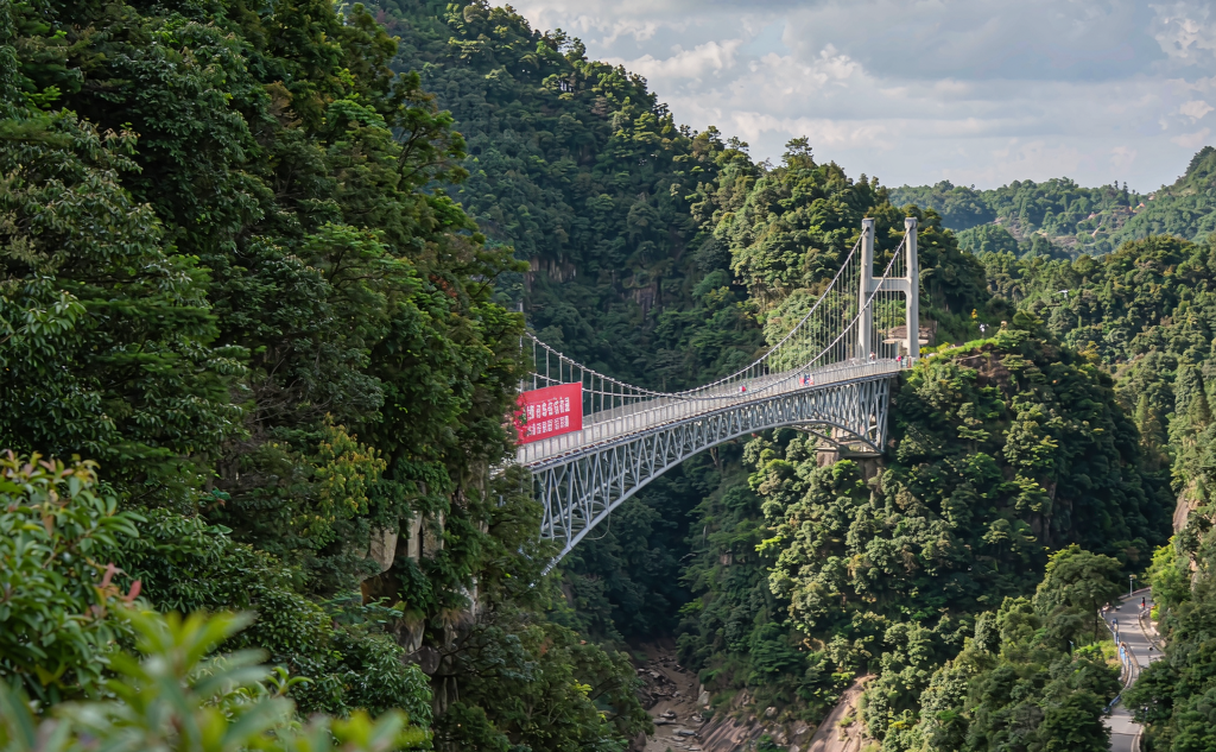
The vertical theme runs through everything. The signature sight is the Mangshan glass bridge (sometimes called the “Grand Canyon” bridge), a transparent span that stretches across a deep ravine. Walking it feels less like crossing and more like flying. Adjacent to it, the cliff-side plank road is a solid path bolted into the rock, but the views down are just as stomach-flipping.
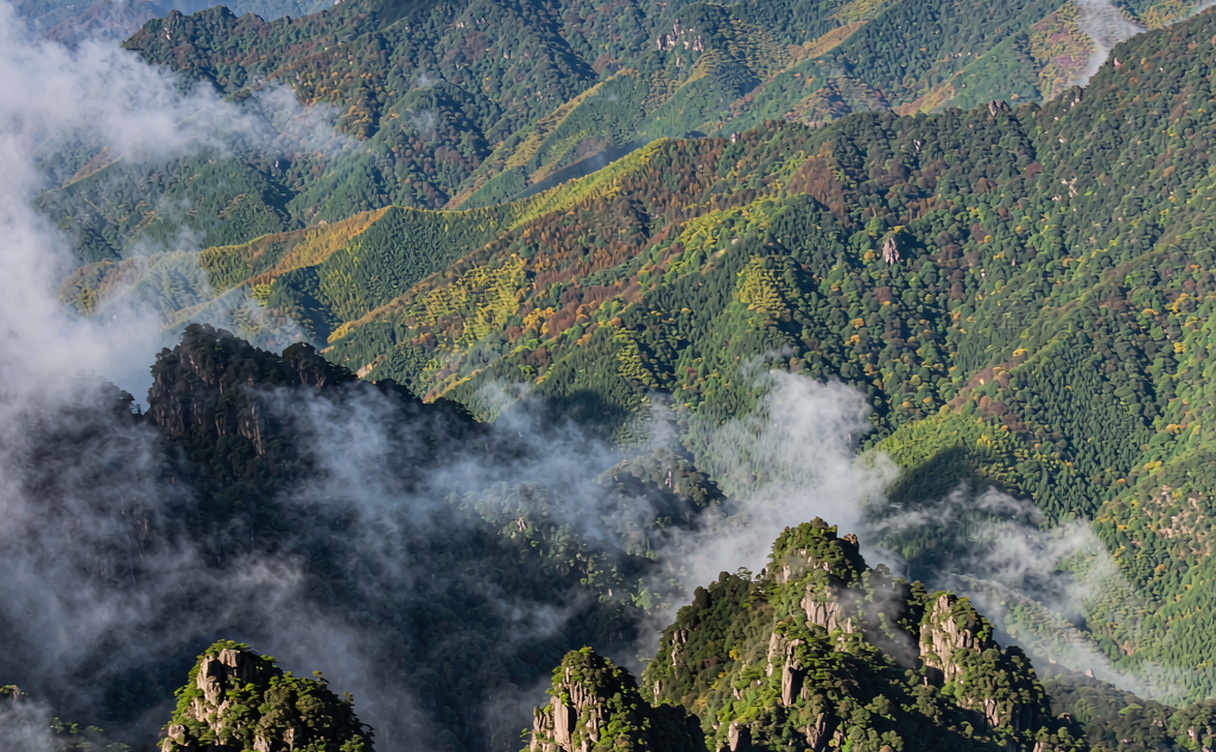
Beyond the thrills, the forest is genuinely beautiful. Ancient firs and camphor trees drip with moss, waterfalls appear around bends, and on clear mornings the sea of clouds rolls across the ridgelines. It is a destination that works for families, photographers, and hikers alike — you choose how much height you can handle.
Things to Do at Mangshan
There is more packed into this mountain than the photos suggest. A typical visit strings together several cable cars, walking sections, and lookout points:
- Wuzhi Peak (Five-Finger Peak): The highest accessible point, reached by a combination of road, cable car, and short hikes. From the top you get the classic layered-mountain panorama.
- The cliff plank road: A relatively easy, rail-protected walk that delivers the best glass-floor moments.
- Jinjiang River gorge: Down at the base, a gentler trail follows the water past pools and small falls — a good cool-down after the heights.
- Tianzhushan and the forest boardwalks: Shaded loops through old-growth trees, ideal if you want the “vertical forest” feeling without the exposure.
- Hot springs: Several resorts at the foot of the mountain use geothermal water. After a day on the bridges, a soak is the local custom.
If you enjoy this kind of ridge-walking, our broader China hiking and treks guide covers similar spots across the country, from alpine passes to coastal trails.
Best Time to Visit Mangshan
Mangshan sits at a low latitude, so it stays green year-round, but the experience changes with the seasons:
- April to June: The rainiest months, which means the fullest waterfalls and the most reliable sea of clouds — also the most slippery planks, so wear good shoes.
- September to November: Widely considered the best window. Skies are clearer, temperatures are comfortable, and the humidity drops.
- Winter (December to February): Cold and quiet, with occasional frost on the high peaks. Fewer crowds, but some cable cars run reduced hours.
Avoid the week-long National Day holiday in early October if you can; like most headline scenic areas in China, Mangshan gets packed then. Spring festival periods are similarly busy.
How to Get to Mangshan
Mangshan is reachable but not on every tourist’s radar, which is part of its charm. The nearest transport hub is Chenzhou, a high-speed rail city on the Beijing–Guangzhou line.
- By train: Take a bullet train to Chenzhou West Station, then a bus or taxi for the roughly 1.5–2 hour drive south into Yizhang County, where the forest sits.
- By air: Fly into Chenzhou Beihu Airport (limited routes) or Guangzhou Baiyun, then rail onward to Chenzhou.
- From Changsha: The provincial capital is a common launch point. See our Changsha travel guide for the city itself; from there, high-speed trains to Chenzhou take about an hour.
Getting around once you arrive is easiest with a driver or the park’s own shuttle buses, since the attractions are scattered across a large area. Foreign visitors should review the China high-speed train guide for foreigners before booking, as ticket machines and ID rules differ from what you may expect.
The protected area and its ecosystem are part of the reason southern China’s subtropical forests are studied worldwide; background on the region’s ecology is available from UNESCO, which documents similar mountain-biosphere reserves across the country.
Practical Tips for a Smooth Visit
A few things worth knowing before you go:
- Tickets: Entry is by combined ticket that may include cable cars. Buy at the gate or through major Chinese travel apps; prices shift by season.
- Footwear: The glass sections are safe but can be slick. Closed, grippy shoes make the plank road far more pleasant.
- Food: Bring snacks or eat at the base restaurants. Mountain-top options are limited and basic.
- Cash or card: Mobile payment dominates in China; set up Alipay or WeChat Pay before arrival, as rural card terminals are unreliable.
- Time: Plan a full day. Rushing the cable cars means you’ll miss the quiet forest loops that are the real highlight.
Mangshan is also a strong candidate if you are building a wider Hunan–Guangdong itinerary; it pairs naturally with the best things to do in China for nature lovers who want a break from temple-and-city sightseeing.
Chenzhou and a Two-Day Plan
Give Mangshan two days and you can pair the thrills with the city life of Chenzhou, an hour and a half north by road. Day one rides the cable cars and walks the glass bridge and plank road, then soaks in a foot hot spring as the fog settles. Day two explores Chenzhou itself: the East River is famous for misty morning scenes where fishing boats drift through a silver haze, a favorite of photographers, and the nearby Xiaodong River rapids and Feishui Village offer gentler walks. A two-day shape also lets you dodge the midday crowds on the bridges by starting at opening.
What to Eat in the South
The cooking here leans into Hunan’s chili heat but draws on Guangdong’s lighter touch, thanks to the nearby border. Chenzhou is known for East River fish, braised or steamed with ginger, and for “sanshi” dishes built from the mountain’s three treasures of game, fungus, and bamboo. In Yizhang, near the forest gate, small restaurants serve smoked pork with dried vegetables and sour soups that cut the spice. Carry cash for the roadside stalls, and ask for “weixian” (less spicy) if your palate needs mercy; the default can be fierce even by Chinese standards.
Where to Stay
Most visitors base themselves either in Yizhang County (closest, with hot-spring hotels) or make a day trip from Chenzhou city. The hot-spring resorts at the mountain’s foot are the most atmospheric choice — you can watch the fog settle over the ridges from a warm pool. Chenzhou itself has a wider range of international-standard hotels and better transport links if you prefer a city base.
Final Thoughts
Mangshan National Forest is the rare place that delivers both serenity and a genuine thrill. The glass bridge gets the photos, but the memory that lingers is usually the silence of the old forest, the smell of wet camphor leaves, and the way the clouds pour through the valley at dawn. If your image of Hunan is all spicy food and pandas-of-the-sky peaks, Mangshan quietly widens that picture.
Whether you come for the adrenaline or the orchids, give yourself time to slow down. The mountain rewards patience far more than speed.