

Liaoyang (辽阳) makes a bold claim that happens to be true: it is one of the oldest continuously inhabited cities in China, with a recorded history running past 2,300 years. It was a capital of the Liao and Jin dynasties, a frontier fortress, and a Buddhist center long before Shenyang rose next door. A serious Liaoyang travel guide is really a walk through layers of Chinese history stacked in a small, calm Liaoning town — and the things to do in Liaoyang Liaoning are almost all about those layers.
We send clients here as a half-day or full-day from Shenyang. It is 30 minutes by high-speed rail, far fewer crowds than the provincial capital, and the temples and tombs are the real article.
Guangyou Temple and the White Pagoda
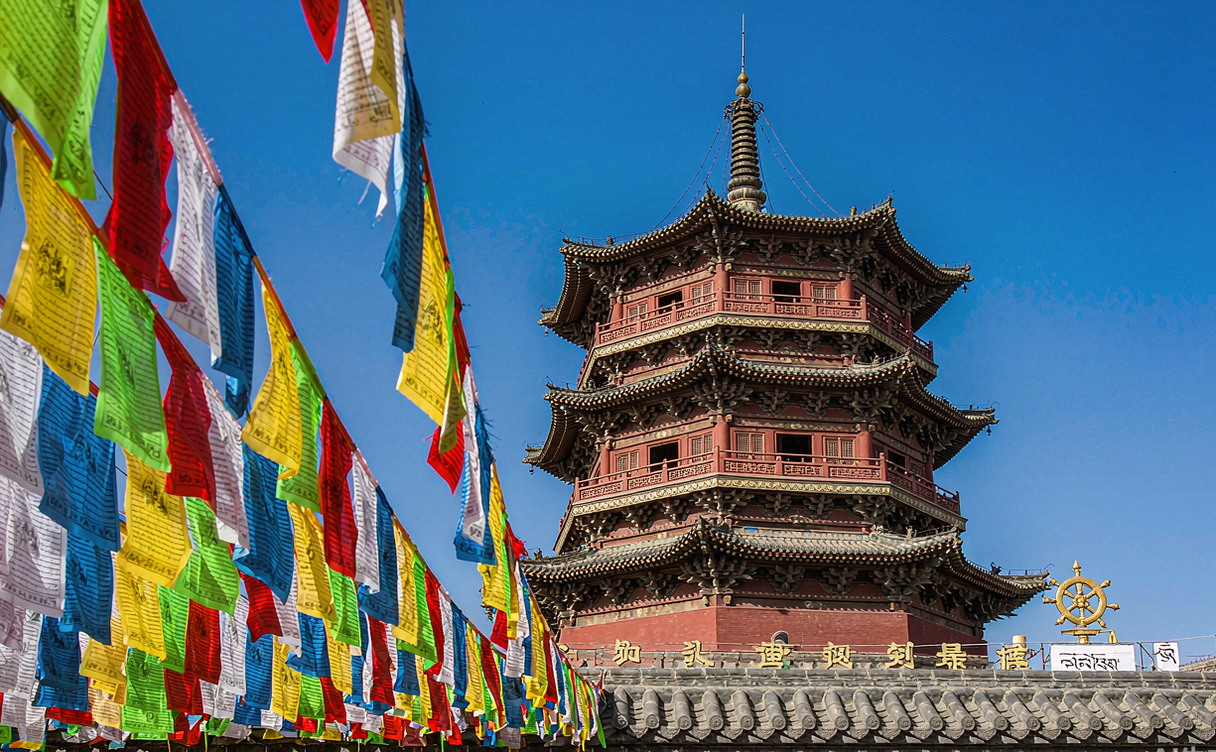
The centerpiece is Guangyou Temple (广佑寺), rebuilt in modern times on old foundations but built around a genuine Liao-dynasty treasure: the White Pagoda (白塔), an octagonal brick tower roughly 70 m tall from around 1,000 years ago. You can walk the temple grounds for free; climbing the pagoda is not allowed, but the view of it across the square, especially lit at night, is the postcard.
Inside the rebuilt Guangyou Temple is one of the largest wooden Buddhist halls in the northeast, with a towering Buddha. The Liaoyang Guangyou Temple complex is busy on festival days and quiet midweek — we prefer midweek for photos. A donation-based entry (around RMB 0–30 depending on the hall) is the norm; the temple asks for modest dress.
The Liaoyang tombs and ancient city
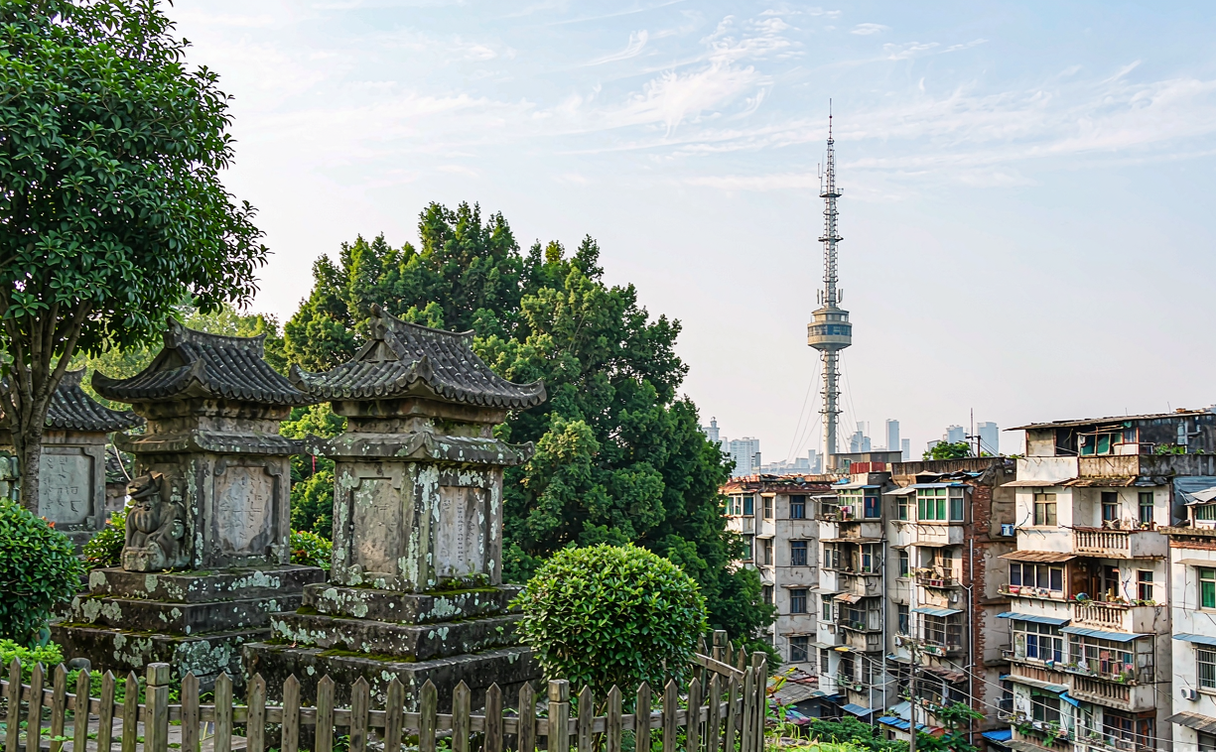
A few km east of the center, the Liaoyang tombs are a cluster of Liao- and Jin-era aristocratic burial mounds, now a protected park with a small museum displaying excavated tiles, figurines, and murals. Entry is about RMB 20–30. The murals — banquet scenes, processions — are the draw; photography without flash is allowed.
Nearby, stretches of the old city wall and the restored East Gate give a sense of the Liaoyang ancient city layout. It is not Xi’an’s wall, but it is honest and walkable, and you will likely have it to yourself. We combine the tombs and the wall as a single morning loop by car (RMB 150–250 for the half day).
For imperial-tomb context elsewhere, our Beijing Ming Tombs guide covers a later, grander version, and if you are curious about temples further afield, the Xiamen Nanputuo Temple guide and the Jokhang Temple in Lhasa, Tibet, China guide show very different Buddhist traditions.
Liaoyang to Shenyang trip: the easy half-day
The Liaoyang to Shenyang trip is the way almost everyone does this — Shenyang is 30–40 minutes north by high-speed rail (RMB 25–45), so Liaoyang works beautifully as a morning or afternoon add-on to a Shenyang base. We usually train in after breakfast, do the temple and tombs, and train back before dinner, which keeps your hotel and luggage in the bigger city.
Coming from Beijing, change in Shenyang; the through options are slower and less frequent. We pre-book both legs and a local car for the eastern tombs so the only thing you think about is the 1,000-year-old brick under your hand. If you want a fuller Liaoning history arc, pair this with Fuxin and Chaoyang on the same line.
The White Pagoda up close
A note for photographers: the Liaoyang Guangyou Temple White Pagoda is best shot from the square to the south at blue hour, when the temple lights come on and the tower goes silhouette against a deep blue sky. The brick is weathered but the bracket-arm detailing near the top is still readable if you bring a zoom lens. We have also had luck from the small bridge on the north side, where the reflection in the temple pond (in wet season) doubles the tower. No tripod permit is needed in the public square, but the temple interior asks for quiet and no flash.
Getting there and around
Liaoyang is on the Beijing–Shenyang high-speed line: about 30–40 minutes from Shenyang (RMB 25–45) and roughly 3.5–4 hours from Beijing with a change. The Liaoyang entry on Wikipedia covers the dynastic background if you want it before arrival. A small airport serves a few cities, but the train is simpler.
The sights are split between the central temple and the eastern tombs, so a taxi or DiDi (from RMB 6 in town, RMB 20–30 to the tombs) is easiest. The center is flat and walkable.
Season and practicalities
April–May and September–October are best: cool, clear, and good for the open-air tombs and wall. Summer is warm and a little humid; winter is cold and the tombs park is barer but still open. We avoid the July–August heat for the midday wall walk.
English signage is limited; a translation app covers basics. Cards work at hotels and chain shops; carry cash for small stalls. Liaoyang is safe, compact, and an easy, low-stress stop.
Where to sleep and eat
Most visitors day-trip from Shenyang, but if you stay, hotels are cheap: a clean business hotel runs RMB 160–280, a four-star around RMB 350–500. Food is classic northeastern Chinese — dumplings, stews, grilled lamb, and the local “Liaoyang tower cake” (塔糖), a brittle sugar sweet sold at the markets. The central night market is the dinner move; two eat well for RMB 70–110.
Beyond the tower cake, look for the local “fire-cooked” flatbread (吊炉饼) pressed on a hanging oven and the sweet red-bean fried cake sold at the temple gate on weekends. None costs more than a few yuan, and they make a good offset to the heavier stews. We tell clients to arrive at the night market hungry and split dishes family-style — the lamb skewers and the cold noodle salad are the two we reorder every time.
One practical tip: base in Shenyang and treat Liaoyang as a loop. Shenyang has the better international hotels, the airport, and the nightlife, while Liaoyang gives you the quiet 2,300-year-old core without the provincial-capital bustle. We have run this pairing for first-timers who wanted “old China” without the Xi’an crowds and the long haul west. The 30-minute train means you lose nothing and skip a hotel change.
If you want mountains after the history, our Huangshan Yellow Mountain guide is the famous southern peak, and the Dinghu Mountain guide offers a greener southern alternative. To frame the wider region, the Beijing vs Shanghai guide helps you decide where to route next.
A sample one-day plan
Morning: high-speed rail from Shenyang, straight to Guangyou Temple and the White Pagoda. Late morning: East Gate and old city wall. Lunch on dumplings. Afternoon: car to the Liaoyang tombs and museum, back to town, evening train to Shenyang.
We have run this for history buffs and for families who wanted “one old city” without the Xi’an crowds. Both left happy. Liaoyang will not shout for your attention, but few places let you touch 2,000 years of Chinese urban history with this little fuss — it is the oldest city story in the northeast, told quietly.