

Dinghu Mountain, or Dinghu Shan, is the green escape that Guangdong residents have relied on for decades. It rises just northeast of Zhaoqing in western Guangdong and protects one of the last stretches of subtropical evergreen broadleaf forest in the Pearl River delta region. For foreign travelers based in the megacity, this Dinghu Mountain guide explains how to trade skyscrapers for waterfalls, a thousand-year-old temple, and a cool, misty forest within a half day of the Guangzhou travel guide hub. It is one of the easiest nature trips in south China, with paved paths, frequent shuttles, and a climate several degrees cooler than the plain below.
Why Dinghu Mountain Stands Out
Dinghu was among the first areas in China declared a nature reserve, back in 1956, and its valley still shelters rare orchids, gibbons’ quieter cousins, and some of the oldest established hiking routes in the south. The mountain is not especially high, around 1,000 meters at the main peak, but the greenery is dense and the air noticeably cleaner. The draw is the combination of forest bathing, the tiered Feishui Tan waterfall, the serene Qingyun Temple, and the boat ride through Butterfly Valley. It pairs perfectly with a Zhaoqing travel guide city stop, since the limestone peaks of Star Lake are only a short drive away.
How to Get to Dinghu Mountain
The simplest route is to reach Zhaoqing first. High-speed trains from Guangzhou South to Zhaoqing take about one hour; from Shenzhen allow two to three hours. Once in Zhaoqing, local buses and didi taxis run the final nineteen kilometers to the Dinghu scenic gate in roughly thirty to forty minutes. If you come straight from Guangzhou by car or charter, the drive is about ninety minutes outside rush hour. Before you book any intercity rail, read our China high-speed train guide for foreigners, because the Guangdong network is dense and the right station name matters. Inside the reserve, electric shuttles link the car park to the main trailheads, so you do not need to walk the access road.
Best Time to Visit Dinghu Mountain
Spring and autumn are the most pleasant seasons, with comfortable humidity and the forest at its greenest. Summer is hot and wet but also the lushest, and the shade and waterfall make the heat bearable; just expect afternoon thunderstorms. Winter is mild and quiet, the best time for solitude on the upper trails. The reserve sits in the south, so it follows the national pattern described in our best time to visit China page: avoid the May and October holiday weeks if you want empty paths. Morning is the right time to enter, because mist lifts off the valley and the light on the waterfall is soft.
Dinghu Mountain Hiking and Main Routes
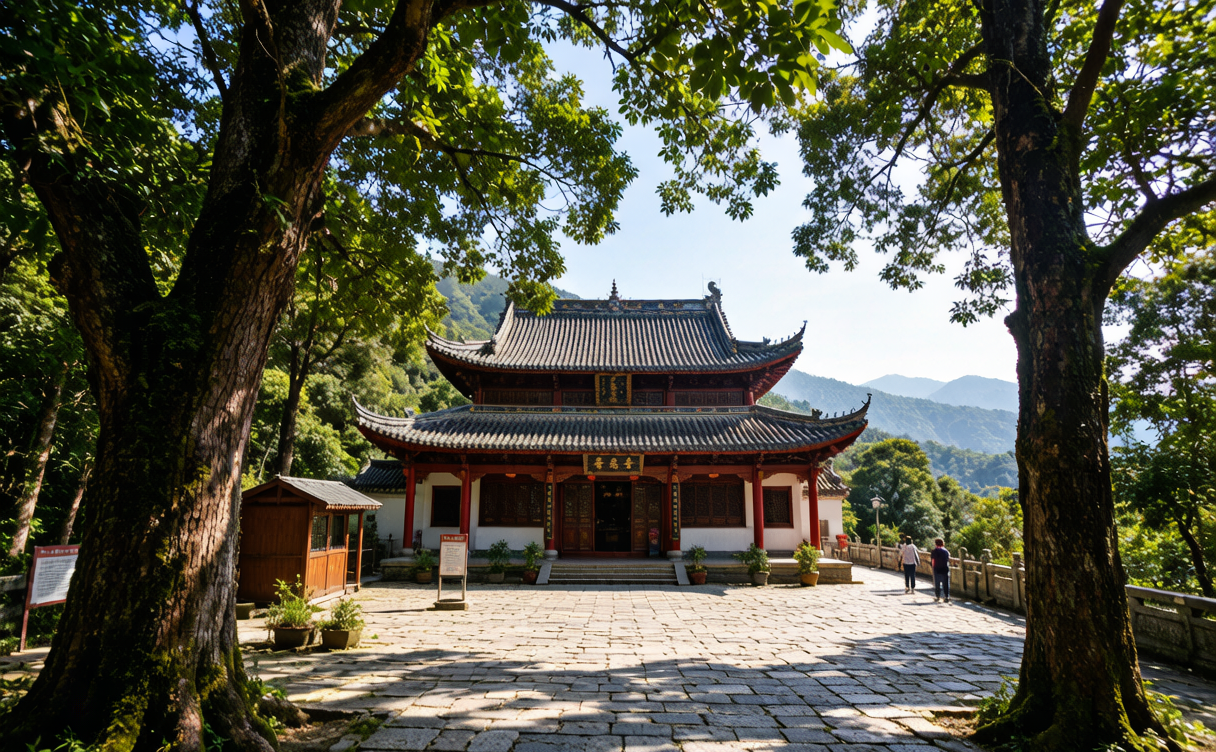
Most visitors follow a loop that starts at the Feishui Tan waterfall, climbs gently to Qingyun Temple, and continues to the Butterfly Valley boat jetty. The walk is mostly paved and signed, suitable for anyone in reasonable shape, and takes three to four hours at a relaxed pace. A steeper branch reaches the main peak for views over the reservoir and the delta haze. Our best things to do in China list notes Dinghu as a top easy-nature day from a major city. Wear grippy shoes after rain, because the stone steps get slick, and bring insect repellent in summer. The shuttles mean you can shorten the walk at any point and still see the headline sights.
Qingyun Temple and Butterfly Valley
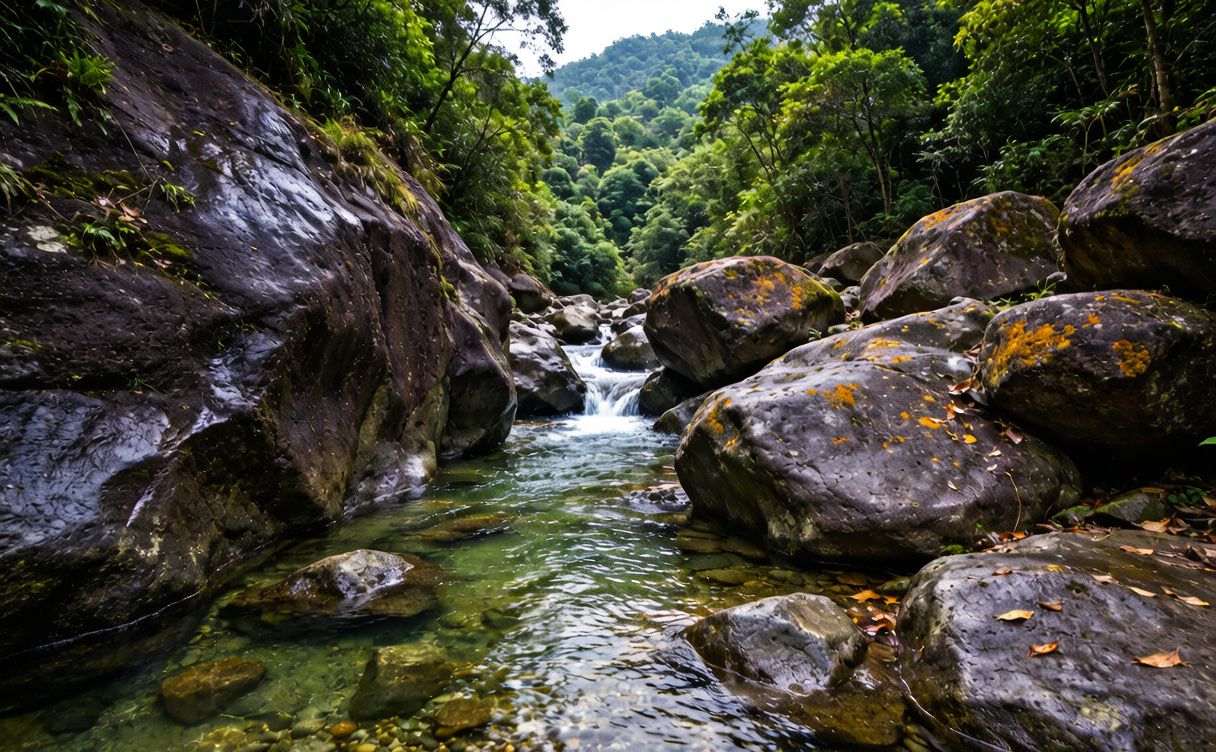
Qingyun Temple, built in the Ming era, is one of the six great Buddhist temples of Guangdong and remains an active monastery. Visitors can watch the morning chanting, walk the cool stone courtyards, and sample the vegetarian lunch the monks prepare. Butterfly Valley is a separate ticketed section with a short lake cruise to a small island forest where butterflies gather in warm months; it is family friendly and an easy add-on if you have energy left. Between the two, the forest boardwalk along the stream is the most photographic stretch, especially where roots and ferns frame the water.
Where to Stay
Day trips from Guangzhou or Zhaoqing are the norm, and both cities have the full range of hotels. If you want the forest at dawn, stay in a Zhaoqing hotel near the bus station, or book one of the simple guesthouses at the reserve entrance. Zhaoqing itself is pleasant and cheap compared with Guangzhou, and pairing the mountain with a night by Star Lake is the relaxed way to do it. Book the entrance guesthouses ahead in holiday season, as rooms are limited and fill fast.
Food and Practical Notes
Inside the reserve, small stalls sell river fish, tofu, and herbal teas; prices are fair but choice is thin, so eat a real meal in Zhaoqing before or after. The vegetarian set lunch at Qingyun Temple is a genuine local experience and costs little. Carry your passport for the ticket gate, set up mobile pay in advance, and download an offline map because signal fades on the upper ridge. Bring a light rain shell even in dry season, as the forest makes its own weather.
Tickets and What to Pack
The reserve sells one entry ticket that includes the internal shuttle bus, while the Butterfly Valley lake cruise is a separate, smaller add-on you buy at the jetty. Show your passport at the gate and keep the QR receipt, because rangers check it again at Qingyun Temple and at the Feishui Tan entrance. Expect about 70 to 90 yuan for entry in peak season, with the valley cruise another 30 or so and the vegetarian temple lunch a few dozen more. Pack a light rain shell in any season, because the forest generates its own showers, plus insect repellent in summer and a refillable bottle, since the streams look clear but are not for drinking. Sturdy sandals or trail shoes are enough for the paved routes, and a small daypack keeps your hands free on the steps. A local SIM with data helps you scan the payment QR and read the few English-friendly maps posted near the shuttle stops, and if you visit on a warm weekend, arrive at the gate before nine to park and beat the Guangzhou day-trippers.
Suggested One-Day Plan from Guangzhou
Take a morning high-speed train to Zhaoqing, transfer by bus or taxi to the Dinghu gate, ride the shuttle to Feishui Tan, walk up to Qingyun Temple for the vegetarian lunch, cruise Butterfly Valley, then shuttle back and train to the city by early evening. If you stay in Zhaoqing, add a slow morning on the peak trail. Dinghu will not test your lungs like the great Sichuan summits, but for a cool, green, half-day reset near the busiest corner of China, it is hard to beat. For independent background on the reserve’s ecology, see the overview at Dinghu Mountain on Wikipedia.
Whether you come for the waterfall or the temple, give the forest a full morning to work.
Pack a rain shell, charge your phone, and let the shuttle save your legs for the views.