

Jigong Mountain, or Jigong Shan, is the old foreign summer resort that time forgot. Straddling the Henan-Hubei border above the city of Xinyang, it was built a century ago by European and American missionaries and railway engineers who fled the Wuhan heat for its breezy ridges. Today this Jigong Mountain guide shows foreign visitors a rare sight in inland China: a hillside of stone villas with verandas, a vintage mountain railway, and a sea of clouds that rolls over the Dabie foothills. It is cooler by ten degrees than the plain below and one of the most atmospheric places to spend a summer night between the Wuhan travel guide hub and the Zhengzhou corridor.
Why Jigong Mountain Is Different
Most Chinese mountains sell temples or peaks. Jigong sells architecture and climate. At the turn of the last century the foreign community erected more than two hundred villas in styles from Gothic to Bavarian, and the Chinese press still calls the scatter of buildings an open-air museum of world architecture. Walking the lanes feels unlike anywhere else in Henan. Add the natural draw, the cloud sea from the main lookout, and the fact that the mountain is a recognized summer retreat, and you have a destination that is both a history lesson and a heat escape. Pair it with the Xinyang travel guide for tea hills and the Nanwan Lake shoreline below.
How to Get to Jigong Mountain
Xinyang is the gateway. High-speed trains from Wuhan reach Xinyang East in about one hour, and from Zhengzhou in roughly two and a half hours, so the mountain is an easy add-on to either city. From Xinyang, a bus or taxi runs the final thirty-eight kilometers up to the scenic gate in about fifty minutes; the last stretch winds through pine forest and the air cools noticeably. If you arrive by rail from farther afield, our China high-speed train guide for foreigners covers the booking steps and the ID you must show at the gate. Inside the area, a vintage-style shuttle and the old mountain road connect the villa district, the railway station ruins, and the cloud-sea viewpoint, so you rarely need to walk the access climb.
Best Time to Visit Jigong Mountain
Summer, from June to August, is the peak season for a reason: while Wuhan bakes past 38 degrees, the ridge stays in the mid twenties with a constant breeze. This is exactly why the old foreign community chose it, and our China summer destinations guide ranks it among the easiest cool retreats to reach by rail. Spring and autumn are also lovely, greener and quieter, with the best cloud-sea mornings after rain. Winter is cold and some villas close, but the bare ridges and frost are photogenic for solitude seekers. For the national picture, our best time to visit China page places the Dabie foothills in the temperate-center band, good from April through October.
Jigong Mountain Villas and the Old Railway
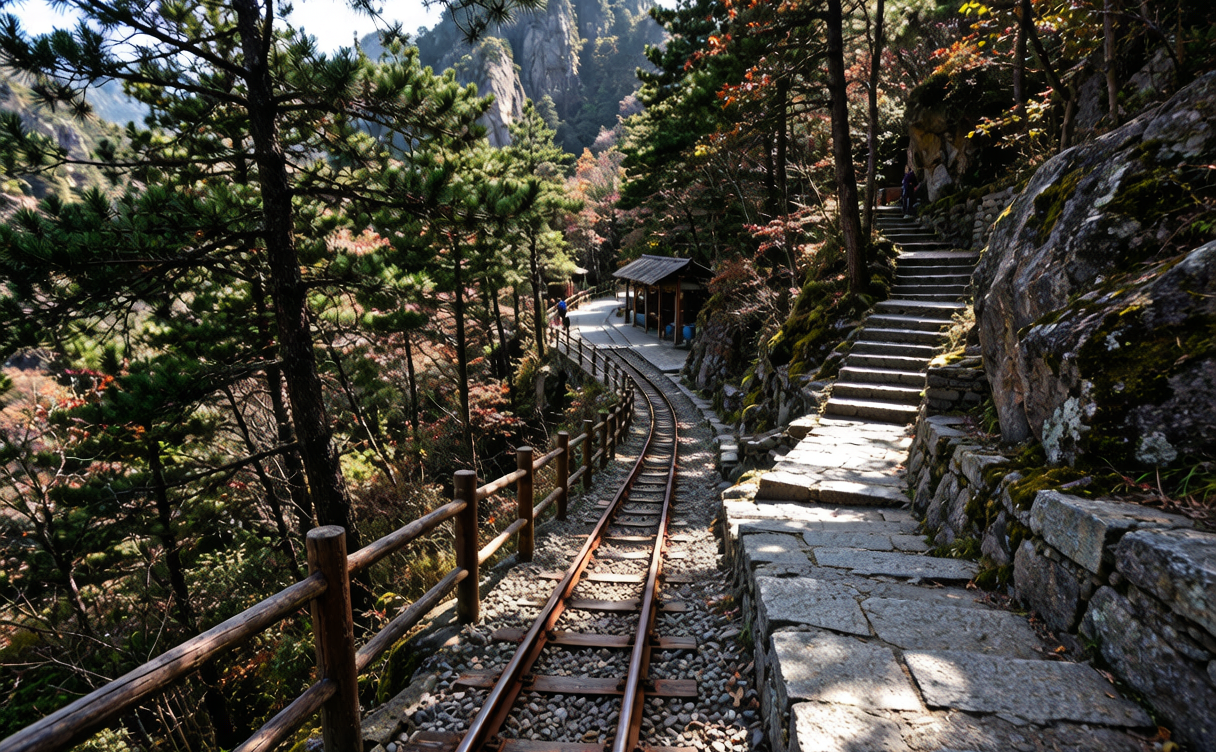
The headline walk is the villa lane, where numbered former residences sit behind stone walls and flower beds. A few are open as small museums with period furniture, and the former church and clubhouse are the most photographable. The mountain railway, built by the Beijing-Hankou line, once carried residents to the summit; the old station and a restored carriage remain as a curious relic of expat life a hundred years ago. Allow half a day just to wander, read the plaques, and enjoy the cooler air. The architecture is the reason Jigong feels like a detour to another continent.
The Sea of Clouds and Lookout Points
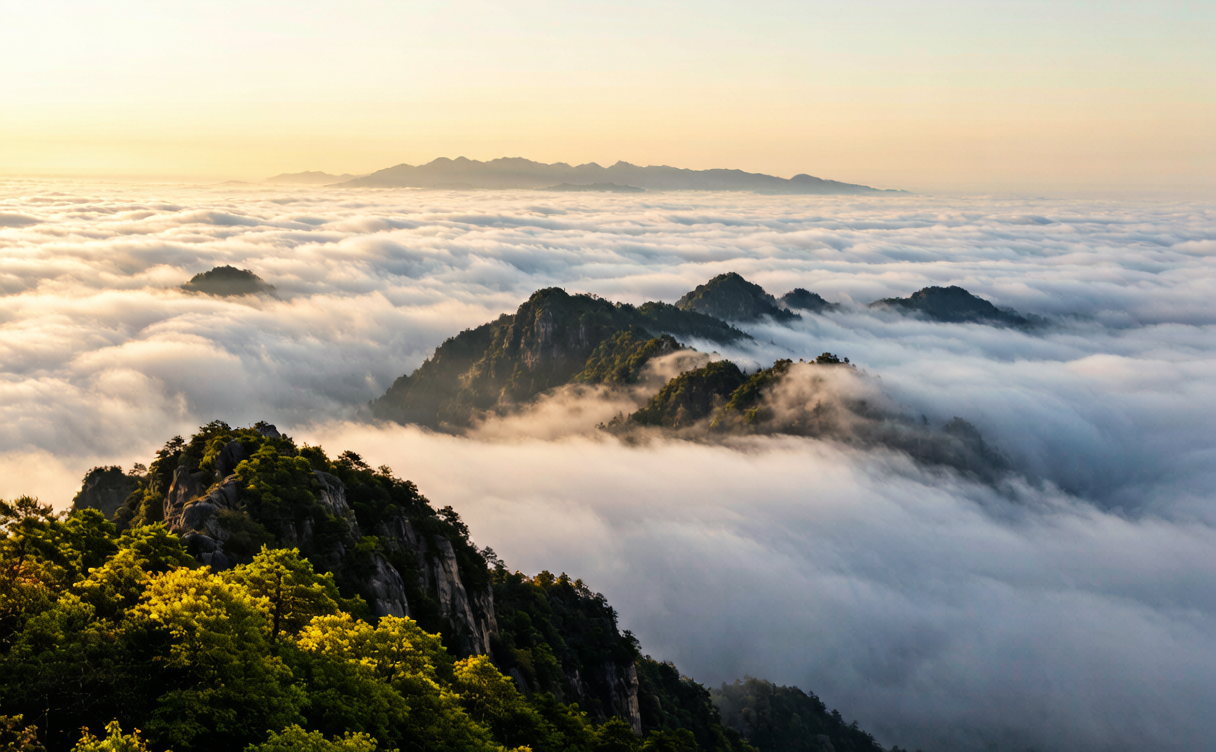
The main cloud-sea viewpoint sits on the eastern ridge and faces the rising sun. After a wet night, the valley below fills with white and the villa tops poke through like islands. The best window is from thirty minutes before dawn to about eight in the morning; by midday the clouds usually burn off. A second viewpoint near the peak gives a wider sweep over the Dabie range. Our best things to do in China list notes Jigong as a sleeper hit for landscape photographers who want something other than the famous peaks.
Where to Stay
The most memorable plan is to sleep in a converted villa or a hillside hotel and wake above the clouds. The villa district has renovated guesthouses and a state-run hotel; book early for July and August, when Wuhan families fill the ridge. Staying down in Xinyang and riding up for the day is possible but means missing the sunrise, which is the whole point. Rooms are simple but clean; bring a light layer even in summer because nights are cool and the old walls are thin. Rates are modest compared with resort mountains nearer the coast.
Food and Practical Notes
Xinyang is famous for its green tea, and the mountain cafes serve it fresh; try the local kidney-bean noodles and the river fish from Nanwan Lake back in town. Inside the area, small restaurants near the villa lane offer Henan staples and simple stir-fries at fair prices. Carry your passport for the ticket gate, set up mobile pay before you leave the city, and download an offline map because signage is in Chinese only and signal dips on the ridge. Comfortable shoes are enough; the paths are gentle compared with the sacred peaks.
Tickets and What to Pack
The mountain charges a single entry ticket that covers the shuttle up the access road, and you show your passport at the gate and keep the QR code for the villa-lane checks. Budget about 60 to 80 yuan in peak season, with the vintage railway exhibit included and the hillside hotels extra. Pack a light jacket even in summer, because the ridge is ten degrees cooler than Xinyang and the old villa walls are thin at night. Comfortable walking shoes are enough, since the lanes and the cloud-sea path are gentle compared with the sacred peaks; add a small umbrella for sudden showers and a refillable bottle for the tea-house stops. A local SIM with data lets you scan the payment QR and read the few English-friendly signs near the shuttle station, and booking the villa stay midweek keeps both the price and the crowds down.
Suggested One-Day or Overnight Plan
Arrive in Xinyang by late morning, transfer up the mountain, check in, and spend the afternoon on the villa lane and old railway. Rise for the cloud-sea sunrise, walk the eastern ridge, then descend for lunch in Xinyang and a tea stop. If you only have a day, skip the sunrise and focus on the architecture and one viewpoint. Jigong Mountain rewards travelers who like stories as much as scenery, and few places in central China let you stand in a European veranda while a Chinese cloud sea drifts past. For independent background on the mountain’s history, see the overview at Jigong Mountain on Wikipedia.
Whether you come for the villas or the clouds, stay a night to catch the ridge at first light.
Pack a light jacket, charge your camera, and let the breeze do the rest.