

Fuxin (阜新) is not on anyone’s highlight reel, and that is precisely the interesting part. It is a former coal capital of Liaoning that ran out of easy coal, closed its giant open-pit mine, and is now quietly reinventing itself — as a green energy town, an agate-trading hub, and a surprisingly pleasant place to spend a slow day. A useful Fuxin travel guide is really a story about industrial China turning a corner, and the things to do in Fuxin Liaoning sit right on that seam.
We send clients here for two reasons: the agate market is genuinely the best in the northeast, and the Haizhou reclaimed mine is one of the more unusual “parks” you will ever walk. If you want the real, unpolished northeast, this is it.
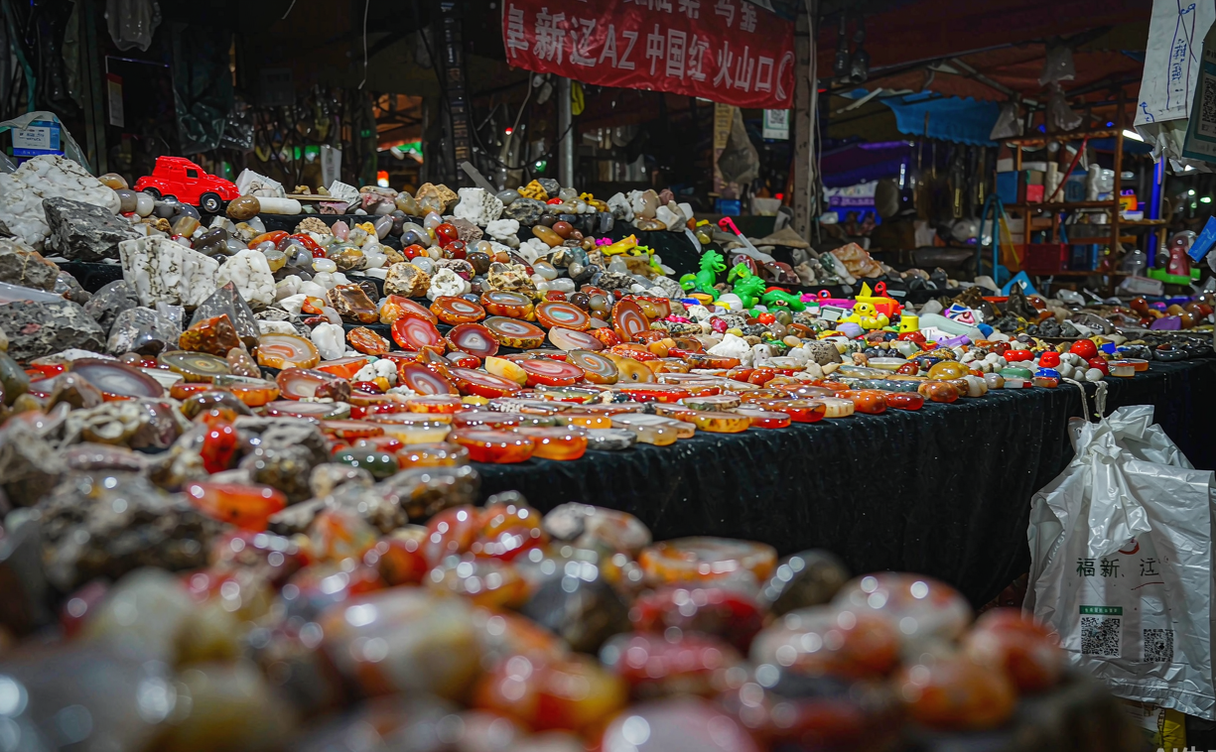
The Fuxin agate market
Fuxin sits on some of China’s richest agate (玛瑙) deposits, and the city has traded the stone for centuries. The main market — a warren of stalls near the old trading zone — sells raw chunks, polished beads, carved figures, and big statement pieces. Prices range from RMB 20 for a tumble-polished stone to tens of thousands for a carved display piece; we tell clients to bargain gently and to buy from stalls with a fixed-price tag if they hate haggling.
The Fuxin agate market is best on weekend mornings when the wholesale crowd is in. A local guide can spot treatments (dyed or heated stones) that a first-timer cannot; we bring one for serious buyers. Even if you only browse, the color range — red, green, purple, banded — is worth the trip.
Haizhou Open-Pit Mine Park (海州露天矿国家矿山公园)
This is the headline sight and the strangest. Haizhou was once one of the largest open-pit coal mines in Asia; when it closed, the city turned the giant pit into a park. You stand at the rim of a crater nearly 2 km across and 350 m deep, with abandoned rail lines, shovels, and a small mining museum at the edge. Entry is about RMB 30–50; the rim walk is easy and there is a viewing platform.
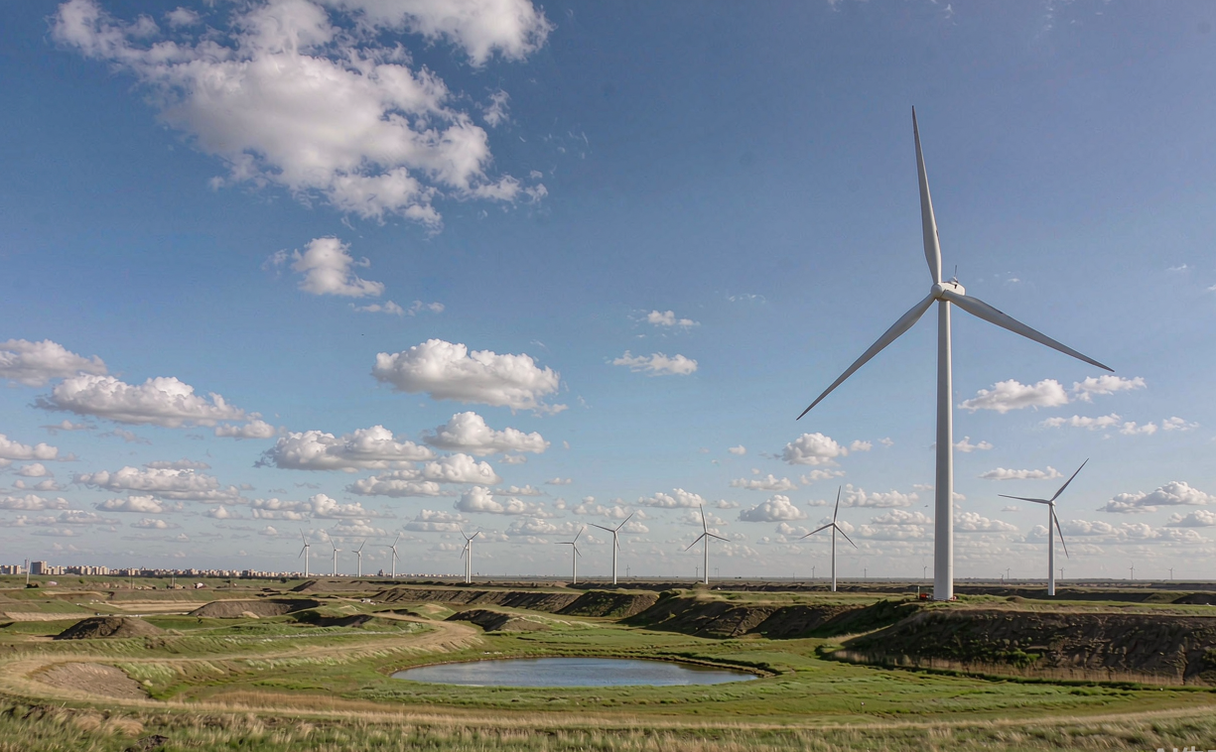
It is part industrial heritage, part cautionary tale, and part oddly beautiful — the terraced walls catch the light in stripes of rust and grey. We have had photographers spend an hour just on the geometry. The Haizhou open-pit mine park is also where Fuxin’s “rebirth” story is most visible: wind turbines now stand on the reclaimed land nearby.
The reclaimed grassland and turbines
North and west of the city, abandoned mining land has been turned into grassland and solar/wind fields. It is not a tourist attraction in the formal sense, but a drive out there with a driver shows the transition vividly: sheep grazing where slag heaps used to be, and long rows of turbines turning in the wind. The Fuxin grassland is modest compared with Inner Mongolia’s, but it is a clean, open place for a picnic and photos, and it is free.
We sometimes pair this with a village stop where former miners now run guesthouses and noodle shops. It is the human side of the story that the big guidebooks miss.
Fuxin to Shenyang trip and the Liaoning arc
The Fuxin to Shenyang trip is the natural way most visitors arrive, and it is quick: high-speed rail covers the 1.5–2 hours for RMB 70–110, and we often run Fuxin as a half-day between Shenyang and the older city of Liaoyang to the south. Done that way, you get coal-country reinvention, a Liao-dynasty capital, and a Neolithic capital in a single relaxed day of train hops.
If you are coming from Beijing, change in Shenyang rather than fighting a direct connection; the change is 20 minutes and far more reliable than the sparse Fuxin flight schedule. We pre-book both legs so the only thing you manage is the agate market.
Buying agate: a longer note
Serious buyers should know the Fuxin agate market runs on relationships. The best carved pieces come from family workshops behind the public stalls, and a guide who is known locally will get you in and get you the unheated, undyed stone. We have seen “red agate” that was plain grey stone soaked in dye — the tell is a too-even color and a pale, washed core at a chip. Natural Fuxin red has depth and thin darker banding. For a first piece, a palm-sized carved bead pendant (RMB 80–200) is a fair, low-risk souvenir; for a collection, budget a few thousand and let us negotiate.
Getting there and getting around
Fuxin is on the high-speed rail network: about 1.5–2 hours from Shenyang (RMB 70–110) and reachable from Beijing in around 4 hours with a change. The Fuxin entry on Wikipedia gives the coal-town background if you want it before you go. There is also a small airport with limited flights, but we default to the train.
In town, DiDi and taxis (from RMB 6) cover everything; the mine park is a 20-minute drive from the center, so a car for half a day (RMB 200–300) is the easy option. The agate market is walkable from most hotels.
Season and practicalities
Spring and autumn are most comfortable (April–May, September–October), with cool dry days good for the open-air mine rim. Summer is warm and a bit hazy from the surrounding industry; winter is cold and grey but the market stays busy. We avoid the windy spring dust days for the mine rim photos.
Fuxin speaks northeastern Chinese and signage in English is rare, so a translation app helps. Cards work at hotels and bigger shops; carry some cash for the market. The city is safe and flat, and an easy half-day add-on if you are already in Liaoning.
Where to sleep and eat
Hotels are cheap and perfectly fine: a clean business hotel runs RMB 180–300, a four-star around RMB 400–550. Food is hearty northeastern fare — dumplings, stewed potatoes with pork (猪肉炖粉条), grilled lamb, and the local flatbread. The night market by the central square is the dinner move; two people eat well for RMB 80–120.
If you are building a Liaoning swing, our Beijing vs Shanghai guide helps frame the region, and the Huangshan Yellow Mountain guide or Dinghu Mountain guide offer a green contrast to the industrial plain. The Beijing Ming Tombs guide and Jinggang Mountain guide or Hengshan Mountain in Shanxi guide round out a history-and-landscape route if you are continuing south or west.
A sample one-day plan
Morning: train in from Shenyang, drop bags, straight to the agate market while it is busy. Lunch on noodles. Afternoon: Haizhou mine park rim walk and museum, then a short drive to the reclaimed grassland for golden-hour turbines. Evening train or overnight in town.
We have used Fuxin as a half-day between Shenyang and Chaoyang, and as a standalone “see the real northeast” stop. Either way, the Fuxin to Shenyang trip is quick and the payoff — a city honestly rebuilding itself — is the kind of China most visitors never see.