

This Hengshan Mountain guide is for travellers based in Datong who want one of China’s five sacred Taoist peaks without the crowds of the south. Hengshan (恒山), in Hunyuan County of Shanxi, China, is the northern of the Five Great Mountains, and it shares its valley with the Hanging Temple (悬空寺) — the wooden monastery pinned to a cliff face that every photo of northern China seems to include. The two are sold as a single day trip, and together they make the most rewarding excursion from Datong. This article covers how to get to Hengshan Mountain, the best time to visit Hengshan Mountain, the things to do at Hengshan Mountain, the Hengshan Mountain entrance fee, and a set of practical Hengshan Mountain travel tips you will actually use.
Content Preview
- What Hengshan is, and why it is quieter than the other sacred peaks
- Best time to visit Hengshan Mountain, with a month-by-month view
- How to get to Hengshan Mountain from Datong and Datong airport
- Things to do at Hengshan Mountain: the Hanging Temple, the plank walk and the temples
- Hengshan Mountain entrance fee and cable-car costs
- Where to stay around Hengshan and Datong
- A one-day sample itinerary
- FAQ with a dated signature
The Northern Sacred Peak
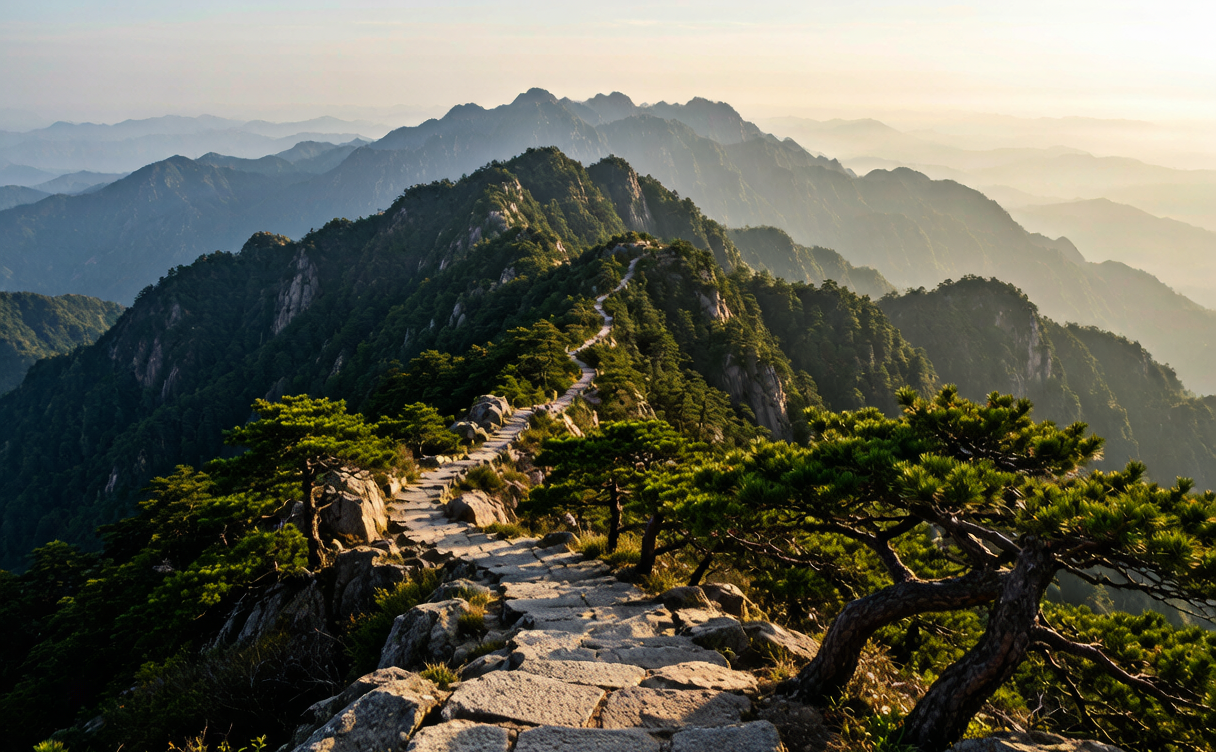
The Five Great Mountains are a Taoist ranking of China’s most spiritually significant ranges. Hengshan is the north, a ridge of grey cliffs and pine forest running along the western edge of the Datong basin. It is lower and less dramatic than Mount Hua or Huangshan, but that works in its favour: the paths are gentle, the temples are genuine working sites rather than theme-park reconstructions, and you can walk the main ridge in half a day.
The mountain has been a Taoist centre for nearly two thousand years. The first temples were built in the Han dynasty, and the site was a place of imperial sacrifice through the Ming and Qing periods. What you climb today is a working sacred landscape — incense smoke in the mornings, chanting from the halls, and old men doing slow breathing exercises on the steps.
Best Time to Visit Hengshan Mountain
Mid-May to early June, and September to mid-October. These are the two comfortable windows. Spring brings fresh green on the pines and few tour buses; autumn is the best of all, with clear skies and cool, dry air that makes the long ridge walk pleasant. This is the best time to visit Hengshan Mountain if you want photographs without haze.
July and August. Warm and busy. Domestic school-holiday crowds peak, but the mountain is still calmer than the southern peaks. Afternoon thunderstorms are common, so start early.
November to March. Cold, with ice on the upper steps and occasional closures after snow. The Hanging Temple is open year-round, but the mountain path can be slippery and quiet to the point of emptiness.
Avoid the week-long National Day holiday in early October and the Spring Festival, when the access roads clog.
How to Get to Hengshan Mountain
Hengshan sits about 80 kilometres south of Datong city, near the town of Hunyuan. There is no train station at the mountain, so road transport is the only option.
| From | Mode | Typical duration | Approx. cost |
|—|—|—|—|
| Datong city centre → Hengshan | Bus / coach from Datong bus station | 1 hr 40 min | ¥30–40 (US$4–6) |
| Datong → Hengshan | Private car with driver | 1 hr 20 min | ¥300–400 return (US$42–56) |
| Datong Yungang Airport (DAT) → Hengshan | Private car | around 2 hr | ¥400–500 (US$56–70) |
| Datong Hanging Temple → Hengshan gate | Local bus or taxi | 15–20 min | ¥15–25 (US$2–4) |
The Hanging Temple and the Hengshan entrance are only a few kilometres apart, so visit both on the same trip. Most visitors base themselves in Datong and make the round trip in a day — see our Datong travel guide for where to sleep and how to move around the city, and our Datong Hanging Temple guide for the cliff monastery in detail. If you are building a longer Shanxi route, our Pingyao ancient town guide and Taiyuan travel guide cover the province’s central belt.
Things to Do at Hengshan Mountain
The Hanging Temple (悬空寺)
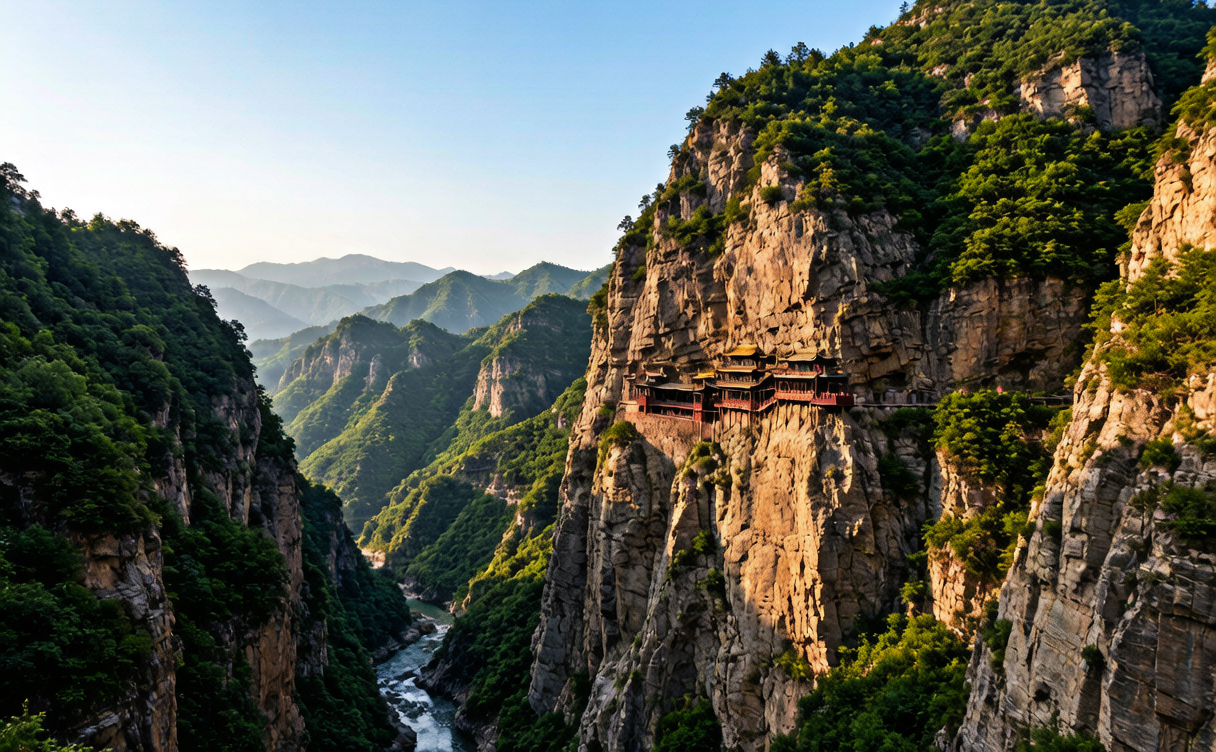
The single reason most people make this trip. Built in 491 against a vertical cliff, the temple is a stack of wooden rooms cantilevered out over a 50-metre drop, held up by wooden pegs driven into the rock. It blends Taoist, Buddhist and Confucian halls in one structure — unusual and worth the hype. Arrive before 09:00 to beat the tour groups, and pay the extra climb ticket if you want to walk the narrow upper galleries.
The lower temple path
From the gate, a stone path climbs past the Paifang archway and the first halls — the Yuanmen, the Four Heavenly Kings hall, and the main Taiyuan hall with its Taoist statuary. Allow an hour to reach the mid-mountain terrace.
The plank walk and the ridge
Above the temples, a restored plank walk (and a short cable-haul section) leads up to the highest viewpoint, where the whole basin opens out. This is the highlight of the things to do at Hengshan Mountain: on a clear day you see the Yellow River loess plain to the west and the Datong coalfields to the north. The round trip to the top takes about two hours at a relaxed pace.
The cliff inscriptions
Hengshan is famous for its rock calligraphy. Look for the giant carved characters on the cliff faces near the mid-mountain terrace — they are a recurring subject in our Datong Hanging Temple guide photos and a good excuse to pause on the climb.
Hengshan Mountain Entrance Fee
Prices shift, so treat these as a planning guide rather than a quote.
| Item | Approx. cost |
|—|—|
| Hengshan Mountain entrance ticket | ¥45–50 (US$6–7) |
| Hanging Temple viewing ticket (no climb) | ¥15 (US$2) |
| Hanging Temple climb ticket | ¥100 (US$14) |
| Hengshan cable car (one way) | ¥70 (US$10) |
| Hengshan cable car (return) | ¥130 (US$18) |
The Hengshan Mountain entrance fee is modest, and most visitors skip the cable car and walk — the path is the point. Buy tickets on arrival; foreign cards are accepted at the main gate, and your passport is the ticket reference.
Where to Stay
Datong city (recommended). Every category of hotel, good food, and a station for onward trains. This is where I would sleep — Hengshan is an easy day trip and Datong has the Yungang Grottoes besides.
Hunyuan town (budget). A few basic hotels near the mountain gate for early starters. Clean but limited; foreigner registration is not guaranteed at the smallest properties.
The mountain itself. No lodging on the peak worth recommending; the site is a half-day visit, not an overnight climb.
Sample Itinerary: One Day from Datong
08:00 — Private car or bus from Datong to Hengshan (1 hr 20 min – 1 hr 40 min).
09:30 — Hanging Temple first, before the crowds; climb the upper galleries if time allows (90 min).
11:30 — Short transfer to the Hengshan gate; buy the entrance ticket.
12:00 — Lunch at the base restaurants (noodles and Shanxi vinegar dishes).
13:00 — Climb the lower temples, then the plank walk to the ridge viewpoint (2 hr).
16:00 — Descend, transfer back to Datong.
18:00 — Evening in Datong; Yungang Grottoes the next morning.
If you have a second day, our Xian travel guide explains how to continue south by high-speed rail toward the Terracotta Army and the ancient capital.
Hengshan Mountain Travel Tips
- Start at the Hanging Temple, not the mountain. The temple crowds build by 10:00; the mountain stays quiet all day, so do the famous sight first.
- Footwear. The plank walk is solid but has exposure; wear grippy shoes, not sandals.
- Combine, don’t separate. The two sites are minutes apart. Doing them on different days doubles your transport cost for nothing.
- Cash and card. Gate tickets take foreign cards; small stalls want WeChat Pay or cash. Carry ¥200.
- Weather. Afternoon storms in summer are real. A light rain shell and an early start solve most problems.
- Guides. English signage is thin. A local guide at the gate costs around ¥150 and turns the temples from scenery into stories.
FAQ
Is Hengshan worth it if I have already seen Huangshan or Mount Hua?
Yes, but for a different reason. Hengshan is gentle and cultural rather than spectacular, and the Hanging Temple alone justifies the trip. It is the easiest of the Five Great Mountains to enjoy in a half day. For the mountain’s geology and temple history, Travel China Guide’s Hengshan Mountain page is a useful reference.
How long do I need at Hengshan?
Half a day for the mountain plus two hours for the Hanging Temple. A full day from Datong, including transport, is comfortable.
Can I visit Hengshan and the Hanging Temple independently?
Easily. Buses run from Datong, and the two sites are close. A private driver is more flexible and barely more expensive split between two or three people.
What is the Hengshan Mountain entrance fee for foreigners?
The same as for domestic visitors — around ¥45–50, with the cable car and Hanging Temple climb extra. No separate foreigner price exists.
When is the best time to visit Hengshan Mountain?
September to mid-October for clear, cool weather, or mid-May to June for green pines and small crowds. Avoid National Day week.
Written by Karl · Updated August 21, 2026