

In the cold, dry north of Shanxi Province, Datong is a former imperial capital that guards some of China’s most jaw-dropping monuments. Once a power center of the Northern Wei dynasty, the city today is the gateway to the Yungang Grottoes — a UNESCO World Heritage site of 1,500-year-old Buddhist cave sculptures — and to the vertigo-inducing Hanging Monastery clamped to a cliff face. This Datong travel guide covers the best time to visit, how to get there, the top sights, where to stay, what to eat, and a practical itinerary. For travelers who love history carved in stone and wood suspended in air, Datong is unforgettable.
Best Time to Visit Datong
The best time to visit Datong is late spring (May–June) and early autumn (September–October), when temperatures are comfortable (12–24°C) and the skies are clear. Datong sits on a high plateau at about 1,000 meters, so nights are cool even in summer, and the air is dry. Winters are long, bitterly cold, and windy — but the grottoes and monastery against snow can be spectacular for hardy photographers. Summers are the most pleasant for hiking the wall and surrounding sites, though July–August can bring brief thunderstorms.
Because the key sights are outdoors, aim for dry days and soft morning light. Autumn also pairs perfectly with the nearby volcanic grasslands turning gold, making it the most photogenic season. If you visit in winter, dress in serious layers and start the outdoor sites late morning once the frost has lifted, since the cliff walkways at the Hanging Monastery can be slippery at dawn.
How to Get to Datong
Datong is reachable by air, high-speed train, and road, often visited via nearby Pingyao. Schedules and tickets can be checked on China Railway’s official portal, China Railway (12306).
- By air: Datong Yungang Airport (DAT) has flights from Beijing, Shanghai, and Xi’an, with a shuttle or DiDi reaching the center in about 40 minutes.
- By high-speed train: The Datong–Taiyuan line and connections put Taiyuan within about 2.5 hours and Beijing within roughly 4–5 hours (via transfer). Trains are the most comfortable way in, gliding past the loess hills of Shanxi.
- By road: The drive from Pingyao Ancient Town takes about 3.5–4 hours and is a classic Shanxi road trip linking two of the province’s best sights, with the landscape shifting from walled towns to open plateau.
Top Things to Do in Datong
Yungang Grottoes
The obvious highlight of the things to do in Datong is the Yungang Grottoes, a UNESCO site where 252 caves hold more than 51,000 Buddhist statues carved between the 4th and 6th centuries. The early caves show striking Gandhara and Persian influences, while the giant seated Buddhas are among the most serene images in all of Chinese art. Allow at least half a day, and visit our dedicated Datong Yungang Grottoes guide for the full background on the carving techniques and the dynasty that built them.
The Hanging Monastery (Xuankong Si)
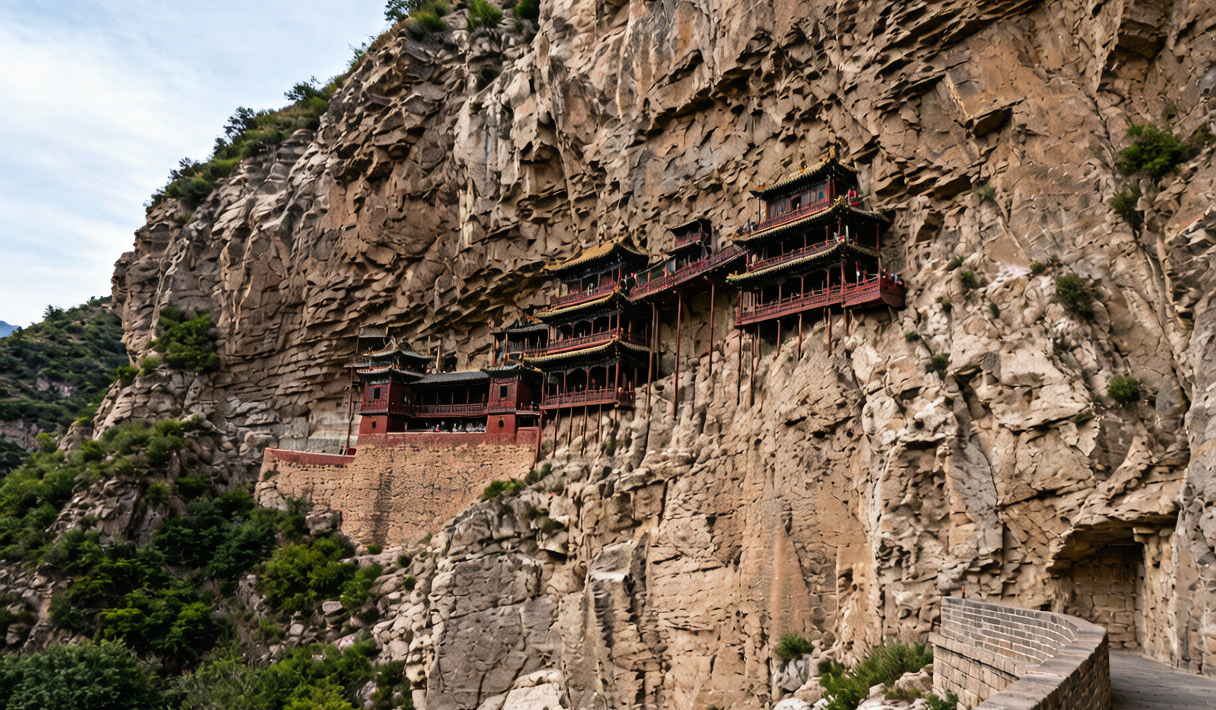
About 65km from the city, the Hanging Monastery is a wooden temple wedged into a sheer cliff, built over 1,500 years ago and resembling a stack of drawers on the rock face. It blends Buddhist, Taoist, and Confucian shrines and is one of China’s most photographed wonders. Our Datong Hanging Temple guide covers how to time your visit to avoid the crowds and which walkways give the best photographs without the tour-bus backdrop.
Datong City Wall and Nine Dragon Screen
Back in town, the reconstructed Ming-era city wall is walkable at sunset for panoramic views, and the Nine Dragon Screen — a glazed-tile wall over 600 years old — is a quick, colorful stop near the center. The wall’s four gates and corner towers give you a sense of how a northern garrison city was laid out, and the evening light on the tiles is worth the short walk.
Huayan Monastery and Shanhua Temple
These restored Buddhist complexes inside the old city show the grand wooden architecture of north China, with sweeping roofs, murals, and quiet courtyards that reward a slower wander away from the big ticket sights.
Where to Stay in Datong
Stay inside or just outside the restored city wall for walkable dining and easy access to the Nine Dragon Screen and temples. Mid-range hotels run about ¥250–450 per night; international chains cluster near the railway station. Budget guesthouses start around ¥150. Book ahead during the October holiday, when domestic tourists flood Shanxi; a hotel near the station also eases the early-morning trip out to the grottoes and Hanging Monastery, which are best seen before the midday coach tours arrive.
Datong Food and Local Specialties
Datong eats hearty northern fare: hand-pulled noodles (dao xiao mian, cut with a blade), lamb stews, stuffed buns, and the region’s sweet, chewy millet cakes. The night market near the old town is the easiest place to graze on skewers and noodles. A warming bowl of knife-cut noodles after a cold day at the grottoes is a local ritual, and the city’s vinegar-dipped dumplings make a sharp, satisfying contrast to the rich lamb. For more context, our best things to do in China roundup features Datong among the country’s top historical stops, alongside the caves, walls, and wooden pagodas that define northern China.

Datong Itinerary
A Datong itinerary of two days covers the essentials:
- Day 1: Yungang Grottoes in the morning (arrive at opening), city wall and Nine Dragon Screen in the afternoon, noodles at night.
- Day 2: Full-day trip to the Hanging Monastery and the nearby Yingxian Wooden Pagoda, then return to Datong or continue to Pingyao by road or rail for a classic Shanxi double-header.
For more ideas, our best things to do in China guide helps you link Datong with Pingyao and the broader Shanxi loop, building a route that threads together caves, cliffs, and walled towns.
Datong Travel Tips
A few Datong travel tips: the altitude and dry air mean moisturizer and lip balm are useful, and layers are essential given the temperature swings between day and night. Mandarin is standard, but a translation app helps with menus. DiDi covers airport and inter-site transfers, though the grottoes and monastery are best reached by a hired car or tour for the day. Tap water is not for drinking, so carry bottled water. Wear sturdy shoes for the cliff-side walkways at the Hanging Monastery, and start early to beat both crowds and the midday sun that flattens the photography.
FAQ
Is Datong worth visiting for foreign tourists?
Yes — the Yungang Grottoes and Hanging Monastery are among China’s most extraordinary historical sites, and the city is compact and manageable.
How do I get to Datong?
High-speed trains from Taiyuan (~2.5 hours) and flights from Beijing and Xi’an are the easiest routes.
What is Datong most famous for?
The Yungang Grottoes (UNESCO) and the cliffside Hanging Monastery.
Do I need a visa for Datong?
Most foreign visitors need a Chinese visa; check current transit rules before travel.
Final Thoughts
Datong packs an extraordinary amount of wonder into a small northern city — caves of stone Buddhas, a temple pinned to a cliff, and walls that glow at sunset. This Datong travel guide shows why the best time to visit Datong is spring or autumn, when the plateau light is at its best. Pair it with Pingyao for a classic Shanxi journey, and for season planning across the country, browse our best time to visit China guide to choose your travel window and build a route that takes in the grottoes, the cliff temple, and the walled towns of the north.