

Qufu, a small city in southwestern Shandong Province, is one of the most important cultural destinations in all of China — the birthplace of Confucius and the spiritual heart of Confucianism for more than two millennia. Its walled old town shelters the “Three Kong” sites: the Confucius Temple, the Confucius Family Mansion, and the Confucius Cemetery, all UNESCO World Heritage treasures. This Qufu travel guide covers when to go, how to arrive, the must-see sights, where to stay, what to eat, and a simple itinerary. If you want to stand where Chinese philosophy was born, Qufu is unmissable.
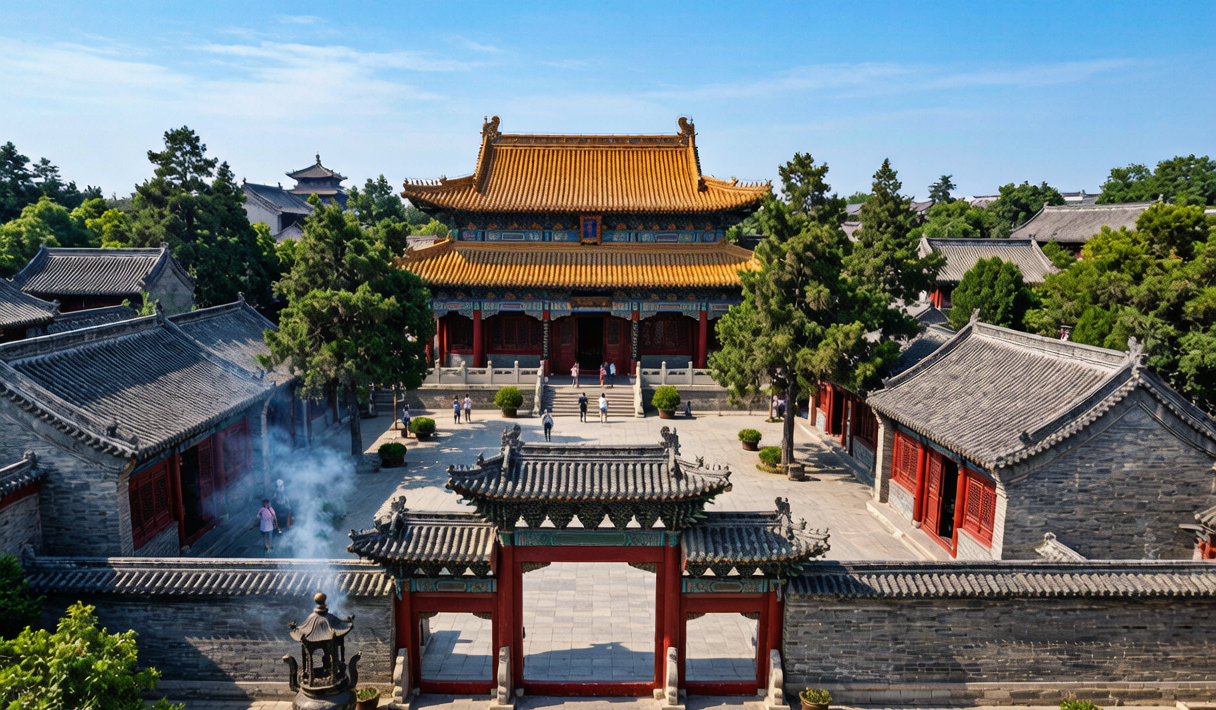
Best Time to Visit Qufu
The best time to visit Qufu is spring (April–May) and autumn (September–October), when the weather is mild (15–25°C) and the old trees in the temple courtyards are at their most beautiful. The city’s ceremonial atmosphere peaks during the Confucius birthday celebrations in late September, when rituals, music, and dance fill the temple — a memorable time to visit if you can plan around it. Summers are hot and humid; winters are cold and grey but quiet, with few crowds and lower hotel prices.
Because Qufu is compact and largely pedestrian in the old town, the pleasant shoulder seasons let you wander the stone lanes comfortably. Autumn also pairs well with nearby Mount Tai, where the peaks turn crisp and clear, and the harvest markets around the city fill with persimmons and pomegranates that make for good photography.
How to Get to Qufu
Qufu is on the Beijing–Shanghai high-speed line and is easy to reach by train. Schedules and tickets can be checked on China Railway’s official portal, China Railway (12306).
- By air: The nearest major airports are Jinan Yaoqiang (TNA) and Qingdao Jiaodong (TAO); from either, a high-speed train completes the journey to Qufu in roughly 1–2 hours.
- By high-speed train: Qufu East Station sits on the Beijing–Shanghai line, putting Beijing within about 2 hours and Shanghai within about 3.5 hours. Foreign travelers should review our China high-speed train guide for foreigners before booking, as passport ID is required at each step of the purchase.
- By road: Buses and private drivers connect Qufu with nearby cities including Tai’an (for Mount Tai) and Jinan, the Shandong provincial capital, on good expressways.
Top Things to Do in Qufu
The Confucius Temple (Kong Miao)
The centerpiece of the things to do in Qufu is the Confucius Temple, a vast complex of courtyards, pavilions, and ancient cypress trees first built in 478 BCE and expanded over centuries. The scale is staggering — over 100 buildings — and the atmosphere, especially at opening time, is serene and reverent. Don’t miss the Hall of Great Achievement, the temple’s ceremonial heart, where the carved dragons and imperial plaques tell the story of Confucius’s rising status through the dynasties.
The Confucius Family Mansion (Kong Fu)
Next door, the Family Mansion was home to the direct descendants of Confucius for generations, a walled warren of reception halls, residential quarters, and gardens. It offers a rare glimpse into the daily life and privilege of China’s most honored lineage, with period furnishings and a quiet rear garden perfect for a slow stroll.
The Confucius Cemetery (Kong Lin)
About 1.5km north, the Confucius Cemetery is a forested burial ground holding Confucius, his descendants, and family members across more than 2,000 years. A peaceful walled woodland, it’s best visited by bicycle or electric cart along its long central path, which ends at the simple, moving tomb of the master himself.
The Old Town Walls and Local Streets
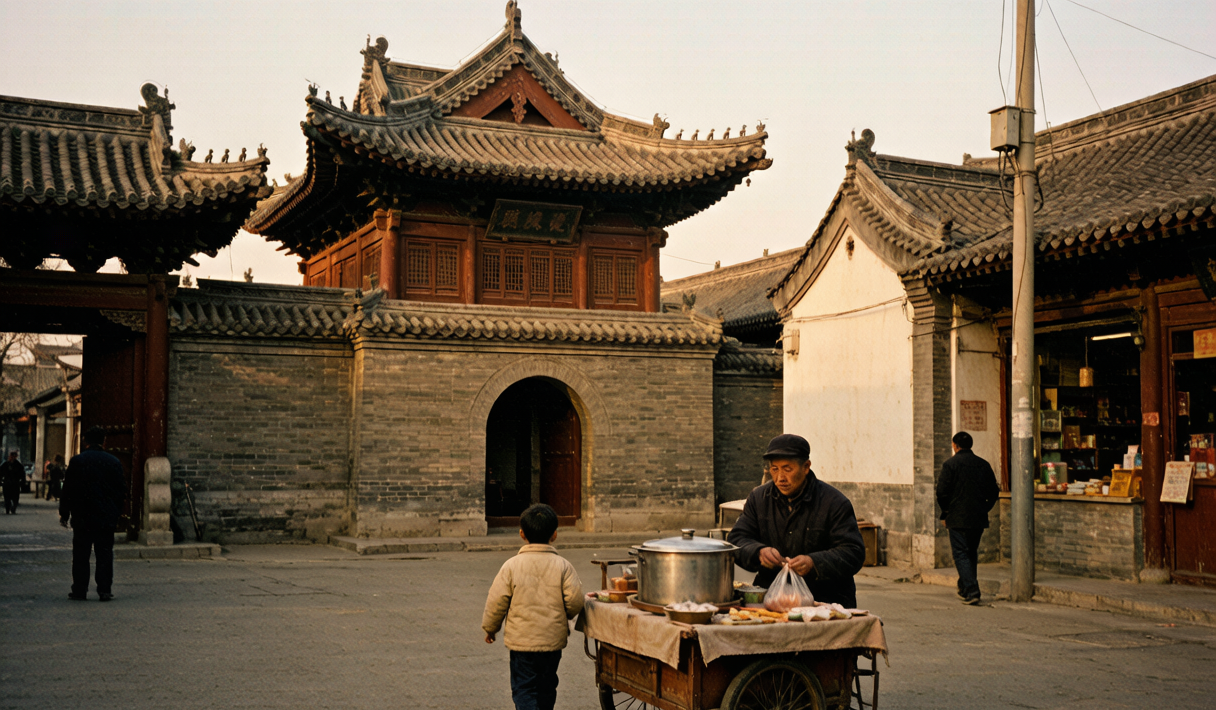
Qufu’s restored city walls and quiet lanes are pleasant for an evening stroll. The southern gate and moat give a sense of the town’s Ming-era layout, and small teahouses sell the local Kong-family style snacks that have been made here for centuries.
Where to Stay in Qufu
Most visitors stay inside or just outside the old town, within walking distance of the Three Kong sites. Mid-range hotels run about ¥250–450 per night; international chains sit near Qufu East Station, about 20 minutes by car from the temple. Budget guesthouses around the south gate start around ¥150. Book ahead for the September Confucius festival, when rooms fill and prices rise; staying near the station also makes a Mount Tai day trip easy, with the train to Tai’an taking well under an hour.
Qufu Food and Local Specialties
Qufu cuisine leans on Shandong’s hearty, savory style, with a Confucian-banquet tradition of elaborate formal dishes. Try “Kongfu” braised fish, the local sesame cakes, and the sweet “Qufu cake” (Qufu bing). Vegetarians will enjoy the temple-area tofu dishes, while the night market near the south gate offers cheap noodles and skewers. A Qufu from Beijing rail run makes an easy overnight or two-day food-and-culture break, letting you see the capital and then step back two millennia in a single trip.
For a coastal contrast on the same Shandong trip, our Qingdao travel guide covers the beer-and-beach city a few hours east by train, a natural pairing with Qufu and Tai’an for a rounded provincial loop.
Qufu Itinerary
A Qufu itinerary of one to two days covers the essentials:
- Day 1: Confucius Temple in the morning, Family Mansion at midday, Cemetery by cart in the afternoon, old-town stroll at dusk.
- Day 2 (optional): Early train to Tai’an and climb Mount Tai, or continue by high-speed rail to Beijing or Qingdao for the next leg of your journey.
For more ideas, our best things to do in China roundup helps you weave Qufu into a wider Shandong and eastern-China route, connecting the sage’s hometown with the mountains and coast of the east.
Qufu Travel Tips
A few Qufu travel tips: buy the combined Three Kong ticket to save money and time, and arrive at the temple right at opening to beat tour groups. Mandarin is standard, but a translation app helps with menus. DiDi works for the station run. Tap water is not for drinking, so carry bottled water. Comfortable shoes are essential — the temple and cemetery involve a lot of walking on stone paths — and modest dress is respectful inside the sacred sites. If you visit during a ceremony, step back and observe quietly rather than walking through the performance.
FAQ
Is Qufu worth visiting for foreign tourists?
Absolutely, as the birthplace of Confucius and home to three UNESCO World Heritage sites central to Chinese culture.
How do I get to Qufu from Beijing?
The high-speed train takes about 2 hours from Beijing South to Qufu East Station.
What are the Three Kong Sites?
The Confucius Temple, the Confucius Family Mansion, and the Confucius Cemetery — all in Qufu’s old town.
Do I need a visa for Qufu?
Most foreign visitors need a Chinese visa; check current transit rules before travel.
Final Thoughts
Qufu is where China’s philosophical soul is most tangible — walk the cypress-shaded courtyards and you feel two thousand years of continuity underfoot. This Qufu travel guide shows why the best time to visit Qufu is spring or autumn, when the temples glow and the crowds thin. Use the city as a calm, cultural anchor on any Shandong journey, and for season planning across the country, browse our best time to visit China guide to pick your travel window and build a route that links Qufu, Tai’an, and the sea.