

The Nanputuo Temple Xiamen sits at the foot of Wulao Peak with its back to the hills and its face toward the sea, a working Buddhist monastery where the vegetarian kitchen is almost as famous as the Buddha halls. We send travelers here as their first Xiamen stop because it is free, it is beautiful, and it sits next to Xiamen University, which makes it an easy half-day before the island crowds. This guide covers the free entry, the route in, and what to eat while you are there.
What Nanputuo is and why it stands out
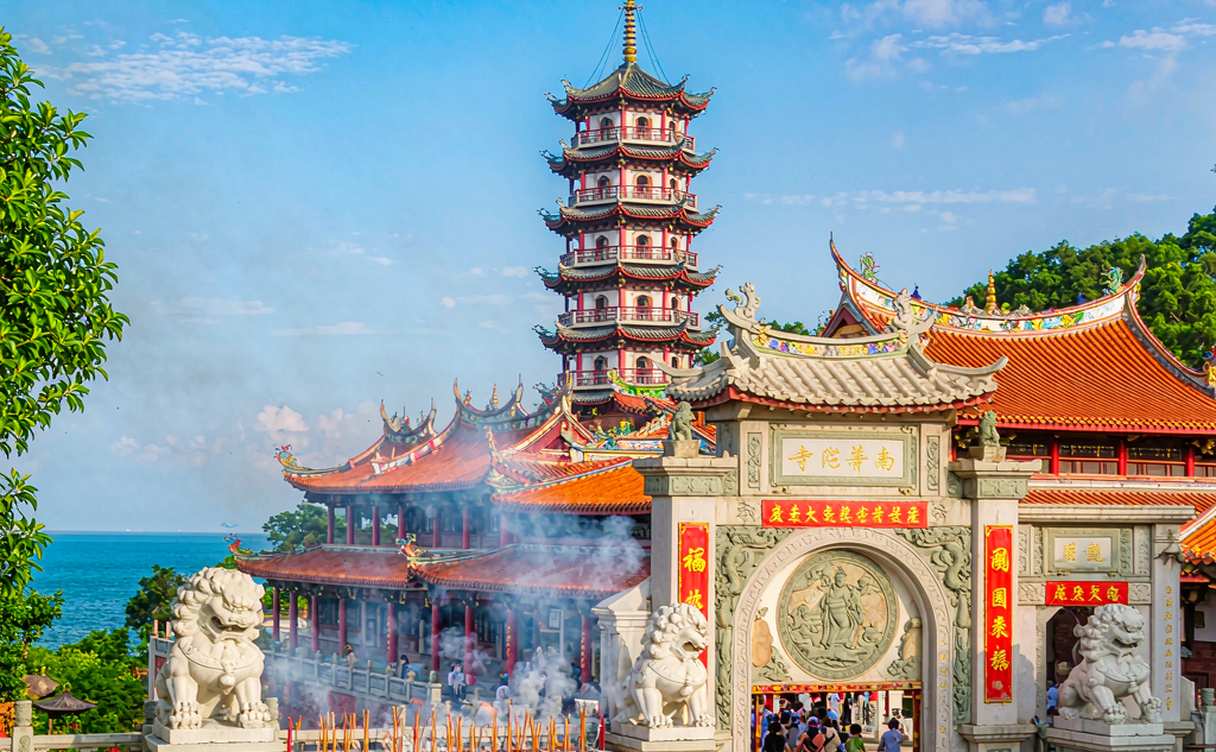
The temple was first founded in the Tang dynasty as Pu Zhao Temple and rebuilt in its present form during the Qing, taking the name Nanputuo, meaning South Putuo, because it mirrors the famous Putuo Island pilgrimage mountain to the north. What sets it apart is the setting: five grand halls climb the hillside in a straight line, backed by the green wall of Wulao Peak and open to the breeze off the sea. The monastery is still active, with dozens of monks in residence, and the smell of the vegetarian kitchen drifts down the steps at lunchtime. For foreign visitors it is one of the most accessible large temples in coastal China, with clear English signs and a calm, welcoming atmosphere.
Tickets, hours, and what you pay
Admission is free, which is rare for a temple of this scale. You simply walk in through the south gate near the university, though there is a small charge if you want to climb the steps behind the halls to the cliffside viewpoint, and a separate price for the vegetarian banquet in the temple restaurant. The restaurant is well known across Fujian, and a set vegetarian meal runs from about 50 to 100 CNY per person depending on the dishes you choose. Opening hours run from 8:00 to 17:00 in peak season, sometimes extending to 18:00 in summer, with the halls closing slightly earlier than the grounds. Arrive before 10:00 if you want to see the morning chanting, and bring cash or a payment app for the food and the incense, because the temple itself takes no entry fee.
How to get to Nanputuo Temple Xiamen
The temple sits in the Siming district, directly behind Xiamen University and a short walk from the coastal road. From the city center, buses 1, 21, and 45 all stop at the Nanputuo Temple stop, and the ride from the railway station area takes about twenty minutes. If you are on Metro Line 1, alight at Xiamen University Station and walk ten minutes south to the gate. A taxi from the island ferry terminal or the station costs roughly 20 to 35 CNY. We advise combining the temple with a walk through the university district and the nearby beach, because the three sit within a fifteen-minute stroll of each other.
Inside the temple: what to see
The axis is simple to follow. The Hall of Heavenly Kings greets you at the bottom, followed by the Great Compassion Hall with its thousand-armed Guanyin, and then the central Mahavira Hall. Behind the halls, a flight of steps leads up to a large open-air Guanyin carved into the cliff face, and beyond that a path winds to a viewpoint over the campus and the sea. Our guides point out the calligraphy on the beams and the old steles that record the temple’s Qing-era repairs. The vegetarian kitchen is worth a look even if you do not eat, because the scale of the wok stations shows how many pilgrims this kitchen feeds on a festival day.
Best time to visit and how to avoid the crowds
Xiamen has a warm maritime climate, gentle compared with the interior. Spring, from March to May, and autumn, from October to November, are the most comfortable, with cool breezes and low humidity, which is also the best time to visit Xiamen for the beaches and the islands. Summer is hot and typhoon-prone, while winter is short and mild. The temple is busiest on the first and fifteenth of the lunar month and during holidays such as Spring Festival, when the incense smoke thickens by midday. For a calm visit, arrive at the 8:00 opening or after 16:00 when the tour groups have gone.
Combine it with the rest of Xiamen
Because the temple sits next to the university, it pairs with the city’s headline sights. Our Xiamen Gulangyu Island guide explains the car-free island just across the water, an easy ferry ride after your temple morning. The old town and the coastal road are walkable from the gate, and the seafood streets near the harbor make a good lunch follow-up once you have had your fill of vegetarian fare.
Practical tips from our guides
A few notes from the steps: dress modestly for the halls, cover shoulders and knees; try the vegetarian banquet at least once, because the mock-meat dishes are a Xiamen specialty; and climb to the cliffside Guanyin early, because the viewpoint gets busy by late morning. If you are arriving from another Fujian city or from further away, the high-speed trains pull into Xiamen Station or Xiamen North, and from either a short taxi reaches the temple gate.
The temple’s history and architecture are summarized on Wikipedia, a helpful read before you stand at the foot of Wulao Peak.
The vegetarian banquet and what to order
The temple kitchen is a destination in its own right, and the banquet format lets you sample several dishes at once. The signature plates are mock meats made from tofu, mushroom, and gluten: a vegetarian goose with crisp skin, a mock duck braised in dark sauce, and stuffed buns shaped to look like shellfish. Portions are shared, so a table of two should order three or four dishes plus rice, which lands around 120 to 180 CNY all in. The dining room looks ordinary, but the cooking has been refined over decades and draws locals as much as pilgrims. We tell travelers to book the banquet for late lunch, around 13:00, when the kitchen is caught up and you can eat without a long wait. Even if you only want a quick bite, the small counter near the gate sells vegetarian pastries and soy milk through the morning.
The hill, the beach, and the university next door
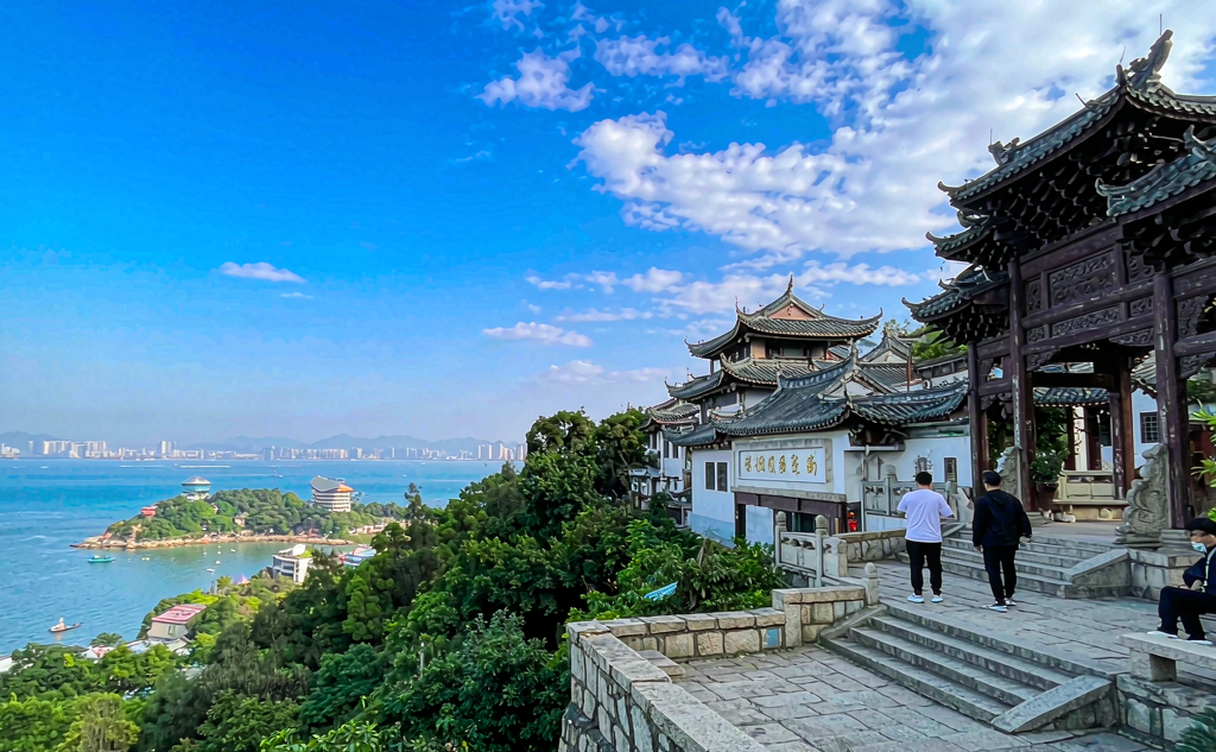
Behind the halls, the climb to the cliffside Guanyin is short but steep, and it opens onto a railed viewpoint over Xiamen University and the sea beyond. From there, a path continues to the fringe of the campus, and a ten-minute walk down reaches Baicheng Beach, where students fly kites and the spray takes the edge off a hot afternoon. The university itself is worth a loop if it is open to visitors, because its lake and buildings are part of why this corner of Xiamen feels so calm. Stringing the temple, the viewpoint, and the beach into one slow morning is one of the best low-cost days in the city.
Why Nanputuo is the right first stop
Nanputuo is free, central, and genuinely alive, which makes it the ideal opening to Xiamen. You get sea air, serious architecture, and a famous meal without spending a cent on entry, and the climb behind the halls gives you the city’s best early view. For travelers who want a calm start before the islands and the old town, this temple delivers.
Quanzhou, just up the coast, holds its own surprises, and our Quanzhou travel guide explains why.
Give the temple a slow morning so the cliffside view stays uncrowded.