

This Quanzhou travel guide is for foreign travelers who want to step away from China’s megacities and into a living museum of global trade history. Once the busiest port in the medieval world, Quanzhou sits on the coast of Fujian province and was the starting point of the Maritime Silk Road. Today its compact old town is dotted with Song- and Yuan-era mosques, Hindu temples, Christian relics and pagodas — a rare, tangible record of how open and cosmopolitan a Chinese city could be centuries ago.
Best Time to Visit
The best time to visit Quanzhou is autumn (October to November) and spring (March to May). These months bring warm but not oppressive weather, low humidity, and clear skies that are perfect for walking the old town on foot. Fujian’s coastal climate means summers (June to September) are hot, sticky and prone to typhoons, especially from July onward, so outdoor sightseeing can be uncomfortable. Winter is mild compared with northern China, rarely freezing, and a good low-season option if you don’t mind the occasional damp day. For a national overview of regional weather, see our guide to the best time to visit China.
How to Get There
Quanzhou is easy to reach, and most visitors arrive via nearby Xiamen or by high-speed rail.
By high-speed train: Quanzhou has its own station on the coastal Fuzhou–Xiamen line. Trains from Xiamen take about 30–50 minutes, from Fuzhou around 1–1.5 hours, and from Shanghai roughly 6–7 hours with a transfer. For ticketing tips and how the network works, read our China high-speed train guide for foreigners.
By air: The nearest major airport is Xiamen Gaoqi International (XMN), about an hour away by car or train. Some domestic flights also serve Quanzhou Jinjiang Airport. Many travelers combine the two cities, and our Xiamen travel guide is a natural companion to this one.
By bus: Frequent intercity buses connect Quanzhou with Xiamen, Zhangzhou and other Fujian towns.
Top Things to Do
Quanzhou’s magic is in its walkable old town, where world heritage sites sit side by side with everyday street life.
Kaiyuan Temple
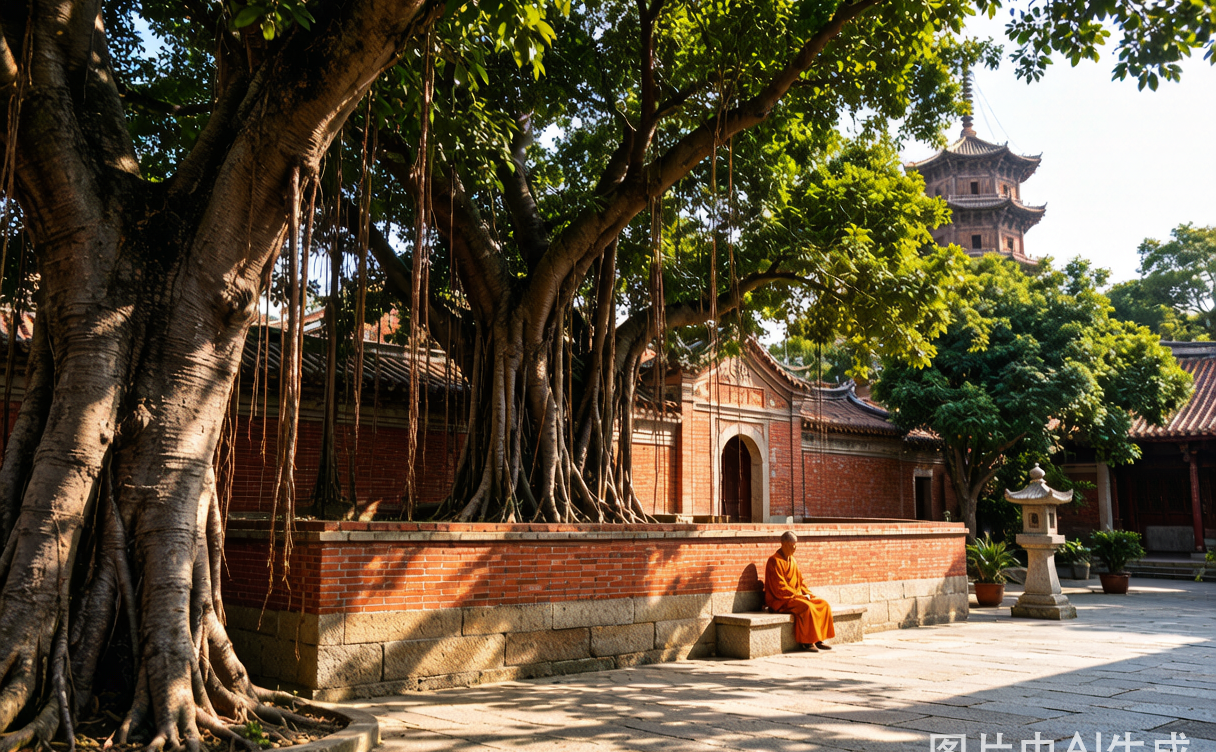
The city’s centerpiece, Kaiyuan Temple dates back to the Tang dynasty and is best known for its two towering stone pagodas — the East and West Towers — that rise above the rooftops. Inside, halls of incense and centuries-old wooden architecture make it the spiritual heart of Quanzhou. It is free to enter and rarely as crowded as China’s more famous temples.
Qingjing Mosque and the Muslim Heritage
Quanzhou once hosted a large Arab and Persian trading community, and the Qingjing Mosque, built in the Song dynasty, is one of the oldest surviving mosques in China. Nearby steles and tombs tell the story of the city’s Islamic past. The presence of so many faiths in one small area is exactly why UNESCO inscribed Quanzhou as a World Heritage Site — you can read the official listing on the UNESCO World Heritage Centre page.
Maritime Museum and Luoyang Bridge
The Quanzhou Maritime Museum holds models of ancient trading ships, maps and artifacts from the city’s golden age of ocean commerce. Just outside town, the Song-dynasty Luoyang Bridge is one of China’s oldest stone beam bridges, built with ingenious oyster-shell foundations that have survived a thousand years.
Tianhou (Mazu) Temple
Dedicated to the sea goddess Mazu, patron of sailors and fishermen, this riverside temple is lively and fragrant with incense. It reflects Quanzhou’s deep connection to the ocean and the communities that sailed from its harbor.
Puppet Shows and Local Crafts
Quanzhou is famous for its intricate string-puppet (marionette) theater, a UNESCO-listed intangible cultural heritage. Catch a short performance at a local theater, and look for woodcarving and stone sculpture workshops in the old lanes. For more ideas on what to prioritize nationally, browse our best things to do in China.
Where to Stay
Most visitors stay in the Licheng district, close to the old town and Kaiyuan Temple, where small boutique hotels and guesthouses put you within walking distance of the main sights. Mid-range rooms run around ¥250–450 per night, while budget options start near ¥150. Staying central means you can explore at dawn and dusk when the light on the pagodas is best and the tour groups have gone home.
Getting around Quanzhou is straightforward once you are inside the old town. The historic core is flat and best explored on foot or by shared bike, while ride-hailing apps with a translation keyboard handle longer hops to Luoyang Bridge or the riverfront. City buses are cheap but seldom signed in English, so save them for confident travelers. Quanzhou also works as a calm base for a wider Fujian loop — many visitors follow the coast south to the Xiamen travel guide region or head inland to the round earthen Fujian tulou villages.
Food and Local Specialties
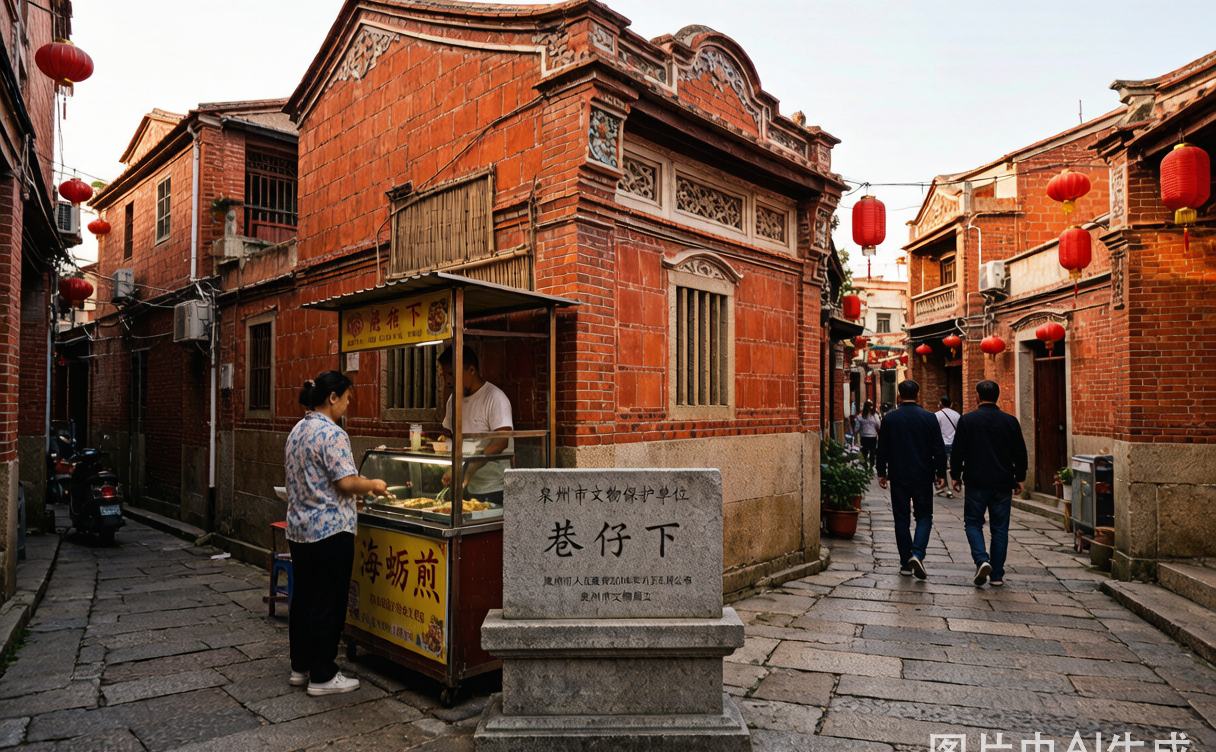
Quanzhou food is a highlight of any visit and leans into the sour, savory and seafood-rich flavors of southern Fujian. Must-tries include vinegar-braised pork (zhe cai), oyster omelet (hai li jian), ginger duck, and a local wheat noodle soup called mian xian hu. The night markets near the old town are the best place to graze; pull up a plastic stool, point at what looks good, and enjoy a meal for around ¥20–40. Quanzhou travel tips from locals almost always start with “eat your way through the side streets.”
Quanzhou Travel Guide: Sample Itinerary
2-Day Quanzhou Itinerary
- Day 1: Kaiyuan Temple and the old town lanes in the morning, Maritime Museum in the afternoon, Mazu Temple and riverfront at dusk.
- Day 2: Luoyang Bridge and a puppet show, then an evening train to Xiamen or onward.
3-Day Quanzhou Itinerary
- Day 1: Old town temples and mosques, slow walking tour.
- Day 2: Maritime Museum, Luoyang Bridge, and a food crawl.
- Day 3: Day trip to the Fujian tulou villages — the round earthen Hakka fortresses — or continue to Xiamen’s Gulangyu Island.
Quanzhou Travel Guide: FAQ
Why is Quanzhou famous?
It was the world’s largest port during the Song and Yuan dynasties and a hub of the Maritime Silk Road, leaving behind an unmatched mix of temples, mosques and relics from many cultures.
Is Quanzhou worth visiting if I’m already going to Xiamen?
Absolutely. Quanzhou is quieter, older and far more historically layered than its flashier neighbor, and the two are less than an hour apart by train.
How many days do I need in Quanzhou?
Two days covers the essentials; three lets you add a tulou or Xiamen day trip.
Is Quanzhou walkable for foreign tourists?
Yes. The old town is flat and compact, signage is improving, and translation apps handle the basics well.
Closing
A thoughtful Quanzhou travel guide shows you that China’s story is not only about emperors and great walls, but also about the ships, merchants and faiths that once met on its shores. With its pagodas, mosques and unforgettable food, Quanzhou rewards the curious traveler. If this is your first venture into the country, begin with our China travel guide for first-timers and let Quanzhou be a highlight of your Fujian journey.