

Most visitors to Sichuan never leave the Chengdu ring road, which is a shame, because an hour northwest of the city the plain gives way to the Longmen Mountains and a county that blooms pink and red every spring. Pengzhou (彭州) is a county-level city under Chengdu, tucked against the northern Sichuan foothills, and it carries two claims we love to show travelers: it is officially one of China’s “peony cities,” and it guards the cool, fast White Water River (白水河) valley that drains straight off the mountain front. We have taken Chengdu-based travelers here for a single day and watched them come back with peony photos and trout dinners. This Pengzhou travel guide covers the peony festival, the White Water River valley, and how to fit it into a Sichuan loop.
Pengzhou sits about 40 kilometers northwest of central Chengdu, where the Chengdu plain meets the edge of the Tibetan plateau’s front range. The land rises fast: within twenty minutes of leaving the city you trade flat farmland for pine slopes, tumbling streams, and the kind of cool air that makes Chengdu’s summer haze feel far away. The county has been famous for peonies for more than a thousand years — Tang and Song poets wrote about its gardens — and today the flower is woven into the local identity, from the city emblem to the spring festival that draws coaches from the provincial capital.
The Pengzhou peony festival on Danjing Mountain
The peony heart is Danjing Mountain (丹jing 山, 丹景山), a low wooded peak north of the county seat where terraced gardens step down the slopes in waves of bloom. The Pengzhou peony festival (彭州牡丹节) runs roughly from late March through April, peaking in early to mid-April when the weather is warm enough and the buds open together. We tell travelers to aim for that two-week window; arrive in May and you will find only green leaves and a few late stragglers. The gardens charge a festival-season ticket of about ¥50–60, with the best light in the soft morning hours before the coach crowds climb the steps.
What sets Pengzhou’s peonies apart is the variety and the setting. Unlike the flat park beds of Luoyang or Heze, these grow on mountain terraces with the Longmen range behind them, so a photo can hold a single heavy bloom and a snow-dusted ridge in the same frame. Local vendors sell peony seedlings and pressed-flower bookmarks at the gate, and the teahouses halfway up serve peony-flavored cakes and a light peony blossom tea that tastes faintly of melon.
The White Water River valley
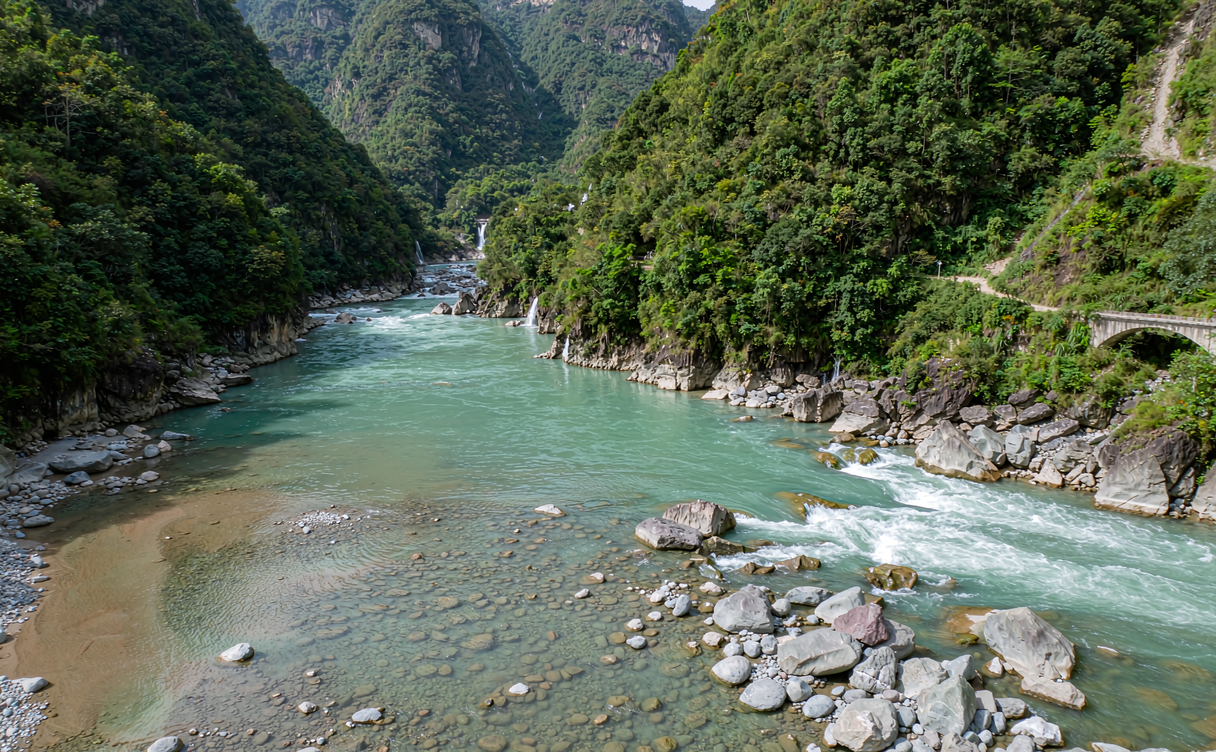
If the peonies are the spring draw, the White Water River is the year-round one. The Bai Shui He (白水河) is a cold, clear tributary that runs down the Longmen Mountain front throughforested gorges and stepped pools, and the valley around it is protected as a national forest park and nature reserve. We send heat-weary Chengdu visitors here in July and August, when the water stays at a bracing 12–16°C and the shade keeps the air in the low 20s. The upper valley has plank walks along the rapids, a few viewing decks over the churning white water, and short trails to side waterfalls that are safe and well railed.
A practical note: the valley was badly hit in the 2008 Wenchuan earthquake and has been rebuilt with stronger paths and early-warning signs for mountain floods. After heavy rain we advise sticking to the marked lower walks, because the upper gorges can flash-flood fast. The park entrance fee is modest, around ¥30–40, and a shuttle bus runs from the gate to the main rapids viewing area so you do not have to walk the road.
Time your visit for the first two weeks of April to catch the Pengzhou peony festival at full bloom on Danjing Mountain.
Best time to visit and what to pack
The best time to visit Pengzhou depends on your goal. For peonies, early to mid-April is the only window that matters. For the White Water River valley and cool hiking, June through September is ideal, with 22–28°C days and cold, swimmable-in-places streams. Autumn (October to early November) brings red and gold foliage on the lower slopes and the clearest mountain views, our pick for photographers. Winter is quiet and cold, with occasional frost in the valley, but off-season tickets and empty trails suit solitude seekers.
For broader planning, our best time to visit China guide maps regional seasons, and the Chengdu travel guide is your base camp since almost everyone rails or drives in from there. Pack layers even in spring — the valley runs several degrees cooler than Chengdu — and water shoes if you plan to wade the shallow pools.
How to get to Pengzhou
Getting to Pengzhou is quick from Chengdu. The Chengdu–Pengzhou intercity railway runs from Chengdu to Pengzhou Station (彭州站) in about 30–45 minutes, with second-class fares around ¥10–15; from there a taxi to the county seat or the Danjing Mountain gate takes 20–30 minutes for roughly ¥30–50. Buses also leave Chengdu’s Chadianzi and Zhaojue Temple stations for Pengzhou several times an hour, about ¥16–20 and an hour. The China high-speed train guide for foreigners covers the passport booking you will need for the intercity line. If you drive, the Chengdu–Pengzhou expressway (S1) makes it a straight 50-minute run, and the mountain roads up to the White Water River are paved and well signed.
We usually fold Pengzhou into a wider Sichuan circuit rather than treating it as a standalone. Pair it with the Dujiangyan irrigation system and Mount Qingcheng, both under an hour east, and string the three into the Sichuan 7-day itinerary for a plateau-edge loop that balances city, mountain, and flower.
From Chengdu, take the intercity train to Pengzhou Station and taxi straight to the valley to beat the midday heat.
Food, where to stay, and a sample day
Pengzhou food deserves its own line. The county is known for Jiuchi roasted duck (九尺板鸭), a salt-cured, wood-smoked duck sold whole or by the quarter for about ¥40–60, best eaten with a cold beer on a riverside bench. JunTun guokui (军屯锅魁), a flaky stuffed flatbread fried on a griddle, originates in a Pengzhou township and costs ¥3–6 at street stalls. Around the White Water River, the cold-water trout farms grill their own fish with cumin and chili for ¥50–80 a kilo, and the clear broth hotpots of the valley use mountain herbs you will not find in Chengdu.
Accommodation ranges from county-seat hotels at ¥160–300 a night to forest guesthouses near the White Water River gate at ¥220–400 in summer. For the peony festival, book the county seat a month ahead, because April weekends fill fast with Chengdu day-trippers. A relaxed plan: train up at 08:00, peonies on Danjing Mountain until noon, duck lunch in town, then the White Water River valley for the cool of the afternoon, and the 18:00 train back. The county’s background is summarized by the Wikipedia entry on Pengzhou, Sichuan, which places it within the Chengdu administrative area and the Longmen Mountain belt — a useful read if you want to understand why the peonies and the cold river sit side by side here.
A sample Pengzhou day trip from Chengdu
If you only have one day, here is the rhythm we recommend for a relaxed Pengzhou day trip from Chengdu, built around the 08:00 intercity train and timed so the heat never catches you. Book your ticket the night before on the 12306 app using your passport, and aim for the 08:00 or 08:30 departure from Chengdu’s North or Xipu station — the ride to Pengzhou Station is just 30–45 minutes and costs ¥10–15 second class. At the station, use DiDi or the metered cab rank; the 20–30 minute drive to the Danjing Mountain gate runs about ¥30–50. Buy your festival ticket at the gate (¥50–60 in April) and walk the terraces slowly from 09:30 to 11:30, when the light sits low on the blooms and the coach groups have not yet climbed the steps.
For lunch, come down to the county seat and order Jiuchi roasted duck (¥40–60) with a cold beer, then a quick stroll through the old street for peony seedlings if you want a souvenir. By 13:30 grab a taxi to the White Water River valley gate (¥40–60, 30 minutes); the ¥30–40 park entry includes the shuttle to the rapids viewing deck, where the 12–16°C water and pine shade make a perfect summer afternoon. Walk the plank paths until 16:30, then a ¥30–50 taxi back to Pengzhou Station for the 18:00 train to Chengdu. Total daily spend for one person, excluding the train, runs roughly ¥200–300 including food and tickets. If you prefer independence, rent a car at Chengdu and follow the S1 expressway — the 50-minute drive is straight and well signed, and parking at both sites is ¥10–20. We have run this exact loop with first-time visitors and it always ends with peony photos, a trout dinner, and a train home before dark.
Order the Jiuchi roasted duck at a riverside stall and pair it with a cold-water trout grilled at the valley farms.