

An hour’s flight from the coastal cities and a world away in feeling, the Jiaohe Ruins sit on a tongue of dried loess between two rivers outside Turpan, Xinjiang, China. This is one of the best-preserved ancient earthen cities anywhere on the old Silk Road — a whole town of streets, temples, and homes carved down into the earth rather than built up from it, abandoned for six hundred years and left to the desert. We have walked its silent main avenue with travelers at golden hour and watched them fall quiet; there is no other site in China quite like it. This Jiaohe Ruins guide covers the Silk Road history, what you will see on the ground, and exactly when and how to visit.
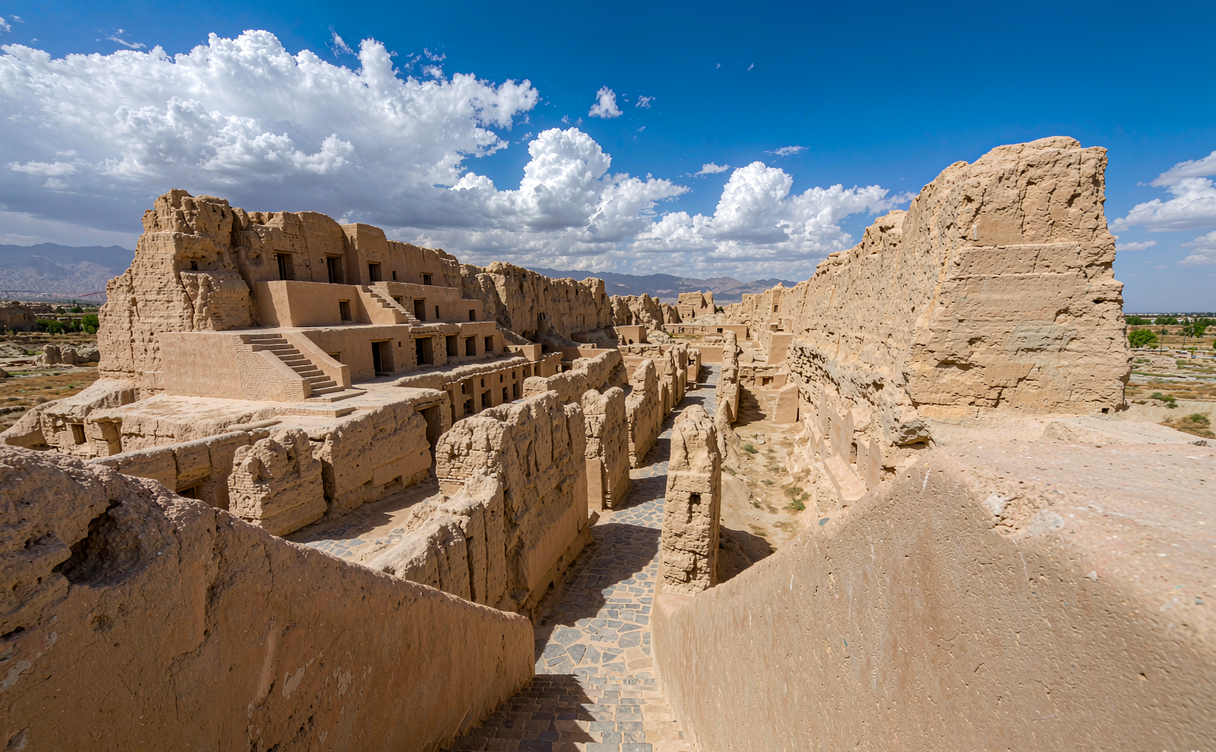
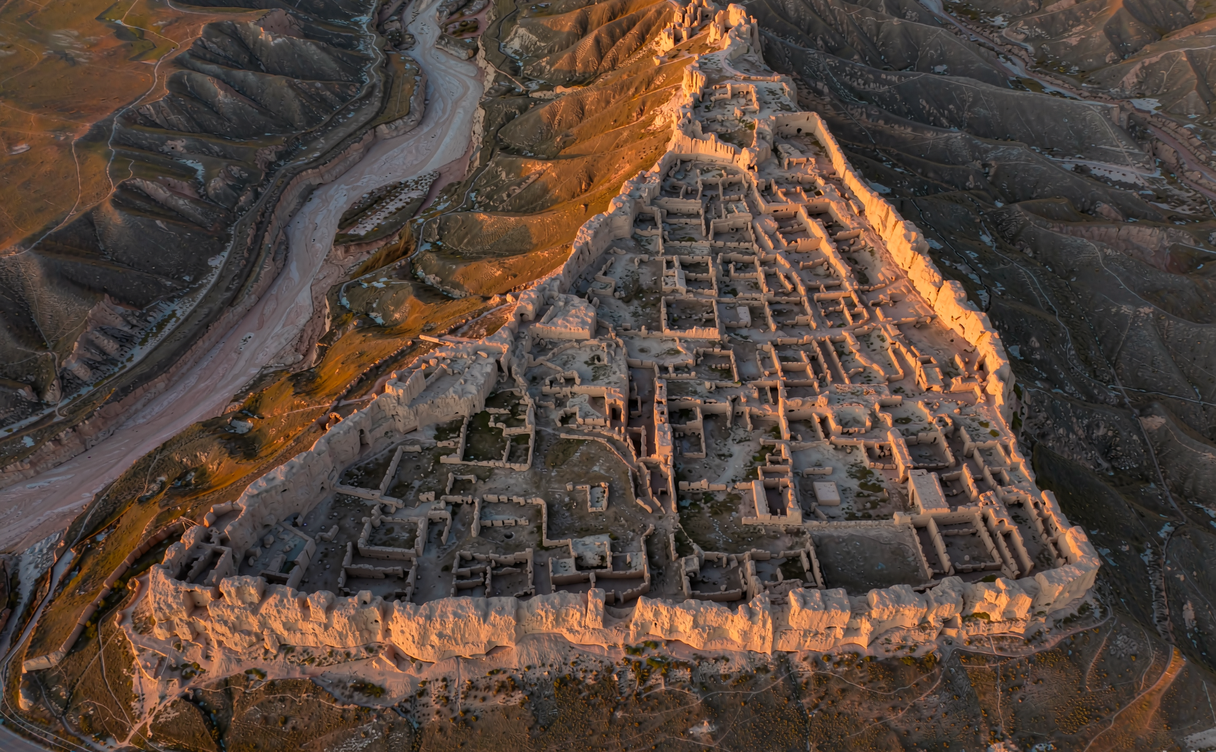
The ruins occupy a flat-topped mesa about 1,650 meters long and 300 meters wide, perched some 30 meters above the confluence of two seasonal rivers — which is where the name comes from: Jiaohe means “confluence of rivers.” Because the plateau’s steep sides formed a natural fortress, the city had no need for outer walls. Instead, builders dug downward, carving streets as trenches and rooms as sunken boxes beneath the surface, so that what remains today is a negative city, a vast relief map of lanes and foundations pressed into the yellow earth. The effect, under the hard Turpan light, is genuinely ghostly, and it is why locals and guidebooks both call it a “ghost city.”
Jiaohe Ruins Silk Road history
The site’s story runs deep. Jiaohe was the capital of the ancient Jushi (also called Cheshi) kingdom more than two thousand years ago, a buffer state caught between the Han and the steppe powers. Later it became a Tang-dynasty garrison and a Buddhist center, its monasteries busy with monks and merchants moving between Chang’an and the markets of Central Asia. At its height the city may have held several thousand people. It was finally abandoned in the 14th century after the wars that swept through the Turpan, Xinjiang, China region, and the dry desert air kept the mud-brick and loess structures from rotting the way they would have in a wetter climate.
What you are seeing is not a reconstruction. The foundations, the stair-cut lanes, the rectangular monks’ cells, and the outline of a large central temple are original, worn by wind rather than rebuilt. Archaeology here is about reading erosion, not restoring walls, which is part of the appeal for travelers tired of polished tourist replicas.
Things to see at Jiaohe Ruins
A walk through the ruins follows the main north–south avenue, a broad sunken road flanked by the raised blocks of former houses and workshops. About two-thirds of the way in, the Buddhist district opens up: a large monastery complex with a central stupa and rows of small monk cells arranged around a courtyard. We tell travelers to climb the low western embankment for the overview photo, where the whole mesa reads as a city pressed into the ground like a stamp. The eastern quarter holds the older Jushi-era dwellings, with narrower lanes and rounded loess walls.
Allow two to three hours for a proper visit, more if you want to sit and photograph the light. Admission to the Jiaohe Ruins is about ¥70, and the site opens roughly 09:00 to 18:00 in spring and autumn, extending to 19:30 in summer. A shuttle cart runs from the parking gate to the mesa entrance for a small fee, but we prefer the ten-minute walk in, because the approach across the dry riverbed frames the plateau better than the cart ride.
Enter at opening and walk the main avenue before the tour buses and the midday heat arrive.
Best time to visit Jiaohe Ruins
Timing matters more here than at almost any other site we cover, because Turpan, Xinjiang, China is one of the hottest inhabited places in the country. Summer (June to August) regularly hits 40–45°C, and the loess plateau bakes with no shade, so midday visits are genuinely unpleasant and risky for children or older travelers. The best time to visit Jiaohe Ruins is April to May and September to mid-October, when daytime temperatures sit in a manageable 18–30°C range and the light is soft. Spring brings occasional dust winds, so pack a scarf for the face; autumn is our clear favorite, with crisp air and long golden evenings.
Winter is cold, sometimes below freezing at night, but the ruins under a dusting of snow are spectacular and the ticket lines vanish. Whenever you go, carry far more water than feels necessary — the desert dryness dehydrates you fast — and wear a brimmed hat and closed shoes, because the loess surface is uneven and gritty.
How to get to Jiaohe Ruins
The ruins lie about 10 kilometers southwest of Turpan city center, in the Turpan, Xinjiang, China oasis. The easiest way is a taxi or DiDi from Turpan, which takes roughly 20 minutes and costs around ¥30–40 one way; many travelers combine it with a private driver for the day who also covers the nearby Flaming Mountains and the Karez wells. Public bus 202 runs from Turpan to the Jiaohe gate for about ¥2 but is slow and infrequent, so we only recommend it for confident budget travelers. If you arrive by rail, Turpan North Station (on the high-speed railway from Lanzhou to Ürümqi) is about 40 minutes from the ruins by car; the China Silk Road itinerary explains the long-distance rail spine that most visitors use to reach the region.
Hire a day driver in Turpan to link Jiaohe with the Flaming Mountains and the Karez wells in one cool-weather loop.
Pairing Jiaohe with the wider region
Jiaohe is rarely a standalone stop; it is one pillar of a Turpan, Xinjiang, China visit that also includes the living oasis town, the underground Karez irrigation channels, and the red cliffs of the Flaming Mountains. Travelers on a longer route should read our Turpan travel guide for the full oasis picture, and our Xinjiang, China travel guide for the province-wide context from Urumqi to Kashgar. The ruins also anchor the eastern end of the Silk Road story told in our Xinjiang, China 7-day itinerary, which strings Turpan together with the old towns further west.
For the deeper history, the UNESCO World Heritage listing for the Silk Roads route confirms Jiaohe’s place within the Chang’an–Tianshan corridor inscribed in 2014, the serial property that protects this and related sites across the region. We find that reading the UNESCO summary before you go changes how you walk the mesa — you start to see the city not as a ruin but as a node on the thread that once tied China to Central Asia. Two other anchors worth adding if you continue west are the Kashgar old town guide and the Urumqi things to do guide, which bookend the same corridor at its far ends.
A sample half-day itinerary at Jiaohe Ruins
To get the most from the site without fighting the heat, we suggest this half-day rhythm for Jiaohe Ruins, Turpan, Xinjiang, China, built around the 09:00 opening. Have your driver (about ¥30–40 each way from Turpan city, 20 minutes) drop you at the mesa entrance rather than the outer parking lot, or take the ten-minute walk in across the dry riverbed so the plateau frames itself before you climb. Enter at 09:15, buy the ¥70 ticket at the gate, and walk the broad north–south avenue first, when the light is soft and the tour buses have not arrived. Spend the first hour on the main avenue and the Buddhist district: the central stupa, the ring of monk cells, and the low western embankment where the whole “negative city” reads in one photograph. Carry at least 1.5 liters of water per person even in spring — the loess bakes dry and there is no shade.
From 10:30 to 11:30, drift into the eastern Jushi-era quarter with its narrow lanes and rounded walls, then climb back to the overview point for a final frame. By noon, retrace the avenue to the gate and meet your driver for the short hop to the Karez wells (about ¥40 combined-area interest, 15 minutes away) or the Flaming Mountains viewpoint if the season allows. A private day driver for all three stops typically runs 400–600 RMB for a half day, which we think beats juggling bus 202 (¥2, slow and infrequent). Bring a brimmed hat, closed shoes for the gritty surface, and a face scarf in spring for dust winds. We have timed this loop with travelers in April and October and the two-to-three-hour window always felt generous without rushing the light. Total per-person cost for the ruins alone is the ¥70 entry plus transport; pack a snack, because the gate area has little beyond a drinks cart.
Read the UNESCO Silk Roads listing before you go so the ruins read as a living trade-route node, not just broken walls.