

Standing on the cracked earthen ramparts of Gaochang, I watched the wind sweep fine desert dust across a city that once held thirty thousand souls. The Gaochang Ruins near Turpan, Xinjiang, China are not a restored theme park but a genuine archaeological site where you walk among walls that have baked under the edge of the Taklamakan for more than a thousand years. If you are following the Silk Road and want to feel the scale of a lost kingdom rather than admire a polished museum piece, this is one of the most rewarding stops in northwest China, and it pairs naturally with the region’s cave temples and oasis towns.
A Desert Capital That Outlived Empires
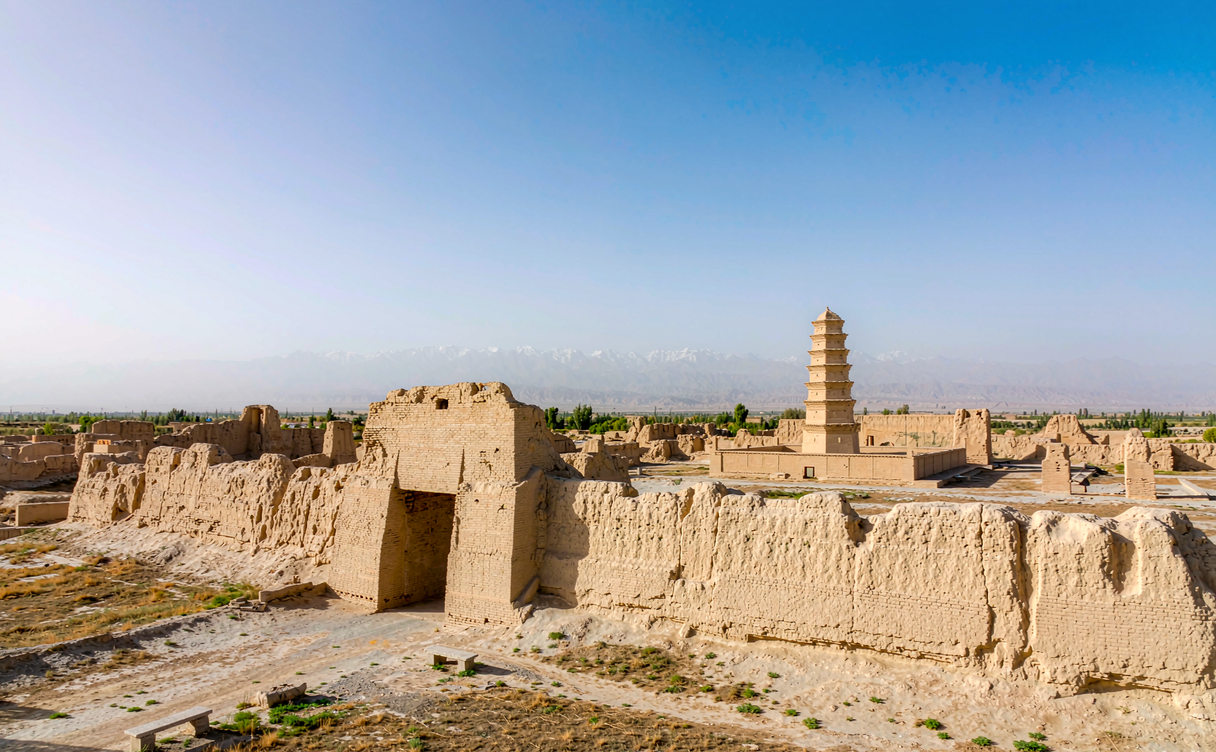
Gaochang (高昌) was founded in the first century BC during the Han dynasty as a garrison town protecting the northern Silk Road corridor that linked China proper with the oasis cities of Central Asia. For more than a thousand years it served as a political, military, and religious hub, passing through the hands of the Han, the short-lived Qu family kingdom, the Uyghur Gaochang Kingdom, and finally the Mongol Yuan before being abandoned in the fourteenth century after a period of war and shifting trade routes. What survives today is a roughly rectangular walled city about 1,500 meters from north to south and 1,000 meters east to west, with the outer ramparts still standing up to eleven meters tall in places where the mud brick has fused into something close to ceramic under the desert sun.
The layout is easy to read even for a first-time visitor. The site splits into three clear districts: the outer city, the inner city, and the palace city in the north. I found the grid of streets and the outlines of temples, workshops, and residences surprisingly legible once I climbed to a high section of the western wall and looked back across the plain. From that vantage point you can trace the main avenue running north to south and picture the markets, monasteries, and courtyards that once lined it. This is the heart of the our Turpan travel guide experience, and it makes an obvious companion to the nearby Buddhist cave complexes that dot the Flaming Mountains to the east.
What to See Inside the Ancient City
The outer city’s western gate is the most photographed spot, with its thick double-wall construction and the ghost of a defensive tower that once guarded the approach from the oasis. Inside the walls, the most striking structure is the large Buddhist temple complex in the southwestern quarter, where you can still make out the central stupa platform and the ring of monk cells around it. The inner city preserves the foundations of what scholars believe was an administrative and residential zone, while the northern palace city shows the raised platform where the ruler’s compound once stood, commanding a clear view over the whole settlement.
I spent a slow hour in the temple district imagining the murals and statues that the early twentieth-century Turpan expeditions removed — many now sit in museums in Berlin and St. Petersburg, a reminder of how much has left the site. On the ground, what remains is earth and silence, which is precisely its power. Bring at least two liters of water per person and some form of shade, because there is almost no cover and midday summer heat in Turpan regularly tops 40°C (104°F). Wear closed shoes, too; the broken brick underfoot is uneven and sharp in places.
If you want the full Silk Road context, this ruin is best understood as one node in a much longer route. Our the China Silk Road itinerary connects Gaochang with Dunhuang, Turpan, Kashgar, and the desert corridors so you can see how these oasis kingdoms traded goods, faith, and language across continents. The contrast between the busy modern oasis and this empty walled city, just a short drive apart, is one of the sharpest I have felt anywhere in Xinjiang, China.
Ready to walk the walls of a lost kingdom? Plan your Turpan leg with our detailed routes, transport tips, and seasonal advice so you arrive when the light is best and the heat is manageable.
Planning Your Visit: Tickets, Hours, and Transport
The Gaochang Ruins are managed as part of the Turpan ruins scenic zone. As of the 2025 season, a ticket covering Gaochang (also spelled Gaochang Gucheng) costs around 70 RMB per person, with the site generally open from 09:00 to 19:30 between April and October and shortened hours of 10:00 to 18:30 in winter. Students with a valid ID usually get a half-price discount, and children under 1.2 meters enter free. There is a small visitor center at the entrance with a scale model of the city and basic interpretive panels in Chinese and English that help you orient before you walk in.
Getting there is straightforward but requires private transport. The ruins sit about 40 kilometers (25 miles) southeast of Turpan city, near the town of Sanbao. The simplest option is a private car or taxi from Turpan, which runs roughly 120–180 RMB one way and takes about 45 minutes. Some travelers combine Gaochang with the Bezeklik Thousand Buddha Caves and the Flaming Mountains on a single loop tour, which most local drivers price at 400–600 RMB for a half day. There is no public bus that drops exactly at the gate, so joining a a 7-day Xinjiang, China itinerary or hiring a driver is the realistic choice for independent visitors who do not want to negotiate fares on the spot.
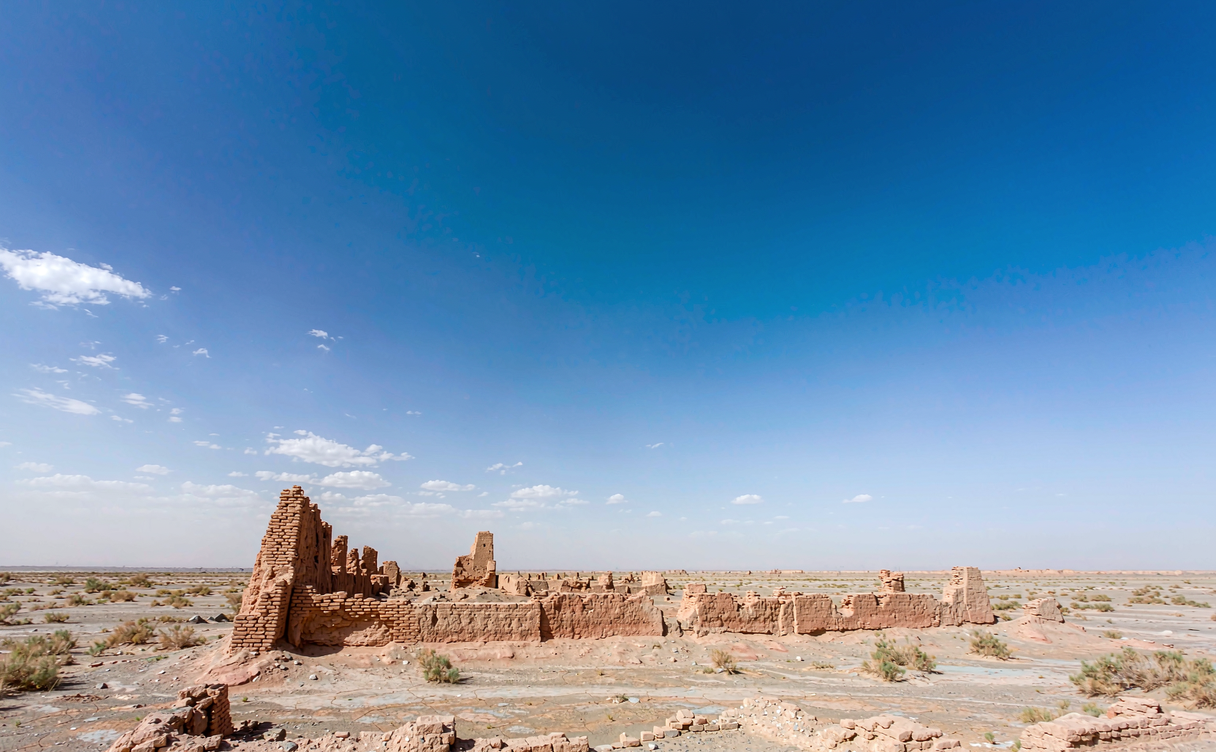
Short on time in the Turpan Basin? Combine Gaochang with the nearby Jiaohe Ruins and the Karez water system on a single ticket loop, and use our driver-hire tips to skip the fare negotiation at the gate.
Best Time to Go and Where to Stay
Timing matters more here than at almost any other site in Xinjiang, China. Summer (June to August) brings the famous Turpan heat — exhilarating for photos but punishing on foot, and I would not attempt a long walk after 11:00. I recommend April to May or September to October, when daytime temperatures sit in a comfortable 18–28°C (64–82°F) range and the light is golden for the earthen walls. Winter is brutally cold but nearly empty, ideal if you want the ruins entirely to yourself and do not mind icy winds across the plain.
Most visitors base themselves in Turpan city, where a mid-range hotel such as a local Silk Road–themed guesthouse runs 250–500 RMB per night, and where you can also reach the Jiaohe Ruins, the Karez irrigation system, and the Grape Valley on the same ticket loop. If you are building a wider regional circuit, our this Xinjiang, China travel guide covers Urumqi, Kashgar, and the southern desert routes in depth, while the things to do in Urumqi, Xinjiang, China page explains the logical gateway city for flights and trains into the basin.
For background on the kingdom’s place in world heritage, the Wikipedia entry on Gaochang offers a solid scholarly overview of its dynastic history and the archaeological seasons that documented the site.
Visiting tips, costs & what to bring for Gaochang
A few practical details make the difference between a good and a great visit to the Gaochang Ruins near Turpan, Xinjiang, China. Budget the entry at around 70 RMB per adult (students half price with ID; children under 1.2 meters free), and plan for 09:00–19:30 opening in the warm season shrinking to 10:00–18:30 in winter. There is a small visitor center at the gate with a scale model of the walled city and bilingual panels — spend five minutes there before walking in, because the overhead view of the three districts (outer, inner, palace) makes the ground plan click. Hire a private car or taxi from Turpan; the 40-kilometer run to Sanbao costs roughly 120–180 RMB one way and takes about 45 minutes, and most drivers will wait or loop you to Bezeklik and the Flaming Mountains for 400–600 RMB half day.
What to bring matters more than usual here. Carry at least two liters of water per person, a brimmed hat, and closed shoes, because the broken mud brick is uneven and sharp and there is almost no shade — midday summer heat regularly tops 40°C. We always tell travelers to arrive before 10:00 or after 16:00 in the warm months, when the light is golden on the ramparts and the heat is bearable. A light long-sleeve shirt doubles as sun protection and a windbreak in spring. Photography is unrestricted on the walls, so bring a wide lens for the western gate’s double ramparts and a zoom for the temple foundations. If you want context on site, download an offline map, because mobile signal inside the walls is patchy. Pair the stop with Jiaohe on a single ticket loop through our Turpan travel guide so you see both the “negative city” and the standing walls of the same lost kingdom in one cooler-weather day.
Make Gaochang the centerpiece of your Turpan trip. Download our route maps and lodging picks, and learn which neighboring sites to pair for a full two-day Silk Road immersion without backtracking in the heat.
Gaochang rewards patience. Go early, carry water, and let the silence do the storytelling — few places in China let you stand inside a thousand-year-old capital and hear almost nothing but wind moving across the bricks.