

Most visitors meet Sichuan through pandas, pandas’ bamboo, and a bowl of numbingly hot hotpot, and there is nothing wrong with that. But a proper Jianmen travel guide should point you northeast, toward the cliffs where the ancient Shu Road was forced through a single narrow gate. If you are listing things to do in Jianmen Sichuan, the headline is Jianmen Pass, a natural rock doorway between two steep ridges that guarded the approach to the Sichuan basin for two thousand years, and that still makes travelers catch their breath.
Getting there
Jianmen sits in Jiange County, under the prefecture of Guangyuan, in the north of Sichuan. The easiest modern approach is the high-speed train: services from Chengdu East to Jianmen Pass Station take about 1.5 to 2 hours and cost ¥80 to ¥120 in second class. From Xi’an it is roughly two hours the other way. The Jianmen to Guangyuan trip is short, about 40 minutes by train or car, and worth it if you want to add the Tang-dynasty cliff Buddha carvings and the only temple in China dedicated to Empress Wu Zetian. We usually tell clients to base in Jianmen for one night and day-trip Guangyuan, rather than the reverse.
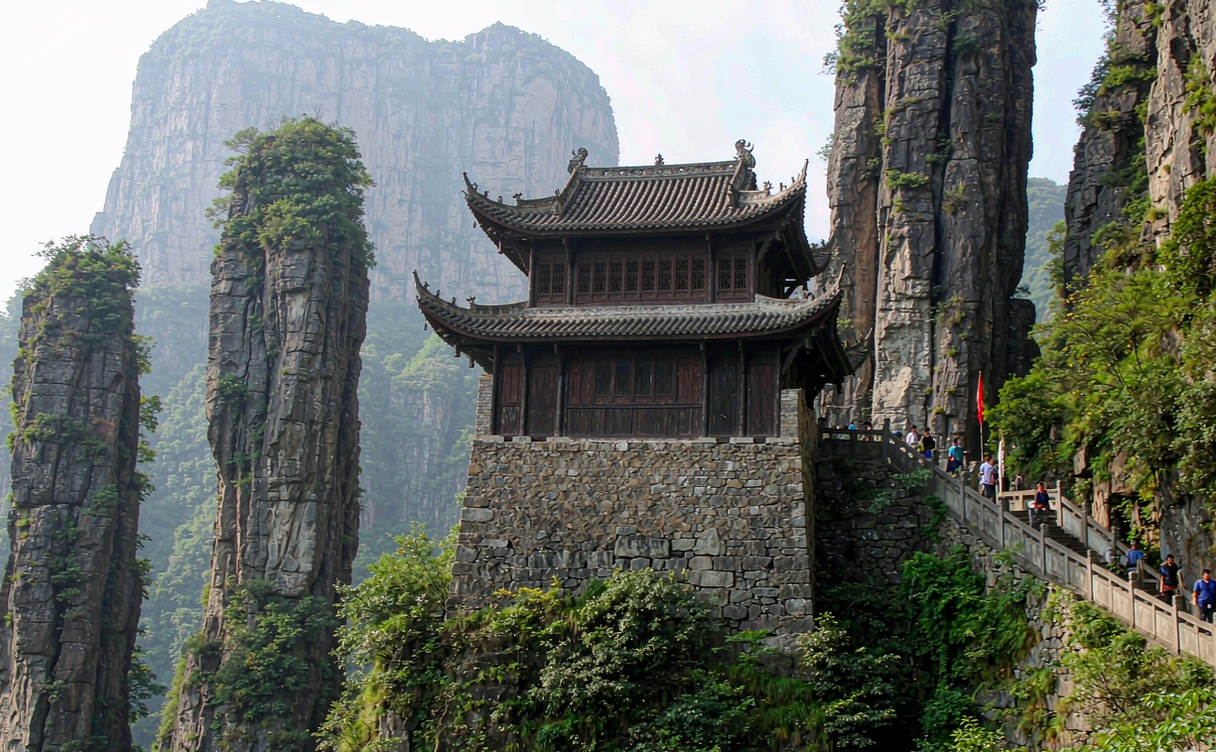
The pass itself
Jianmen Pass is less a building than a geographic throat. Two ridgelines close in until the road must pass through a single cleft, and the defenders of old simply walled that cleft. Today you walk or ride up to the gate, then choose your adventure. The cautious take the cable car and the broad viewing platforms. The brave tackle the cliff plank roads, the restored wooden walkways bolted to the rock face, including the infamous Yuanrao Path, a narrow ledge with a harness and no railings that we only recommend to clients without a fear of heights. The Jianmen Pass Shu Road experience is about scale: the cliffs are red-gold sandstone, the drops are real, and the poetry carved into the stones is older than most European nations.
Cuiyunlang and the ancient cypress road
A few kilometers away, the Cuiyunlang section of the old Shu Road is a different kind of wonder. For centuries travelers planted cypress trees along the route, and today you walk beneath a tunnel of trunks, some said to be more than a thousand years old, their limbs interlocking overhead. It is flat, shaded, and profoundly peaceful after the drama of the pass. We send photographers here in the early morning when the light slants through the leaves and there is no one else on the path. This is the Jianmen mountain hike for people who do not actually want a mountain.
The road does not end at Cuiyunlang. The ancient Shu Road continues southwest toward Zitong and Mianyang, and drivers can follow a quiet stretch of it for a real sense of the full corridor; we sometimes extend a client’s day that way if they are not flying out of Chengdu the next morning. One particular cypress, the Jiange cypress, is said to be more than 2,000 years old, a single trunk you can walk around and photograph without crowds.
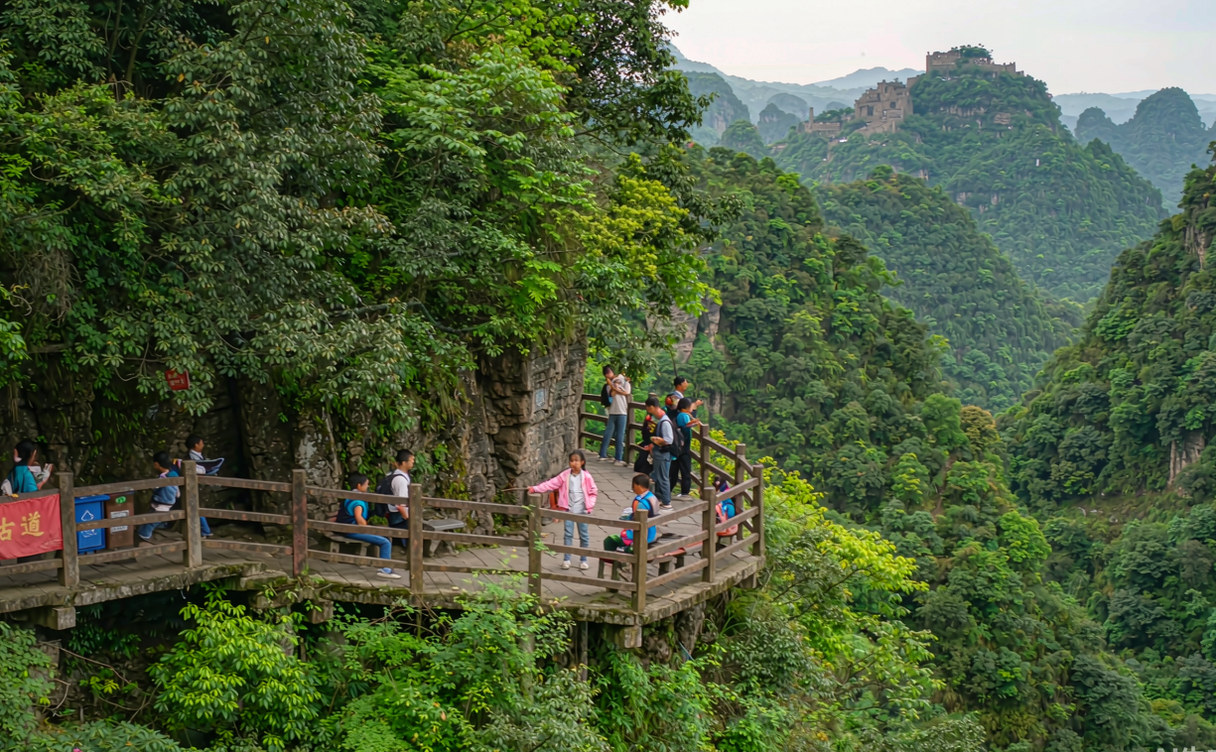
The Sichuan history you are standing on
You cannot separate Jianmen from the Jianmen Sichuan history of the Shu Kingdom. In the Three Kingdoms period, the general Jiang Wei held the pass against far larger armies, and the statesman Zhuge Liang is credited in legend with fortifying the route. Centuries later the poet Li Bai wrote that the road to Shu was harder than climbing to heaven, and Jianmen was the hard part he meant. The whole landscape reads like a history book with the pages left standing. For travelers building a wider Sichuan plan, our Chengdu travel guide covers the provincial capital two hours south, and the Sichuan 7-day itinerary shows how to string Jianmen together with the pandas, the Buddha at Leshan, and the mountains.
Nearby Guangyuan in half a day
Guangyuan rewards the short hop. The Qianfoya cliff carvings are a string of Tang Buddhist niches cut into a riverside rock face, and the Huangze Temple is the only major temple in China built for a reigning empress, Wu Zetian, who was born here. Both are an easy 40-minute run from Jianmen, and they round out a day that is otherwise all cliffs and cypress tunnels. We often book a driver for this loop so clients see both the military gate and the devotional art without juggling buses.
Food: tofu as a local specialty
Jianmen is quietly famous for tofu. The Jianmen tofu here is made with local spring water and a finer texture than the standard, served in dozens of forms: braised, smoked, in hot broth, stuffed, or simply fried with scallion. A full tofu banquet runs ¥60 to ¥120 a head and is a genuine regional experience, not a gimmick. If you want the louder end of the local table, our Chengdu hotpot guide explains the mala numbness, and the Sichuan snacks guide lists the street eats worth grazing between sights. For a gentler green escape after the cliffs, the Huangshan yellow mountain guide and the Dinghu mountain guide both cover very different peaks.
Where to stay and a sample day
Jianmen has decent mid-range hotels near the station for ¥250 to ¥450 a night; guesthouses closer to the pass are simpler but convenient for sunrise, and we use them when a client wants to be first through the gate. A good single day: train in by late morning, lunch on tofu, afternoon at the pass with the cable car, sunset on Cuiyunlang, dinner back in town, train out next midday after a Guangyuan morning. We can flip that for clients who hate early starts.
Practical tips
Buy your pass ticket online in advance during holidays; the combined pass-plus-cable-car ticket runs roughly ¥100 to ¥130. Wear real hiking shoes for the plank roads, not sneakers with smooth soles. English signage is limited, so download an offline map and a translator, and let us know if you want a guide who can explain the Three Kingdoms stories in plain English.
Best photo spots
Shoot the gate from below as a sliver of sky between the cliffs, the plank road with a tiny figure for scale, and Cuiyunlang’s cypress tunnel from straight underneath. Winter haze and summer storm light both work; this is a dramatic place in any weather.
When to come and how long
Spring and autumn are ideal, with cool, clear hiking weather; the red cliffs glow at sunrise and sunset. Summer is warm and occasionally wet, winter is cold but uncrowded and sometimes lightly snow-dusted, which photographs beautifully. Most visitors need one full day for the pass and Cuiyunlang, plus a second half-day if they add Guangyuan. According to the entry on Jianmen Pass on Wikipedia, the pass has been a strategic chokepoint since the Han dynasty, which is exactly why it still feels charged.