

When most foreign travelers picture Inner Mongolia, they picture endless grassland and galloping horses. A proper Bayannur travel guide should start with a gentle correction: Bayannur, in the west of the region, is defined less by open steppe than by the Hetao Plain, a fertile ribbon of Yellow River-irrigated farmland wedged between desert and the Yinshan mountains. If you are scanning things to do in Bayannur Inner Mongolia, the honest answer is a mix of bird-filled lakes, sunflower seas, and quiet agricultural countryside that feels a world away from the usual China itinerary.
Getting there
Bayannur sits in western Inner Mongolia, south of the Yinshan range and along the Yellow River. The Bayannur to Hohhot trip by high-speed or regular train takes about 2.5 hours, with fares from ¥70 to ¥130, and the city is also reachable from Baotou in under two hours. There is a small airport, Tianjitai, with limited flights, so most of our clients train in from Hohhot or fly to Baotou and transfer. Inside Bayannur a private car is essential for the lake and farmland loops, which we arrange at about ¥400 to ¥600 a day.
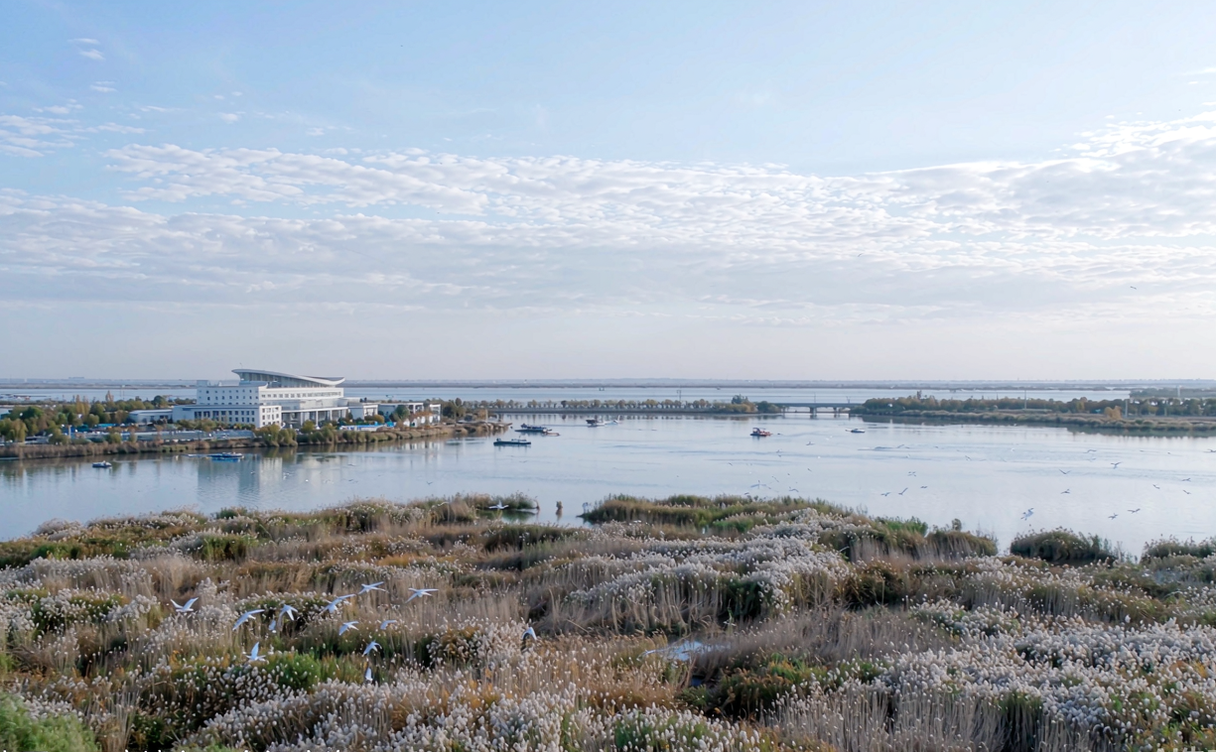
Wuliangsuhai Lake
The signature sight is Wuliangsuhai Lake, the largest freshwater lake in the Hetao area and a critical stop on the East Asian bird migration route. In spring and autumn the reed beds fill with whooper swans, egrets, and the occasional red-crowned crane, and the boardwalks and a small boat circuit let you watch without disturbing them. We send birding clients in late April and late September, when the numbers peak and the light is soft. Entry and a basic boat ride run about ¥60 to ¥100. It is a calm, rewilding kind of place, a different experience from the alpine Tianchi lake in Xinjiang, China, or the high Namtso lake in Tibet, China; for flooded-hill scenery our Qiandao Lake near Hangzhou guide is the southern contrast, and the Erhai Lake in Dali piece covers a bigger Yunnan waterbody.
The Hetao farmland
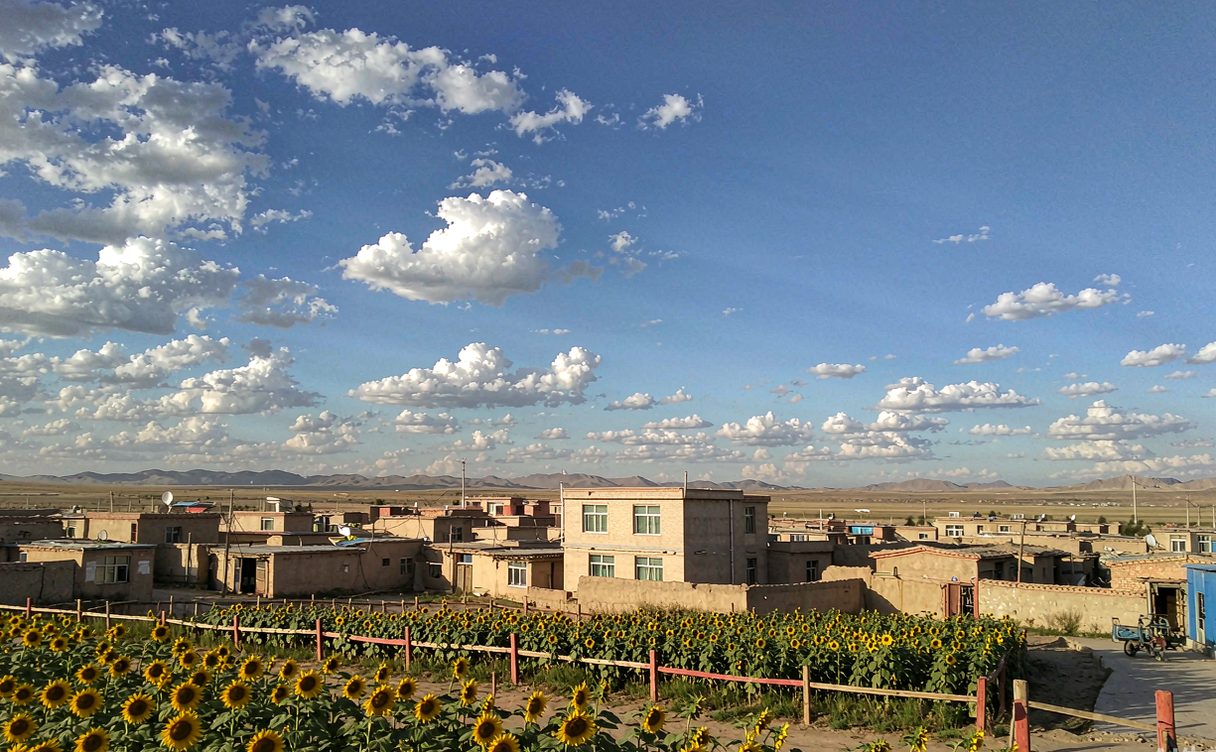
What makes Bayannur unusual is the agriculture. The Hetao farmland is one of China’s great irrigation zones, and in summer the fields turn into a sea of sunflowers, millions of them, because Bayannur is effectively the country’s sunflower capital. There are also wheat fields, orchards of Hetao melon (a famously sweet local fruit), and the premium Hetao wheat flour that bakers across China prize. A drive through the plain in July and August, windows down, is its own reward. We warn clients not to wander into private fields, but the roadside sunflower belts are wide open for photos.
The Hetao melon, a small netted melon with intensely sweet orange flesh, is the region’s edible souvenir, sold by the roadside in late summer for a few yuan each. We tell clients to buy two and eat one in the car; the other rarely survives the trip home. It is the kind of detail that makes the farmland memorable rather than merely pretty.
Yinshan, rock art, and the edge of desert
North of the farmland, the Yinshan mountains carry ancient rock art, petroglyphs of animals and hunters carved by nomadic peoples thousands of years ago, and scattered remnants of the Han-dynasty Great Wall crossing the dry uplands. This is where the Bayannur grassland meets the desert margin, and the contrast, green valley below, tawny mountains above, is striking. For travelers curious about desert scenery, our Kubuqi desert guide covers the dune system not far to the south, and the Mugecuo lake guide in Sichuan shows a completely different mountain lake.
Food and the local table
The Hetao region eats well. Lamb is the staple of Inner Mongolia, and here it comes grilled, boiled, or in dumplings, alongside noodles made from that prized local wheat. Sunflower seeds are the universal snack, and the melons in season are worth a detour. We take clients to a simple farmland restaurant where a lamb-and-noodle meal runs ¥50 to ¥90 a head and the flour really does taste different.
The sunflower festival and when to be there
Bayannur leans into its sunflower identity with a summer sunflower festival, usually in August, when the fields are at peak bloom and local farms set up photographic arches and honey stalls. We time photographic clients for the last week of July through early August; miss it and the blooms are already turning to seed. Even outside the festival, the scale of the crop is astonishing from the train window as you approach the city.
A countryside stay
For a deeper feel, a night in a Hetao farmstay beats the city hotels. Families near the sunflower belt take guests for ¥150 to ¥250 including dinner, and you wake to the fields rather than a parking lot. We book these for clients who want to photograph dawn light without a long drive, and the home cooking alone is worth the swap.
Getting in via Baotou
If Hohhot flights are full, flying to Baotou and driving two hours east is a reliable backup; Baotou itself is worth a stop for the Inner Mongolia museum if your route allows. Either way, the final stretch into Bayannur is the payoff, when the green ribbon of the Hetao suddenly appears against the dry horizon.
What to bring home
Beyond melon and sunflower seeds, the Hetao region produces a clean, nutty sunflower oil that locals cook with and travelers like as a gift. A bottle costs ¥20 to ¥40 at the city market and survives the trip better than fresh produce. We suggest picking one up on the way out, alongside a bag of the roasted seeds that taste of the plain they grew on.
Where to stay and a sample day
Bayannur city has functional mid-range hotels for ¥220 to ¥400 a night. A good plan: arrive by train from Hohhot in the morning, drive the sunflower belt and a farmland lunch, afternoon at Wuliangsuhai, overnight in the city; next morning the Yinshan rock art, then train back. We can compress it to a long day-trip for clients short on time.
Practical tips
A private car is not optional here; public transport does not serve the lake and fields. Carry cash for small farms and roadside stands, though mobile pay works in the city. Summer sun is fierce, so bring a hat and water, and time the lake for early morning when the birds are most active and the heat is low.
Best photo spots
Shoot the sunflower fields at golden hour for maximum color, Wuliangsuhai from the boardwalk with a swan in frame, and the Yinshan petroglyphs in raking side light. The plain under storm clouds is genuinely dramatic.
When to come and how long
Summer is the sunflower peak and the most photogenic; spring and autumn are best for birds and mild weather; winter is harsh and very quiet. Most visitors need one full day for the lake and farmland, plus a half day for the Yinshan rock art if interested. According to the overview on Bayannur on Wikipedia, the name means “rich lake” in Mongolian, a fitting label for a place built on water and soil.