

If your image of Inner Mongolia is an endless sea of grass under an enormous sky, a Xilingol travel guide should simply say: yes, and here it is. Xilingol League, in the center of the region, protects one of the last great undisturbed grasslands in China, and it is also the heartland of Mongolian horse culture, where the local horses are a breed unto themselves and the summer festivals still turn on a good rider. If you are weighing things to do in Xilingol Inner Mongolia, the answer is unhurried: ride, watch, eat, and let the scale of the place sink in.
Getting there
The Xilingol to Beijing trip is easy by air: flights from Beijing to Xilinhot, the league seat, take about 1 hour 15 minutes, with fares from ¥500 to ¥1,100 depending on season. There are also flights from Hohhot and a long overland drive of roughly 600 kilometers if you want to see the steppe unfold gradually. Inside Xilingol a 4×4 or SUV with a driver is strongly recommended, because the grasslands and festival grounds are far apart and public transport is thin; we arrange full-day drives at about ¥600 to ¥900 including fuel.
The grassland itself
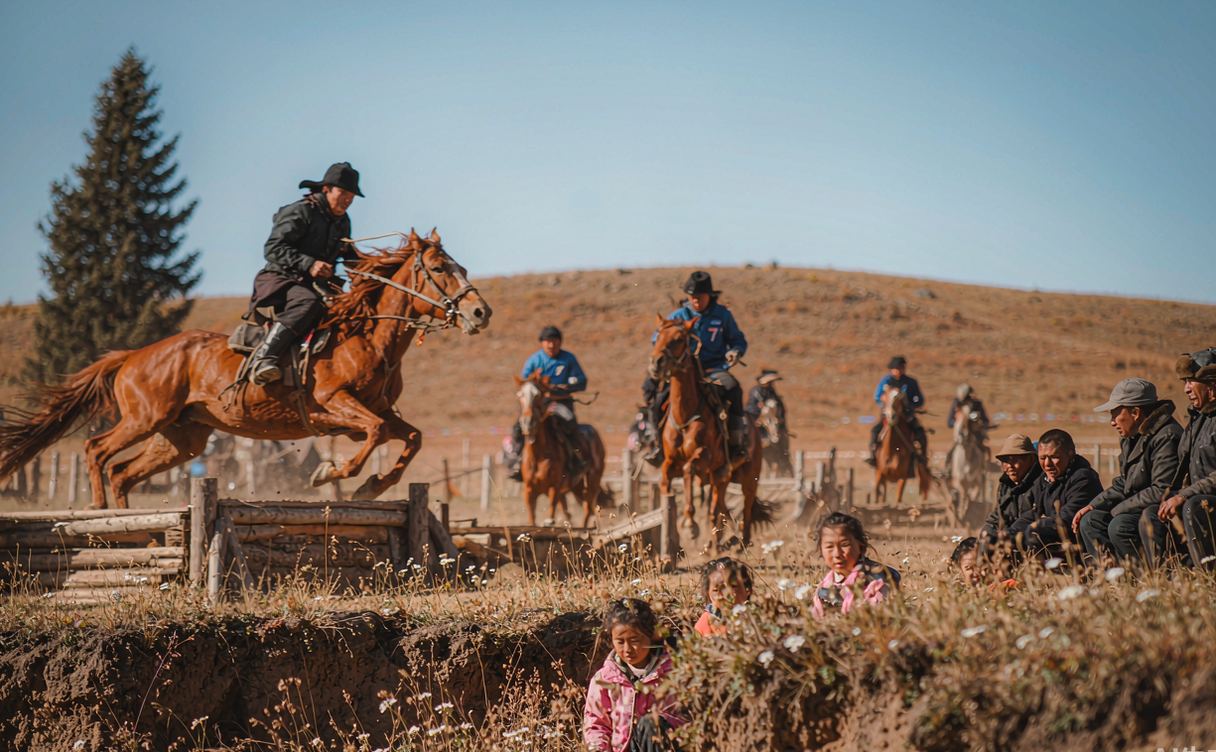
The Xilingol grassland is the headline, and it earns the name. In summer the rolling green runs to the horizon, dotted with white yurts and grazing herds, and the light is the big, clean kind you only get far from cities. Parts of it are a protected biosphere, which is why the grass is still thick rather than overgrazed. We send clients out at dawn, when the mist sits low and the horses move like smoke across the slope. For a different kind of Inner Mongolia, our Kubuqi desert guide covers the dunes to the south, and the Hulunbuir grassland guide in the far northeast describes an even vaster steppe; the Inner Mongolia lamb guide explains why the meat here tastes the way it does.
Horse culture and festivals
This is where Xilingol earns its reputation. The local Mongolian horse is small, tough, and fast, and the Xilingol horse festival season, built around the Naadam traditions of wrestling, archery, and horse racing, draws herders from across the league. In the Ujimqin area there is even a white-horse festival celebrating the prized pale herds. We time client visits for July, when the races are at their best and the yurt camps are open. If you want to compare grasslands beyond Inner Mongolia, our Xinjiang Nalati grassland guide and the Xinjiang Bayanbulak grassland guide both cover high pastoral meadows in Xinjiang, China, while the Luoyang White Horse Temple guide connects to a different thread of the region’s history.
Xanadu, the summer capital
A short drive from the grasslands brings you to the ruins of Xanadu, the Site of Xanadu, Kublai Khan’s summer capital and the place Marco Polo described as a city of palaces. It is a UNESCO World Heritage Site, and although what remains above ground is mainly foundations and a planned grid, the setting, open plateau with the ruins laid out against the hills, is genuinely moving. We pair it with the grassland so clients see both the nomadic and the imperial sides of Mongol history in one trip. The official UNESCO listing at Site of Xanadu explains its world significance in detail.
Ulagai and the Nine-bend River
North of the main grasslands, the Ulagai area wraps the Ulagai River into a series of lazy bends known as the Nine-bend River (Jiuquwan), best viewed from a low hill at sunset when the water catches the last light. It is a longer drive, two to three hours from Xilinhot, but the empty steppe along the way is half the point. We send photographers here when they have already had their fill of horses and want a different kind of wide, quiet frame.
Mongolian culture and the table
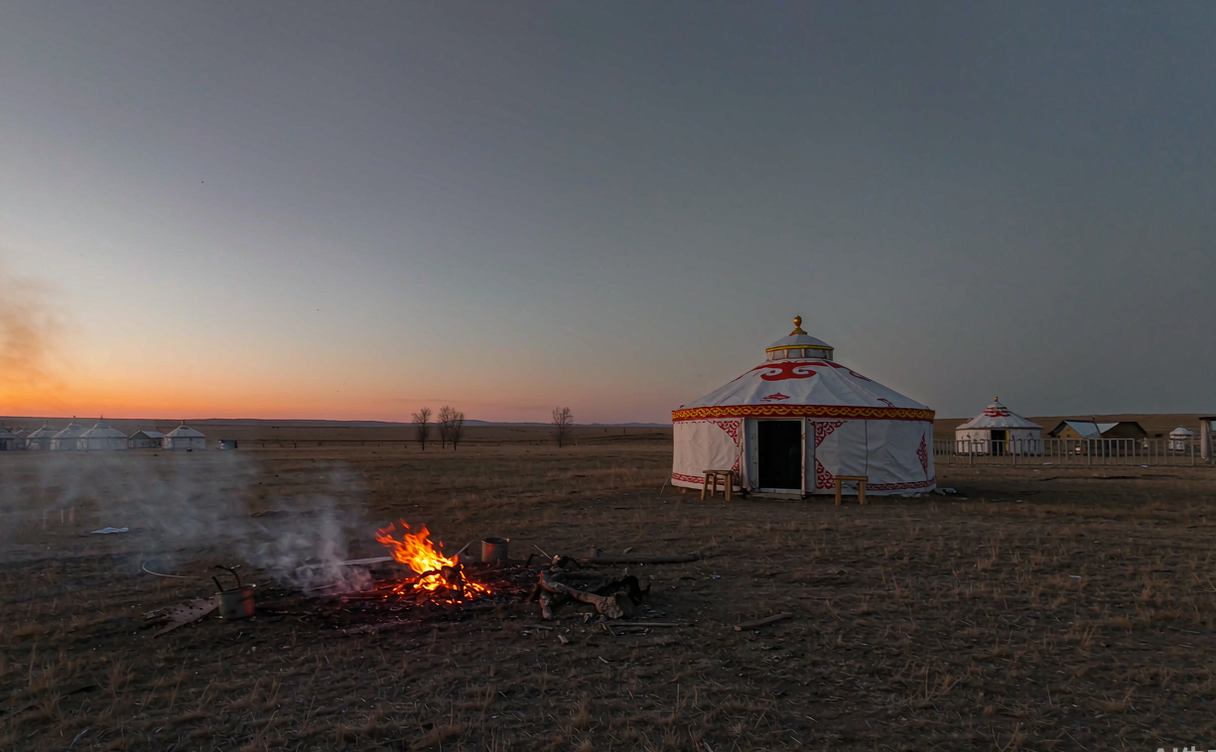
Staying in a yurt is the right move. A night in a white felt ger, a campfire, and a bowl of salty milk tea is the Xilingol Mongolia culture experience in its purest form. The food is meat-forward: lamb boiled and eaten with fingers, dairy curds, and the thick noodles that fuel a herder’s day. The lamb we serve in those yurts is the same local staple we describe in our grassland notes, but on the ground we just point clients at the nearest honest grill and let them eat.
Xilinhot’s monasteries
Back in the league seat, Xilinhot has the Bashan Temple (Benzu Miao), a working Tibetan-Buddhist monastery where you can watch evening prayers, a useful counterpoint to the open grassland and a good rainy-day option. A couple of hours there balances the outdoor days and reminds visitors that the steppe has a settled, devotional side as well.
Where to stay and a sample plan
Xilinhot has standard hotels for ¥250 to ¥450 a night, but the memorable stays are the yurt camps on the grassland, which run ¥300 to ¥600 with meals. A good three-day plan: day one, fly in and reach the grassland for sunset; day two, a morning ride, afternoon at a horse festival or a Naadam ground, evening campfire; day three, Xanadu ruins and the drive back. We can trim it to two days for tight schedules.
What to pack for the steppe
The grassland weather turns fast. A windproof layer, sunglasses, and a scarf for dust are essentials; even July can drop to single digits at night. We hand clients a packing note before they fly in so they are not buying fleece at the Xilinhot airport. Good boots also matter if you plan to walk the festival grounds, which turn to dust under thousands of feet.
Practical tips
Book yurt camps well ahead for July and August. Bring a warm layer even in summer, because grassland nights are cold. Cash helps at herder stalls, though mobile pay works in Xilinhot. A driver who speaks some English and Mongolian smooths everything; we provide one so you are not negotiating in three languages.
Best photo spots
Shoot the horse festival at the start of a race for motion and dust, the yurt camp at blue-hour with the first stars, and Xanadu’s grid of foundations against the open plateau. The grassland under towering cumulus clouds is the postcard everyone expects and still loves.
When to come and how long
July and August are the festival and green-peak months, warm by day and cool at night; May, June, and September are quieter and still beautiful. Winter is brutally cold and mostly closed. Most visitors need two days for the grassland and a festival, plus a half day for Xanadu, so plan two to three nights.