

Most foreign travellers who reach Qinghai stop at Qinghai Lake and leave. We keep sending a different kind of visitor further west to Delingha, a small prefecture-level city on the Qinghai–Tibet plateau at about 2,980 metres. A good Delingha travel guide has to explain why the place is worth the detour: twin salt lakes, a poetry monument to a Chinese poet, and open Qaidam desert scenery that you can drive through with almost no other tourists around. Below is what we tell our own travellers before they go.
Where Delingha sits and why it feels different
Delingha is the administrative centre of Haixi Mongol and Tibetan Autonomous Prefecture. The name comes from Mongolian and means “golden world.” The city itself is compact, maybe 100,000 people, and most of what you come to see is outside the urban core. The altitude is the first thing to respect. At nearly 3,000 metres, walking up a flight of stairs will leave you short of breath on day one. We advise travellers to spend a night in Xining (2,200 m) before pushing west, and to skip the first day’s heavy exercise.
The Delingha plateau is dry, sunny, and cold at night even in summer. That dryness is exactly why the night sky is so clear here, and why photographers come for the Milky Way over the lakes.
Things to do in Delingha Qinghai
The short list of things to do in Delingha Qinghai is short but specific:
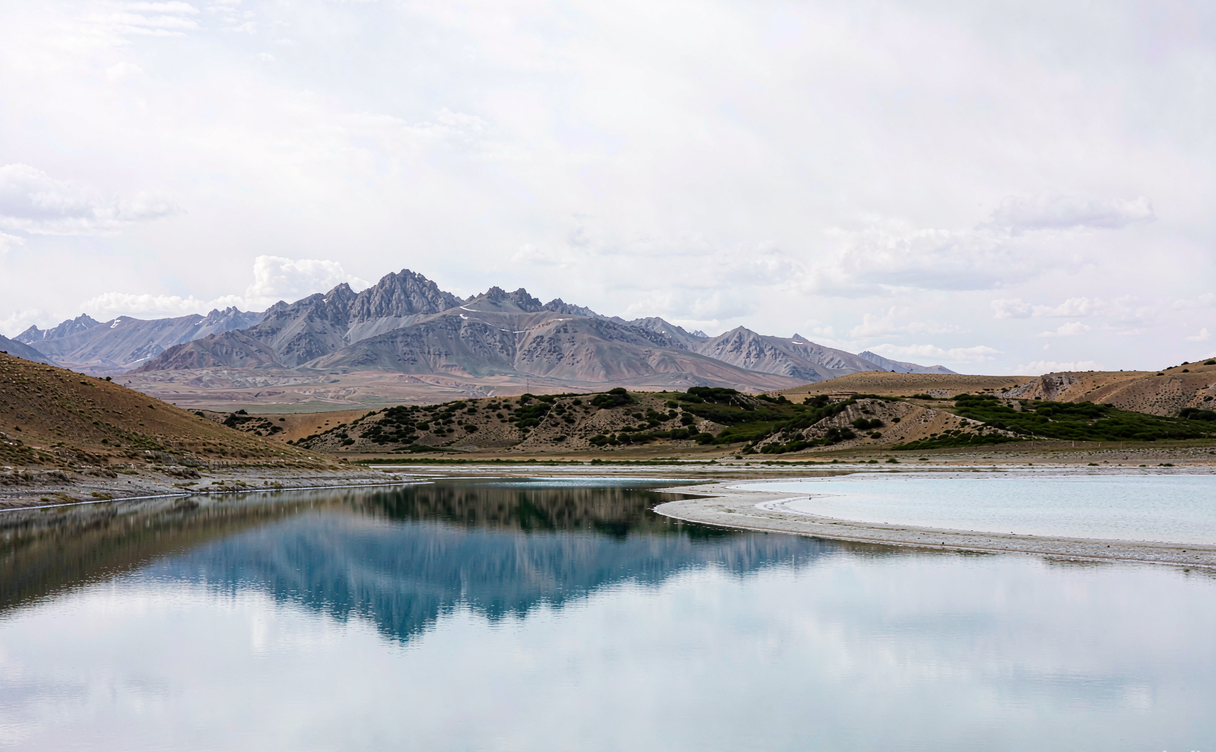
- Tuosu Lake (Tuosuhu) – the headline sight, a freshwater lake paired with the salty Keke Lake right beside it. The two lakes sit only a low causeway apart yet one is drinkable and the other is not.
- Keke Lake – the salt lake on the north side, white crusts and reflection shots at sunrise.
- Haizi Poetry Monument Park – a riverside park with a monument to the poet Haizi, who wrote a famous line about Delingha.
- Delingha Museum – small, free, good for understanding the local Mongol and Tibetan culture and the Qaidam geology.
- Keluke Lake and the surrounding wetland – good for birdwatching in spring.
We usually build a half-day around the two lakes and a relaxed afternoon in the poetry park. That leaves room for the drive out to the desert edge, which travellers remember more than they expect.
Tuosu Lake Delingha: the practical details
Tuosu Lake Delingha is roughly 40 km south of the city centre. A private car from Delingha town costs about ¥150–220 one way and takes 50–70 minutes. There is also a public bus from the long-distance station in the morning, but the return times are awkward, so most foreign independents hire a driver for the half-day.
Entry is cheap: the lakeside scenic area charges around ¥60–90 per person in peak season (roughly June to early October), and the price drops or the gate is loosely manned in winter. Opening hours run about 08:30–18:00. There are boardwalks and a viewing platform; bring sunglasses and a windproof layer because the lake wind is sharp.
The best light is 07:00–09:00 and 17:30–19:30. We send travellers there in late September because the crowds thin out, the poplar trees near the causeway turn yellow, and the air is crisp. Mid-summer brings more domestic tour buses on weekends.
The Delingha Haizi poem and the poetry park
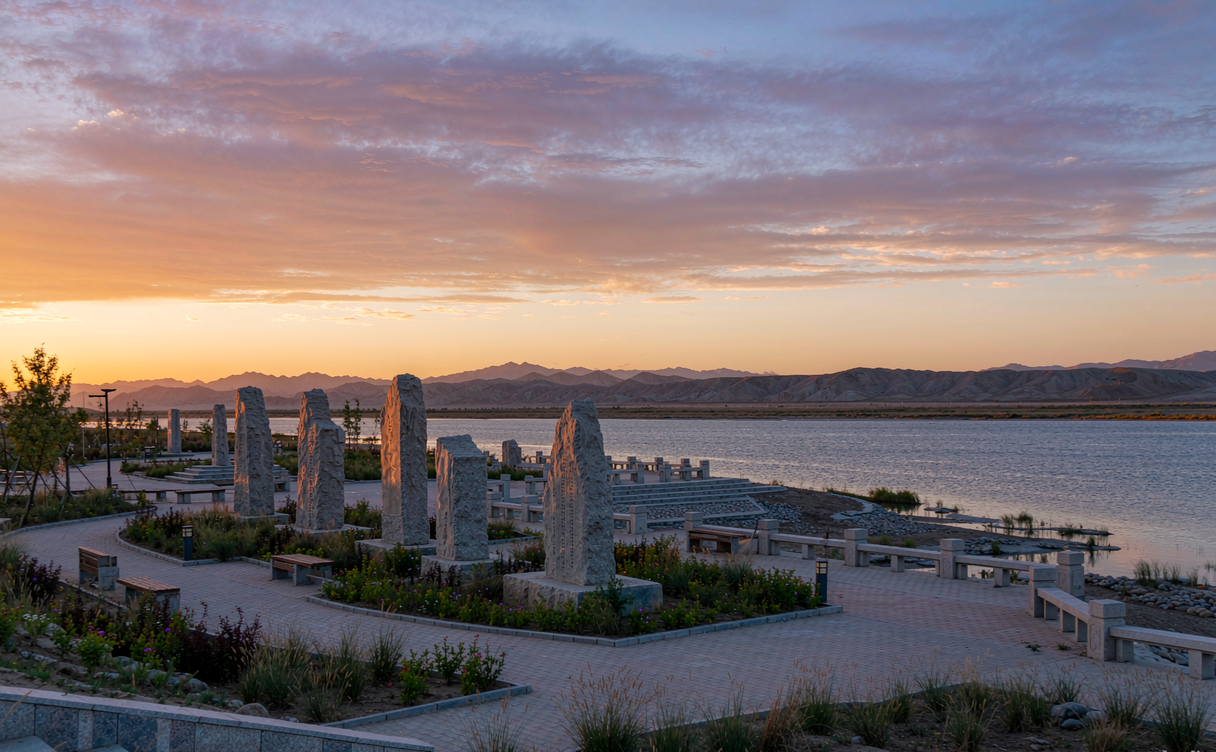
The Delingha Haizi poem reference is the cultural hook that makes this city stick in people’s minds. Haizi (1964–1989) was a Chinese poet, and his 1988 work “Sister, I have walked to Delingha tonight” turned the obscure plateau town into a line of Chinese literature. The riverside monument park has a stone engraving of the poem and a quiet walking path along the BaLang River.
It is free to enter and open all day. Go at sunset; the light on the water and the engraved stone make a calm end to a travel day. If you want background on the poet before you stand in front of the stone, the English Wikipedia entry on Haizi the poet) covers his life and major works.
Delingha to Golmud trip
Many of our travellers link Delingha with Golmud, the next big stop toward the Tibet plateau. The Delingha to Golmud trip is straightforward: the high-speed train (D-prefix) covers the ~230 km in about 1.5–2 hours, with second-class seats around ¥75–95. A private car is slower (3–3.5 hours) and costs roughly ¥600–800 one way, but it lets you stop at the Qaidam desert viewpoints.
From Golmud you can continue south to Lhasa, or swing north. If your wider plan includes Xinjiang, our Xinjiang 7-day itinerary shows how to combine desert and lake stops, and our Tianchi Heavenly Lake Xinjiang guide covers another high-altitude lake worth comparing with Tuosu.
Where to stay and what to eat
Stay in the city centre near the main road (Lenghu Road area). Decent business hotels run ¥220–380 per night; a few upscale options reach ¥500. Don’t expect international chains. Book ahead for the October National Day week when rooms tighten.
Food is the unexpected highlight. Try the hand-grabbed lamb, yak beef hotpot, and the local highland barley noodles. The night market near the centre sells roasted potatoes and milk tea. If you want a desert contrast later, our Kubuqi Desert guide explains the camel-ride and camp setup on the other side of the region.
Sample two-day plan
Day 1
- Morning: arrive by train from Xining, check in, rest for altitude.
- Afternoon: Haizi Poetry Monument Park at sunset, dinner at the night market.
Day 2
- 07:30: private car to Tuosu and Keke lakes, boardwalk and photography.
- 12:00: lunch back in town.
- 14:00: Delingha Museum, then drive toward Golmud or onward.
Getting there and around
Xining to Delingha is the main rail link: high-speed trains take about 1.5 hours, second class ¥95–120. Delingha airport has limited flights, mostly via Xining or Xi’an, so most foreigners come by train. Inside the city, taxis start at ¥6 and DiDi works; for the lakes you need a hired car or driver.
FAQ
Is Delingha worth visiting if I only have time for Qinghai Lake?
If your interest is scenery plus a quiet cultural stop, yes. Tuosu and Keke lakes give you the salt-and-freshwater contrast that Qinghai Lake alone doesn’t, and the poetry park is unique. If you only want one big lake, skip it.
What is the best month to visit Delingha?
Late May to early October for open access and green plateau. Late September is our pick: fewer crowds, yellow poplars, clear skies. Winter is brutally cold and some services close.
Do I need a permit to visit Delingha?
No special permit for Delingha city and the lakes. It is an ordinary part of Qinghai, China. Only the Tibet border areas need permits, which is a different route.
How many days do I need?
One full day covers the lakes and the park; two days lets you relax for altitude and add Golmud or a desert drive. We rarely recommend more than two without a wider Qinghai loop.
Can I combine Delingha with Qiandao Lake?
Not on one trip cheaply, they are far apart. But if you want a very different lake experience later in eastern China, our Qiandao Lake Hangzhou guide covers the reservoir-island scenery near Shanghai.