

Most people hear “Tibet, China” and picture the Potala Palace. Two hundred and forty kilometers north of Lhasa, though, sits Namtso — a saltwater lake at 4,718 m that local pilgrims call the “Sky Lake” because its far shore dissolves into cloud. It is one of the highest large lakes on Earth, ringed by the snow-dusted Nyenchen Tanglha range, and the shoreline is stitched with prayer flags flapping at a height where most visitors are already short of breath. This Namtso Lake guide is written for the foreign traveler who has already sorted the logistics of entering the region: it explains the Tibet Travel Permit reality, the organized-tour rule, the short open season, and the Lhasa-to-lake drive that defines the trip. For the wider timing picture, our month-by-month China guide helps you stack Namtso against the rest of the country.
The Permit Reality First
Foreign nationals cannot roam Tibet, China independently. You need a Tibet Travel Permit issued through a registered local travel agency, and you must travel on an organized tour with a licensed guide and a vehicle — you cannot self-drive or take the public bus as a foreigner. That makes Namtso a tour-daytrip from Lhasa by default: your agency handles the permit paperwork (your passport plus a China visa, submitted roughly 15–20 days ahead), a guide rides with you, and the entry fee at the lake is paid as part of the package. This is purely practical, not optional, so budget the lead time into your itinerary. The upside is that the permit also unlocks the quieter, high-altitude sites most independents never reach.
Why Namtso Earns the Altitude
Namtso is a sacred lake in Tibetan Buddhism, one of the four holy lakes, and a traditional site for pilgrimage and meditation retreats. Three things make the journey worthwhile:
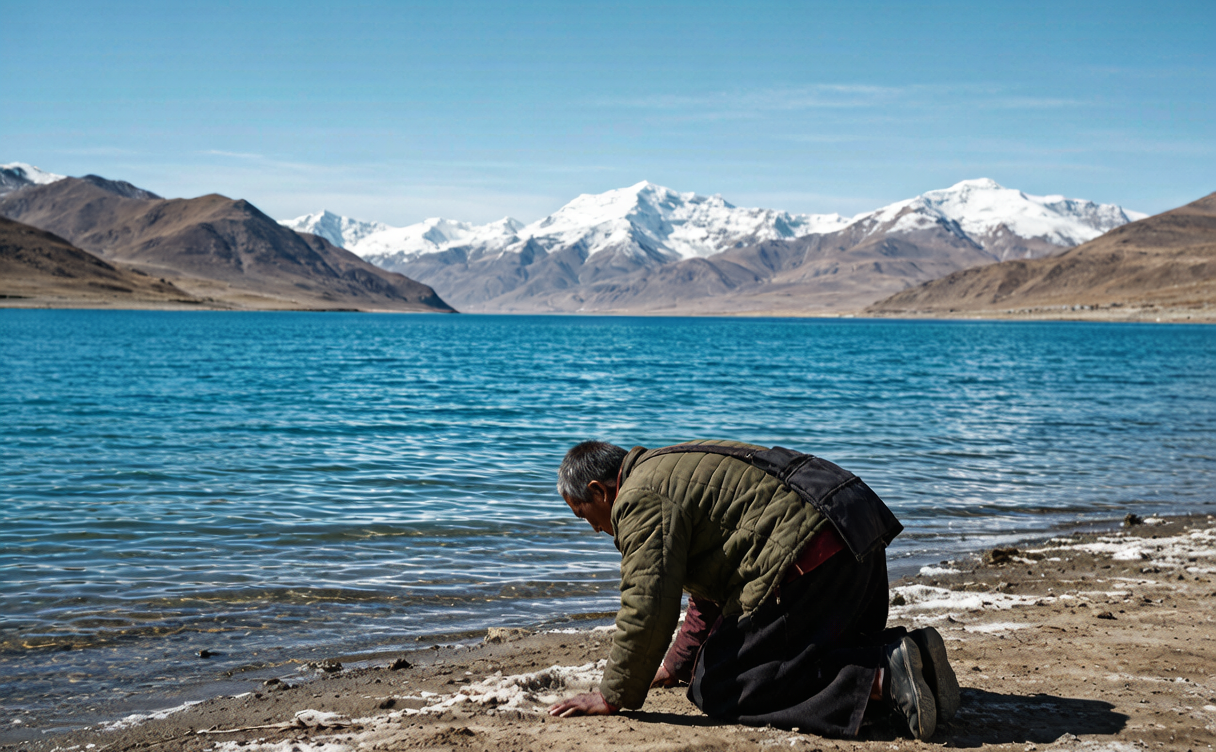
- The color and scale. On a clear day the water is an impossible turquoise that meets the Nyenchen Tanglha snow line with no horizon break — a “sky lake” in the literal sense.
- The prayer-flag shore. At the Tashi Dor peninsula, hundreds of meters of wind-worn flags mark a meditation cave and a walking circuit that pilgrims complete on foot.
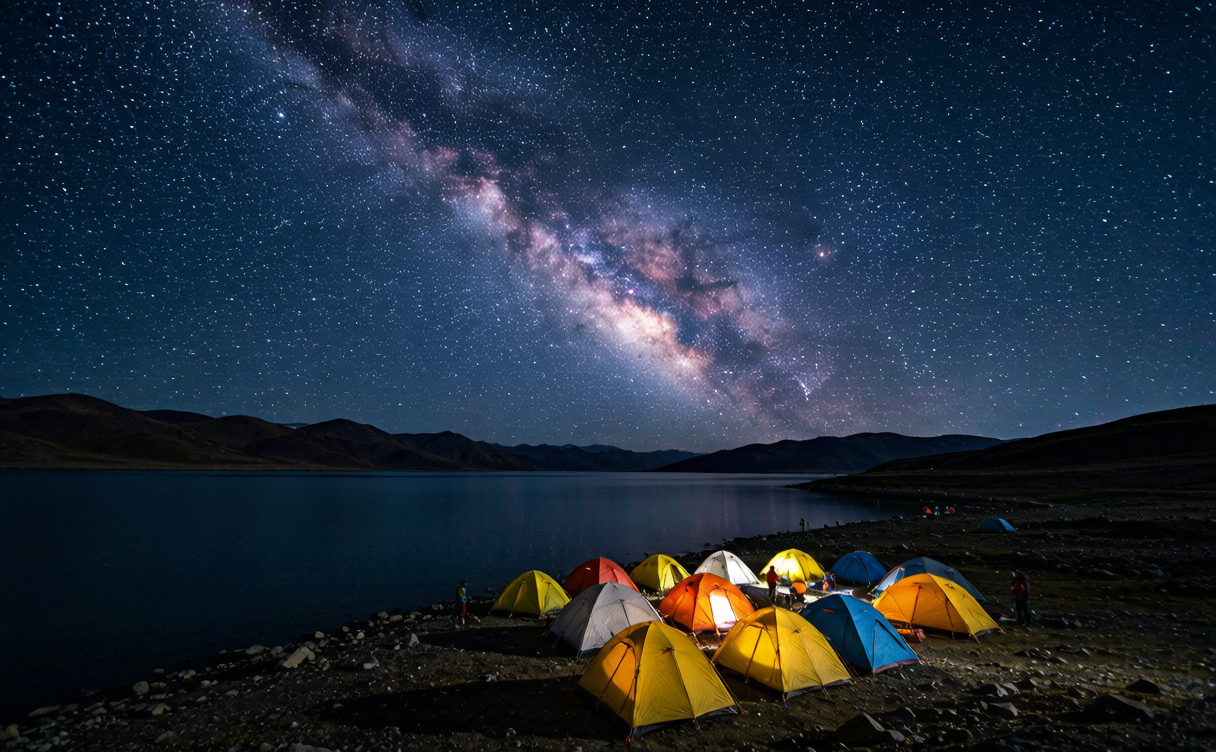
- The night sky. With near-zero light pollution and thin air, the Milky Way is visible to the naked eye in summer — the single best reason to push for an overnight at the lakeshore camp.
Tashi Dor Peninsula
The peninsula is the developed comer of the lake: a small monastery, the flagged meditation cave of Guru Rinpoche, and the launch point for the short kora (circumambulation) walk. Most tours stop here for an hour or two. The full lakeshore is enormous — about 1,900 km² — so you see a sliver, but it is the right sliver.
Best Time to Visit Namtso Lake
The best time to visit Namtso Lake is brutally narrow because of altitude:
- June to September is the only reliably open window. The access road over the 5,190 m Lakenla Pass is usually snow-cleared, days are 10–18°C, and the lake is ice-free. July–August is busiest but also mildest.
- May and early October are marginal — pass snow and freezing nights are possible, and some camps close.
- November to April the lake freezes solid, the road is closed by snow, and the site is effectively unreachable for tourists.
Avoid the weeks around the major Tibetan festivals only if you dislike crowds; otherwise they add color. Plan altitude acclimatization in Lhasa (3,650 m) for 2–3 days before the drive up.
How to Get to Namtso Lake
Because of the permit rule, the realistic route is a Lhasa-based organized tour by vehicle. Distances and drive times below are what your itinerary will actually follow:
| Route | Option | Time | Approx. Cost |
|—|—|—|—|
| Lhasa → Namtso (Tashi Dor) | Organized tour 4WD + permit | ~5–6 hr each way | RMB 800–1,500 per person (US$115–215) |
| Lhasa → Damxung | Tour vehicle / private transfer | ~3 hr | included in tour |
| Damxung → lakeshore via Lakenla Pass | Tour vehicle | ~2 hr | included in tour |
| Overnight at lakeshore camp | Tent / guesthouse add-on | — | RMB 200–500 extra (US$29–72) |
| Lhasa internal transfer (airport→hotel) | Taxi / agency car | 1 hr | RMB 150–250 |
There is no train or public bus option for foreign travelers on this route, and the pass road is closed in winter. The same passport-and-app discipline that helps elsewhere applies once you’re in Lhasa — our train and transport guide for foreign travelers covers the Lhasa arrival by rail from Xining or Chengdu.
Where to Stay
Your two realistic bases are Lhasa (3,650 m, full hotel range RMB 300–1,500) and the lakeshore tent camp at Tashi Dor (RMB 200–500, basic beds, shared toilets, no heating beyond what you bring). The camp is the move for the stars, but it sits at ~4,700 m — sleep is light and cold. Most first-timers do Namtso as a long day-trip and return to Lhasa to sleep lower, which is the smarter altitude play. There is no indoor plumbing at the camp, and power is limited to a few hours in the evening.
Things to Do in Namtso Lake
The lake is a slow-place, not a checklist, but a Namtso Lake travel guide should name the actual moments:
Walk the Tashi Dor kora
The peninsula circuit takes 1–2 hours at a respectful pace; the flagged ridge above the cave gives the classic lake-and-passes panorama.
Photograph the meditation cave
Guru Rinpoche’s cave is small and active; ask before shooting people at prayer, and never walk over the flagged lines.
Sunset and the Milky Way
If you overnight, the 8–10pm light and the post-midnight sky are the payoff. A tripod and a headlamp are essential.
Lakeshore stones and pilgrims
You may see pilgrims prostrating along the shore — keep distance, don’t interrupt, and don’t photograph mid-prostration without a smile-and-gesture ask.
Sample Itinerary
Day-trip version (most common): Day 1 in Lhasa for acclimatization. Day 2 — depart 7am, cross Lakenla Pass for photos, reach Tashi Dor by early afternoon, walk the kora, sunset, drive back to Lhasa by 9–10pm.
Overnight version: Same drive but stay at the camp; dawn on the lake and the night sky, return to Lhasa the next morning. This is one of the best things to do in Namtso Lake country for photographers, provided you’ve acclimatized in Lhasa first.
Practical Tips (Namtso Lake Guide Tips)
- Acclimatize first. Spend 2–3 days in Lhasa before the drive; the pass hits 5,190 m and the lake 4,718 m.
- Layer like it’s two seasons. Warm afternoons, near-freezing nights even in July; a windproof shell is non-negotiable.
- Permit lead time. Submit passport and visa to your agency 15–20 days out; no permit, no entry.
- Cash. The camp and roadside stalls prefer RMB; carry RMB 300–500.
- Oxygen. Guides carry cans; mild headaches are normal, but tell your guide if symptoms worsen.
- No drones, no photos of military posts along the route — the pass area has restrictions.
FAQ
Do I really need the Tibet Travel Permit for Namtso?
Yes. Foreign nationals need the permit and must travel on an organized tour with a licensed guide and vehicle; independent travel is not permitted on this route.
Can I visit Namtso in winter?
Effectively no. The Lakenla Pass road closes with snow from roughly November to April, and the lake freezes. Plan for June–September.
How bad is the altitude?
The lake sits at 4,718 m. With 2–3 days acclimatizing in Lhasa first, most healthy travelers manage a day-trip; overnight at the camp is colder and lighter-sleeping.
Is the overnight camp worth it?
Only for the stars and dawn, and only if you’re acclimatized. Otherwise the day-trip from Lhasa is the better, safer call.
Can children do this trip?
With acclimatization and a slow pace, yes — see our China family travel guide for altitude notes with kids — but watch them closely at 4,700 m.
How much does a Namtso tour cost?
Roughly RMB 800–1,500 per person (US$115–215) from Lhasa including permit handling and vehicle, plus RMB 200–500 for the lakeshore camp. For the lake’s geography and significance, the Wikipedia entry on Namtso is a useful reference.
Written by Karl Huang, updated August 2026.