

Chaoyang (朝阳) is the kind of Chinese city that surprises people who bothered to look. In the northeast of Liaoning, it sits where the Yan Mountains tail off into the Liao River plain, and underneath that ordinary skyline is one of the richest fossil beds on the planet. A good Chaoyang travel guide has to start with the stones, because the “fossil birds” the town is famous for rewrote what scientists thought they knew about the dinosaurs-to-birds story.
We started sending clients here after a paleontologist friend wouldn’t stop talking about it. He was right. The things to do in Chaoyang Liaoning are evenly split between world-class museum pieces and quiet, older-than-you-think ruins — and almost nobody from abroad has heard of either.
The fossil birds and the Chaoyang Museum
Chaoyang sits in the Jehol Biota, the 120-million-year-old lake beds that preserved feathered dinosaurs, early birds, and flowering plants in staggering detail. The Chaoyang County entry on Wikipedia is a dry start, but the real draw is the Chaoyang Exhibition Hall of Fossil Birds (朝阳鸟化石国家地质公园), on the edge of town.
Inside you will see Confuciusornis, one of the earliest beaked birds, and Sinosauropteryx, a small dinosaur with visible feather traces — the specimens are real, not casts, and labeled in Chinese with a few English panels. Entry is about RMB 60–80, and a guide who knows the science costs another RMB 100–150 for an hour. We book the guide; without one, you are looking at beautiful rocks with no story.
The Chaoyang fossil birds are the headline, but the plant fossils and fish slabs are just as photogenic. Photography without flash is allowed; tripods need permission.
Niuheliang and the Hongshan culture
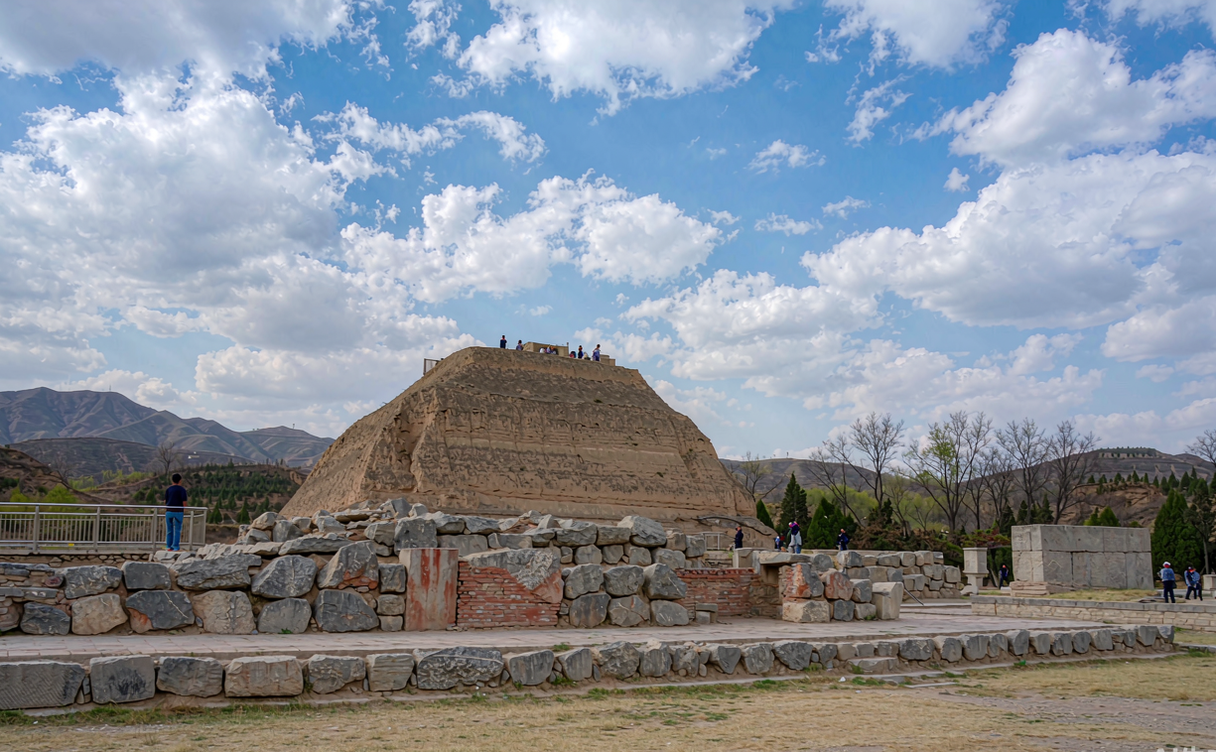
The second reason to come is older than the dinosaurs by a wide margin — in human terms. Niuheliang (牛河梁) is a Hongshan culture ritual site about 90 km southwest, dating to roughly 3500–3000 BCE. It is where archaeologists found the famous goddess temple and jade “pig-dragon” figurines that pushed back the date of complex society in northeast China.
The site is partly covered and partly open. You walk a boardwalk past the stone altar, the goddess temple foundation, and the tomb clusters, with a small museum explaining the finds. Entry runs RMB 40–60. We combine it with the fossil museum as a two-site day; a car and driver for the loop is RMB 500–700.
The old city: pagodas and city walls
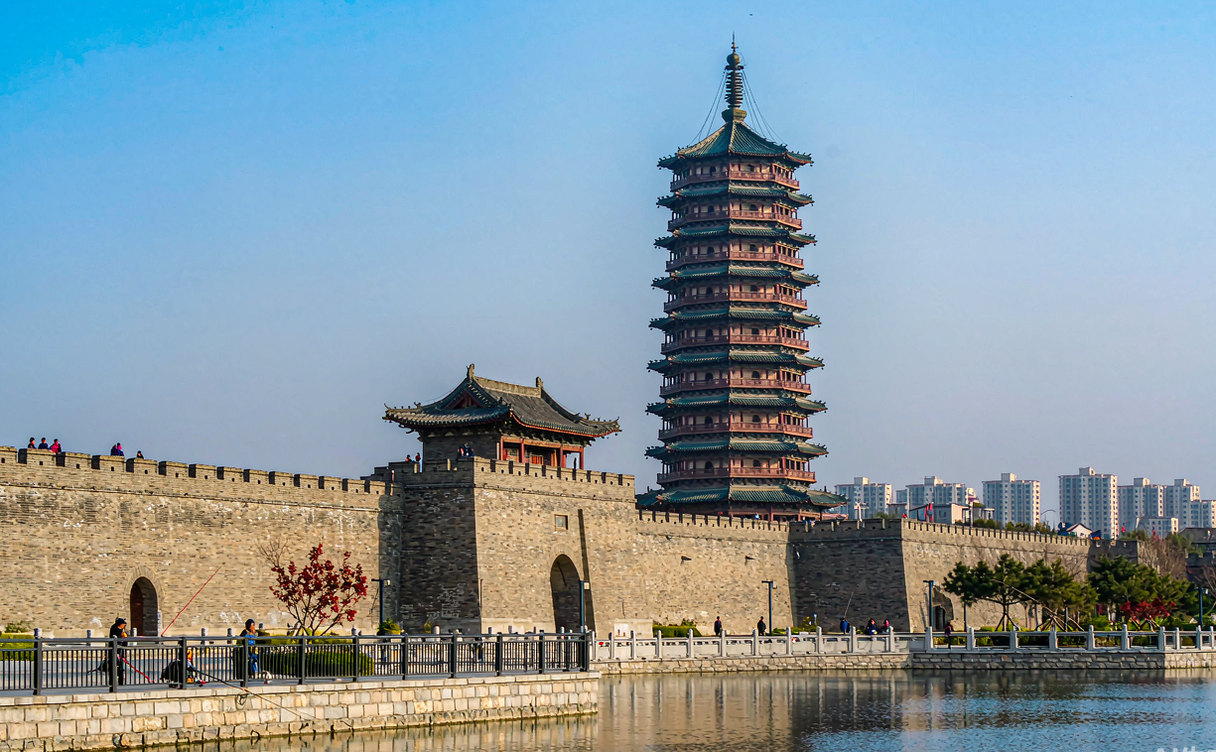
Back in town, Chaoyang wears its later history lightly but well. The North Pagoda (北塔), a Liao-dynasty brick tower from around 1,000 years ago, stands right in the city center and you can walk the surrounding square for free. Nearby, the Chaoyang South Pagoda and stretches of old city wall give the place a lived-in ancient feel that bigger Liaoning cities have paved over.
If imperial tombs interest you, our Beijing Ming Tombs guide covers a later, grander version of the same idea a few provinces south, and the Beijing vs Shanghai guide helps you decide where to route next.
Chaoyang Liaoning history: why it matters
What makes the Chaoyang Liaoning history unusual is the layering. Under the Liao and Jin capitals (roughly 10th–12th centuries) sat Tang and Han settlements, and under those, the Hongshan people who built Niuheliang three millennia earlier. Few Chinese cities let you stand in a 1,000-year-old pagoda square and know that the ground beneath it has been sacred on and off for 5,000 years. We frame the visit around that continuity — it turns a pile of old stones into a timeline you can walk.
The fossil beds add a fourth layer: 120 million years of prehistory under the same hills. Clients who do both the museum and the ruins in one day routinely tell us it rewired how old “old China” feels to them.
Chaoyang to Beijing trip planning
The Chaoyang to Beijing trip is the route most of our clients actually take, and it is easy. High-speed trains run Beijing–Chaoyang in about 2.5–3 hours, so you can do the fossils and ruins as a very full day from the capital, or — better — sleep in Chaoyang and take a relaxed morning before the afternoon train. We usually book the 7–8 am departure from Beijing, a private car from midday, and a return seat after dinner.
If you are continuing northeast instead, the same line runs to Shenyang in under an hour, which pairs Chaoyang neatly with Fuxin and Liaoyang as a three-stop Liaoning history arc.
Getting there and getting around
Chaoyang has a high-speed rail station on the Beijing–Shenyang line — about 2.5–3 hours from Beijing (RMB 180–260 second class) and under an hour from Jinzhou. There is also an airport with a few daily Beijing and Shanghai flights. We usually bring clients in by train from Beijing as part of a Liaoning history swing, then drive them out toward the fossil and Hongshan sites.
The Niuheliang Chaoyang distance is best done by private car; public buses exist but eat half a day. Local taxis in town are cheap (starting at RMB 6), and DiDi works.
Season and practicalities
Spring (April–May) and autumn (September–October) are best — cool, clear, and good for the open-air ruins. Summer is warm and a bit humid; winter is cold and some outdoor boards close, though the museums stay open. Chaoyang Liaoning history reads better in dry weather, so we avoid the July–August rainy peaks.
The town is flat and walkable in the center. English signage is thin, so a translation app and your guide earn their keep. ATMs and UnionPay work fine; international cards are hit or miss at small shops, so carry cash for the markets.
Where to sleep and eat
Hotels are affordable: a decent business hotel runs RMB 200–350, and a comfortable four-star like the Wanda Realm runs RMB 450–650. Food is classic northeastern Chinese — dumplings, stews, and the local “bowl-cake” (碗砣) snack, plus good grilled lamb. The night market by the main drag is the move for dinner; a full spread for two rarely tops RMB 120.
If you want mountains after the museums, our Huangshan Yellow Mountain guide is the famous southern peak, and the Dinghu Mountain guide or Jinggang Mountain guide offer greener alternatives. For a sacred northern climb, the Hengshan Mountain in Shanxi guide is a logical next stop on a history-and-mountain route.
A sample two-day plan
Day 1: morning train from Beijing, drop bags, afternoon at the North Pagoda and old city wall, dinner at the night market. Day 2: private car to the Fossil Birds museum (allow 2–3 hours), then Niuheliang for the Hongshan ruins, back to town for the evening train out.
We have run this for families with dinosaur-obsessed kids and for serious travelers who just wanted the jade pig-dragons. Both leave happy. Chaoyang will not be on your first China list, but it should be on your “I’ve done the big ones” list — few places pack this much deep history into a quiet morning.