

Golmud (格尔木) is the town most foreign travelers pass through without meaning to. It is the last real city before the Qinghai–Tibet railway climbs onto the roof of the world, and for years we treated it as a fuel stop. That was a mistake. A proper Golmud travel guide shows a place that is itself worth a night: a gritty, sunny, high-altitude hub where the Kunlun Mountains throw a long shadow and the nearby salt lakes are some of the easiest “alien landscape” photography in China.
Golmud sits at about 2,800 m in the eastern Qaidam Basin, in Qinghai’s Haixi Prefecture. It is the natural complement to Mangnai — if you read our Mangnai to Golmud trip notes, this is the eastern bookend of that 400 km desert drive.
Why stop in Golmud at all
Two reasons. First, it is the acclimatization stepping stone for the train to Lhasa — sleeping here a night drops your altitude-sickness odds noticeably. Second, the surroundings are genuinely good: the Kunlun Pass, the Qinghai–Tibet railway itself, and a chain of salt lakes within an hour’s drive. We now build Golmud into almost every Qinghai far-west and Tibet-bound itinerary we run.
The things to do in Golmud Qinghai are spread out, so a car and driver is the move. A full-day loop with driver runs RMB 600–900, which is cheap for the ground you cover.
The Qinghai–Tibet railway
You do not have to ride it to appreciate it. The line leaves Golmud and gains more than 2,000 m before Lhasa, the highest railway on earth. We like taking clients to the railway bridge viewpoint on the outskirts where a freight train crawls across the open plateau — a 20-minute taxi ride, no ticket. If you do ride it, book the sightseeing window seat on the right going south; the Kunlun range stays in view for an hour.
The Qinghai–Tibet Railway entry on Wikipedia has the engineering background if you want the numbers before you go. Soft-sleeper tickets from Golmud to Lhasa run RMB 700–1,000 depending on season and sell out weeks ahead in summer, so we book early.
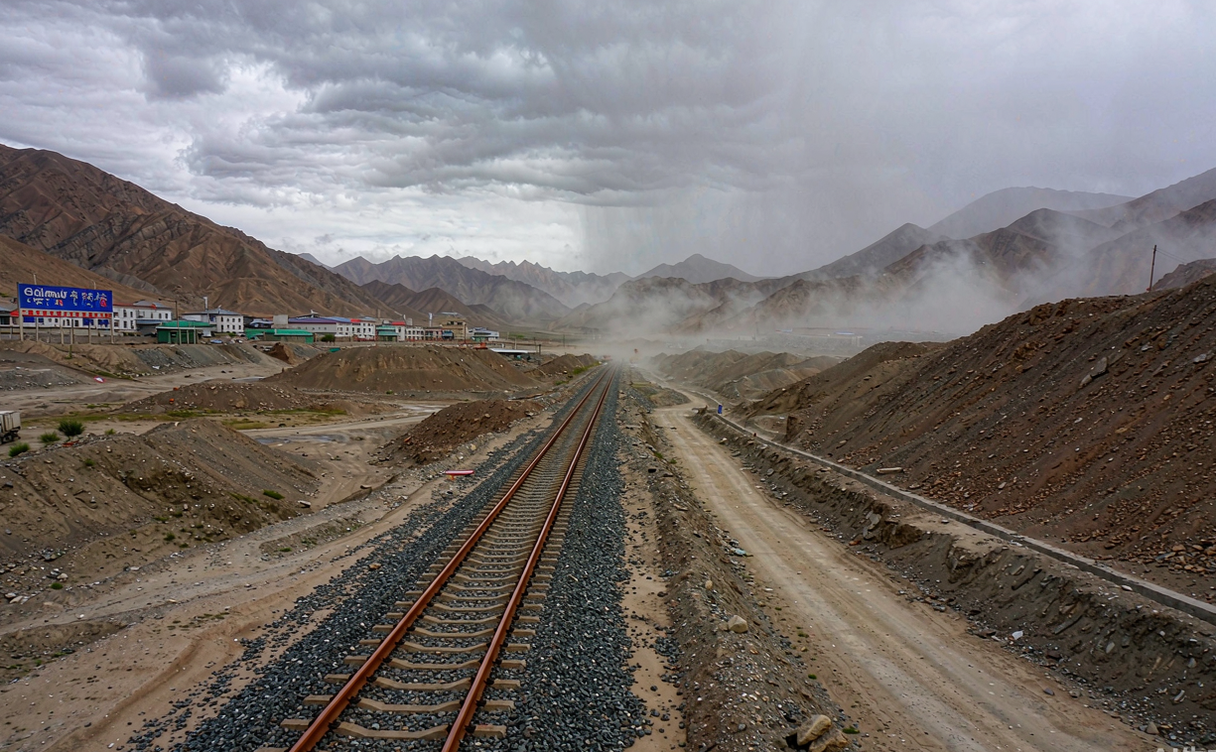
Kunlun Mountain Pass and the Kunlun Spring
The Golmud Kunlun Mountain (昆仑山) is the spiritual and physical gateway. The Kunlun Pass (昆仑山口) sits at about 4,760 m, roughly two hours south of town on the G109. At the pass there is a stone monument and, on clear days, a wall of snow peaks behind it. We stop here briefly — at that altitude you do not linger — then drop to the Kunlun Spring (昆仑泉), a warm mineral spring at a more comfortable 3,500 m where you can actually walk around.
Past the pass, the road continues toward the Hoh Xil reserve, but that is a multi-day expedition and needs permits we arrange separately. For a one-day taste, the pass plus the spring is the standard loop.
Salt lakes near town
Golmud’s own salt lakes are the quiet stars. The closest, Chaka-style white salt flats, are about 40–60 km out and cost almost nothing to enter (RMB 20–40 with shuttle). The crystals form hexagonal puzzles you can walk on in dry months. We prefer the smaller, unnamed pans east of town to the busy paid ones — your driver will know them. Golden hour turns the crust pink and the photos look like nowhere else in China.
If you want a bigger, bluer lake experience elsewhere, our Qiandao Lake near Hangzhou guide is the opposite end of the spectrum — green flooded hills rather than white salt. And the Namco Lake in Tibet, China guide covers the giant salt lake south of Lhasa if your rail trip continues.
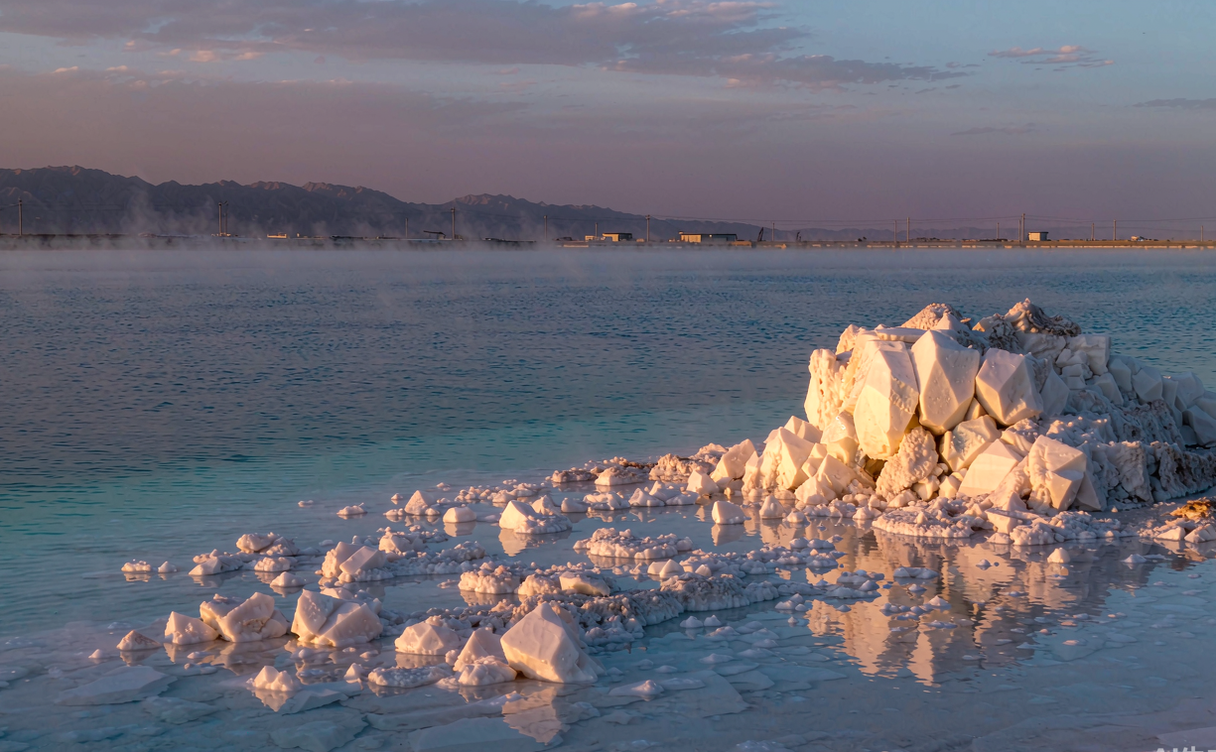
Qarhan Salt Lake and the Golmud to Lhasa plan
The biggest salt body in the area is Qarhan Salt Lake (察尔汗盐湖), about 60 km southeast of town and the largest salt lake in China by area. It is more industrial than the pretty pans — a working potash operation with a famous salt bridge road built right across the crust — but the scale is staggering and the entry is modest (RMB 40–60 with shuttle). We treat it as the “big one” and the smaller east pans as the “photo one” on the same day.
Planning the Golmud to Lhasa trip is the other reason travelers pause here. The train is the classic choice, but if you would rather fly, Golmud has connections toward Xinjiang and the south; we often use the town as the pivot between a Qinghai loop and a Tibet, China extension. Either way, sleeping one night at 2,800 m before the climb is the single best thing you can do for your comfort on the roof of the world.
Night skies and photography
Golmud’s dry, high, and lightly polluted air makes it genuinely good for stars and the Milky Way from June to September. We have shot the Kunlun range under moonlight and the salt pans with reflections of the sunset that need no filter. Bring a tripod and a headlamp; the plateau wind drops after dark and the cold comes fast, so layer up. Drones are fine away from the railway and airport approaches — check with your guide.
Season, altitude, and logistics
Best window is June to September. Winters are harsh (nights well below -15°C) and many sites close. Daytime in summer is a dry 15–25°C with fierce UV — same packing list as Mangnai: lip balm, eye drops, hat, sunscreen, two liters of water.
Because Golmud is only 2,800 m, it is a kinder acclimatization night than pushing straight to Lhasa at 3,650 m. We have had far fewer sick clients when we insert this stop. The town has real hospitals and an airport with daily Xining and Xi’an flights (RMB 500–800), so it is also a sensible exit point if the altitude disagrees with you.
Where to sleep and eat
Golmud has the widest hotel choice of any town in the basin: international chains like Holiday Inn Express (RMB 350–550) down to clean local business hotels (RMB 200–300). Food is hearty northwestern fare — hand-pulled noodles, beef noodles (RMB 12–20), mutton, and surprisingly good yak-dairy snacks at the morning market. There is a pedestrian street off Kunlun Road with hot pot and barbecue that stays lively until late.
For travelers extending west, our Xinjiang 7-day itinerary guide and the Heavenly Lake (Tianchi) in Xinjiang, China guide pair naturally if you are flying on from Golmud rather than taking the train south.
A sample one-day loop
Morning: drive south to Kunlun Pass and Kunlun Spring. Midday: back for lunch in town. Afternoon: salt lakes east of town for golden hour, then dinner on Kunlun Road. If you are rail-bound, swap the afternoon for an evening train south and watch the plateau go dark.
We have sent everyone from solo photographers to families through this loop. It is low-risk, high-reward, and a lot cheaper than the headline Tibet trips it feeds into. Golmud rewards the traveler who slows down for one night instead of sprinting through.