

The first time I really understood Wuzhen, I wasn’t looking at it — I was listening. I’d stepped off the bus from Hangzhou around nine in the morning, still half-asleep, and the sound that hit me wasn’t traffic or tour-group chatter but the soft thunk of a wooden paddle against black water. A flat-bottomed boat was sliding under a stone arch, and somewhere a woman was beating laundry against the river steps. That’s the thing about Wuzhen: it’s a 1,300-year-old canal town that still actually breathes. Most people visit it as a day trip from Hangzhou, and after three trips of my own, I’m convinced that’s exactly the right amount of time — if you know which half to see and when.
Wuzhen sits about 80 kilometers (50 miles) east of Hangzhou in northern Zhejiang province, part of the dense web of water towns that line the Yangtze River delta. Unlike some of its neighbors that have been rebuilt almost entirely for tourism, Wuzhen keeps a working-village feel in its older lanes. It’s split into four historic zones, but visitors really only deal with two: the East Gate (Dongzha) and the West Gate (Xizha). They could not feel more different, and choosing between them — or doing both — is the single most important decision you’ll make.
Why Wuzhen Works as a Hangzhou Day Trip
Hangzhou is famous for West Lake, and rightly so. But after two days of teahouses and causeways, I found myself wanting something grittier and older. Wuzhen delivered that in under ninety minutes of travel. The town is compact, walkable, and flat, which makes it ideal if you’re based in Hangzhou and don’t want to repack your bag.
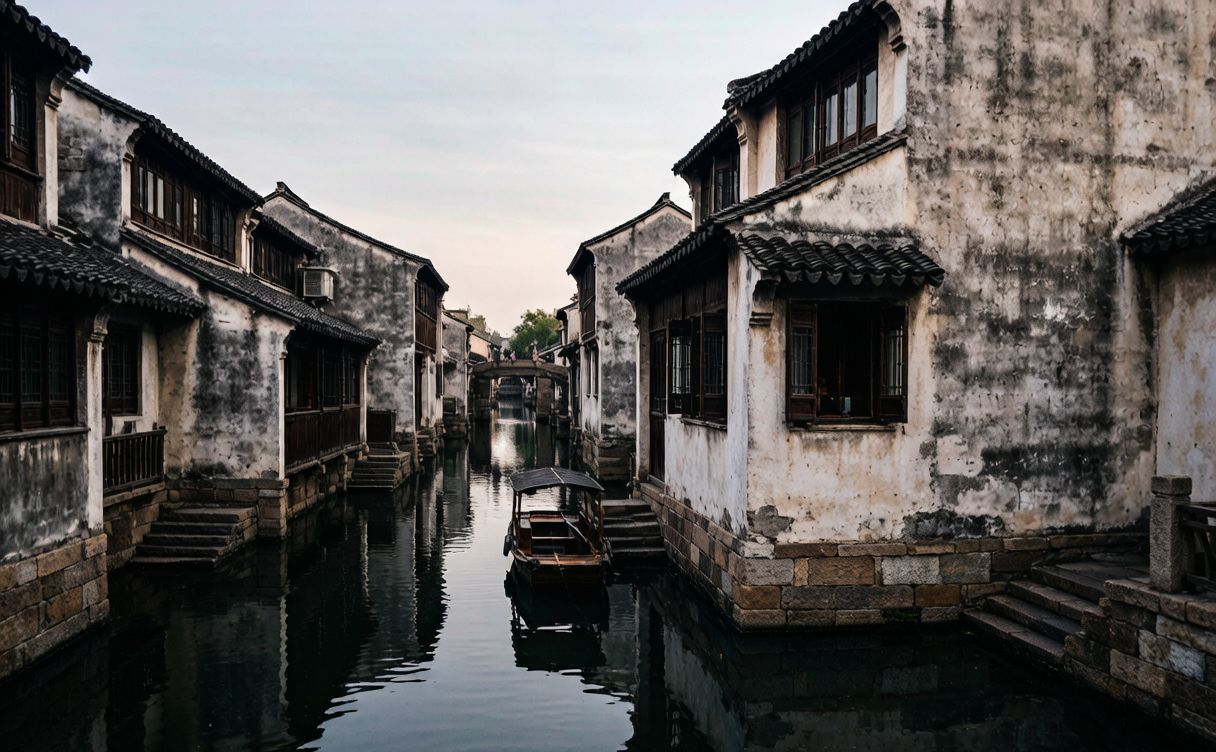
What surprised me most was how the canal life isn’t staged. Yes, there are souvenir stalls, but there are also residents hanging windows open over the water, old men playing cards on a threshold, and a working indigo-dye workshop where you can watch cloth get pounded and hung to dry. That blend of lived-in and preserved is why I keep sending friends here instead of the more theme-park-like alternatives closer to Shanghai. If you want to compare options, our guide to Shanghai Zhujiajiao Water Town covers the closer-in alternative, and Suzhou Travel Guide explains the wider canal-country region.
Getting from Hangzhou to Wuzhen
The logistics are easier than you’d think. I’ve done it three ways:
Direct tourist bus. Hangzhou’s main bus stations (Hangzhou Bus Station near the train hub, and sometimes the West Lake area hotels) run direct coaches to Wuzhen. This is the laziest, most comfortable option — about 1.5 hours, door to the scenic gate.
High-speed train + taxi. Take a train from Hangzhou East to Tongxiang Station (roughly 20–35 minutes), then a taxi or local bus the remaining 20 minutes into Wuzhen. This is my default now because trains run constantly and Tongxiang is a real stop on the Shanghai–Hangzhou line. If you’re new to the system, our China High-Speed Train Guide for Foreigners walks through buying tickets and what to expect at the station.
Organized day tour. Plenty of Hangzhou hotels and agencies sell Wuzhen day trips with a guide. More expensive, less flexible, but zero planning.
One practical note: Wuzhen’s two gates are a 10-minute shuttle apart, and your entry ticket is usually zone-specific. Buy the combined ticket if you think you’ll want both, but read the fine print — the combined pass is priced for people staying overnight, and as a day-tripper you may not get your money’s worth from Dongzha if you arrive late.
East Gate (Dongzha): The Morning Half
If you only have a half day, I’d send you to Dongzha in the morning. It opens early, it’s smaller, and the light on the water before 10 a.m. is the best you’ll get anywhere in town. Dongzha is the more traditional, museum-like zone: you’ll find the former residence of writer Mao Dun, a silk-flocking workshop, a wine distillery, and the indigo-dye yard I mentioned.
I spent a slow hour just following the main canal from one end to the other, ducking into side alleys whenever a doorway looked interesting. The folk performances — shadow puppetry, a water-side opera stage — run on a loose schedule, so grab a free map at the gate and plan around the two or three shows you care about. Dongzha empties out by mid-afternoon, which is part of its charm and part of its limitation: once the workshops close, there’s not much to do but eat.
West Gate (Xizha): The Evening Half
Xizha is the larger, more polished zone, and it’s where Wuzhen’s reputation for night views comes from. I’ll be honest: I almost skipped it on my first trip because I’d read it was “too restored.” That was a mistake. Come late afternoon, watch the lanterns switch on along the water, and the whole place turns into something between a painting and a dream. The reflection of red and gold lights on the black canal is the single image I carry home from Wuzhen.
Xizha has more to do than Dongzha — boutique hotels, riverside cafés, a foot-massage street, a well-curated crafts market, and the clever tricks that make it feel premium: covered wooden walkways so you never get rained on, and a smart lighting system that shifts the mood through the evening. It’s also where you’ll find the best food.
Day vs. Night: Which Should You Choose?
This is the question I get most from readers, so here’s my straight answer.
If you have one day from Hangzhou: Do Dongzha in the morning, eat lunch, then move to Xizha for the late afternoon and stay until the lanterns come on (around 6–7 p.m. in summer). You’ll need to buy separate tickets or the combined pass, and you’ll be tired, but you’ll see the full arc of the town.
If you only have a few hours: Pick based on your energy. Morning person and love quiet? Dongzha. Want the postcard and don’t mind crowds? Xizha at golden hour.
If you can stay overnight: Wuzhen rewards it. The town belongs to the guests after the day-trippers leave around 5 p.m., and a dawn walk along an empty Xizha canal is the most peaceful thing I did in Zhejiang. Hotels inside the scenic area include evening entry, which softens the ticket cost.
For broader context on planning a longer loop through the region, our Hangzhou Travel Guide and the West Lake Hangzhou Guide pair naturally with a Wuzhen day — West Lake in the morning, Wuzhen the next day, is a classic two-day Hangzhou plan.
What to Eat
Food is a quiet highlight. Along Xizha’s lanes you’ll find ding sheng gao (sticky rice cakes), smoked river fish, and Wuzhen’s signature san bai — “three whites”: white fish, white shrimp, and white water tofu, all from the local rivers. I’m not usually one for tourist-town dining, but the riverside stalls grilling small fish over charcoal earned a second visit. Prices inside the scenic area run higher than outside the gates, so if you’re on a budget, eat a big meal just outside Xizha’s entrance before you go in.
A word on drinks: the town has a handful of craft-tea and coffee spots now, including one famous for a “Wuzhen latte” with a printed canal scene on the foam. It’s a gimmick, but on a hot afternoon it hit the spot.
Practical Tips From Someone Who Got It Wrong First
- Buy tickets online in advance where possible, especially on weekends and Chinese holidays. Queues at the gate can be long, and the combined pass sells out on peak days.
- Wear flat shoes. Every lane is flagstone, and the canalside paths are uneven. My inappropriate sneakers survived, but heels would not.
- Bring cash for small stalls, though Alipay and WeChat Pay are widely accepted now.
- Go on a weekday if you can. I once went on a Tuesday and had entire alleys to myself; the following Saturday felt like a different town.
- Pack light. As a day-tripper you’ll be carrying your bag through narrow lanes and onto boats. A small backpack is plenty.
Is Wuzhen “Authentic”? My Honest Take
I’ll spare you the authenticity debate that travel forums love. Wuzhen is restored, yes — the Xizha you see was rebuilt and reopened in the 2000s after decades of decline. But the bones are real: the canals, the bridges, the layout, the craft traditions. And because it’s professionally managed, it’s clean, safe, and remarkably hassle-free compared with more chaotic ancient towns. If you want something rougher and more weathered, our Fenghuang Ancient Town Guide describes a very different, less polished experience in Hunan.
For me, Wuzhen’s value isn’t that it’s untouched — nowhere famous is. Its value is that it lets you step into a working river-town rhythm for a day, hear that paddle on the water, and walk home with your shoes a little damp from the canal spray. That’s worth the 80 kilometers from Hangzhou every time.
Getting Your Timing Right
Wuzhen changes with the seasons in ways that matter. Spring (April–May) is mild and green, with the canals at their fullest. Summer is hot and crowded but the night views are at their most atmospheric. Autumn (September–October) is my personal favorite — cool, clear, and lit by the Mid-Autumn festival lanterns. Winter is quiet and a little bare, but if you catch a misty morning after a cold front, the empty canals are unforgettable.
Whatever season you pick, give Wuzhen a full day if you can, and don’t rush the transition from East to West. The magic isn’t in any single bridge — it’s in the slow slide from a sleepy morning canal to a lantern-lit evening, all within a few hours’ reach of Hangzhou.
For official opening hours, ticket prices, and the current performance schedule, always confirm with the town’s management before you go — details shift season to season. The authoritative source is the official Wuzhen tourism site, which posts updated gate times and event listings in both Chinese and English.