

When travelers ask us about Xibaipo red tourism, we tell them to set expectations correctly: this is not a theme park. Xibaipo is a small lakeside village in Pingshan County, Hebei, about 90 km west of Shijiazhuang, where from May 1948 to March 1949 the central leadership of the revolution lived and worked. For anyone curious about modern Chinese history, it is one of the most important and best-preserved revolutionary sites in the country — and, quietly, a lovely spot on the shore of the Gangnan Reservoir.
This Xibaipo red tourism Hebei guide covers how to get there, what to see inside the compound, the museums worth your time, and the practical tips that make a half-day visit smooth.
The Site and Its Setting
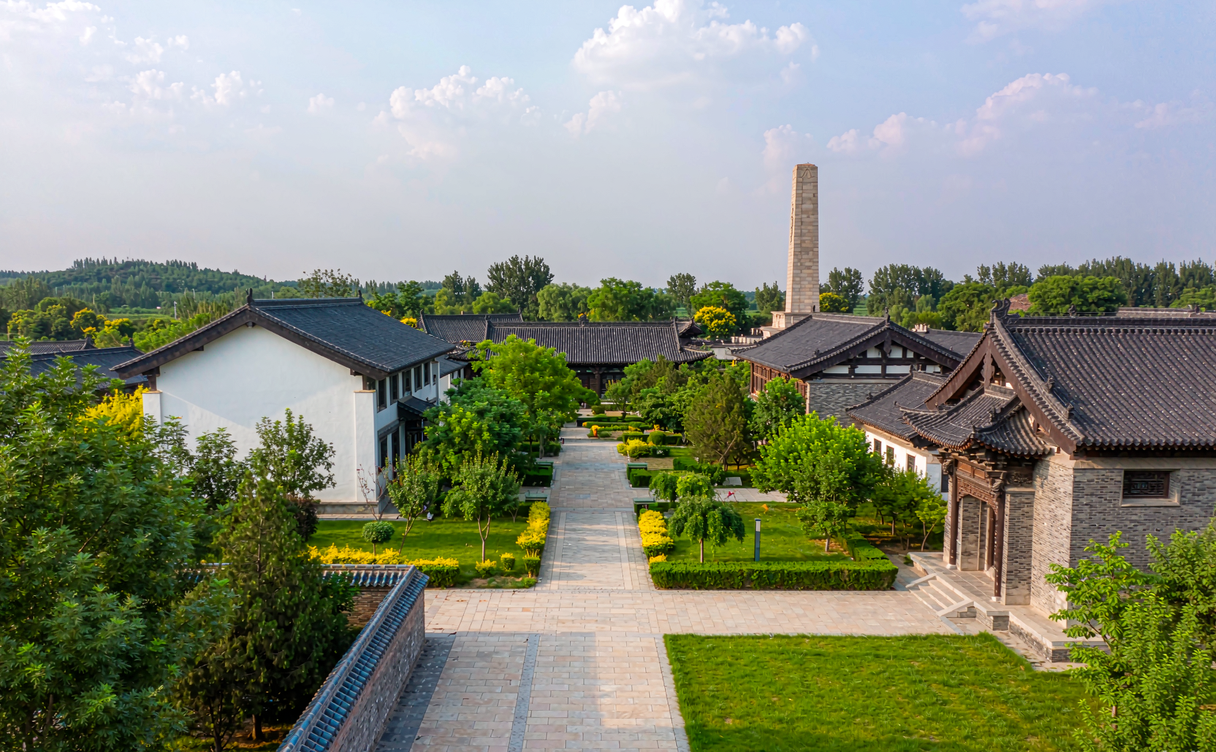
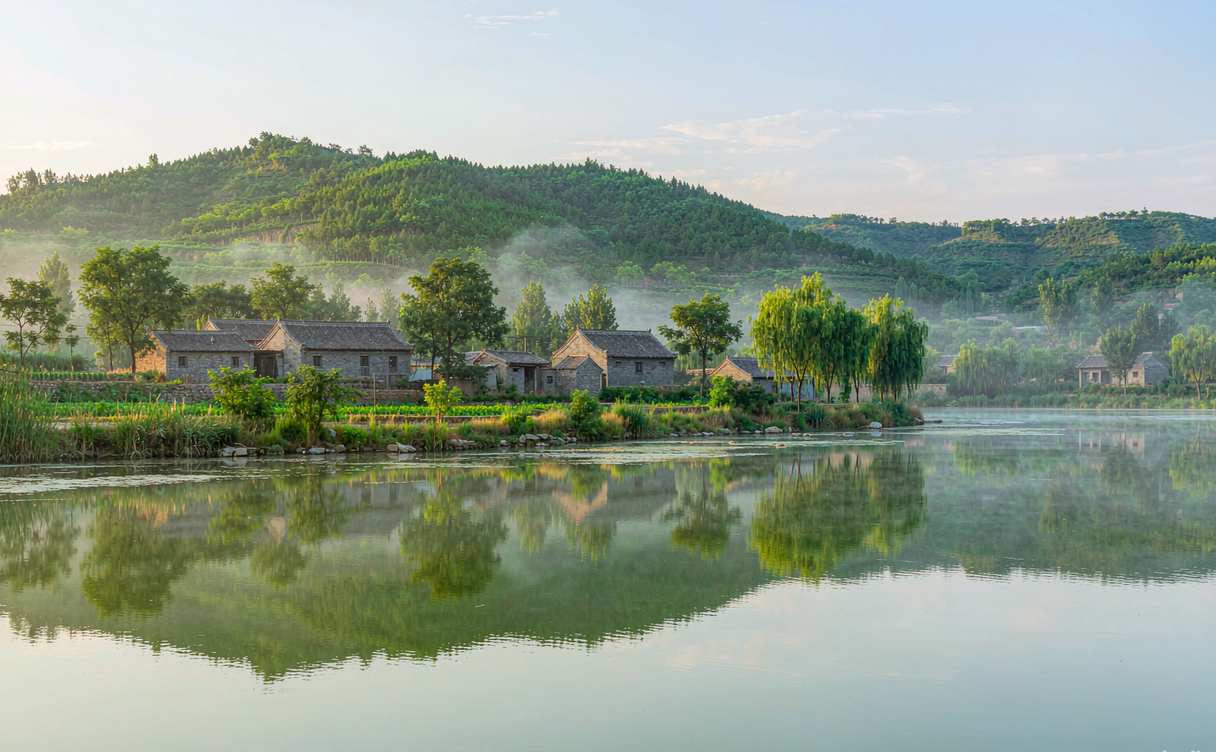
Xibaipo sits on a low hill above the Gan River, now backed by the Gangnan Reservoir. The original village was relocated when the dam was built, and the memorial compound you visit today is a careful reconstruction of the 1948–49 leadership quarters. The setting is green and calm — pine trees, red-tiled courtyards, and a wide plaza with a red-star monument. We’ve brought history-minded travelers here who expected a somber museum and left surprised by how peaceful the place feels.
For an encyclopedic overview of the village’s place in modern history, see Xibaipo on Wikipedia.
Xibaipo Memorial Site Guide
A good Xibaipo memorial site guide starts at the entrance plaza and works inward. The compound is laid out as a cluster of small courtyards, each one the former residence and workplace of a senior figure. Rooms are furnished simply — a bed, a desk, a map on the wall — exactly as they would have been.
Key stops:
- The central compounds. Walk the lanes of restored courtyards where meetings were held and telegrams sent. Wooden signs mark each residence; the atmosphere is reverent but not heavy-handed.
- The meeting hall. This is where the Second Plenary Session of the 7th Central Committee was convened in March 1949. The hall is plain: rows of benches, a podium, and a flag. Standing inside, you understand the scale of decisions made in a room smaller than a classroom.
- The telegraph office. A row of old telegraph sets behind glass shows how orders reached the front lines. Our guides point out that this was, in effect, the communications nerve center of the time.
- The stone mill and old trees. A large millstone and a few centuries-old trees survive from the original village and make good photo anchors.
Xibaipo History Museums
The on-site Xibaipo history museums are the heart of the visit. The main memorial hall is a modern building with two floors of exhibits: documents, photographs, uniforms, weapons, and a large diorama of the decisive campaigns of the civil war. English signage is limited, so a Chinese-speaking guide (about RMB 100 for a small group, bookable at the gate) transforms the experience.
Two exhibits stand out. One is the original telegraph equipment and codebooks; the other is a wall of portraits of the leadership who lived on-site. Allow 60–90 minutes for the museums alone. Admission to the compound and museum is free, which makes Xibaipo one of the best-value historical stops in Hebei.
Things to Do in Xibaipo
Beyond the memorial, things to do in Xibaipo are gentle and outdoorsy:
- Walk the reservoir shore. The Gangnan Reservoir offers flat, easy paths and good birdwatching in spring and autumn.
- Boat trip. Small electric boats run in season (roughly RMB 30–50 per person) for a slow loop of the bay.
- Combine with Tian桂 Mountain (Tiangui Shan). About 30 minutes north, this scenic area has karst caves and a cable car; a natural counterpoint to the history-heavy morning.
- Photograph the plaza at golden hour. The red-star monument catches the late sun beautifully, and the crowds thin after 16:00.
Best Time to Visit Xibaipo
For the best time to visit Xibaipo, think like a northern-Hebei traveler. Spring (April–May) and autumn (September–October) have the most comfortable weather, clear skies, and the reservoir at its prettiest. Summers are hot and can be humid; winters are cold and grey but crowd-free. National holidays (early May, early October, and the lunar new year) bring busloads of domestic tour groups, so we steer independent travelers to weekdays.
Xibaipo to Shijiazhuang Trip
A Xibaipo to Shijiazhuang trip is the standard logistics. From Shijiazhuang’s west bus station, frequent coaches run to Pingshan and Xibaipo in about 2 hours for RMB 25–35. Some direct tourist buses go straight to the memorial gate. Driving takes about 1.5 hours via the Shitai (G5) expressway and local roads. If you’d rather build a wider Hebei loop, our Shijiazhuang travel guide is the natural hub, and you can extend west toward Baoding or north toward Beijing.
Travelers coming from Shanxi often pair Xibaipo with a stop in Taiyuan or the walled streets of Pingyao ancient town. Staying overnight in Beijing hotels before heading out keeps the routing simple.
What to Read Before You Go
Xibaipo’s exhibits assume you already know the broad outlines, so a little homework pays off. The site commemorates the final months before the 1949 crossing of the Yangtze and the move of the capital north to Beijing; the compounds you walk were where the land-reform agenda and the blueprint for the new state were thrashed out in cramped rooms. We tell travelers to skim a short account of the civil war’s closing campaigns on the bus up from Shijiazhuang — even ten minutes of context turns a row of plain beds and desks into a living story. Chinese schoolchildren study this period in detail, so domestic visitors arrive primed; foreign travelers often benefit most from the human guide who can name the figures in each courtyard and explain why a small village by a reservoir became the hinge of modern history. The memorial hall’s large diorama of the decisive campaigns is far easier to follow once you know which front is which. Read lightly beforehand, then let the quiet lanes and the museum fill in the rest; you’ll leave with far more than the placards alone can give.
Insider Tips
- Go early. Arrive at opening (around 08:30) to beat tour buses; by 11:00 the plaza is packed.
- Hire the audio or human guide. Without context the rooms are sparse; with it, they tell a clear story.
- Carry ID. Entry is free but you register at the gate with your passport or ID card.
- Pack water and a hat. Shade is limited along the reservoir paths in summer.
- Make it a half-day. Two to three hours covers the compound and museums well; don’t over-plan.
Planning Your Visit
Budget a modest RMB 100–200 per person including transport from Shijiazhuang, a simple lunch (noodles or a small restaurant in Pingshan, RMB 25–45), and the boat if you like. The site itself costs nothing to enter. Xibaipo rewards curiosity more than stamina — read a little history beforehand, and the quiet courtyards will mean far more.
Arrive right at the 08:30 opening to explore the courtyards before the tour buses arrive around mid-morning.
Hire a local guide at the gate for about RMB 100, since English signage in the museums is limited.
Bring your passport to register at the free-entry gate, and pack water for the open reservoir paths.