

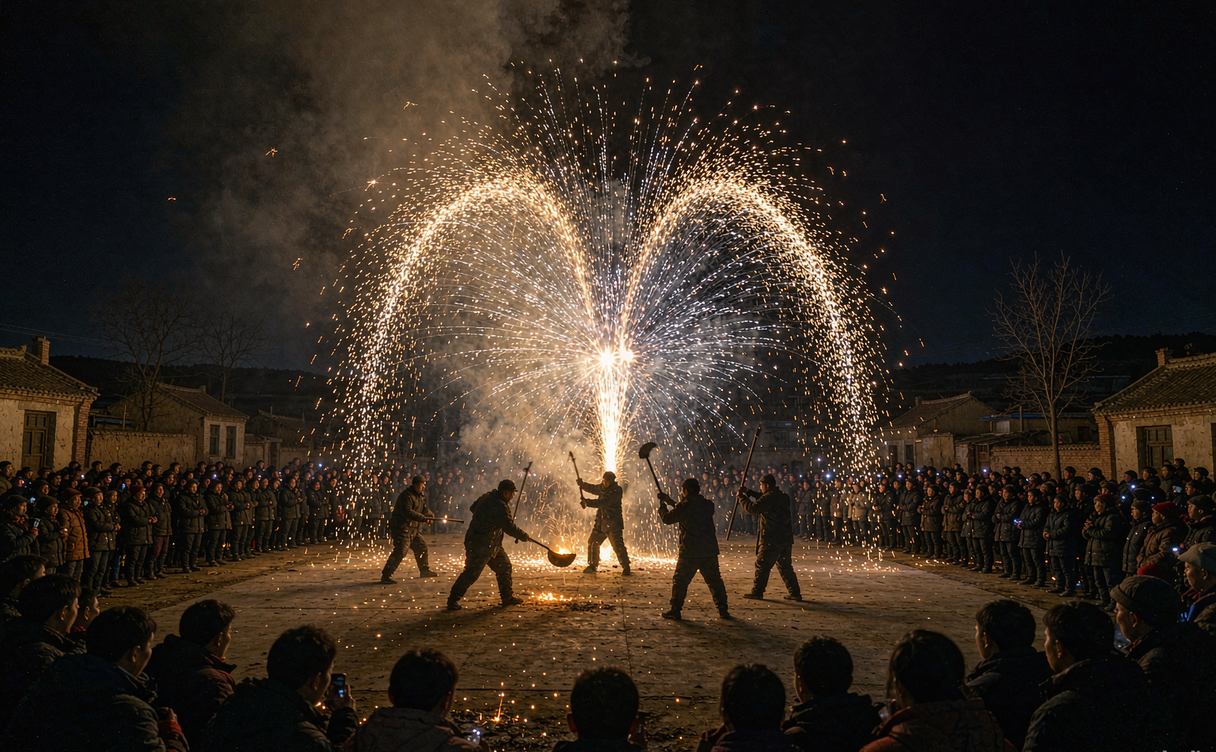
Most travelers who plan a Nuanquan ancient town trip come for one reason and stay for a dozen others: the nightly “iron flower” show, where local blacksmiths fling ladles of molten iron against a cold stone wall and the whole courtyard erupts in a shower of gold sparks. We’ve taken travelers there in every season, and we still stop breathing when the first arc of liquid metal hits the rammed-earth battlement. Nuanquan sits in Yu County (Yuxian), Zhangjiakou prefecture, about 250 km northwest of Beijing, and it is one of the few places in Hebei where a 600-year-old folk ritual is performed not for cameras alone but as a living tradition.
This Nuanquan ancient town Hebei guide explains how to get there from Beijing, what to see, what to eat, and — most importantly — how to time your visit so you actually catch the famous fireworks instead of an empty square.
Where Nuanquan Is and Why It Matters
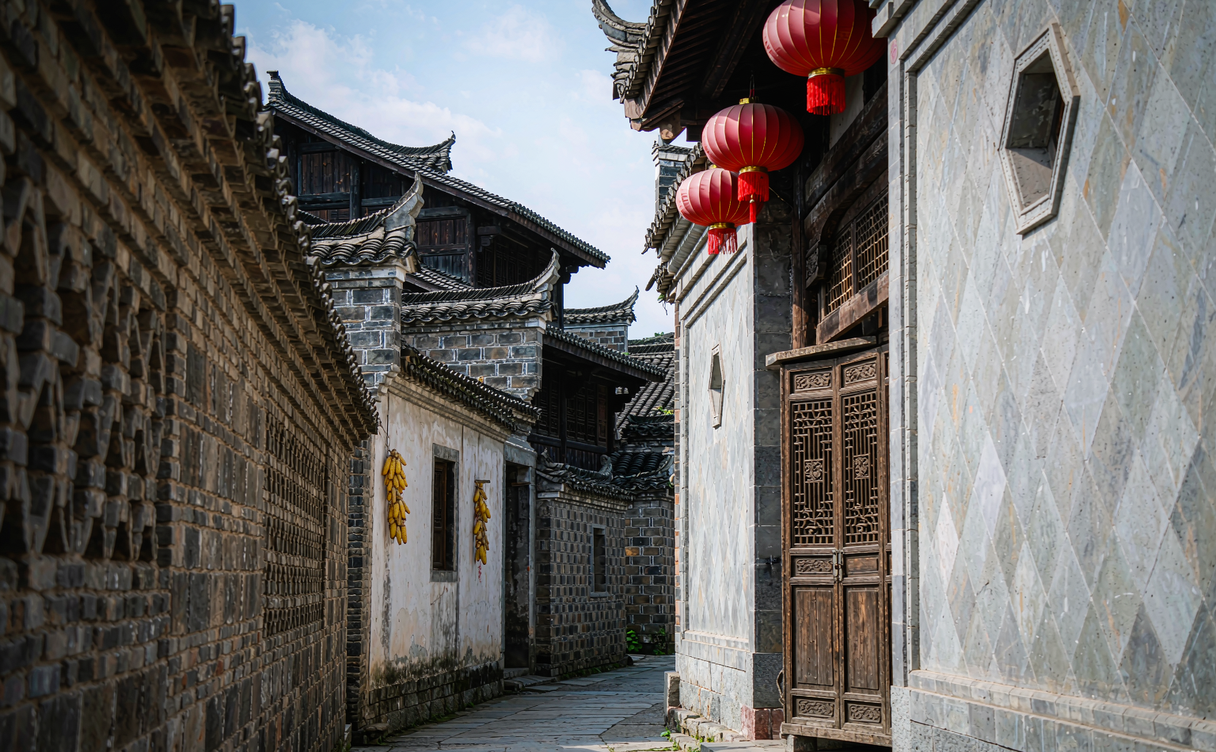
Nuanquan was founded during the Ming dynasty (1368–1644) as a garrison town defending the trade route into Shanxi and the Mongol frontier. Its name means “warm spring” for the hot spring that still feeds the village. The old core is a walled settlement with three surviving gates, a drum tower, and lanes of grey-brick courtyard homes. What makes it special is the layered heritage: military architecture, a thriving paper-cut folk-art industry, and the Nuanquan iron flower fireworks show, known locally as Dashuhua (打树花, “beating the tree flower”).
The ritual dates back roughly 500 years. Blacksmiths who could not afford the fireworks of the rich began splashing molten iron onto the town’s cold walls during the Lantern Festival. The iron cools instantly into a spray of orange-and-white sparks that looks, from a distance, like a blossoming tree. Today the show is staged in a purpose-built courtyard theater, but the performers are still Yu County men who learned the craft from their fathers.
For background on the county and its traditions, see the county overview on Wikipedia.
Things to Do in Nuanquan
The single must-see is the iron-flower performance, but things to do in Nuanquan fill a relaxed full day if you stay overnight.
- The Iron-Flower Show (Dashuhua). Performed at the Tree Flower Square theater most nights in season. Expect two or three rounds of throwing, plus supporting acts like fire pots and stilt dances. Front-row seats cost more and are worth it; the heat on your face is part of the experience.
- The West Castle (Xibao) and old residences. Walk the lanes of the fortified western quarter, where Ming-Qing courtyards have carved beam ends and stone doorsteps worn smooth by centuries of feet.
- The Drum Tower and temple fairs. On the main cross street, the drum tower anchors the old town; during festivals the surrounding lanes fill with snack stalls and opera troupes.
- Paper-cut (“window flower”) workshops. Yu County paper-cutting is a national intangible heritage. Small family workshops sell intricate red cuttings for RMB 10–50; watching an elder work a tiny scissor is better than any museum.
- Hot spring soak. The namesake warm spring feeds a couple of modest bathhouses and guesthouses — a perfect way to thaw after a winter show.
Best Time to Visit Nuanquan
The honest answer for the best time to visit Nuanquan depends on what you want. The iron-flower show runs from roughly April through the Lantern Festival period (the lunar new year, usually February), with the biggest, most authentic performances during the Lantern Festival itself. Spring (April–May) and autumn (September–October) bring comfortable temperatures and reliable show schedules. Winter (December–February) is cold — daytime highs often near freezing — but it is also when the show feels most “real,” staged against a genuinely dark, crisp sky.
We tell travelers to avoid the deep-freeze weeks only if they dislike cold; otherwise January and February are magical. Summer is green and busy but the town can feel humid. Whatever the month, check the performance calendar before you book, because the show is occasionally suspended for weather or maintenance.
Nuanquan to Beijing Day Trip (and Why You Shouldn’t)
A Nuanquan to Beijing day trip is technically possible but we don’t recommend it. Buses from Beijing’s Liuliqiao long-distance station run to Yu County seat in about 3.5–4 hours and cost RMB 80–100. From Yu County bus station a taxi to Nuanquan takes another 30–40 minutes (RMB 50–80). The show, however, starts after dark — around 19:30 in season — so a same-day round trip means a 1 am return to Beijing. Far better: travel up in the afternoon, watch the night show, and sleep in a courtyard guesthouse for RMB 150–300 a night.
If you do come from Beijing, you can also route through Zhangjiakakou, which pairs well with our Zhangjiakou travel guide. Many travelers combine Nuanquan with a stop in Chengde if they are already in northern Hebei, or use Beijing as a first-time base before heading out to the countryside.
Nuanquan Yu Xian Heritage and Food
The Nuanquan Yu Xian heritage is bigger than the fireworks. Yu County is one of northern China’s great folk-art pockets: paper-cutting, baked clay figurines, and a distinct local dialect and cuisine. Food is hearty northern fare. Don’t miss Yuxian dried tofu (firm, smoked, eaten as a snack), huanggao (a sticky yellow millet cake), hand-pulled youmian buckwheat noodles with a sharp vinegar-garlic sauce, and winter hotpot-style mutton. A filling meal in the old town runs RMB 30–60 per person.
Building a Northern Hebei Loop Around Nuanquan
Because Nuanquan sits deep in Yu County, it pairs naturally with other Zhangjiakou and Shanxi-border sights rather than standing alone. We often route travelers from Beijing up through Zhangjiakou, then west to Yu County for the night show, and onward toward the Datong grottoes across the provincial line — a five-day arc that trades city bustle for frontier history. If your time is shorter, the Yu County seat (Weizhou) alone justifies an extra half-day: its Ming-dynasty bell tower is the largest in Hebei, and the surrounding wall still traces the old garrison plan. In winter, coupling the iron-flower show with a hot-spring night in the town makes the cold worthwhile. The key is to treat Nuanquan as the evening centerpiece of a two-day countryside break, not a whistle-stop you rush.
Insider Tips From Our Guides
- Buy tickets in advance online during weekends and holidays; the courtyard holds a few hundred people and sells out.
- Arrive an hour early to wander the lanes in daylight, then claim a good seat before the crowd.
- Dress for the cold even in spring — the show courtyard is open and unheated.
- Stay overnight so you’re not racing a night bus; guesthouses inside the walls let you hear the drum tower at dawn.
- Combine with Weizhou (the Yu County seat, 30 minutes away) for a larger walled town and a massive Ming-dynasty bell tower.
Planning Your Visit
Entry to the old town itself is free; the iron-flower show ticket is RMB 80–160 depending on seat and season. A taxi from Yu County, a night’s stay, two meals, and the show can be done for under RMB 500 per person if you travel independently. If you prefer a guided transfer from Beijing, our Beijing hotel base makes an easy launch point, and travelers continuing west can branch to Baoding afterward.
Nuanquan rewards the slow traveler. Spend one night, watch the sparks fall, and you’ll leave understanding why a handful of blacksmiths’ families have kept this fire alive for half a millennium.
Book the iron-flower show ticket online a few days ahead if you visit on a weekend, as the courtyard theater sells out fast.
Stay one night inside the walls so you can watch the night performance without racing a late bus back to Beijing.
Bring a warm layer even in spring — the open-air show courtyard gets cold once the sun drops.