

If you want to stand on the Tibetan plateau without the permits and paperwork of Lhasa, Golog, Qinghai, China is the answer we give seasoned travelers. Golog (Guoluo Tibetan Autonomous Prefecture) sprawls across the southeastern corner of Qinghai province, a high, windswept land of prayer flags, glacier-backed peaks, and some of the largest mani stone walls on earth. We’ve sent travelers here who wanted raw Amdo culture and came back talking about altitude, silence, and the friendliest nomads in China.
This Golog travel guide covers the route from Xining, the altitude you must respect, the monasteries and lakes worth the drive, and the season that makes or breaks the trip.
Understanding Golog, Qinghai, China
Golog is not a town but a prefecture. Its administrative center is Dawu Town (Maqên county), sitting at about 3,700 m. Other key counties are Gande, Maqên, Maduo, and Jigzhi. The whole region is part of the Amdo cultural area of the Tibetan plateau, so the language, food, and faith you meet here are Tibetan, not Han Chinese. Importantly for independent travelers: Golog is in Qinghai, China, so no Tibet travel permit is required — just a normal Chinese visa and a readiness for thin air.
The landscape is dominated by the Amne Machin (Maqên Gangri) range, a sacred snow mountain on the Golog–Gande border, and by the headwaters of the Yellow River around Maduo. For a geographic primer, see Golog on Wikipedia.
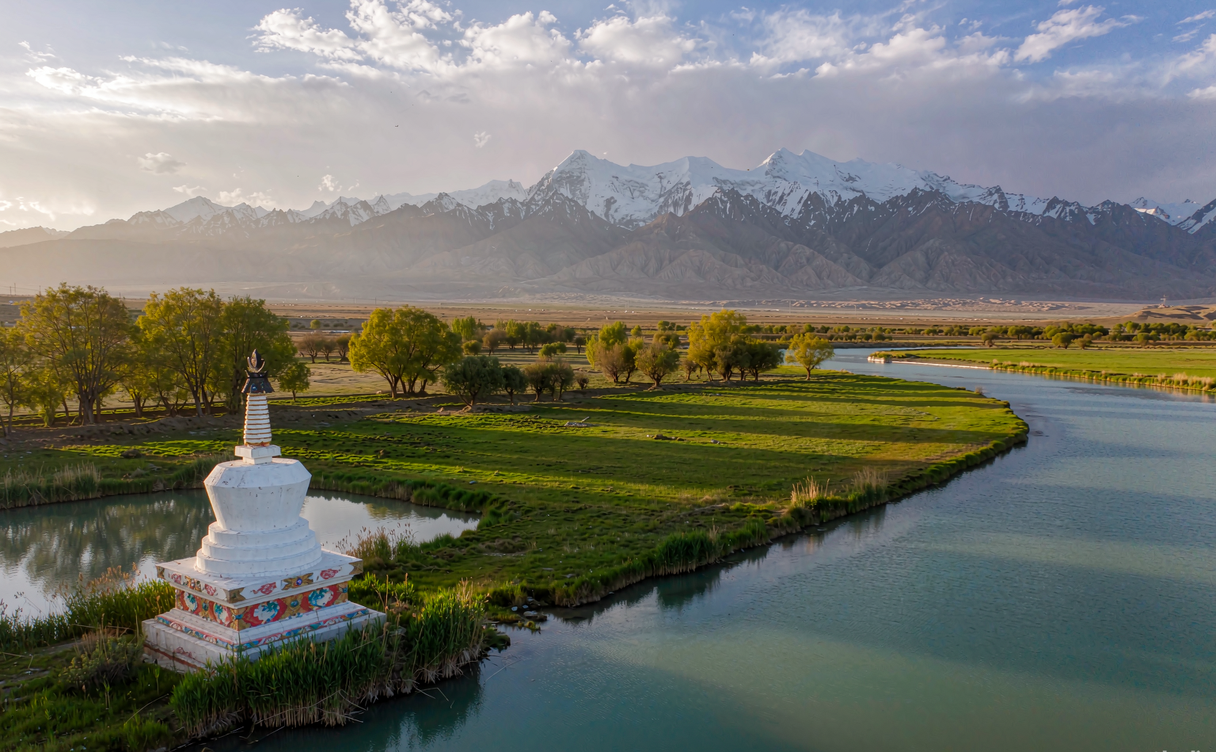
Golog to Xining Route
The standard Golog to Xining route is the first decision. Xining, the Qinghai provincial capital, is the gateway. The fastest option is to fly: Golog Gema (Hongtu) airport has daily flights from Xining in about 1 hour, costing roughly RMB 600–900 one way. The drive is an adventure in itself — about 480 km south via the G0615 and G227, taking 8–9 hours with passes over 4,000 m. Most travelers we arrange either fly one way and drive the other, or join a 4WD loop that continues to the Yellow River source lakes.
From Xining you can also build a wider Qinghai circuit. Our Xining travel guide is the launch point, and many travelers first acclimatize at Qinghai Lake (3,200 m) before pushing higher into Golog. Those heading west can continue to Delingha or Golmud, while travelers coming from the east pass through Haidong. If you later want to compare plateau Buddhism in the Tibet Autonomous Region, our Lhasa hotel guide helps, but Golog itself needs no special permit.
Golog Tibetan Plateau Attractions
The Golog Tibetan plateau attractions are spread across the prefecture, so a private car (RMB 600–900/day with driver) is the practical way to move.
- Amne Machin (Maqên Gangri). A sacred 6,282 m peak and one of the great pilgrimage mountains of Amdo. The road from Dawu to Gande skirts its northern flanks; nomad camps and mani piles line the way.
- The Golog Mani Stone Wall. Near Dawu, this is among the largest accumulations of carved prayer stones in the world — millions of slate slabs inscribed with mantras, stacked into a wall hundreds of meters long. Circumambulating it clockwise is the local devotion.
- Eling and Zhaling Lakes (Maduo). These two linked lakes are the source lakes of the Yellow River. Flat, bird-rich, and starkly beautiful; winter freezes them solid.
- Golog Monastery and smaller gompas. The prefecture seat has a working monastery where monks debate and chant; smaller retreats dot the valleys.
Things to Do in Golog
For things to do in Golog, slow down and let the plateau set the pace:
- Circumambulate the mani wall. Walk the kora (pilgrim circuit) with locals; spin the prayer wheels and watch the light shift on the stone.
- Attend a horse festival. In summer (July–August) county towns host grassland horse-racing festivals with riding, wrestling, and tent banquets.
- Photograph nomads and yaks. Always ask before shooting portraits; a small gift or the share of a thermos of butter tea goes far.
- Stargaze. At 3,700 m with no light pollution, the Milky Way is absurdly bright.
Golog Monasteries and Lakes
The pairing of Golog monasteries and lakes is the region’s signature. Spend one day at the mani wall and Golog Monastery near Dawu, and a second day driving to Maduo for the Yellow River source lakes. The Maduo road is long and empty — fuel up in Dawu, carry water, and tell someone your plan. The reward is a horizon of water and snow with almost no other tourists.
Best Time to Visit Golog
The best time to visit Golog is tightly seasonal. From June to September the grassland turns green, festivals run, and roads are clear of snow; days reach a pleasant 15–20°C but nights drop near freezing. October to May brings heavy snow on the passes, closed side roads, and bitter cold — Maduo in deep winter is for expeditioneers only. We tell travelers to aim for July or August for culture, or early September for fewer crowds and golden light.
Altitude and Health (Read This)
Golog starts at 3,700 m and goes higher. Acclimatize in Xining (2,300 m) or Qinghai Lake first; ascend gradually; drink water; skip alcohol for the first two days; and pack warm layers regardless of month. Mild headache and breathlessness are normal; persistent symptoms mean descend. Travel insurance that covers evacuation is wise.
Food and Costs
Food is Tibetan-Hui: tsampa (roasted barley flour), beef momos, butter tea, and hand-pulled noodles. A noodle bowl runs RMB 15–30; a guesthouse RMB 200–400 a night; the airport shuttle or a shared 4WD from Xining another RMB 150–300 per seat. Budget RMB 500–800 per day with a driver, less if you hitch rides on local buses (slow and infrequent).
Insider Tips
- Acclimatize first. Never fly straight from sea level to Dawu in one day if you can avoid it.
- Carry cash. County towns have ATMs but nomad stalls and small monasteries do not take cards.
- Dress in layers. Sun is fierce by day, cold by night, even in August.
- Hire a Tibetan-speaking driver. It unlocks festivals and family gompas a GPS never finds.
- Respect the kora. Walk mani walls and stupas clockwise; never climb on or photograph restricted shrine interiors.
Planning Your Visit
Golog is for travelers who measure a trip in silence and sky, not checklists. Give it three nights minimum — one to acclimatize, two to explore — and you’ll understand why Amdo holds such a pull. Pair it with Xining and Qinghai Lake for a plateau journey that needs no permit and rewards every kilometer.
A Sample Golog Itinerary
Most travelers do Golog as a three-to-four-day arc rather than a single stop. Day one: fly from Xining to Dawu, rest, and walk the mani wall at a gentle pace to start acclimatizing. Day two: drive the northern road beneath Amne Machin to Gande, stopping at nomad camps and roadside gompas, returning for a hotpot dinner. Day three: push east to Maduo for the Yellow River source lakes, leaving by 08:00 to allow for the long, empty return — fuel, water, and a downloaded offline map are essential, as signal fades for long stretches. A fourth day lets you attend a summer horse festival or simply linger at the monastery. We’ve found this rhythm keeps altitude manageable while still covering the region’s two headline sights. Whatever you plan, build in a buffer day; plateau weather closes passes without warning, and a flexible driver is worth more than a tight schedule.
Acclimatize in Xining or at Qinghai Lake for a night before flying up to Dawu at 3,700 m.
Carry enough cash for nomad stalls and small monasteries, since county-town ATMs are unreliable.
Hire a Tibetan-speaking driver so you can reach summer festivals and family gompas a GPS misses.