

Why Haidong Is Qinghai’s Most Underrated Day-Trip Belt
Most visitors treat Qinghai as “Xining plus Qinghai Lake” and move on, but on our last loop we spent three days in Haidong, Qinghai, China, and it was the cultural surprise of the trip. Haidong wraps the east of the province in Yellow River canyons, terraced farmland, and some of the most distinctive ethnic villages in the northwest. This Haidong travel guide comes from that loop and from the travelers we’ve sent here who wanted culture without the altitude of the far plateau.
Haidong is where you meet the Salar people — a Muslim community with roots in Central Asia whose villages along the Yellow River are unlike anything else in Qinghai. It is also where you find a Ming-dynasty temple with murals to rival the famous ones further east, and a hidden alpine lake tucked above a gorge. Best of all, it is an easy hop from Xining.
How to Get to Haidong from Xining
The first thing to know is how to get to Haidong from Xining, because the region is really a cluster of county towns south and east of the capital. The high-speed rail from Xining to Ping’an (Haidong’s main station) takes about 20–30 minutes, ¥15–25 CNY. From there, county towns like Hualong and Xunhua are reached by bus (1–2 hours, ¥20–40 CNY) or hired car.
For flexibility, I recommend hiring a car with driver for the day (¥400–700 CNY) so you can chain the Salar villages, the temple, and the lake without waiting on rural buses. The roads are good paved provincial highways, though the final canyon climbs to Mengda are switchbacked. If you are basing in the capital, the Xining travel guide has hotel and airport details, and the Ta’er Monastery guide is the natural half-day add-on on your way out of town.
The Xunhua Salar Villages Haidong
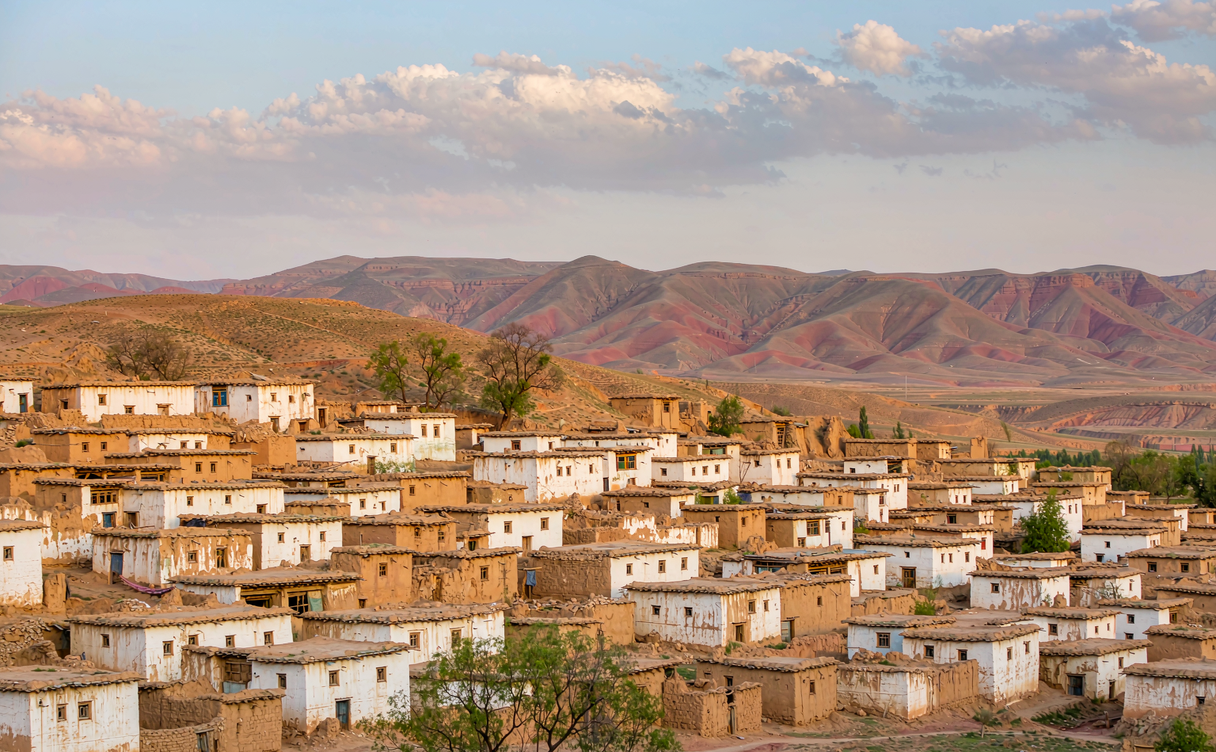
The headline of this guide is the Xunhua Salar villages Haidong, concentrated around Xunhua Salar Autonomous County. The Salar are a Sunni Muslim community whose ancestors are traced to the Turkic-speaking world; today they speak a Salar language at home and Mandarin in public, and live in flat-roofed courtyard houses that blend Chinese and Islamic forms. Villages like Jiezi and the riverside hamlets are calm, photogenic, and genuinely welcoming if you greet with “As-salamu alaykum” and ask before shooting portraits.
For background on the community, the Wikipedia entry on the Salar people is a useful read before you go. On the ground, the best experience is a village lunch — hand-pulled noodles, mutton stew, and fried dough — eaten in a family courtyard for ¥30–60 CNY per person. Our China halal food guide explains the etiquette (no pork, right-hand eating) that keeps you a welcome guest.
Qutan Temple Ming Murals
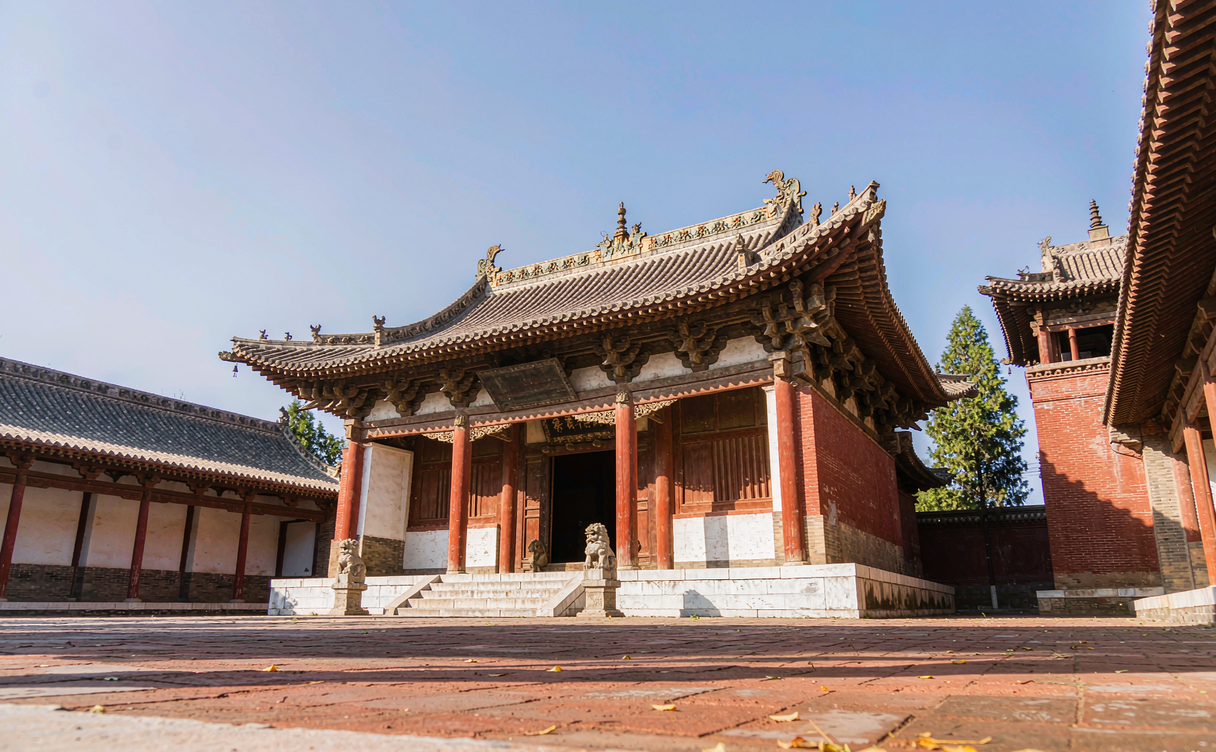
A short drive from the Salar villages brings you to Qutan Temple (Qutansi), a 14th–15th century Ming monastery that survives as one of the finest examples of early Ming architecture in the northwest. The real treasure is the Qutan Temple Ming murals — large-scale Buddhist wall paintings in the main halls, vividly colored and surprisingly well preserved. Entrance is about ¥30–50 CNY, and the quiet courtyards are a relief after busier sites.
I’ve sent travelers here who expected a quick stop and ended up studying the murals for an hour. The halls are dim, so a phone light helps read the detail, but use it respectfully and avoid flash. The temple sits in a narrow valley, so mornings give the best light on the front halls.
The Mengda Heavenly Lake Hike
For walkers, the Mengda Heavenly Lake hike is the physical reward. Mengda is a nature reserve above the Yellow River gorge, and a high-altitude freshwater lake (around 2,500 m) sits in a volcanic crater ringed by forest — an unlikely alpine scene in this dry corner of Qinghai. The hike from the lower gate to the lake takes about 1.5–2 hours uphill (or a shuttle partway for ¥30–50 CNY), then a level loop around the shore.
The trail is steep in sections and exposed; good shoes and water are essential, and I’d skip it in winter when ice makes it dangerous. Entry to the reserve is about ¥50–80 CNY. On a clear day the contrast of the blue lake against the ochre canyon below is the photo most people remember. For more dramatic canyon scenery nearby, the Kanbula National Park guide covers the Danxia landforms just south.
More Things to Do Around Haidong
- Ledu’s carved cliffs: the nearby county has small grotto sites worth a stop for history buffs.
- Yellow River viewpoints: pull-offs along the G214 show the river’s first big bends.
- Cross-province add-on: the Linxia travel guide just over the border in Gansu extends the Muslim-village theme into another Hui heartland.
Our China ethnic minorities guide maps how the Salar, Hui, Tibetan, and Mongol communities of Qinghai each leave their mark on the food and architecture you’ll see.
Getting around Haidong is easiest with a hired car for the day, because the Salar villages, Qutan Temple, and Mengda Lake are spread along different river valleys and rural buses are infrequent. A driver costs ¥400–700 CNY and removes the headache of timed connections. If you go by bus, base in Ping’an or Xunhua and use local minibuses (¥15–30 CNY) for each hop, but build in slack — mountain roads and prayer-time closures can stretch a 40-minute drive into two hours. I always tell clients to start at the lower-elevation sites and save the Mengda climb for when legs are fresh, since the lake hike is the only physically demanding item on the list.
Where to Stay and Eat
Haidong is best done as a day loop from Xining, but if you want to linger, Xunhua has basic guesthouses at ¥150–300 CNY and a couple of county-town hotels at ¥300–500 CNY. Eat halal throughout the region: lamb paomo (¥25–40 CNY), laghman noodles (¥15–25 CNY), and sweet melon in season. Never bring pork into a Salar or Hui village — it is the one hard rule.
Best Time to Visit Haidong
The best time to visit Haidong is May to October. Spring and autumn are mild (12–24°C) and good for walking; summer is warm and green along the river. Winter is cold and some mountain roads ice over. I steer people to September, when the canyon light is golden and the lake is still accessible.
Sample 2-Day Plan
Day 1: Train Xining → Ping’an, hire car, Salar villages and Qutan Temple, overnight Xunhua. Day 2: Mengda Heavenly Lake hike (3–4 h), riverside lunch, return to Xining.
Practical Tips
Dress modestly in Salar villages (shoulders covered, no shorts). Carry cash for stalls and temple donations. Altitude is moderate (1,800–2,500 m) so most people are fine, but the lake hike still winds you. Ask before photographing people, and a small purchase at a village stall goes a long way toward a warm welcome.