

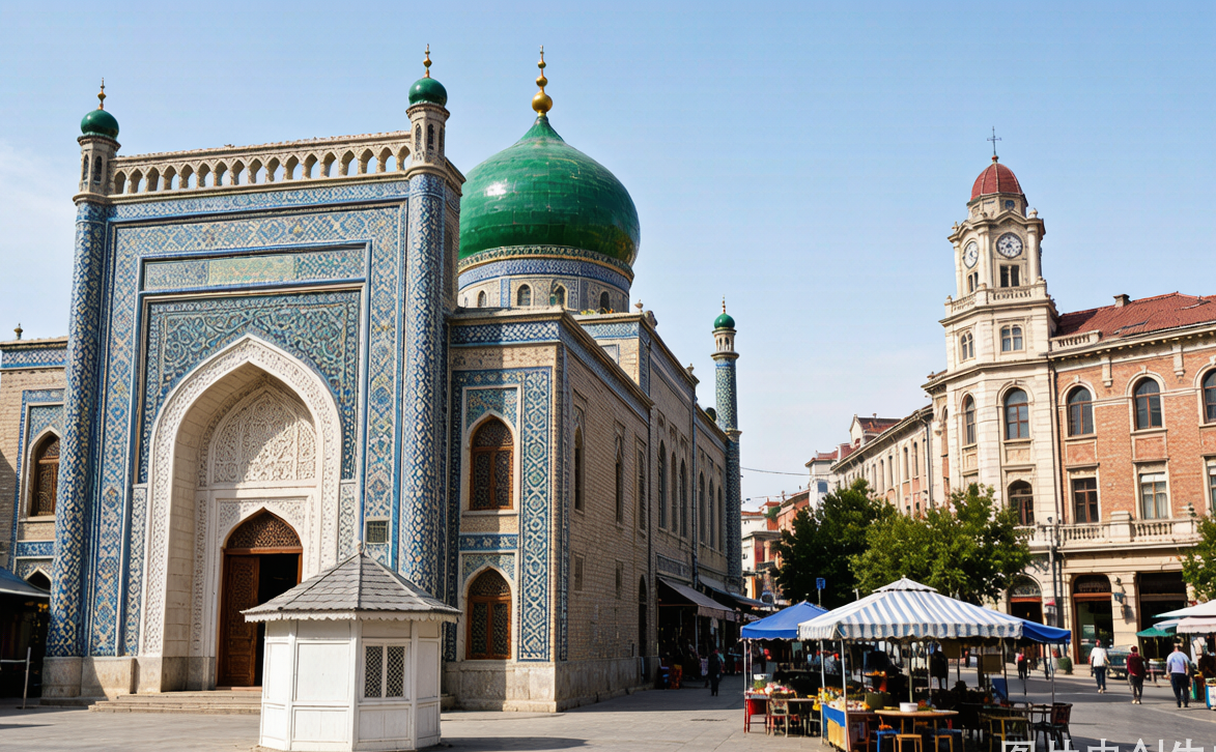
This Linxia travel guide introduces a city that surprises most first-time visitors to Gansu, China: a low-rise river town of domes, minarets, and bustling halal food streets, often nicknamed “Gansu’s Little Mecca” for its dense cluster of ornate mosques. Linxia (formerly Hezhou) sits on the edge of the Loess Plateau where Hui, Dongxiang, Salar, and Bao’an cultures meet, making it one of the best places in northwest China to experience Islamic-influenced architecture and cuisine. The things to do in Linxia also reach beyond the city to the cliff-carved Buddhas of Bingling Temple an hour away. New to the region? Our China travel guide for first-timers is the place to start.
Content Preview
- [Best Time to Visit in This Linxia Travel Guide](#best-time-to-visit-in-this-linxia-travel-guide)
- [How to Get There — Linxia Travel Guide Transport](#how-to-get-there–linxia-travel-guide-transport)
- [Things to Do in Linxia](#things-to-do-in-linxia)
- [Where to Stay](#where-to-stay)
- [Linxia Itinerary](#linxia-itinerary)
- [FAQ](#faq)
Best Time to Visit in This Linxia Travel Guide
The best time to visit Linxia is from May to October, when temperatures are mild (15–28°C) and the nearby Yellow River gorges are pleasant for boat trips. Spring (April–May) and autumn (September–October) are the most comfortable, with clear skies and fewer crowds than summer. July–August is warm and green but busier; winter (November–March) is cold and dry, though the mosques and food scene still make a short visit worthwhile.
Linxia sits lower (about 1,900 m) than Gannan’s highlands, so altitude is not a concern here — a useful contrast if you are combining this with the Tibetan plateau. For nationwide timing, our best time to visit China page helps you sequence regions.
How to Get There — Linxia Travel Guide Transport
Linxia is an easy hop from Lanzhou, Gansu’s provincial capital.
| Route | Mode | Time | Notes |
| — | — | — | — |
| Lanzhou → Linxia | Bus / car | 2–2.5 hrs | ~150 km via expressway; frequent departures |
| Lanzhou → Linxia (rail, where available) | Train | ~1.5–2 hrs | Check current schedules; links keep improving |
| Linxia → Liujiaxia (Bingling boat) | Car / bus | 1–1.5 hrs | Then ~1 hr boat to the caves |
| Linxia → Xiahe (Labrang) | Car | 3–4 hrs | The classic “Linxia to Labrang” cultural hop |
Most travelers base in Lanzhou and do Linxia as a day or overnight trip, or thread it into a Gansu loop toward Xiahe and the grasslands. For train planning across the province, our high-speed train guide for foreigners covers Lanzhou connections. A private car costs roughly ¥400–600/day and unlocks Bingling Temple and the plateau in one flexible route.
Things to Do in Linxia
The Eight Mosques and Old Town
Linxia’s heart is the Bafang (Eight Lanes) old district, where narrow alleys open onto courtyards of glazed tile, carved wood, and slender minarets. The “Eight Mosques” label refers to a historic cluster of community mosques, each with its own style — from Chinese-roofed halls to Middle-Eastern domes. Visitors can walk the lanes freely, peek into courtyards respectfully, and photograph the facades. Dress modestly (cover shoulders and knees), keep noise low near prayer times, and ask before entering a worship space.
Bingling Temple Grottoes
An hour from Linxia, the Bingling Temple grottoes are carved into a cliff above the Liujiaxia Reservoir on the Yellow River. Reached by a scenic boat ride, the site holds hundreds of niches and a 27-meter cliff Buddha, blending Buddhist art with a dramatic riverside setting. Entry is about ¥50–80 plus a boat ticket (~¥70). It is a quieter, less crowded cousin of the famous Dunhuang caves — see our Dunhuang Mogao Caves guide to compare the two.
Food Streets and Local Handicrafts
Linxia things to do must include eating: hand-grabbed lamb, stuffed “Hezhou” buns, beef noodles, and sweet confections fill the evening food stalls. The city is also known for its carved brick and embroidery crafts, good souvenirs that ship easily.
Where to Stay
Linxia city has mid-range hotels (¥250–500/night) near the old town and the main roads, plus a few comfortable business hotels. Staying in or beside the Bafang district puts the mosques and food within walking distance. Rooms are warmer and better equipped than highland Gannan’s, and heating is reliable in winter. Book through Chinese platforms or your guesthouse; international sites list only a handful. For broader cost strategies, budget travelers will find many low-cost train and bus options across Gansu.
If you want a quieter base, the newer hotels near the riverfront offer calm rooms and easy taxi access to the lanes. Breakfast is a highlight: many hotels sit steps from nan (flatbread) bakeries and lamb-noodle shops that open before sunrise. For a scenic contrast after the city, pair a Linxia stay with a night in Xiahe and the grassland loop described in our Qinghai Lake travel guide for a broader Gansu–Qinghai frame.
Linxia Itinerary
A compact 2-day Linxia plan:
- Day 1: Morning drive from Lanzhou (2–2.5 hrs), explore the Eight Mosques and old lanes, evening food-street dinner.
- Day 2: Day trip to Liujiaxia and the Bingling Temple boat ride (half-day), return via Xiahe (Linxia to Labrang, 3–4 hrs) or back to Lanzhou.
Add a night in Xiahe if you want to extend toward the grasslands and Labrang Monastery.
FAQ
Is Linxia safe and open to foreign tourists? Yes. Linxia is a normal Chinese city, open to standard visa holders, with no special permit needed.
Do I need to be Muslim to visit the mosques? No. Visitors are welcome in the lanes and courtyards; just dress modestly and respect prayer times.
How long is the Bingling boat ride? About one hour each way from Liujiaxia pier, with the grottoes at the far end.
Can I visit Linxia as a day trip from Lanzhou? Easily. Two hours each way leaves a full day for the old town and food; add a second day for Bingling.
What’s the “Linxia to Labrang” route like? A scenic 3–4 hour drive linking Islamic Linxia with Tibetan Xiahe — a striking cultural contrast in one day.
Bingling Temple is part of the UNESCO-listed Silk Roads heritage; see the UNESCO World Heritage Centre entry for the official background.
Practical Travel Tips
Linxia is low-altitude and easygoing, but a few tips help. Carry cash as well as mobile pay; smaller stalls and mosques’ donation boxes take paper yuan. Fridays are the busiest prayer day, so visit the lanes early or late to avoid crowded courtyards. Halal food is the norm, so expect no pork and plenty of lamb and noodle dishes — a bonus for many travelers. If you continue to Xiahe and Gannan’s highlands afterward, ascend gradually and read our plateau advice. Finally, ask before photographing people, and enjoy the city at its best in the blue hour when the minarets glow.
Getting around town is simple: rideshare apps and cheap taxis cover short hops, while the old lanes are best on foot. There is no international ATM that reliably works, so withdraw yuan in Lanzhou before you arrive. The Bingling boat runs on a fixed schedule and can sell out on holidays, so start early and confirm the return time at the pier. If you are combining Linxia with the plateau, pack a layer for the higher stops even in summer, and keep one extra day free in case weather delays the gorge boat. With these small preparations, Linxia rewards you with one of China’s most distinctive urban cultures.
By Karl — Last updated July 26, 2026