

Xi’an’s city wall gets the photographs. The Terracotta Army gets the queues. But the site we send calligraphy students, architecture fans and anyone who has ever wondered how a country remembers things is the Forest of Steles — the 碑林, tucked inside the old city walls a few hundred metres southeast of the Bell Tower.
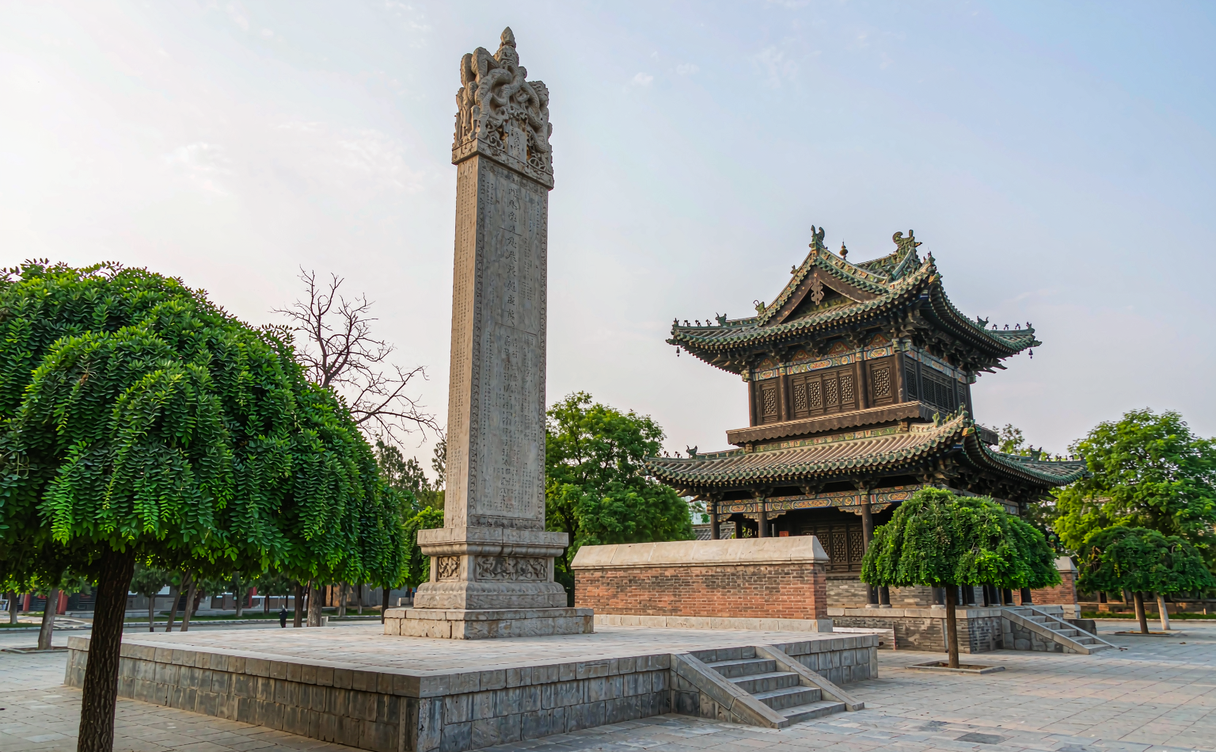
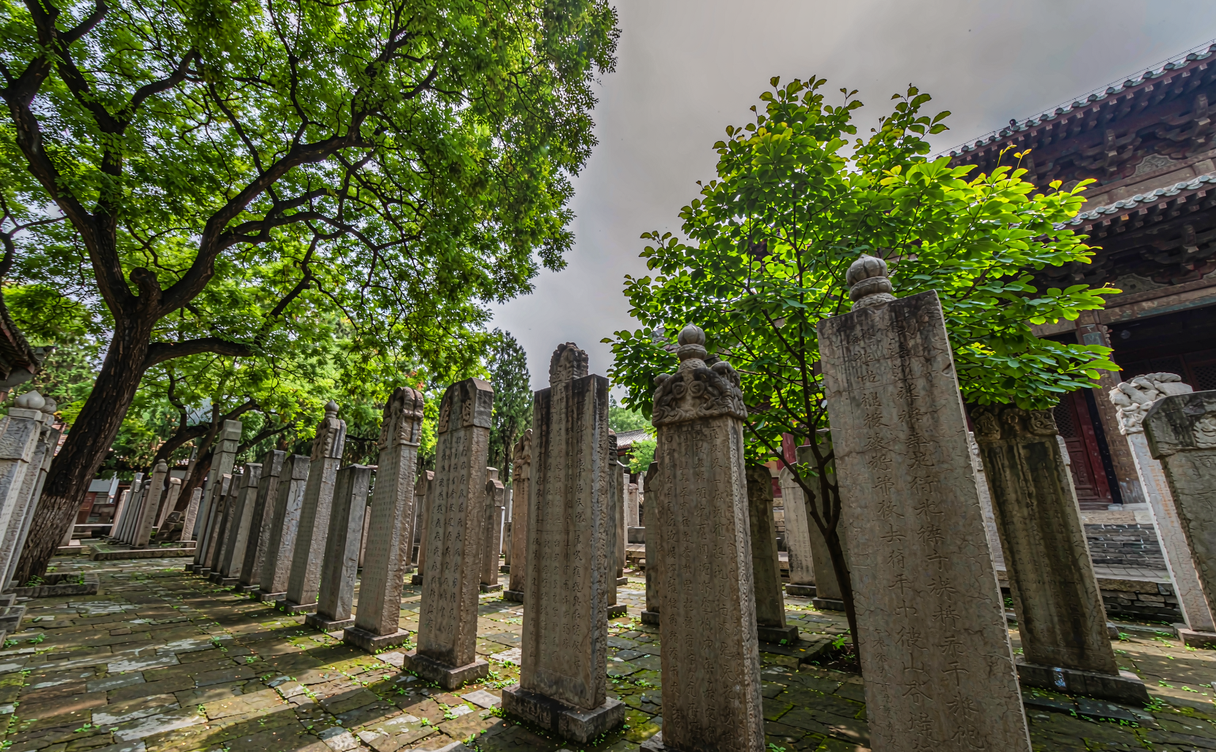
The Forest of Steles is a museum of standing stone: roughly 3,000 carved steles in about a dozen courtyards, most of them originals, ranging in date from the Han dynasty to the Qing, arranged round a temple precinct that has been a school and a Confucian academy before it became a museum. We have walked it twice and skipped half of it both times, because the place rewards a second pass. The encyclopaedic description of the Forest of Steles is a good primer; it is also a lot less interesting than standing in front of a Tang dynasty slab of the Confucian classics in the afternoon light.
What the Forest of Steles actually holds
Three things, basically.
The first is the Kaicheng Stone Classics (开成石经), carved in 837 CE under the Tang emperor Wenzong. Even numbers of them: 114 slabs, about 650,000 characters, ten Confucian classics in triplicate so that they could be copied without error. They were built to be a standardised, public, indestructible version of the textbooks of the empire. Standing in that hall is the closest most visitors come to understanding what “a civilisation’s memory” looks like in physical form.
The second is buildings of calligraphy — the reason serious students come. Yan Zhenqing (颜真卿) and his pupil Liu Gongquan (柳公权), the two great Tang masters whose styles are still taught as the baseline for Chinese brushwork, are represented by genuine Song-dynasty reproductions carved from their work. You can see the difference between Yan’s broad, squat, chest-expanded strokes and Liu’s disciplined, tightly governed ones side by side in the same courtyard. It is the single best calligraphy lesson available anywhere in China and it is free with your ticket.
The third is the oddities, and by far the oddest is the Nestorian Christian Monument (大秦景教流行中国碑) of 781 CE — a Tang stele that carries both Chinese characters and Syriac script, announcing the arrival of Christianity into Tang China more than a thousand years before the crossings that most Western visitors know about. It is in the same open-air row as the Buddhist dhāraṇī steles and the Confucian exhortations, and that adjacency is the museum’s quiet argument: all of these scripts, in one walled compound, in a city that was the centre of the world.
Best time to visit the Forest of Steles
The best time to visit the Forest of Steles is a weekday morning, any month from March to November. The courtyards are shaded by old trees and the museum is indoors-linked in parts, so it handles a Xi’an summer better than an open-air site; but the light through the pines is best in the last two hours before closing when the stone goes honey-coloured.
April and May are ideal weather-wise, 15–26°C, though Xi’an has become genuinely busy in spring. October and early November are the sweet spot for combining the museum with a walk on the wall. July and August are hot, humid in the courtyards and crowded with school groups in the mornings.
Museum hours run roughly 08:00–18:30 in summer and 08:00–17:30 in winter, with last admission an hour before closing. Like most Shaanxi museums, it takes a weekly closed day in the low season — check before you build a morning around it. Entry is around ¥75 per adult, which is one of the better-value tickets in the city, and there is a discount for students.
For the rest of the year’s trade-offs, our best time to visit China guide lays them out.
How to get to the Forest of Steles
The Forest of Steles is inside the city walls, which sounds simple and is simple if you use the metro.
- Metro Line 2 to Yongningmen (永宁门), then walk east along a wall, roughly 500–800 metres through 顺城巷 and the 湘子庙 area. Fifteen minutes on foot, and it puts you on the wall circuit at the same time.
- Metro Line 4 to 和平门 (Hepingmen), which is the closest stop to the museum gate — about a five-minute walk north. This is what we do.
- Taxi to 三学街 (Sanxue Street): the driver will know it, and the museum sits on the same street as the Shaanxi Calligraphy Museum and the Confucius temple frontage.
Xi’an is one of the easiest Chinese cities to arrive in by rail, and the China high-speed train guide for foreigners covers the Xi’an legs if you are coming from Beijing, Shanghai or Chengdu. Our Xi’an travel guide maps out the wall, the tower and the museum as a coherent walking day.
Things to do at the Forest of Steles
Do it in this order. Enter from Sanxue Street, buy the ticket, and turn right rather than following the crowd.
Start in the Stone Classics hall with the 114 Tang slabs, then move out into the first courtyard where the giant 颜氏家庙碑 (Yan Zhenqing’s Family Temple Stele) sits under a pavilion. Walk the open-air rows next, where the Nestorian monument and the Buddhist steles sit side by side at eye height — lean in and look at the bottom of the Nestorian stone, where the Syriac begins. Then the calligraphy halls, small and dark, and the database of imperial exam steles, which record the names of the men who passed the palace examinations; find your own surname if you can, because thousands of visitors do.
Finish in the stele pavements outside, where fragments of Buddhist sutras are set into the ground like paving. We always tell people to look down as well as up.
A two-hour plan and a five-hour plan
The museum is compact and dense. If you have two hours you can do the main circuit: classics hall, first courtyard, the open-air rows, the two calligraphy halls. You will see everything and understand about half.
If you have five hours, and we strongly recommend it if calligraphy matters to you, do this: two hours on the main circuit, then a return trip to the calligraphy halls to work on the Yan and Liu steles properly, then cross the street to the Shaanxi Calligraphy Museum and finally walk out through the old academy precinct into 湘子庙 and 德福巷 for coffee. The Forest of Steles rewards repetition in a way almost no other Xi’an sight does.
What most people walk past
The Confucius temple frontage you enter through is not a reconstruction built for the museum; the precinct has held a school since the Yuan dynasty. There is a drum tower and drum courtyard in the compound that rings on festival mornings. And behind the museum, the Guanzhong Academy (关中书院) is a working historic school courtyard that almost no tourists enter.
Photographers should note that flash is banned in the indoor halls, which is annoying and necessary. Tripods are not permitted. Light levels are low inside, so bring a fast phone camera rather than expecting the exhibition lighting to do the work.
Practical tips before you go
Three or four things. Rent a Chinese dictionary app with OCR before you enter — many of the steles have small collateral inscriptions in the corners that the labels will not translate, and being able to photograph and read them changes the visit. Wear shoes with grip; the courtyard paving is uneven and a few of the outdoor rows are wet in rain. Go on a weekday. Saturday afternoons in April feel like a school trip across the whole compound.
Most importantly, read a little before you arrive. A stele is a document until you know what it says, and a document until you know who put it there. Twenty minutes of background on Yan Zhenqing — a calligrapher who died defending a rebellious province and whose later work gets bigger, looser and more human the closer he came to execution — turns a slab of stone into a person.
Pairing it with the rest of Xi’an
The Forest of Steles sits inside the walking core, so it stacks well. The Bell Tower and Muslim Quarter are a 15-minute walk north; the city wall runs straight past the museum’s western end at 永宁门 and you can walk a whole rampart in two hours.
The obvious companion is the Shaanxi History Museum, which is a different sort of collection — bronzes, tomb figures, gold and silver — and should be booked in advance because it genuinely sells out. Between the two you have the city’s history in stone and in object form.
For the wider trip, our best things to do in China roundup places Xi’an’s museum quarter high, and our China travel guide for first-timers covers the metro card, the payment apps and the museum booking habit that make a city like this easy.
Final thoughts
The Forest of Steles is the Xi’an sight that changes people who are not interested in old stones. We have watched a busload of indifferent travellers cross that first courtyard and stop dead in front of the Nestorian monument, because the moment you understand that a Tang Christian document, a Confucian textbook and a Buddhist sutra were all carved for the same wall, the whole museum opens.
Go early. Read one biography. Look down at the pavement.