

Weifang, a mid-sized city in central Shandong Province, is known around the world as the birthplace of the modern kite and the host of the annual Weifang International Kite Festival. Yet the wider Weifang region offers far more than wind and string. To the west lies Qingzhou, one of China’s ancient Nine Provinces and a remarkably preserved historic city, while the surrounding plain is dotted with folk-art museums, Buddhist grottoes, and the kind of relaxed local life that most foreign itineraries skip entirely. This Weifang travel guide is written for independent foreign tourists who want to step off the crowded Beijing–Shanghai axis and discover a corner of Shandong that is authentic, affordable, and easy to reach by high-speed rail.
Whether you arrive from the coast or the provincial capital, Weifang makes a calm base for exploring northern Shandong. Many visitors combine it with a few days in Qingdao travel guide on the coast, or loop it together with Jinan travel guide and Mount Tai, Shandong for a classic Shandong circuit built around mountains, springs, and the sea.
How to Get to Weifang
Weifang sits on the Qingdao–Jinan high-speed corridor, which makes it one of the easiest lesser-known cities in Shandong to reach. From Qingdao it is roughly a one-hour train ride, and from Jinan about the same. Beijing is around three hours away by bullet train, and Shanghai is reachable in roughly five to six hours with a transfer. The city’s main station, Weifang Railway Station, sits close to the center and connects directly to the city’s bus network.
For first-time visitors, the simplest approach is to fly into Qingdao Jiaodong International Airport and take a short high-speed train inland, or to arrive via Jinan. Weifang also has a small airport of its own, but its flight network is limited and schedules change often, so most international visitors are better off routing through Qingdao or Jinan. Our China high-speed train guide for foreigners explains how to buy tickets, use the real-name system, and read seat numbers so the journey stays stress-free. Taxis and ride-hailing apps cover the short hop from the station to most hotels.
Within the city itself, getting around is easy and cheap. Public buses reach the kite museum and the main commercial streets, while shared dockless bikes are handy for the flat, grid-like center. For the trips out to Qingzhou or the Binhai coast, a pre-arranged driver for the day costs little and removes the guesswork of rural bus timetables. Because Weifang is compact, you will rarely spend more than twenty minutes moving between sights, which keeps a one-base stay relaxed.
Best Time to Visit and the Kite Festival Dates
Spring, from April to May, is the most pleasant season, with mild temperatures and steady breezes that are perfect for kite flying. Autumn, from September to October, is also excellent, with clear skies and comfortable humidity. Summers are warm and occasionally humid, while winters are cold and dry.
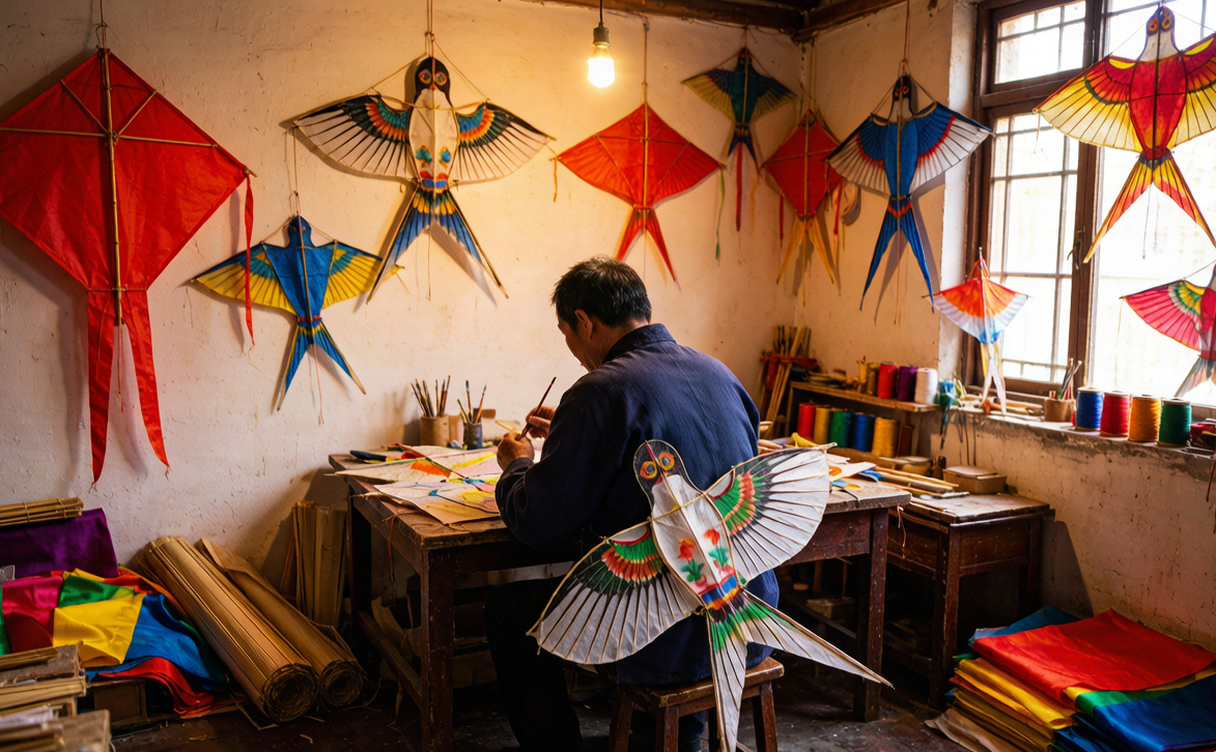
The headline event is the Weifang International Kite Festival, held each April and traditionally clustered around April 20. The Weifang kite festival dates shift slightly year to year, so check the official schedule before booking, but the festival reliably fills the city with competitors from dozens of countries, giant sculptural kites, and evening light shows. If your trip is flexible, planning around late April gives you the liveliest atmosphere and the best photographs.
Top Things to Do in Weifang
The single most important stop is the Weifang World Kite Museum, the largest institution of its kind in the world. Inside you will find centuries of kite history, regional styles from across China, and intricate examples that double as folk art. Adjacent to it, Kite Square is a good place to watch locals flying their own designs on a breezy afternoon.
Beyond kites, the city rewards slow exploration. The Fangzi District preserves a strip of early railway-era architecture from the German and later Japanese concession period, now repurposed as cafes and small museums. The Bailang River Greenbelt offers riverside walking paths, and the coastal development at Weifang Binhai gives a glimpse of the vast salt flats and wind farms along the Bohai shore.
The true highlight, however, is Qingzhou, about an hour west by train or bus. Qingzhou’s ancient city is a living neighborhood of gray-brick lanes, small temples, and the excellent Qingzhou Museum, which holds Buddhist sculpture, porcelain, and a famous collection of painted clay figures. Nearby Tuoshan Grottoes carve Tang-dynasty Buddha images into the hillside, and Ouyuan Garden is a refined classical garden rebuilt from a scholar’s estate. For most travelers, things to do in Weifang really means a full day or two in Qingzhou.
Where to Stay in Weifang
Most visitors base themselves in Kuiwen District, near Weifang Railway Station and the main commercial streets, where international-chain hotels, mid-range business hotels, and budget options are all within walking distance of food streets. Staying here keeps transport simple and puts you close to the kite museum.
For atmosphere, consider sleeping in Qingzhou’s old city instead. Boutique hotels and restored courtyard guesthouses there let you wander lantern-lit lanes after the day-trippers leave. Where to stay in Weifang therefore comes down to a simple choice: convenient city-center hotels for kite-focused trips, or characterful Qingzhou accommodation for history and photography. Either way, book ahead if you visit during the kite festival, when rooms fill quickly.
A 3-Day Weifang Itinerary for Foreign Tourists
A practical Weifang itinerary for foreign tourists spreads the city and Qingzhou across three relaxed days.
Day 1: Arrive by train, check in, and spend the afternoon at the Weifang World Kite Museum and Kite Square. Eat dinner along the nearby food street and try local snacks.
Day 2: Take an early train or bus to Qingzhou. Visit the Qingzhou Museum, walk the ancient city, and climb to Tuoshan Grottoes in the afternoon. Return to Weifang or stay overnight in Qingzhou.
Day 3: Explore the Fangzi heritage district in the morning, then visit the Bailang River Greenbelt before departing toward Qingdao or Jinan by high-speed train.
Thispace leaves buffer time for unplanned discoveries and avoids the exhaustion of a rigid schedule. If you have a fourth day, the coastal Binhai area makes a calm half-day excursion.
Food and Local Specialties
Weifang’s food reflects the hearty, wheat-based cooking of northern Shandong. Chaotian Guo, a street dish of boiled meat and vegetables eaten with thin pancakes, is the city’s signature and best enjoyed at a busy morning stall. Weixian radish, a crisp sweet local variety, is sold raw as a snack and pickled as a side. Roast chicken and braised donkey meat (Lu cuisine style) appear on many menus, and Qingzhou contributes Longsheng pastries, a delicate traditional confection worth bringing home.
Vegetarians will find plenty of vegetable-forward dishes and noodles, though truly meat-free restaurants are rare outside large hotels. Street markets are the best place to sample cheaply and safely, and night markets near the center come alive after dark.
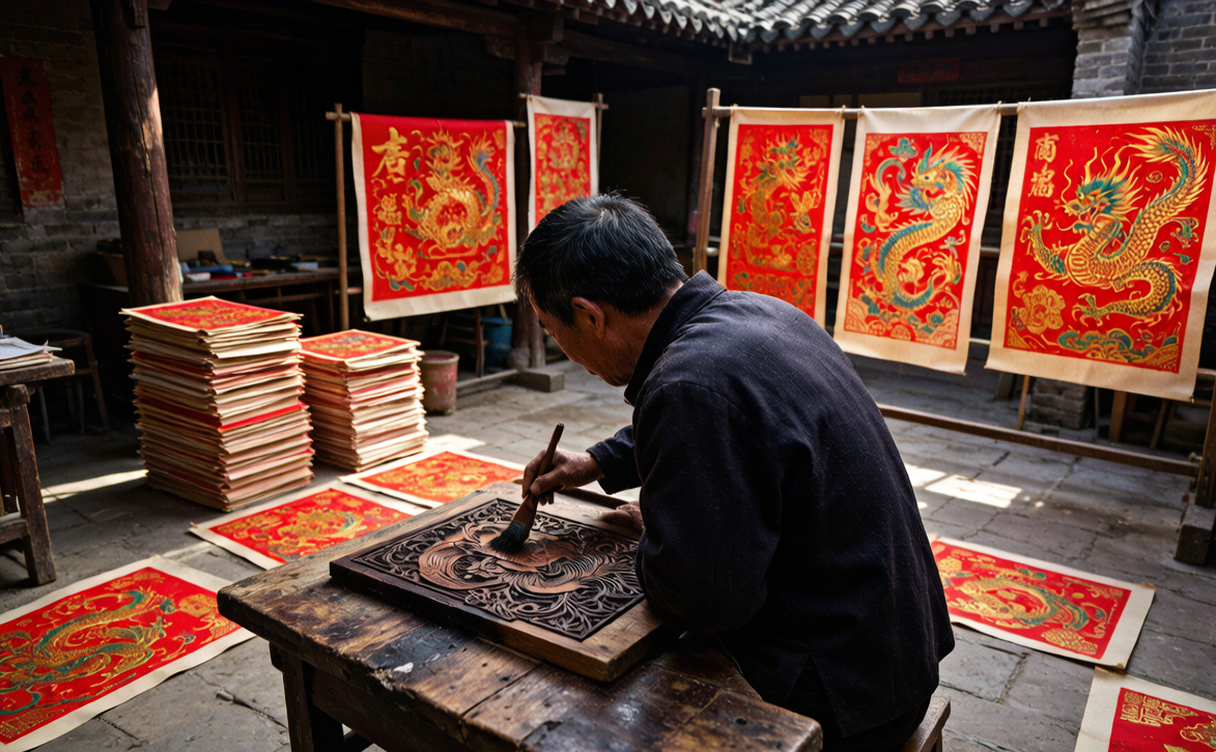
Beyond the snacks, Weifang has a low-key tea-house culture worth sampling in the evening. Small shops near the old streets serve local green teas and warm millet porridge, a comforting close to a day of walking. If you want a souvenir that is lighter than a kite, look for hand-painted New Year woodblock prints from Yangjiabu, a village on the city’s edge that has produced folk prints for centuries; the designs are bold, inexpensive, and far easier to pack than a framed kite.
Side Trips from Weifang
Weifang’s position in central Shandong makes it a natural hub for wider exploring. Zibo, famous for its outdoor barbecue culture, is a short train ride west and pairs well with a food-focused day trip; see our Zibo travel guide for the essentials. To the south, Qufu travel guide covers the hometown of Confucius, while Mount Tai, Shandong remains the province’s most celebrated summit hike.
Because all of these are on the same high-speed network, you can use Weifang as a quiet, inexpensive base and make easy loops outward, returning each night to calmer streets and lower hotel prices than the big tourist cities charge.
Conclusion
Weifang rewards travelers who like their China unhurried: world-class kites, a genuine ancient city at Qingzhou, and easy rail links to the rest of Shandong. For official event dates, transport, and cultural information, consult the Weifang Municipal Government portal at Weifang government.