

In the loess hills of Shanxi, China, the Wang Family Courtyard is the largest and most imposing of the province’s famous merchant compound mansions — a walled hillside warren of grey-brick courtyards, watchtowers and carved screen walls. This Wang Family Courtyard guide explains how to get there from Pingyao, ticket details, how it compares with the Qiao Family Compound, and the best time to visit.
What the Wang Family Courtyard is
The Wang Family Courtyard was built by a wealthy merchant clan over more than a century, from the late Ming through the Qing dynasty. Unlike a single grand house, it is a fortified settlement: dozens of courtyards stepped up a hillside, enclosed by battlemented walls and guarded by watchtowers. At its peak the compound held hundreds of rooms, and walking it today feels like exploring a small fortified town rather than a home.
For visitors interested in Shanxi merchant courtyard houses, the Wang Family Courtyard is the most complete example, and far larger than the better-known Qiao Family Compound. The scale is the point: it shows how powerful the Shanxi merchants became in the Qing era.
How to get to Wang Family Compound from Pingyao
The common question is how to get to Wang Family Compound from Pingyao, the famous nearby ancient town. The compound sits in Lingshi County, about 50 kilometres south of Pingyao, and the easiest method is a private car or taxi, which takes roughly an hour along the expressway. Some visitors also take a high-speed train from Pingyao to Lingshi East station and then a short taxi to the site.
Because the courtyard is large and the hills hot in summer, give yourself a half day. Many travellers pair it with a morning in Pingyao and an afternoon at the Wang compound, then sleep in the old town.
Wang Family Courtyard tickets
Wang Family Courtyard tickets are sold at the entrance gate, with a combined ticket covering the main courtyards and the hillside red mansion area. Prices are modest by international standards and include the site’s small museums of furniture, stone carving and folk life. Opening hours are roughly daylight; arrive early to beat both the heat and the tour groups.
Guides are available at the gate and are worth hiring — the layout is a maze, and a guide explains the symbolism of the carvings and the clan’s rise and fall, which turns a walk through old rooms into a story.
Shanxi merchant courtyard houses
To understand the Wang Family Courtyard you need the context of Shanxi merchant courtyard houses. During the Qing dynasty, merchants from Shanxi, China dominated trade and early banking across the empire, and they spent their fortunes on fortified homes that doubled as status symbols. The result is a distinct regional architecture: grey brick, high windowless outer walls for security, and astonishingly detailed wood, brick and stone carving inside.
The Wang compound is the largest, but the tradition runs through Qikou ancient town on the Yellow River and the courtyard homes of the province’s other old towns. Seeing two or three gives you a real feel for the merchant era.
Wang Family Courtyard vs Qiao Family Compound
The Wang Family Courtyard vs Qiao Family Compound debate comes up often. The Qiao Family Compound, near Qi County, is more famous abroad thanks to films and is compact and easy to grasp in an hour. The Wang Family Courtyard is bigger, more rugged, and set on a hill with wider views, but it demands more walking and time.
Our advice: if you can only see one, choose based on your style. Want a tidy, photogenic single compound with famous film pedigree? Pick Qiao. Want scale, fortification and a half-day of exploration? Wang is the better choice, and it is an easy add-on from Pingyao.
Wang Family Courtyard ticket and layout tips
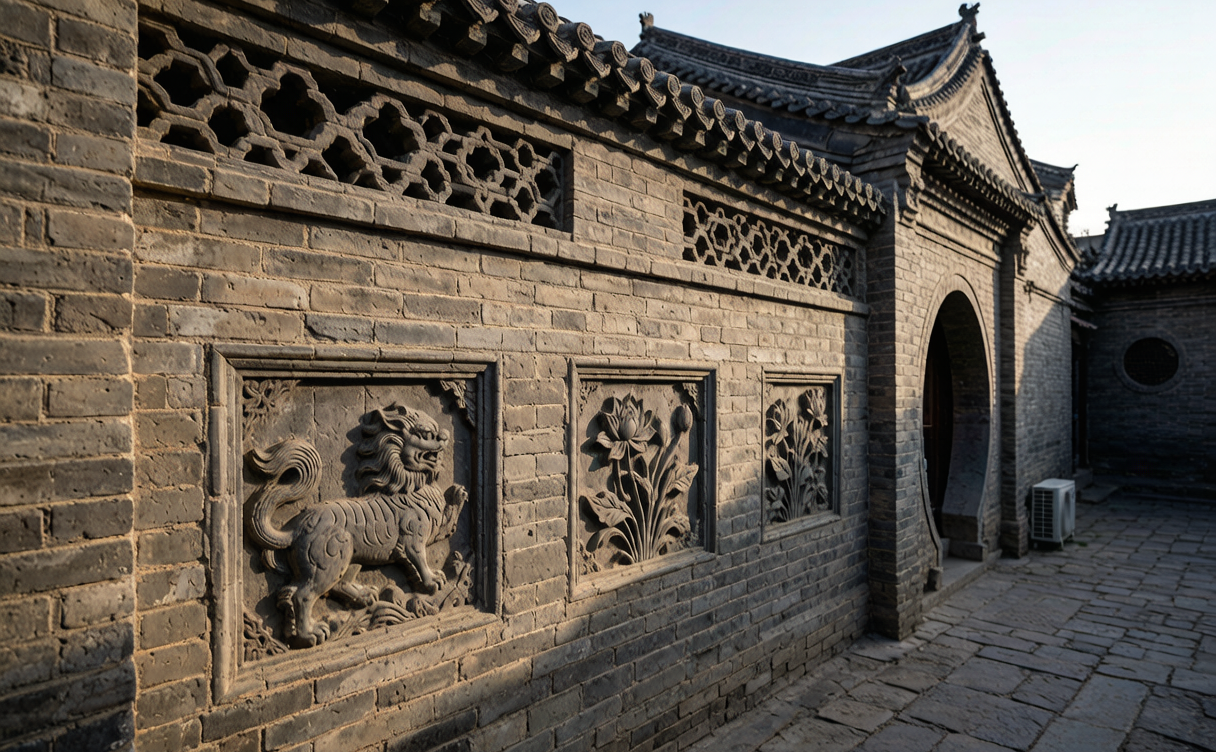
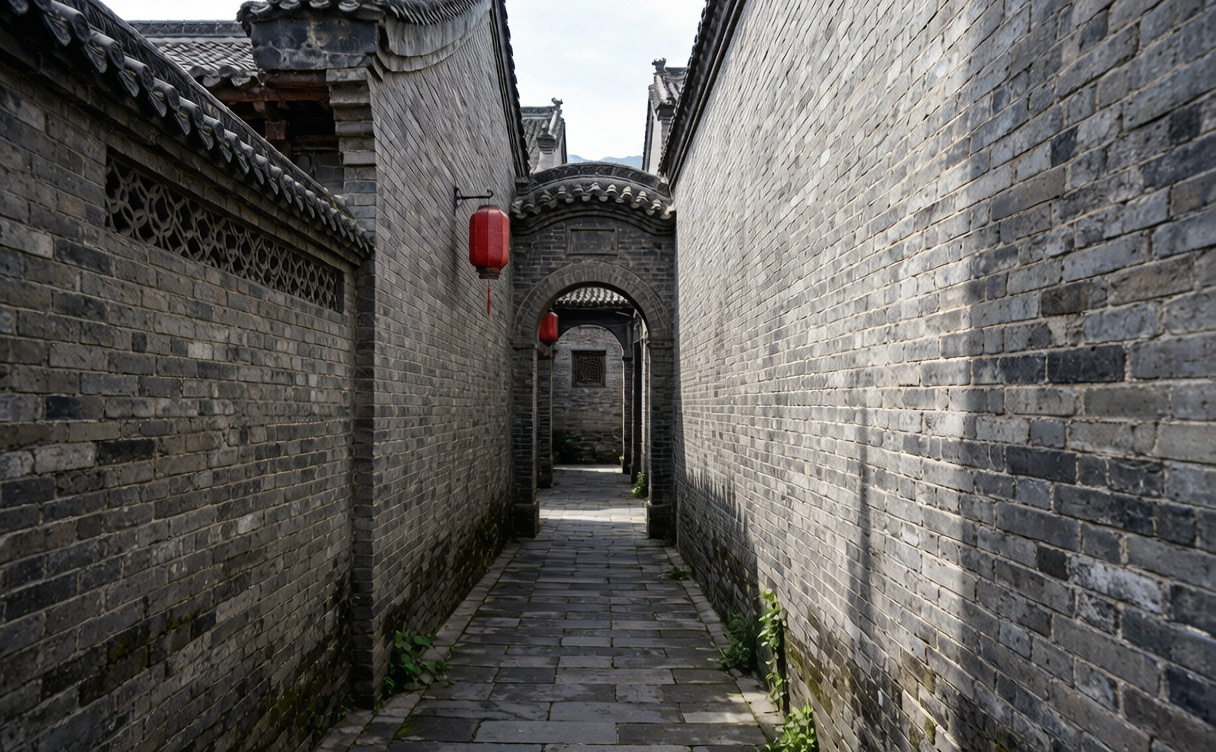
Inside, follow the main axis upward to the Red Mansion terrace for the best overview of the whole compound, then wander the side courtyards to find the finest carvings. Look for the brick screen walls with lions and flowers, the moon gates between courts, and the narrow stone alleys with their arched gateways. Wear comfortable shoes; the site is big and the hillside paths are uneven.
The Wang clan and the salt trade
The Wang family rose not from land but from trade. Starting in the Ming dynasty as small-scale merchants, later generations grew rich on salt — the most lucrative and tightly controlled commodity of imperial China — and reinvested the profits into this hillside fortress. At its height the clan counted officials, scholars and businessmen among its members, and the compound’s scale reflects that status. Understanding the salt fortune is the key to why a “family home” could look like a walled town.
Reading the three carvings
The courtyard is famous for its “three carvings” — in wood, brick and stone — and they are not merely decorative. Lions symbolise protection, peonies wealth, cranes longevity, and scenes from opera and legend teach Confucian virtue to the family’s children. The brick screen walls just inside each gate were designed both to block bad spirits and to show visitors the family’s taste. A guide will point out details you would otherwise walk past, which is why hiring one pays off.
A half-day walking route
A sensible route starts at the ticket gate, climbs the main axis to the Red Mansion terrace for the overview, then loops down through the eastern and western courtyard clusters before finishing at the carved screen walls near the entrance. Allow three to four hours with photo stops. Mornings are best for both light and thin crowds; by midday tour groups fill the narrow alleys.
Best time to visit Wang Family Courtyard
The best time to visit Wang Family Courtyard is spring and autumn, when the Shanxi weather is mild and the light is good for the carved detail. Summer is hot and crowded with domestic tours; winter is cold but quiet and atmospheric, with few visitors and a stark beauty to the grey walls. Mornings are best year-round.
Extending your Shanxi trip
From the Wang Family Courtyard you are well placed to explore more of Shanxi, China. The provincial capital Taiyuan has museums on the merchant era, Datong holds the Yungang Grottoes and the hanging temple, and Mount Wutai is a sacred Buddhist mountain not far north.
A riverside counterpart
If you enjoy the courtyard theme, Qikou ancient town on the Yellow River shows the same merchant culture in a river-port setting, a nice contrast to the hilltop Wang compound.
Sources:
- Shanxi Provincial People’s Government: https://www.shanxi.gov.cn